Hepper is reader-supported. When you buy via links on our site, we may earn an affiliate commission at no cost to you. Learn more.
How to Crate Train an Older Dog: Step-by-Step Guide

In this article
Though plenty of dogs are crate trained from puppyhood, this isn’t always the case. And if you’ve adopted an older dog that isn’t crate trained, you might prefer for it to be, but how can you make that happen? After all, you can’t teach an old dog new tricks. Right?
Wrong! It might not be as simple as crate training a puppy, but you can crate train an older dog. You just need patience and to follow the step-by-step guide below. If you’re ready to get your older dog crate trained sooner rather than later, keep reading to find out how!

The 10 Steps to Crate Training an Older Dog
1. Purchase a crate.
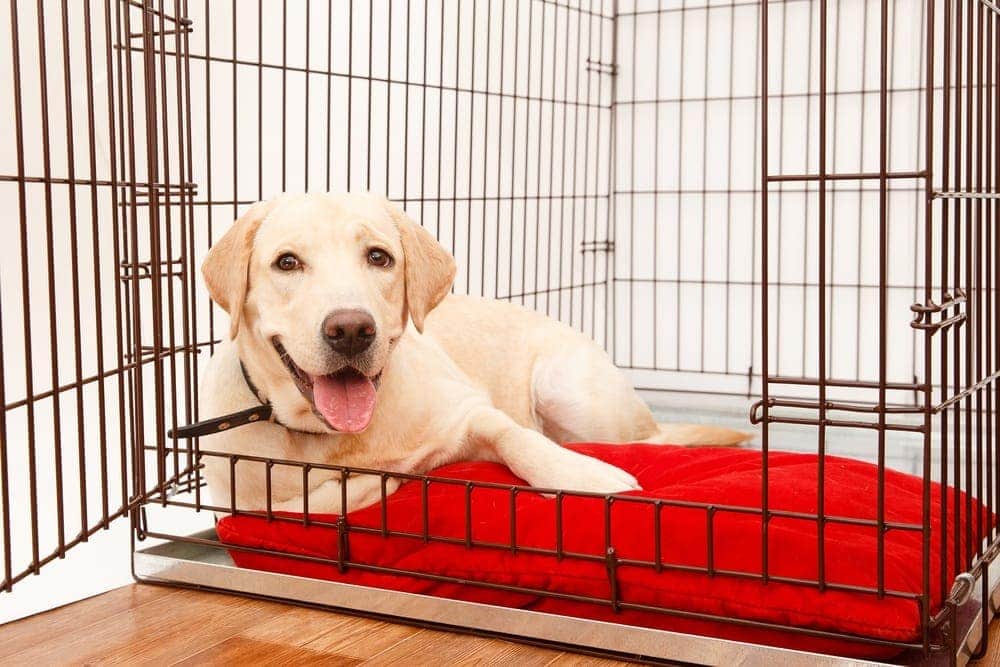
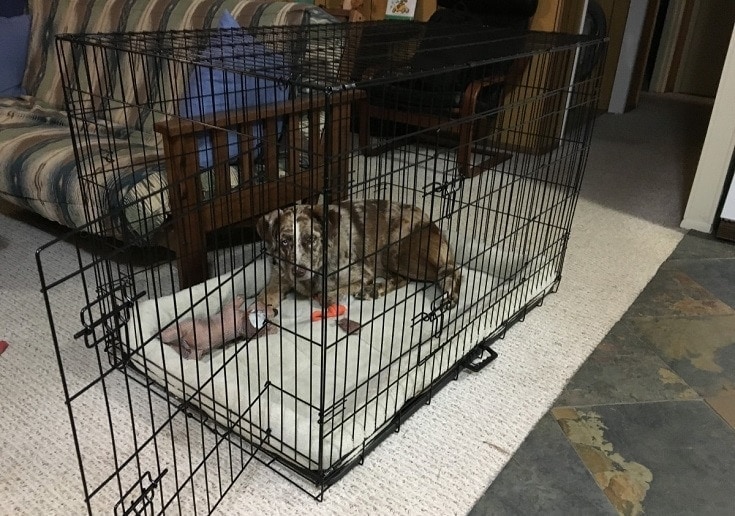
You want a crate that’s big enough your dog can lie down, turn around, and stand in it.
2. Choose a location for the crate.
You want to place your pup's crate in an area of the house that's out of the way but in a spot that's still in a commonly used room, such as the living room. It needs to be a place that’s easy for your pet to access and one that is fairly quiet and restful. Locating an area of your home like this allows your dog to feel comfortable and safe rather than anxious.
3. Get your pup interested in the crate.
But don’t make a big deal about the crate either. Okay, so just how are you supposed to do that? Well, you don’t want to point the crate out; you want to act as if it’s just another piece of furniture. But you do want your dog to begin exploring it, at least from the outside. So, put a few treats inside the crate, then close the door. The treats will certainly grab your dog’s attention, and by not being able to reach them, it will spend more time around the crate than it would if the treats could be easily grabbed. Let the treats stay there for a couple of days before moving on.
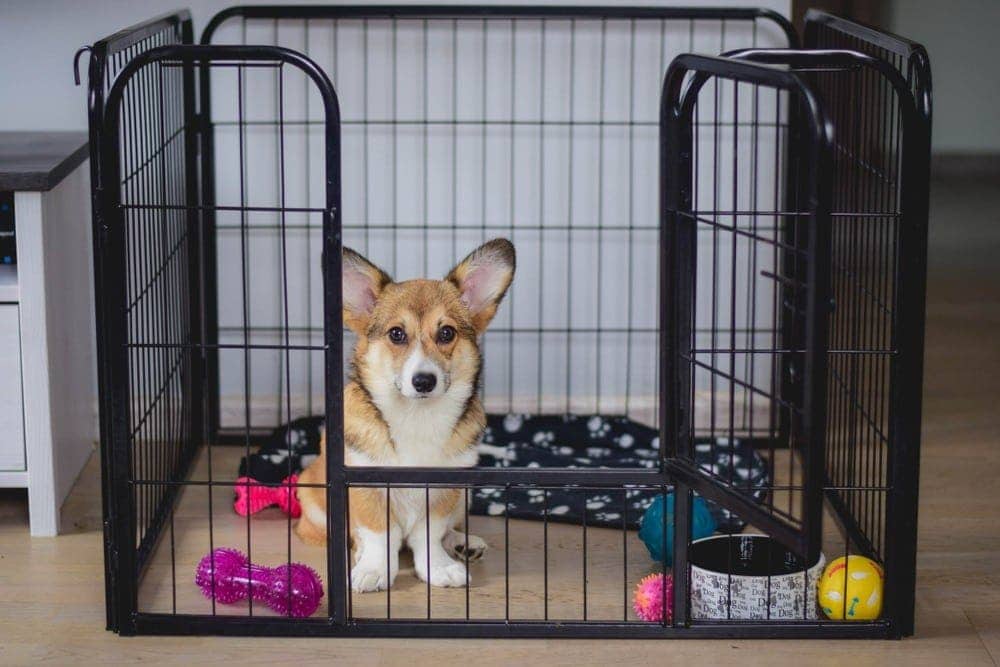
4. Make the crate cozy and comfy!
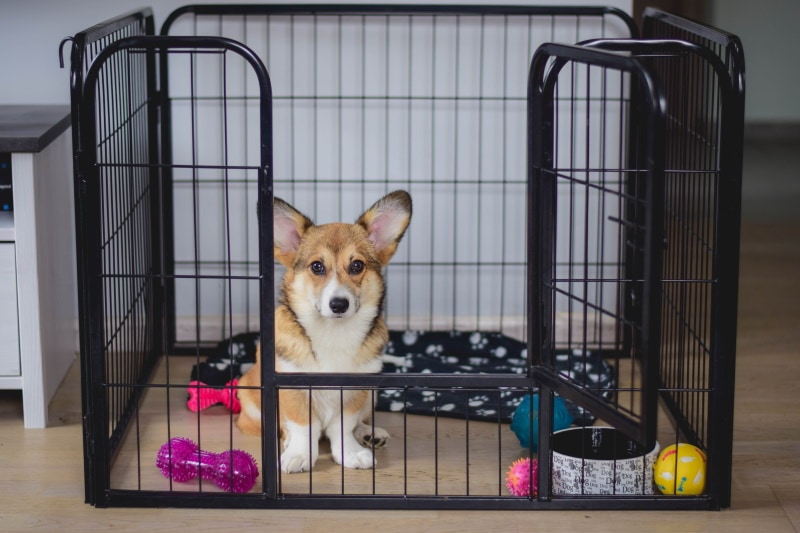
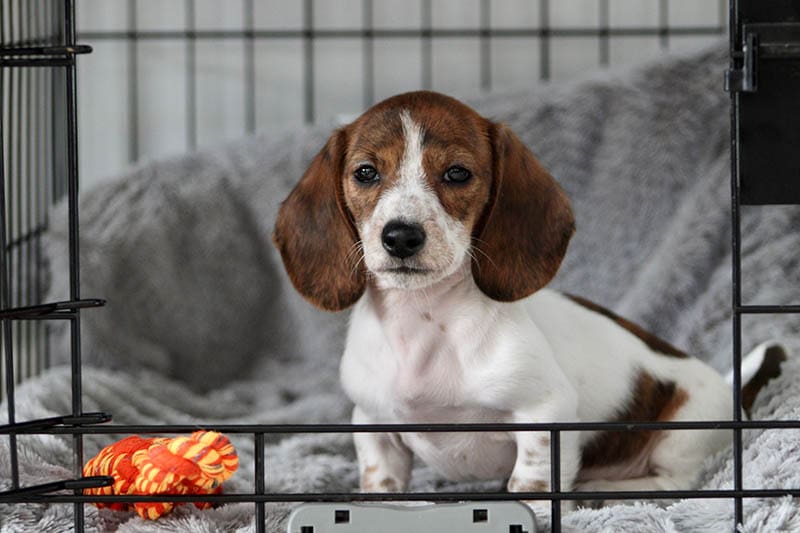
Now that your pet is interested, it’s time to make the inside of the crate something right out of a doggie daydream—aka, you want to make the interior as comfortable and enticing as possible. That means throwing down a cozy dog bed or a pile of soft blankets and putting a few toys inside.
5. Let your dog explore the inside of the crate.
Once the inside is set up to be as comfortable as possible, drop a few more treats in there, but leave the door open. Let your pup go in when it wants to eat the treats (with the door open). When your dog is done, let it explore or leave immediately (whichever it prefers).
Once your dog has exited the crate, close the door and drop more treats in to keep your dog interested. After a few times of alternating treats and an open door with treats and a closed door, your dog should start entering as soon as the door has opened for the treats. The key here is that the dog stays inside the crate to eat the treats rather than grabbing them and running away.
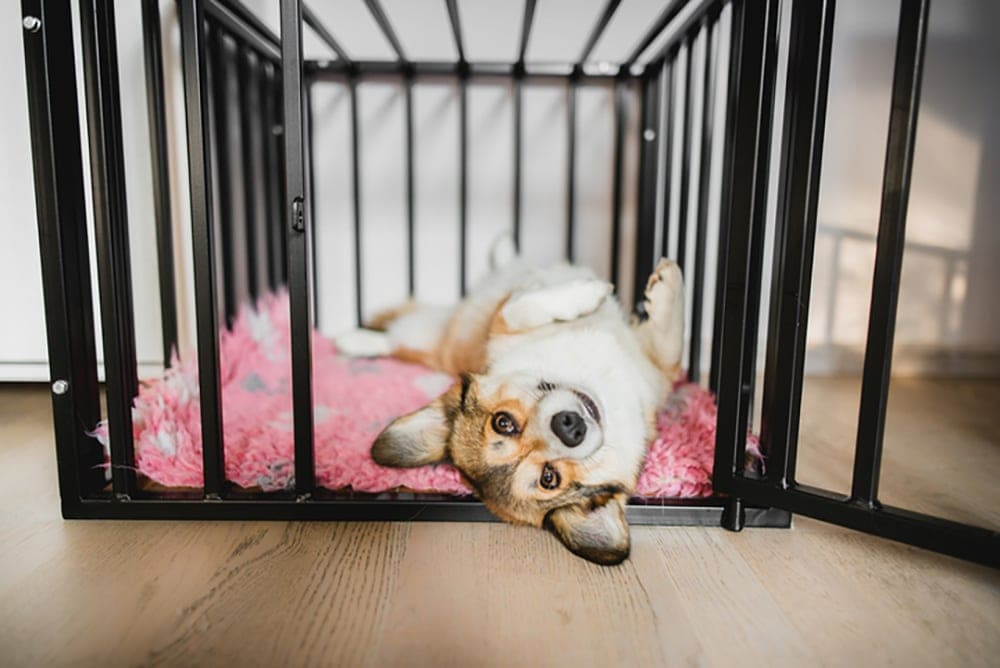
6. Get your pup used to the door moving.
You still don’t want to close the door fully with your pet inside. Instead, when your dog is inside eating the treats, just move the door an inch or two (in either direction). Doing this a few times allows your dog to become used to the door, so it will (hopefully) not panic when the door is finally closed.
7. Practice closing the door.
Once your canine pal has gotten used to the door being moved, it’s time to start closing the door. Drop a treat into the crate—and if you’re going to be using a verbal command, such as “crate”, begin incorporating that now. Once your pet is in, close the door a quarter of the way. If your pup is still calm, toss in another treat, then close the door halfway. Is the dog still okay? Drop in another treat and shut the door the entire way.
If your dog tries to leave the crate at any point during this process, let it! You don’t want to trap your pet where it doesn’t want to be, as this will only cause anxiety and stress.
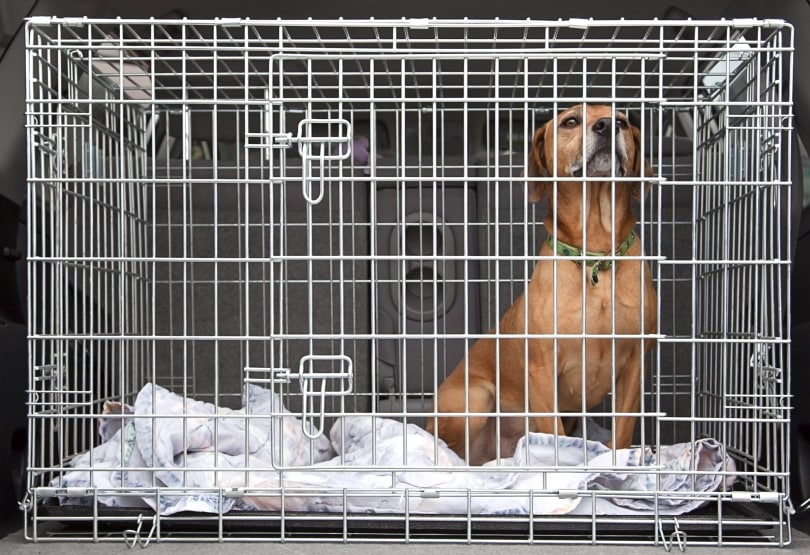
8. Now it’s time to practice locking the door with your dog in the crate.
You’ll want to do this slowly, as well, by locking the door when your pup is inside for just a minute and dropping a treat in. After the minute is up, open the crate door. If your dog wants to leave, let it. If not, close and lock the door again for a minute and add another treat. Repeat this until your pet stays inside the crate, even with the door open.
9. The next step is not being in sight of the crate.
This entire time, you’ve been in your dog’s line of sight when it’s in the crate, so now it’s time to get your pup used to you not being there. Once your pet is okay with being locked in for short periods, put a toy or bone inside (and maybe an extra treat or two), then step out of the room. Don’t leave for long; only 30 seconds or so. Once the 30 seconds are up, return and toss your pet another treat. This process will be repeated until your dog is fine with you not being there for longer periods.
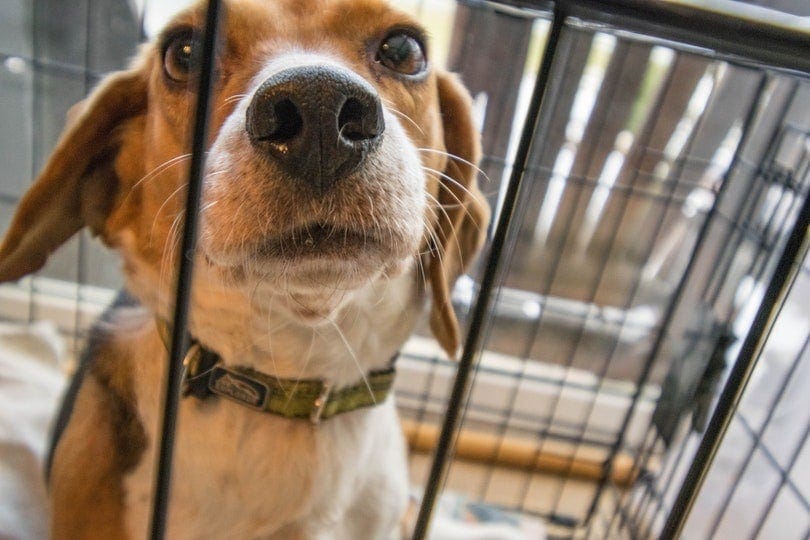
10. Leave the dog alone for a short time.
Once your pet is fine in its crate with you out of the room for at least a half hour, leaving the house for short errands should be alright. You’ll still need to keep working to increase the amount of time your dog is fine in its crate, but at this point, the battle is pretty much won!

Crate Training Tips
If you’ve been following this step-by-step guide, but are still having trouble crate training your dog, try these tips.
- If your pup is barking and whining constantly while in its crate, get its attention and say “No” firmly. Repeat as needed until your dog stops being noisy.
- If your pet is chewing at the crate bars, try the “No” command, but you might have to go with a spray. A bitter spray can be sprayed on the bars of the crate and will leave an icky taste in your dog’s mouth if it begins chewing on the crate. This should deter your pet from continuing to chew.
- Remember not to keep your dog in its crate for longer than 4 hours.
- Don’t use a crate as “time-out” for your pet. You want your dog to associate its crate with comfort, so if you use it for punishment, your dog will quickly learn the crate has negative connotations.
- If your dog has severe separation anxiety while in the crate, to the point that it’s panicking, don’t keep your pet in there. Getting this panicked could cause your dog to injure itself, and you don’t want that! And if your pup’s anxiety is this bad, speak with a vet about ways to alleviate it.
Final Thoughts
You can teach an old dog new tricks; you just need a lot of patience (and treats!). Crate training an older dog will take a bit of time, but eventually, your dog should be more than okay staying in its cozy, safe space. Just remember to repeat the steps as many times as needed to get your pet truly comfortable and to never leave your dog inside its crate for more than 4 hours.
Related reads:
Featured Image Credit: Amber Sallot, shuttersetock
Get Hepper In Your Inbox


Pet care tips from our vets and experts, straight to your inbox.
You may opt-out at any time. View our Privacy Policy for more information.
Misty Layne lives out in the woods in small-town Alabama with her two Siamese—Serafina and Jasper. She also has an array of stray cats, raccoons, and possums who like to call her front porch home. When she’s not writing about animals, you’ll find her writing poetry, stories, and film reviews (the animals are, by far, her favorite writing topic, though!). In her free time, Misty enjoys chilling with her cats, playing piano, watching indie and foreign films, photographing abandoned places, and catching up on her never-ending TBR list.
Join the conversation
Ask a question, share your story, or send private feedback.