Hepper blog

Search our database of over 9,984 posts with up-to-date information from our experts and veterinarians.

Hepper is reader-supported. When you buy via links on our site, we may earn an affiliate commission at no cost to you. Learn more.

What Is Cat Regurgitation? Vet-Approved Tips & Differences From Vomiting

By Lorre Luther · Reviewed & fact-checked by Dr. Luqman JavedVet Approved
Dr. Luqman Javed
Reviewed & Fact-Checked byDr. Luqman JavedDVM (Veterinarian)
Dr. Luqman grew up with an extreme fondness for animals and turned a childhood dream into reality by becoming a veterinarian. His goals are now focused on helping pet owners understand their pets better in order to ensure the best quality of life for all pets globally. He is passionate about wildlife, exotic pets, pet owner education, and animal welfare. Luqman has 3 years of professional experience working with a variety of animal species. He has skills in demonstrating proper animal husbandry and training some exotic species, such as parrots. Additionally, he has decades of personal experience with keeping many exotic pets: freshwater fish, parrots, songbirds, chickens, ducks, turtles, and hamsters.View authorThe information is current and up-to-date in accordance with the latest veterinarian research. Read about our vets
Share
Ask us a question in the comments
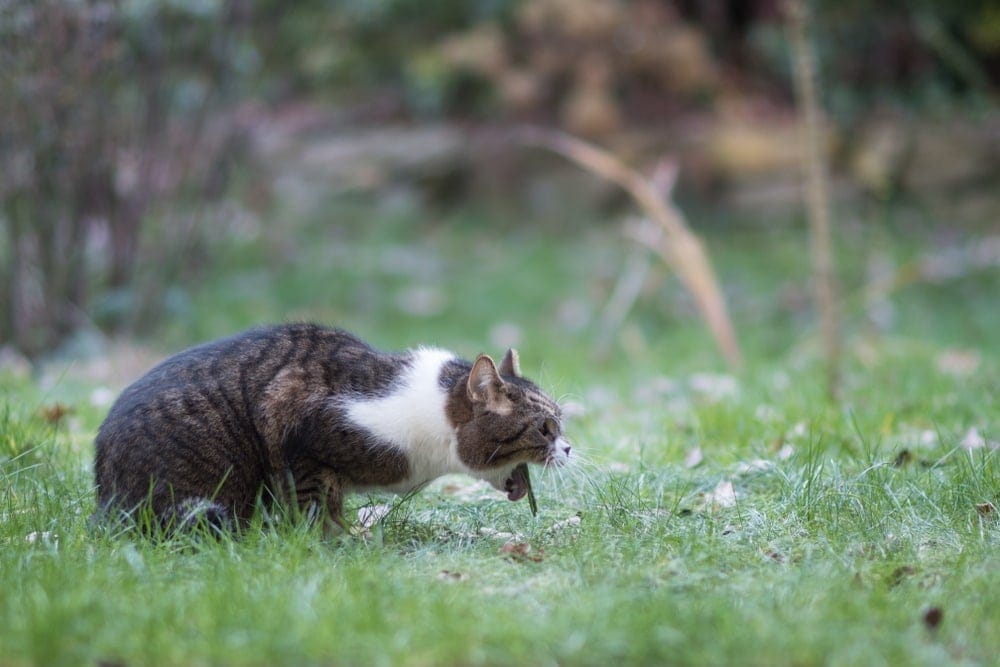
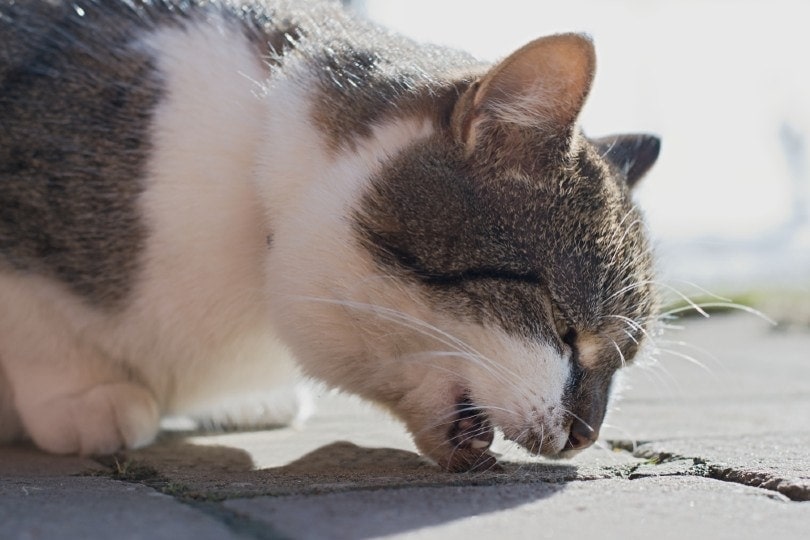
cat vomitting_Shutterstock_Nils Jacobi

While we’d all like our cats to be happy and healthy day in and out, our pets occasionally feel less than wonderful. Cats sometimes have off days, which are often accompanied by tummy problems, and it can be quite worrying when a beloved cat starts having trouble keeping their food down. Before determining how to help your cat, it’s essential to understand the difference between regurgitation and vomiting.

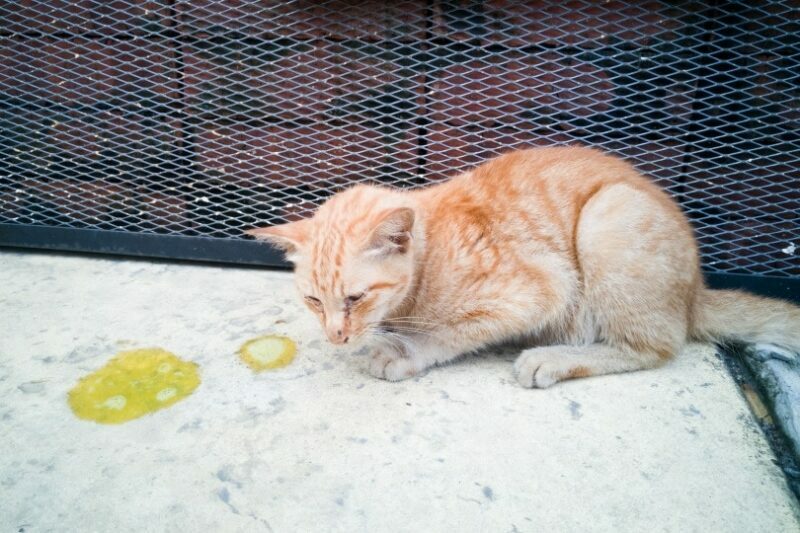
Both result in cats bringing up food after eating, but the two processes differ. Regurgitation involves the esophagus and occurs when cats expel food before it has reached the stomach. Regurgitated food often comes out in a tubular shape and is accompanied by saliva. Cats vomit food that’s in the stomach, and the vomit often includes digestive fluids.

How Can I Tell if My Cat Is Vomiting or Regurgitating?

Distinguishing between regurgitation and vomiting can be tricky. However, there are several key differences between the two processes.

RegurgitationVomiting
A passive process, there are no contractions of the abdomen during regurgitationAn active process, involves abdominal contractions and retching. Is painful for your cat
Almost always happens immediately or very shortly after a mealMay be associated with meals but may also happen at times not associated with meals
Looks and smells very similar to what your cat recently ateUsually appears and smells slightly or very differently to what your cat ate, may also be mixed with digestive liquids (such as bile)
Usually indicates issues with your cat's esophagusIndicates issues with parts of your cat's digestive system beyond their esophagus
Not very uncommon, normal in some circumstancesUncommon, never considered normal
Some breeds may have a higher predisposition to regurgitationThere is no breed association with vomiting

When Should I Contact a Veterinarian?

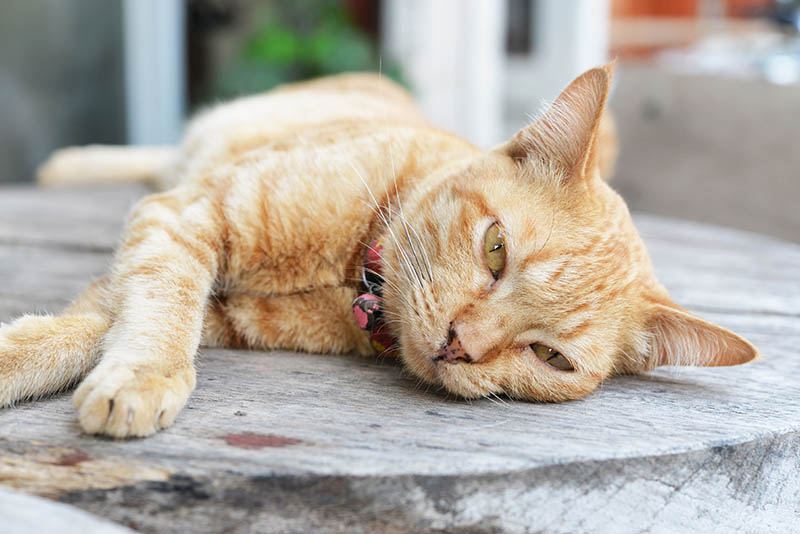
If your cat is healthy and only regurgitates once a month or less, possibly after eating too quickly or while passing a hairball, there’s likely nothing to be worried about. Contact your veterinarian if your kitty starts regurgitating more frequently or shows signs of illness, such as fatigue, weight loss, lethargy, or hiding. Contact your vet for guidance immediately if you suspect your cat has consumed something problematic.

And don’t be afraid to ask for help if you can’t tell the difference between vomiting and regurgitation. Consider taking a picture of what your cat produces to show your veterinarian. A video is even better for diagnostic purposes if you remember to grab your phone in time.

Remember to write down how often your cat appears to be having problems and when the issue started. Note what your cat eats and how long they usually start having problems after meals. Let your veterinarian know about any behavioral changes you observe as well.
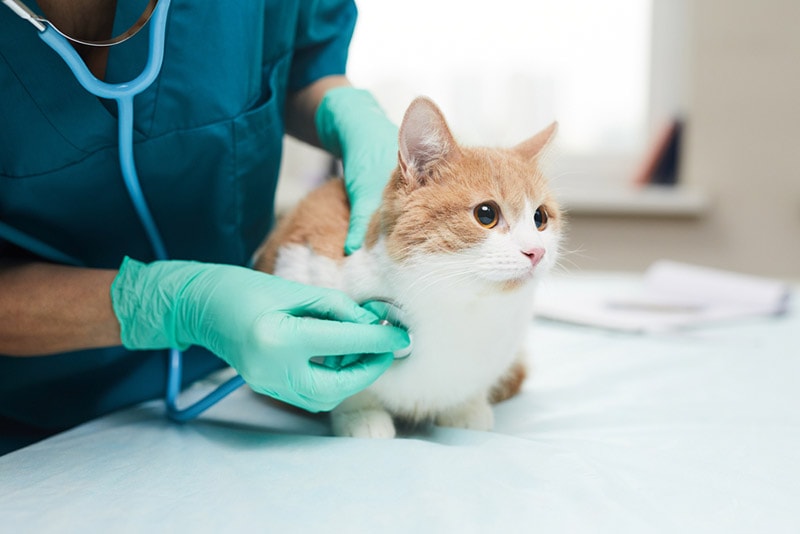
female vet examining the cat with stethoscope
Image By: AnnaStills, Shutterstock

What Causes Feline Regurgitation?

Feline regurgitation has several causes. In most instances, consistent or multiple incidences of regurgitation in a month are not considered normal. In such instances, the cause for regurgitation is an abnormality or condition affecting your cat's esophagus. In other instances, regurgitation is often a stand-alone episode, often associated with your cat's eating habits.

There are many conditions and ailments that can lead to regurgitation. These are some of the potential causes for your cat's regurgitation habits.:

Common Causes for Regurgitation

  • Megaesophagus: This is the most common reason for regurgitation and is defined as a very large esophagus. This isn't a disease itself but rather a condition that can be caused by other conditions or diseases. Siamese cats have a genetic predisposition to this condition.
  • Esophagitis: This is an inflammation of the esophagus. At times, it may be caused by a history of certain medication use.
  • Myasthenia Gravis: When cats are afflicted with this disease, their immune system attacks certain parts of their body that don't allow nerve impulses to properly control muscle action. This can lead to a weak esophagus.
  • Congenital Defects: Certain cats are born with ailments that affect the esophagus. The most common of these ailments is Persistent Right Aortic Arch.
  • Foreign Bodies: Cats that eat a foreign object sometimes regurgitate in attempts to remove items that have become stuck. If you see your cat eat a button, bit of bone, or piece of yarn, consider it a medical emergency and contact your veterinarian immediately. Reach out for help if your cat is vomiting or regurgitating and you suspect they may have gotten into something problematic. Foreign objects that don’t pass through your cat’s body can develop into life-threatening obstructions.
  • Tumors: Both benign (harmless) and malignant (often termed as cancerous) tumors that affect the esophagus can lead to your cat regurgitating.
  • Quick Eaters: Eating too fast can cause cats of any age to regurgitate. Lick mats and food puzzles are great ways to slow fast eaters. They also provide a bit of fun and mental engagement, which are incredibly important for a cat’s well-being. Feeding cats wet food instead of kibble helps some pets as well. Pets in multi-cat homes sometimes eat too quickly when anxious or stressed regarding food access. Feeding pets separately can reduce resource competition and decrease the need for speedy eating.

Final Thoughts

Feline regurgitation is a relatively common occurrence. It’s usually nothing to be concerned about if it only happens occasionally. But contact your veterinarian right away if the problem starts occurring more frequently or your pet begins to show other signs of illness, such as lethargy, weight loss, or lack of appetite.

Call your veterinarian immediately if you suspect your cat has eaten a button, rubber band, or anything else that could cause an obstruction. Feline regurgitation can also be related to inflammatory and endocrine conditions, making the proper diagnosis an absolute must to ensure cats are treated appropriately.

Sources

Featured Image Credit: Nils Jacobi, Shutterstock

Get Hepper In Your Inbox

Pet care tips from our vets and experts, straight to your inbox.

List

Select all that apply.

You may opt-out at any time. View our Privacy Policy for more information.

Lorre Luther
Authored by

Lorre Luther

Join the conversation

Ask a question, share your story, or send private feedback.
Rate this post
Required to post. Only our editors see your rating.
Who should see this?

A human reviews every comment before it appears. Your email is never published.

Picked to go with this article

Why Is My Cat Throwing Up Undigested Food? 7 Vet-Reviewed Reasons

Why Is My Cat Throwing Up Undigested Food? 7 Vet-Reviewed Reasons

Finding piles of thrown-up, undigested cat food can be unsettling for any cat owner. It's not unusual to wonder why your cat is suddenly throwing up undigested…

Nicole Cosgrove
By Nicole Cosgrove ·
Indigestion & Acid Reflux in Cats: Signs, Causes, & Treatment (Vet Answer)

Indigestion & Acid Reflux in Cats: Signs, Causes, & Treatment (Vet Answer)

Indigestion and acid reflux are fairly common problems encountered by cats. They can occur at any age, however, it's usually younger cats that are affected. Th…

Dr. Emma Chandley
By Dr. Emma Chandley ·
What Is Dog Regurgitation? Vet Reviewed Differences From Vomiting

What Is Dog Regurgitation? Vet Reviewed Differences From Vomiting

Walking into a room to find a mess on your floor isn’t a fun thing. As a loving dog parent, you instantly worry about your companion. It’s also normal to insta…

Melissa Gunter
By Melissa Gunter ·
My Cat Just Threw Up, What Do I Do? 5 Vet-Approved Steps

My Cat Just Threw Up, What Do I Do? 5 Vet-Approved Steps

We care for our cats like we would for our own kids. When we discover that they're feeling sick, we might feel the urge to immediately panic or rush them to th…

Brooke Bundy
By Brooke Bundy ·

Keep reading

More stories you might like

Why Does My Cat Throw Up After Eating? 6 Vet Reviewed Reasons & Solutions

If your cat has been throwing up after eating, there is a good chance that you are concerned. It can be alarming to see your pet vomit after eating, and it can…

Sophie Herlihy
By Sophie Herlihy ·
Why Does My Cat Throw Up After Eating? 6 Vet Reviewed Reasons & Solutions

How to Clean up Cat Vomit: Vet-Approved Step-by-Step Guide

Before explaining how to clean vomit up, we would feel guilty if we did not suggest the idea of contacting your veterinarian. If your cat is vomiting, no matte…

Nicole Cosgrove
By Nicole Cosgrove ·
How to Clean up Cat Vomit: Vet-Approved Step-by-Step Guide

My Cat Has Never Had a Hairball, Should I Worry? Vet-Reviewed Safety Guide & Advice

If you’ve spent enough time surfing the web, you probably know that cats tend to get hairballs. If your cat has never had a hairball, it’s actually a great sig…

Lorre Luther
By Lorre Luther ·
My Cat Has Never Had a Hairball, Should I Worry? Vet-Reviewed Safety Guide & Advice

How Long Will It Take a Cat to Digest Food? Vet-Approved Facts

Is your kitty rushing off to the litter box minutes after they’ve eaten? Or are they throwing up the kibble right after mealtime? If so, you might be concerned…

Chantelle Fowler
By Chantelle Fowler ·
How Long Will It Take a Cat to Digest Food? Vet-Approved Facts

Can a Cat Choke on Hairballs? Feline Health Facts & FAQs

Hairballs are no fun for cats or their owners. Why do kitties always cough up hairballs on carpeting or your bed but never on easier-to-clean tiled flooring? W…

Cassandra Kyser
By Cassandra Kyser ·
Can a Cat Choke on Hairballs? Feline Health Facts & FAQs

Why Do Cats Eat Their Own Vomit? 5 Vet-Reviewed Possible Reasons

We've all had that moment of panic when we're lying in bed in the morning and start to hear our cats retching somewhere in the house. What's even worse is when…

Nicole Cosgrove
By Nicole Cosgrove ·
Why Do Cats Eat Their Own Vomit? 5 Vet-Reviewed Possible Reasons

How to Save Cats From Choking - The Heimlich Maneuver on Cats

When you own a cat, you’ll likely encounter events that require knowledge of first aid for felines. One possible event is the risk of your cat choking while th…

Nicole Cosgrove
By Nicole Cosgrove ·
How to Save Cats From Choking - The Heimlich Maneuver on Cats

Why Did My Cat Throw Up White Foam? 6 Vet-Reviewed Causes

Owning a cat means dealing with the good times and the bad times, and those bad times can often involve bodily fluids. Cats get ill, just like we do, which can…

Kerry-Ann Kerr
By Kerry-Ann Kerr ·
Why Did My Cat Throw Up White Foam? 6 Vet-Reviewed Causes