Hepper is reader-supported. When you buy via links on our site, we may earn an affiliate commission at no cost to you. Learn more.
What Is Crude Fiber in Dog Food? Vet-Approved Nutritional Facts & FAQ


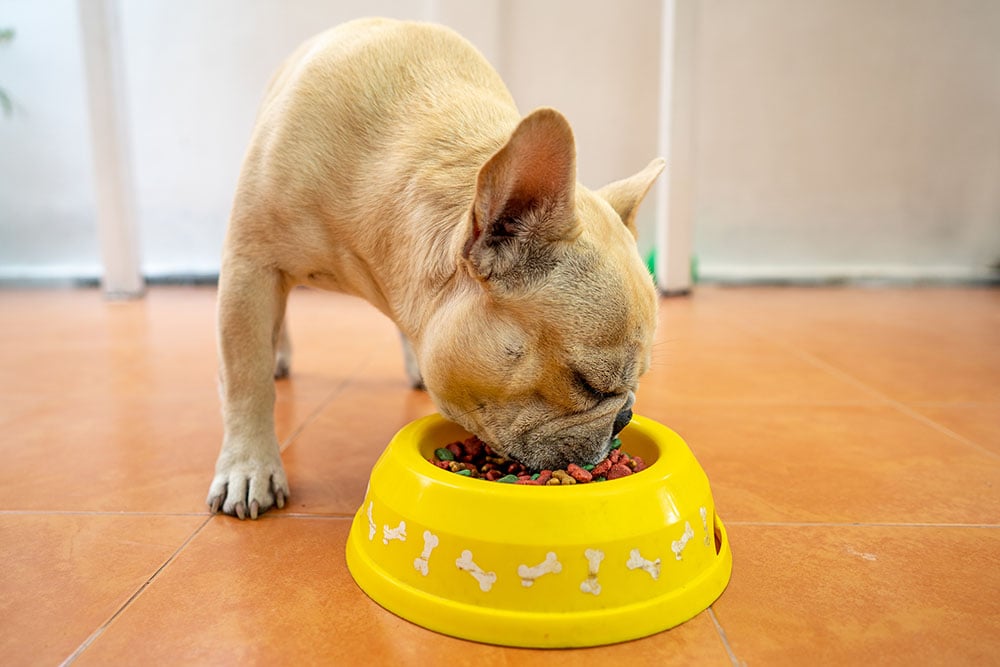
For the majority of us, dog food nutritional labels are one of life’s great mysteries. We all know what protein, fat, and fiber are, and we know that fiber can be beneficial for our dogs, but why has the word “crude” been attached to the start of these words? In short, crude fiber refers to the amount of insoluble fiber in dog food as determined by laboratory tests.
If you’d like to learn more about what crude fiber is, how it is determined, and why dogs need fiber in their diets, read on to find out more. Let’s kick off with what fiber is and why it is good for dogs, and then we’ll get into how scientists test for crude fiber and how it differs from dietary fiber.

What Is Fiber and Is It Good for Dogs?
Fiber is a carbohydrate derived from plant material that passes through the digestive system without being digested. There are two types of fiber—soluble and insoluble. Soluble fiber dissolves in water, whereas insoluble fiber does not. Soluble fiber ferments, whereas insoluble fiber absorbs water. Both are beneficial, but too much of either type can cause adverse effects.
For dogs, fiber can help keep the digestive system in good order because it helps to form healthy stools and eliminate excess water in the digestive tract. This is why it is often called “roughage”.
Additionally, some dietary fibers (soluble) ferment in the digestive tract, where they turn into fatty acids and this helps balance gut bacteria.
Fiber also helps with weight control because it leaves dogs feeling full without eating a ton of calories. It can also benefit dogs with diabetes mellitus as it helps keep blood sugar stable. For this reason, vets sometimes prescribe high-fiber diets to dogs suffering from diabetes, but not in every case as not every diabetic dog is suited to this kind of diet.
What Is Crude Fiber?
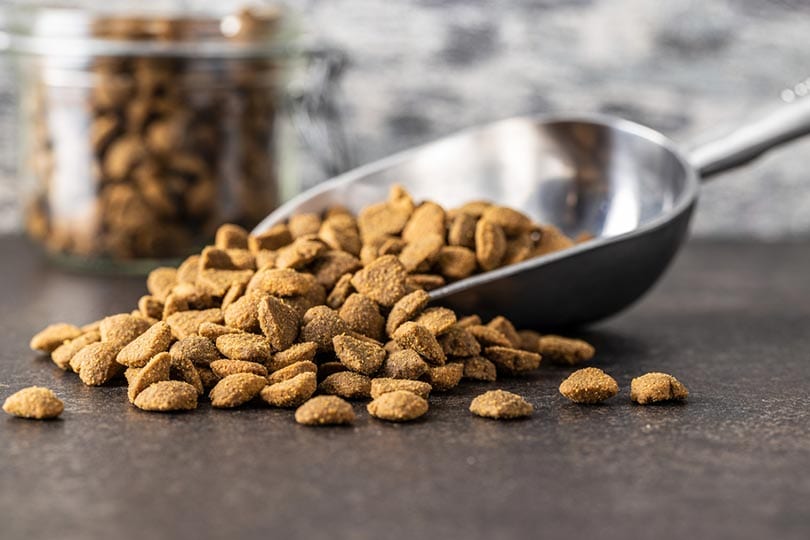
Crude fiber is the insoluble part found in plant cell walls and is mostly made up of cellulose. It is different from dietary fiber in that it cannot ferment in the small intestine, whereas some types of dietary fiber can. Dietary fiber is the total of insoluble and soluble fiber added together. Crude fiber is the residue left over from laboratory tests on dog food to determine how much fiber a product contains.
Crude Fiber: The Testing Process
If you’re interested in the science behind how dog food is tested for fiber, the below steps explain the process in brief. It’s called the Weende method, and the acid and alkaline act as digesters.
- The dog food sample is immersed in sulfuric acid.
- After the acid has been removed, the leftovers are washed and boiled in an alkaline solution.
- The leftovers are washed, dried, and weighed.
- The leftovers are placed in an oven at 525 degrees for 3 hours.
- The ashes are then weighed.
- To get the crude fiber content, the weight of the ashes that come out of the oven is subtracted from the weight of the remains that were previously dried.
Final Thoughts
So, in brief, crude fiber is the material that degrades during the final part of the testing process due to burning. Testing for crude fiber is a standard process that gives us a measure of how much fiber the product contains.
Fiber can be beneficial for dogs as it helps control diabetes, keeps weight down, and contributes to a healthy digestive tract. If you’re wondering whether your dog is getting enough fiber or think a high-fiber diet might be beneficial for them, please speak to your vet for an expert opinion.
Sources
https://www.livestrong.com/article/480986-differences-of-crude-and-dietary-fiber/
https://www.differencebetween.com/difference-between-dietary-fiber-and-vs-crude-fiber/
https://www.hillspet.com/dog-care/nutrition-feeding/benefits-of-fiber-for-dogs
https://www.hsph.harvard.edu/nutritionsource/carbohydrates/fiber/
https://www.velp.com/public/file/crude-fiber-determination-in-dog-food-201431.pdf
Featured Image Credit: Tienuskin, Shutterstock
Get Hepper In Your Inbox


Pet care tips from our vets and experts, straight to your inbox.
You may opt-out at any time. View our Privacy Policy for more information.
Kit Copson is a freelance writer and lifelong animal lover with a strong interest in animal care. She has parented various furry beings over the years and is currently a proud cat mom of two—one skittish but adorable Domestic Shorthair and very chilled (unless hungry) Siamese and a —and dog mom of one—an adopted Bichon Poodle cross. When not writing about or spending time with pets, Kit can be found doodling in her sketchpad, reading, or more often than not, drinking tea.
Join the conversation
Ask a question, share your story, or send private feedback.