Hepper is reader-supported. When you buy via links on our site, we may earn an affiliate commission at no cost to you. Learn more.
Why Do Cats Chase Their Tails? Behavioral Reasons & Advice (Vet Answer)

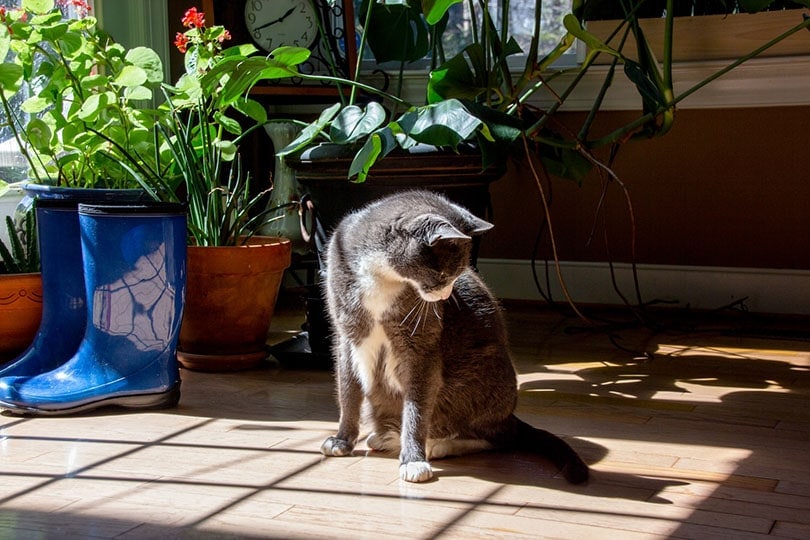
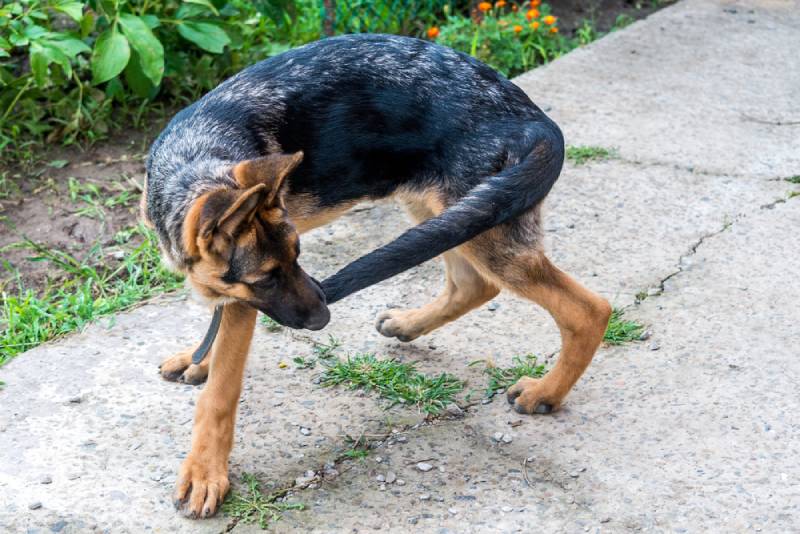
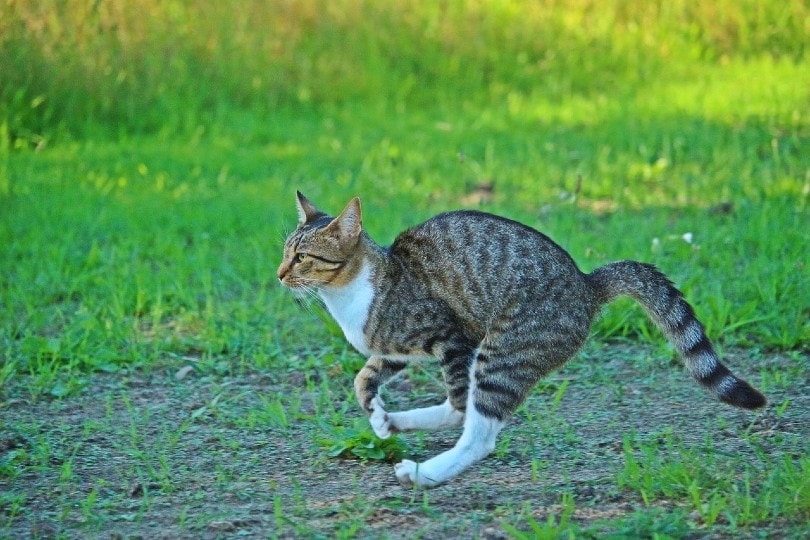
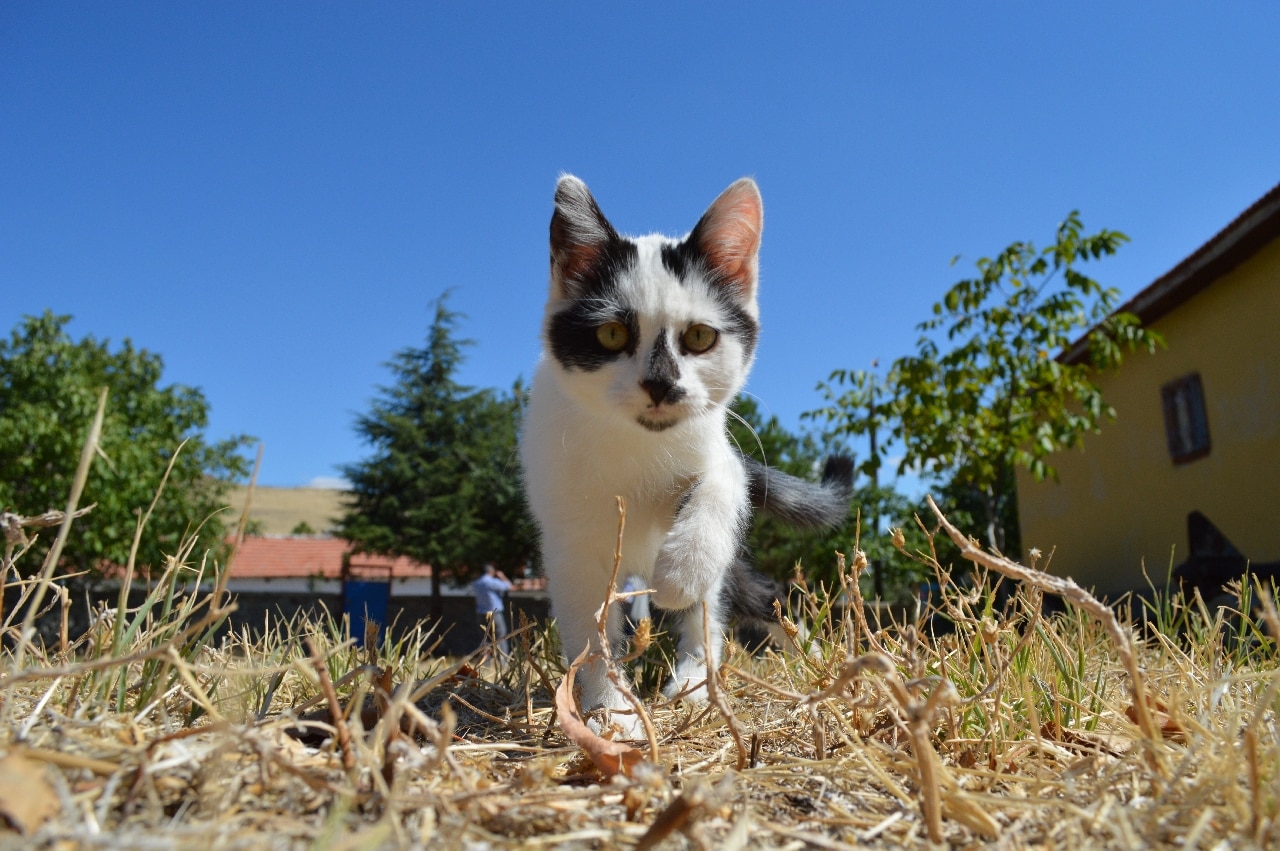
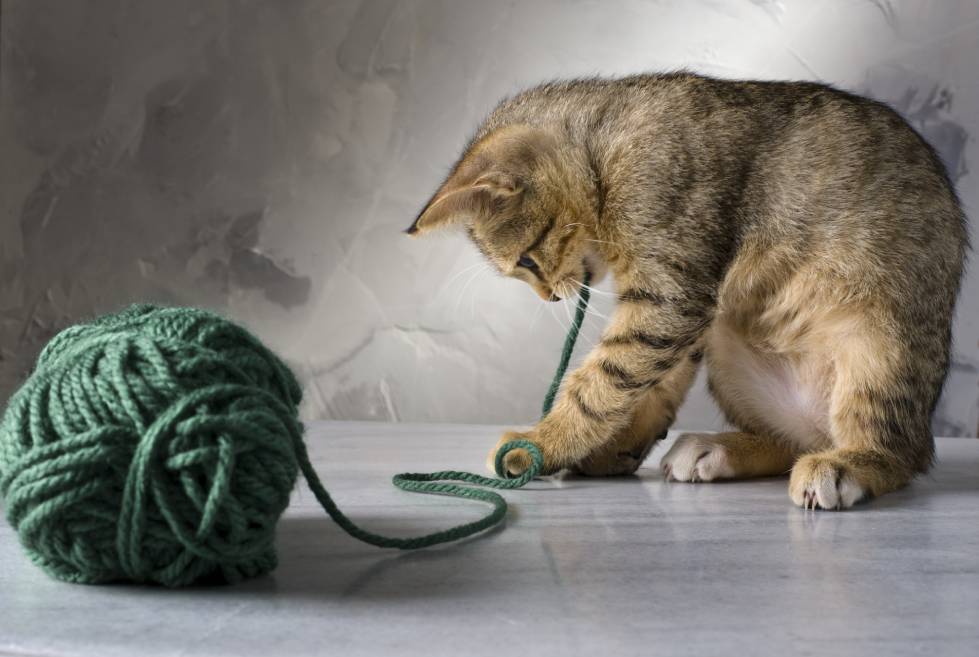
We would have to admit that watching a cat chasing their tail looks funny. In the case of kittens chasing the tail, this is considered a normal behavior; it seems to be a playful behavior that helps kittens practice and develop their hunting skills. The occasional chasing of the tail on an adult cat is usually considered harmless. However, if you notice your cat is chasing their tail regularly, this can be an indication of a medical issue.

What Causes a Cat to Chase Their Tails?
There are two possibilities or causes:
What Kind of Behavioral Issues Causes a Cat to Chase Their Tail?
Anxiety and Stress
Anxiety in cats is a recognized cause of a large number of behavioral and medical issues. If you notice that your cat has recently started to chase their tail frequently, try to identify if there is any potential cause of anxiety. Cats are creatures of habits, and sometimes the smallest changes in their habitual environments or routines can cause them to suffer from anxiety.
If there is any change in the physical or social environment, this might be the cause of the problem. The social environment of a cat includes yourself, the other humans in the house including regular visitors, other cats in the house, and other pets in the house. Changes in the size, age, and reproductive status of different cats in the same household can affect the social structure between them.
Boredom
Cats like any other living creature need mental and physical stimulation. Many behavioral problems have their origin in plain boredom. Even extreme, aberrant, self-mutilating behaviors sometimes can be traced back to plain boredom.

Tips to Keep Your Cat From Getting Bored
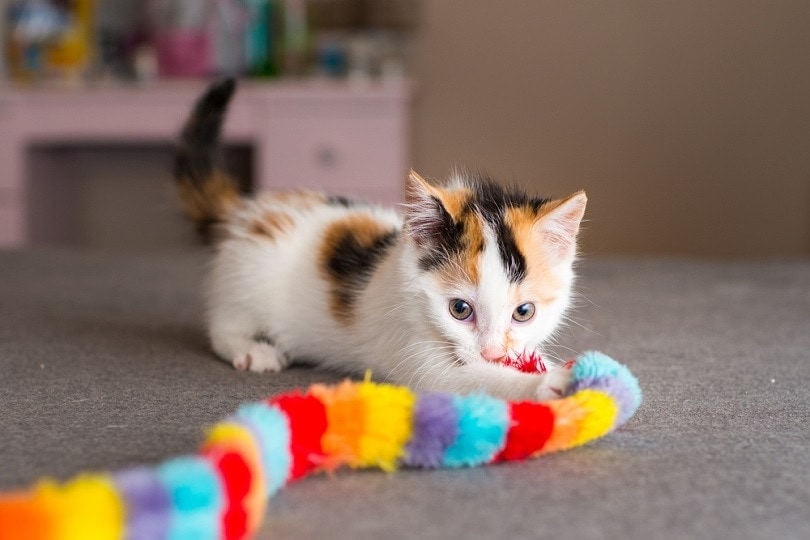
Engaging in playtime and providing variety and enrichment to the cat’s environment should be part of the regular daily care for your cat. A very useful tip is to have a regular rotation to the access of the toys that your cat enjoys. This will keep the toys interesting to your furry friend whenever available.
It is also very important to provide your cat with an environment that allows fun and stimulation of their senses. A cat scratcher like Hepper’s could have the double function of saving your furniture from the paws of a bored cat while allowing them to have some physical and mental stimulation. A variety of food treats that are hidden in unexpected places go a long way as well, just make sure to clean any leftovers on a daily basis.
A Warning Note:
What Else Can I Do to Stop My Cat From Chasing Their Tail?
If you notice your cat has started to present this aberrant behavior regularly, it is always recommended to take your cat for a veterinary check. In this way, you can rule out the possibility of any medical condition causing this aberrant behavior. Record as much information as possible about the case and share it with your veterinarian.
Questions to Prepare for the Vet
The following are some guiding questions you can prepare to help your veterinarian have a complete history of the case:
- When did you first notice your cat starting to chase their tail?
- How often does the cat engage in this behavior (frequency and duration)?
- Did you notice any change in the physical or social environment of the cat?
- Has there been any change in your routines? For example, a new job changes the normal times you are around home.
- Do you have other cats in the same household? And if yes please specify gender and relative information.
- What kind of food does your cat eat?
- When was the last time your cat was dewormed?
- Has the cat suffered from fleas or other external parasite infestations before?
- Have you noticed any change in the frequency of your cat's feces or the cat showing signs of pain while defecating?
- Has the cat experienced any trauma or injuries to their tail or back end?
What Can You Expect at the Veterinary Consultation?
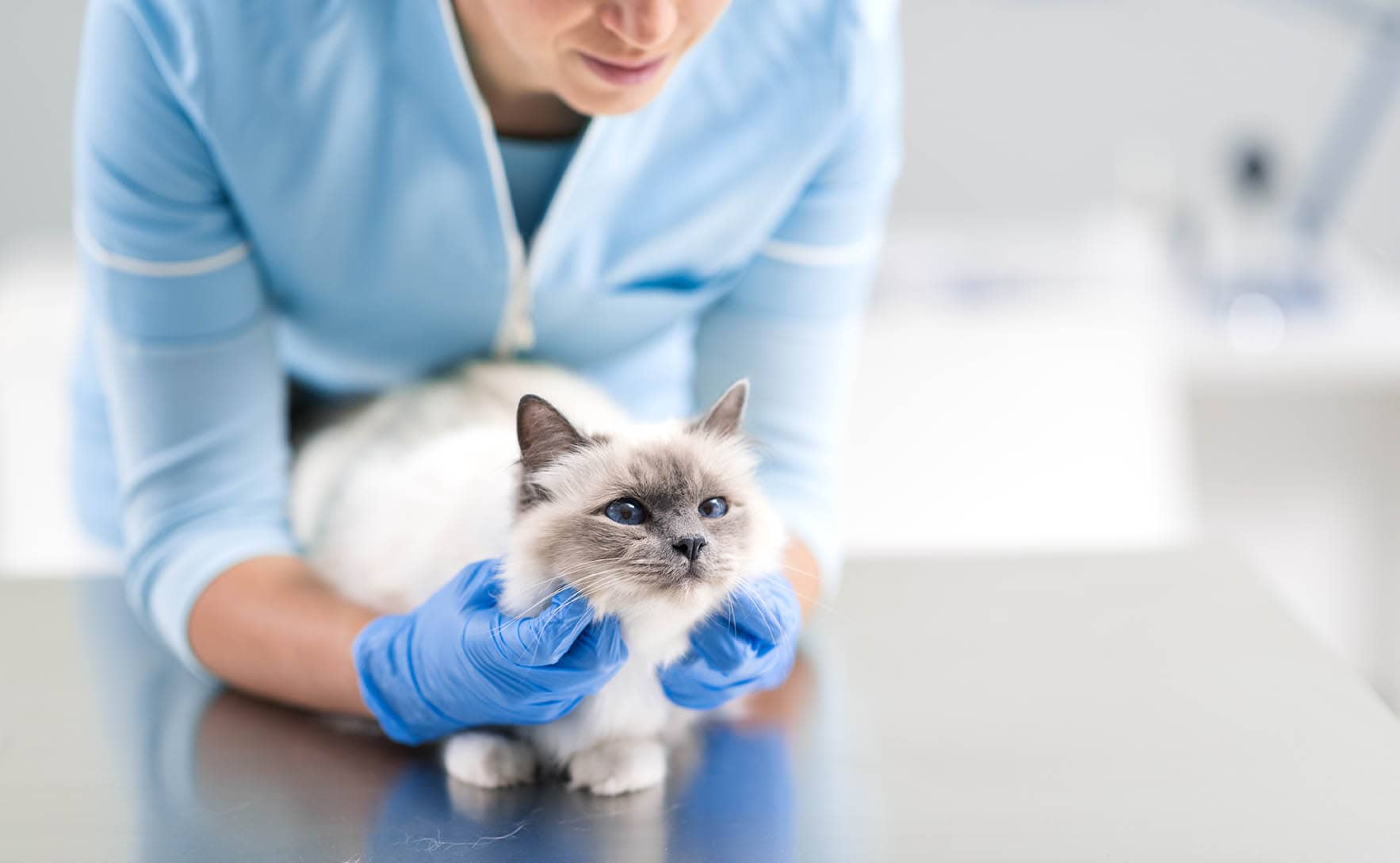
After looking at their medical history, the veterinarian will proceed to do a physical examination of your cat, and they will check the tail, back, skin, and perianal area. The veterinarian might suggest a blood sample, a skin scrape, and possibly also a fecal sample of the cat. With this information, the veterinarian should be able to know if the condition is caused by a medical issue or if it is behavioral.
What Kind of Medical Conditions Causes a Cat to Chase Their Tail?
Several medical conditions can cause your cat to chase their tail:
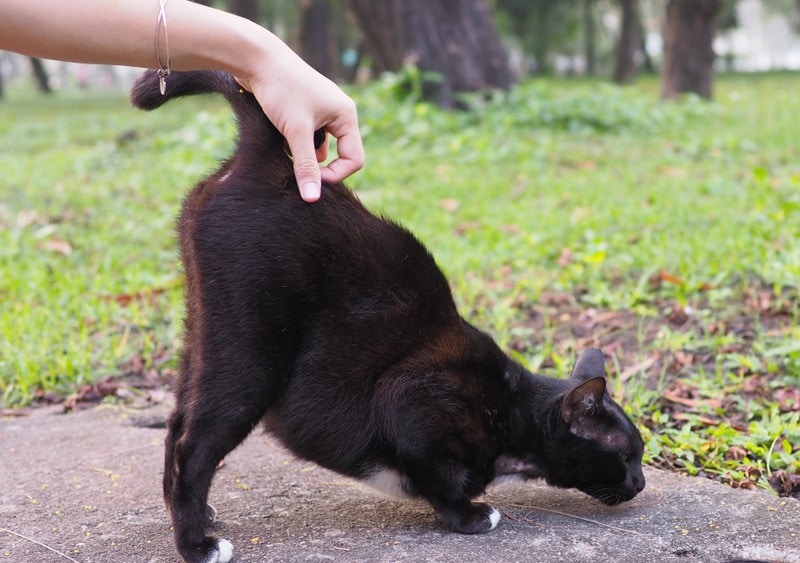
Hyperesthesia. An area of skin of the cat usually right before the tail but sometimes in the back becomes extremely sensitive. The cat might react aggressively when this area is touched and will present neurological signs, such as dilated pupils and drooling. Hyperesthesia is more common in Siamese cats, and some veterinary neurologists believe it could be representative of a seizure-like problem.
Final Verdict & Possible Vet Prescribed Treatments
The veterinarian's prescription will be depending on the results of their observations and the diagnostic tests. Your cat might be prescribed oral medications such as pain management medication, anti-inflammatories, dewormers, antihistaminic, or corticosteroids. It is also possible that they recommend starting your cat on a monthly spot-on anti-flea treatments. If the problem is the infection or impaction of the anal glands, your cat might require the manual emptying of the anal glands’ contents. Always follow your veterinarian’s recommendations with regards to medical treatments and please never try to medicate your cat without professional advice.
Have your own question?
Submit your own question about proper cat nutrition, behavior, or training and a veterinarian will give you an answer during the next 24 hours.
Featured Image Credit: Salomé Guruli, Unsplash
Get Hepper In Your Inbox


Pet care tips from our vets and experts, straight to your inbox.
You may opt-out at any time. View our Privacy Policy for more information.
Paola Cuevas is a veterinarian and animal behaviorist, with over 18 years of experience working with a variety of species. Her passion is animal welfare and focuses on the importance of preventive medicine. Paola has skills in the fields of nutrition, microscopy, clinical pathology, diagnostic imaging, and endoscopy as well as extensive experience in animal training through positive reinforcement. As our in-house veterinarian, Paola is very happy to share her knowledge and experience with our readers and hopes to be helpful with any issue presented by your non-human family members.
Dr. Paola is our Senior In-House Veterinarian at Hepper, and she loves sharing her knowledge and experience with our readers. Paola hopes to provide helpful information for any issue presented by your fur babies.
Her passion is animal welfare and she focuses on the importance of preventive medicine.
Education
Paola graduated from the University of Guadalajara, Mexico.
Experience
Dr. Cuevas has over 18 years of veterinary and animal behaviorist experience and has worked with a variety of species, from companion animals to exotics. She has skills in the fields of nutrition, microscopy, clinical pathology, diagnostic imaging, and endoscopy as well as extensive experience in positive reinforcement animal training.
Things You Didn't Know About Dr. Paola:
As a student, Paola received an outstanding student scholarship. She had the opportunity to travel to Canada and learn about aquaculture diagnostics and pathology.
Paola and another colleague trained gentoo penguins to recognize shapes and colors and their project achieved an international first-place award in research.
Paola has trained several species of animals to voluntarily accept medical procedures such as ultrasound examinations, X-rays, and the collection of biological samples with the goal of improving their healthcare without additional stressors or the need for physical restrain.
Join the conversation
Ask a question, share your story, or send private feedback.