Hepper blog

Search our database of over 9,984 posts with up-to-date information from our experts and veterinarians.

Hepper is reader-supported. When you buy via links on our site, we may earn an affiliate commission at no cost to you. Learn more.

Why Do Parakeets Puff Up? 6 Vet-Reviewed Reasons

By Kathryn Copeland · Reviewed & fact-checked by Dr. Amanda CharlesVet Approved
Dr. Amanda Charles
Reviewed & Fact-Checked byDr. Amanda CharlesVeterinarian
Dr. Amanda Charles qualified as a vet in 2002 after graduating from the University of Liverpool and has been in small animal practice ever since. She has a postgraduate Certificate in Dermatology. She loves empowering pet parents by giving them up-to-date and accurate information and thrives off the variety that being a vet brings.Outside of work, Amanda has two very active young sons and an equally active Cocker Spaniel and Ragdoll cat, all of whom keep her very busy!View authorThe information is current and up-to-date in accordance with the latest veterinarian research. Read about our vets
Share
Ask us a question in the comments
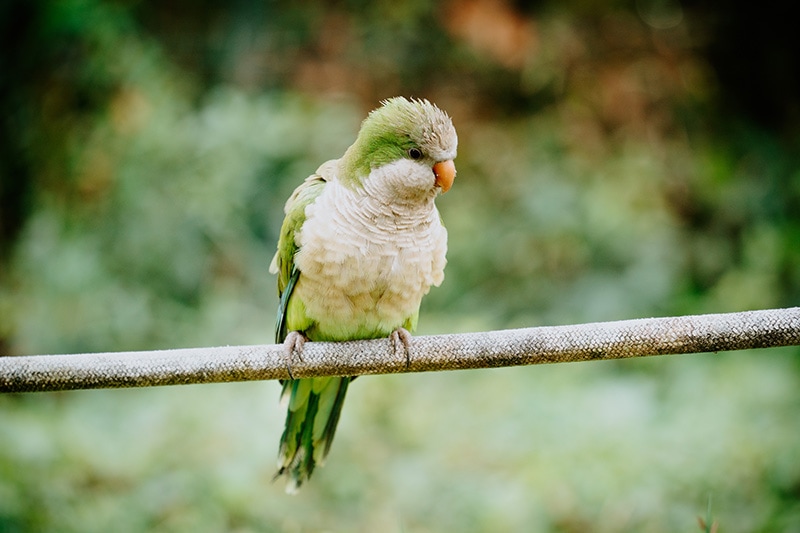
puffed Monk parakeet bird

Owning any pet comes with specific care requirements, which include things like diet, exercise, and general looking after. But a big part of caring for a pet is understanding them—specifically, becoming familiar with their body language.

If you own a parakeet and have noticed them puffing up, you’re likely wondering what this means. Parakeets typically puff up when they are cold, sleepy, excited, scared, or preening. With other signs present, though, it can indicate that the parakeet has a health problem.

We get into more of the details about puffed-up parakeets and how you can help them here.

The 7 Reasons That Your Parakeet Puffs Up

1. Your Parakeet Is Cold

A puffed-up parakeet can mean they are cold, which makes sense because they have their origins in much warmer climates.

A parakeet that is fluffing their feathers and is additionally shaking might be cold. The fluffed-out feathers help trap an insulating layer of air between the feathers and their skin. Basically, they are self-regulating their temperature.

What You Should Do
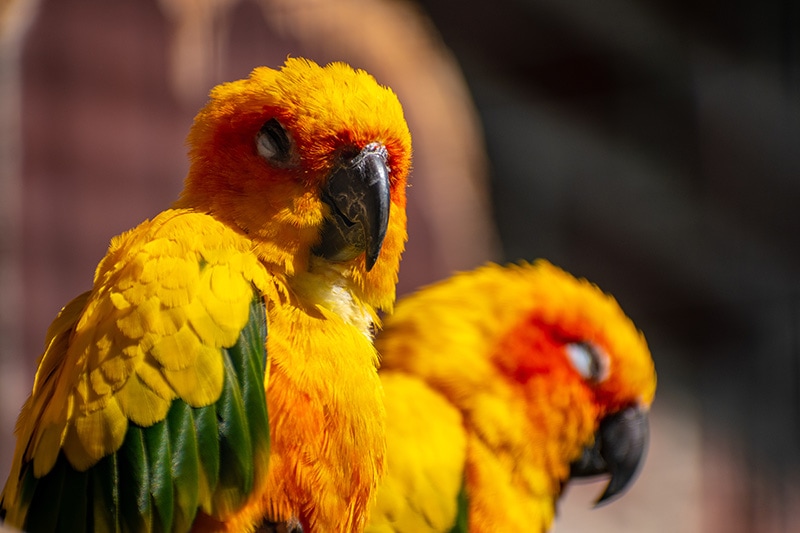
Parakeets are usually most comfortable in environments 65°F to 75°F (15.5°C to 23.8°C). You should adjust the temperature in your home to 60°F at a minimum and ensure that your parakeet’s cage is not near a draft, which can include an air-conditioner vent.

Hypothermia is a real concern, so if your bird is showing signs of distress, you should take them to your avian veterinarian immediately!

closeup Carolina parakeet birds
Image Credit By: Wirestock Creators, Shutterstock

2. Your Parakeet Is Sleepy

Just like how we enjoy burrowing into soft blankets when settling into bed for the night, parakeets will fluff themselves out when preparing to sleep.

Parakeets generally only puff up when sleeping overnight and not so much when they take naps during the day.

What You Should Do

Parakeets need to have lights out overnight, or they won’t be able to fall into a deep sleep, which is necessary for their overall well-being.

At the end of the day, if your parakeet is comfortable and starts to puff up, cover the cage ( if your parakeet is happy with a cover) and turn out the lights.


3. Your Parakeet Is Bathing and Preening

Parakeets spend a fair amount of time grooming and preening their feathers and taking baths. Preening can involve fluffing out the feathers so they have better access to them and can realign them.

They will often ruffle their feathers to shake out dust and debris before taking a bath. Puffed feathers after a bath help dry their feathers.

What You Should Do
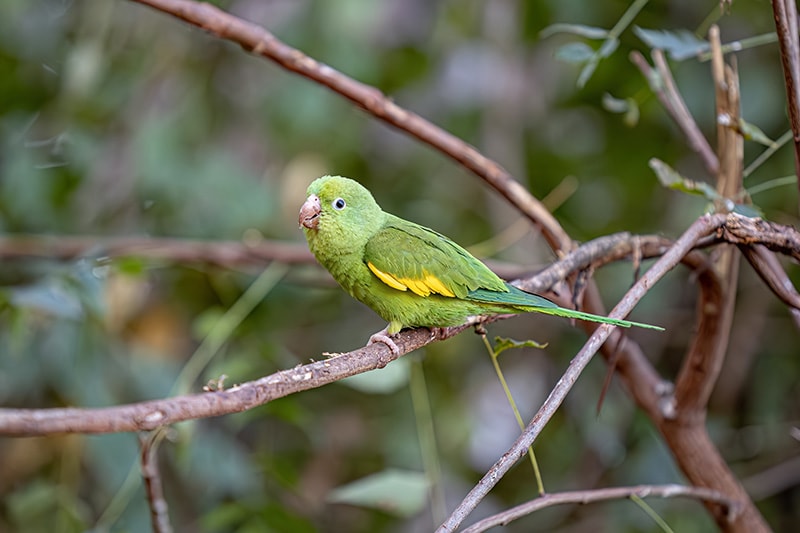
Ensure that you have the right-sized bath for your parakeet. They come in a wide variety of sizes, and there are various methods for bathing your bird.

Yellow chevroned Parakeet bird perched
Image Credit by: Vinicius R. Souza, Shutterstock

4. Your Parakeet Is Happy and Excited

Birds that puff out their chests and fluff their feathers can also feel quite happy and excited! If you notice your parakeet puffing up when you enter the room, they might be showing that they love you in their own way. If they show other signs, such as happy chirping, singing, and wagging their tail feathers, these are all indications that they love being around you.

Since this is a positive behavior, you don’t need to do anything about it.


5. Your Parakeet Is Attracting a Mate

Birds puffing up their feathers can often be part of a courtship display, which is most likely to occur during mating season.

Since the mating season is generally in the spring, you might notice the puffing in addition to other behaviors. These can include aggression or regurgitation, and they might try mating with you or a perch or a toy.

What You Should Do
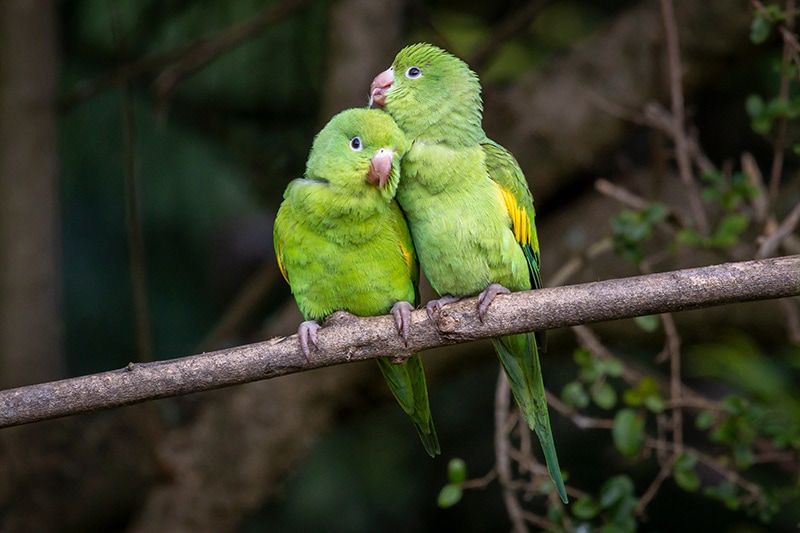
Remove any mirrors or nest boxes to start. Mirrors might encourage mating behavior, but if your parakeet shows aggression, leave them alone and don’t handle them too often.

Just remember this behavior is perfectly normal, so stay calm and deal with it as best you can until the season ends.

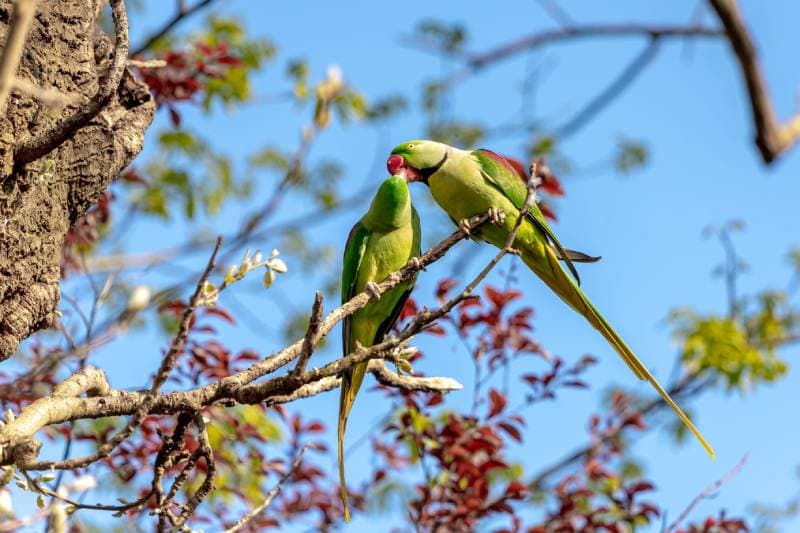
couple of Parakeet birds perched on a branch
Image By: Fernando Calmon, Shutterstock

6. Your Parakeet Is Angry or Scared

Birds that feel threatened will puff themselves up to make themselves look bigger. This is common in most animals (e.g., cats) because it’s a method that makes them look like something that you don’t want to mess with.

They might additionally spread their wings away from their body to look even more threatening.

What You Should Do

If something is happening to upset your bird, such as the household is too noisy and chaotic, or another pet is bothering them, you should remove the threat. This might mean removing the pet from the room or moving the cage to a quieter space.

You might also want to consider investing in a heavier cage cover that can muffle noises at night, particularly if your bird seems sensitive to noises.


7. Your Parakeet Is Sick

For the most part, it should be obvious when your parakeet is not feeling well. While birds are good at hiding illnesses as a self-preservation technique, you will be familiar with your pet’s behavior and should notice that something is off.

If their feathers are puffed up most of the time, this can indicate that there is a problem, particularly if everything is normal in the environment (like the temperature is just right, they aren’t feeling threatened, and they have plenty of toys, a high-quality diet, and time outside the cage).

The fluffing, in addition to other signs, can be a health problem, so if any of the following signs are also seen, take your bird to the vet:

  • Weight loss
  • Lack of appetite
  • Abnormal droppings (more watery, changes in color or amount)
  • Difficulty breathing
  • Squinting eyes
  • Inflamed nares
  • Discharge from the eyes, mouth, or nares
  • Lack of grooming or preening
  • Feather plucking
  • Disinterest in flying
  • Sitting on the cage floor instead of a perch
  • Quiet with no chirping
  • Sleeping excessively

What You Should Do
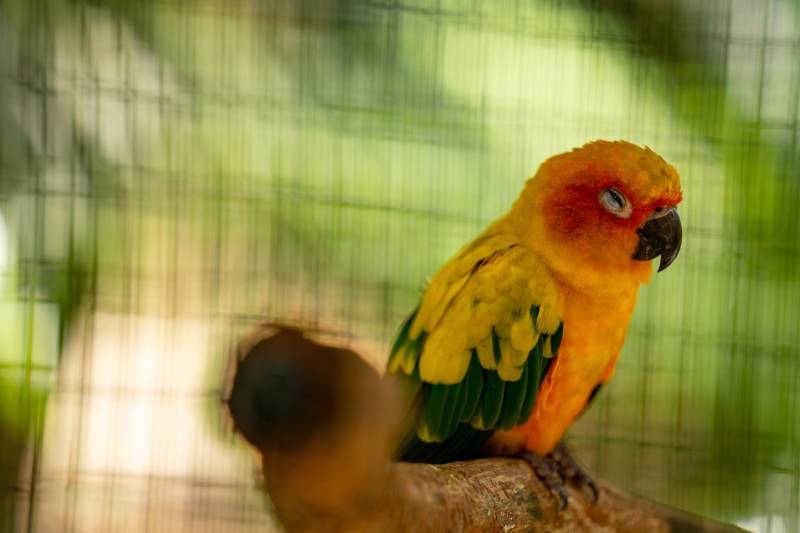
Sometimes, how your parakeet is sleeping can also tell you when there’s a problem. If they are sleeping with both feet on the perch or floor instead of having one leg tucked up and they aren’t sleeping with their head tucked into their shoulder, this merits a visit to your vet.

You should also ensure that they are warm if you can’t get them to the clinic right away. You can call your vet for other steps before taking them in.

Small parakeet sleeping in a cage
Image Credit by: Felix Mizioznikov, Shutterstock

Conclusion

Puffed-up feathers in parakeets can be perfectly normal. They might only be sleepy, preening or particularly happy to see you.

But it can also be because they are cold, feel threatened, or they might be sick. It’s essential to keep an eye on your bird. It’s easier to understand what’s going on if you consider the context of the behavior, alongside their body language and general mood.

Ensure that you have an avian vet lined up and are familiar with your bird before you ever have to worry about an emergency visit. You want your parakeet to stay with you for as long as possible!

Sources

Featured Image Credit: Sarka_Svobodova_Photo, Shutterstock

Get Hepper In Your Inbox

Pet care tips from our vets and experts, straight to your inbox.

List

Select all that apply.

You may opt-out at any time. View our Privacy Policy for more information.

Kathryn Copeland
Authored by

Kathryn Copeland

Join the conversation

Ask a question, share your story, or send private feedback.
Rate this post
Required to post. Only our editors see your rating.
Who should see this?

A human reviews every comment before it appears. Your email is never published.

Picked to go with this article

Why Do Cockatiels Puff Up? 6 Likely Reasons

Why Do Cockatiels Puff Up? 6 Likely Reasons

If you spend enough time around a cockatiel, you’ll probably notice them puff up from time to time. In birds, puffing refers to an action where they extend the…

Kristin Hitchcock
By Kristin Hitchcock ·
Why Is My Parakeet Shaking? Vet Approved Facts & Care Tips

Why Is My Parakeet Shaking? Vet Approved Facts & Care Tips

Noticing that your parakeet is shaking can be alarming, but it doesn't always mean something sinister is happening behind the scenes. In some cases, a shiverin…

Kit Copson
By Kit Copson ·
Parakeet Molting: Vet Reviewed Signs, Causes, Care Tips & FAQ

Parakeet Molting: Vet Reviewed Signs, Causes, Care Tips & FAQ

If you’re new to parakeet ownership (Melopsittacus undulatus), there may come a time when feathers are all over the bottom of your bird’s cage, and the entire…

Chantelle Fowler
By Chantelle Fowler ·
How to Keep Parakeets Warm: 6 Vet-Approved Tips

How to Keep Parakeets Warm: 6 Vet-Approved Tips

We all love our parakeets because they're so cute and funny to watch. But since they are significantly smaller than their larger parrot counterparts, they get…

Ashley Bates
By Ashley Bates ·

Keep reading

More stories you might like

9 Parakeet Sounds & Their Meanings (With Audio)

With their knack for mimicking human speech, parakeets know how to get their message across. When they’re not repeating words, these chatty birds are vocalizin…

Nicole Cosgrove
By Nicole Cosgrove ·
9 Parakeet Sounds & Their Meanings (With Audio)

Why Do Parakeets Bob Their Heads? 8 Vet-Reviewed Reasons

This article has been fact checked and reviewed by a qualified veterinarian using information available at the time of review. However, the purpose of this art…

Sarah Psaradelis
By Sarah Psaradelis ·
Why Do Parakeets Bob Their Heads? 8 Vet-Reviewed Reasons

Do Parakeets Like to Be Held? Vet-Approved Facts & Explanation

Part of owning a pet that brings us so much joy is petting and cuddling them. It’s been scientifically proven that cuddling a dog (or perhaps, any pet) reduces…

Kathryn Copeland
By Kathryn Copeland ·
Do Parakeets Like to Be Held? Vet-Approved Facts & Explanation

Can Parakeets Get Fleas? Vet-Reviewed Health Facts

Pet birds, such as parakeets, can carry parasites like fleas. This isn’t as common as fleas on dogs or cats though, and other parasites are more prevalent. Rea…

Nicole Cosgrove
By Nicole Cosgrove ·
Can Parakeets Get Fleas? Vet-Reviewed Health Facts

Why Is My Parakeet Panting? 7 Vet-Verified Reasons

One of the most difficult parts of owning a pet is not being able to effectively communicate with them. Animals cannot tell you when something is wrong, or exp…

Grant Piper
By Grant Piper ·
Why Is My Parakeet Panting? 7 Vet-Verified Reasons

How Long Do Parakeets Live? Vet-Reviewed Average Lifespan, Data & Care

This article has been reviewed for accuracy by a qualified veterinarian. It should not be considered a complete care guide, nor is it intended to replace veter…

Jessica Kim
By Jessica Kim ·
How Long Do Parakeets Live? Vet-Reviewed Average Lifespan, Data & Care

Why Is My Parakeet Losing Feathers? 10 Vet-Approved Common Causes

As all bird lovers know, birds lose feathers, similar to the way that we lose and regrow our hair. It is a completely normal part of their lives. However, some…

Ashley Bates
By Ashley Bates ·
Why Is My Parakeet Losing Feathers? 10 Vet-Approved Common Causes

Why Do Parakeets Kiss Each Other? Vet-Approved Bird Behavior Explanation

Parakeets are some of the most adorable and affectionate avian pets you can own, and they’re famous for kissing each other, like lovebirds. While parakeet kiss…

Codee Chessher
By Codee Chessher ·
Why Do Parakeets Kiss Each Other? Vet-Approved Bird Behavior Explanation