Hepper is reader-supported. When you buy via links on our site, we may earn an affiliate commission at no cost to you. Learn more.
Why Do Pugs Have Flat Faces? (Vet Reviewed Facts & FAQs)


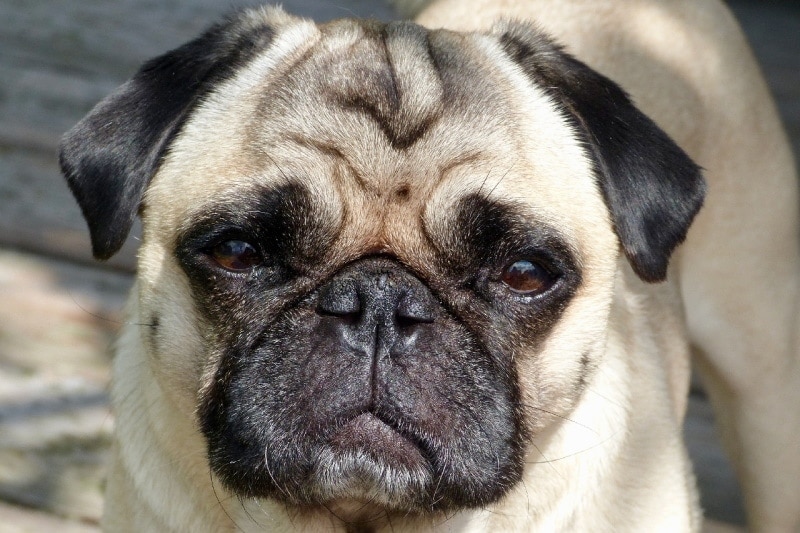
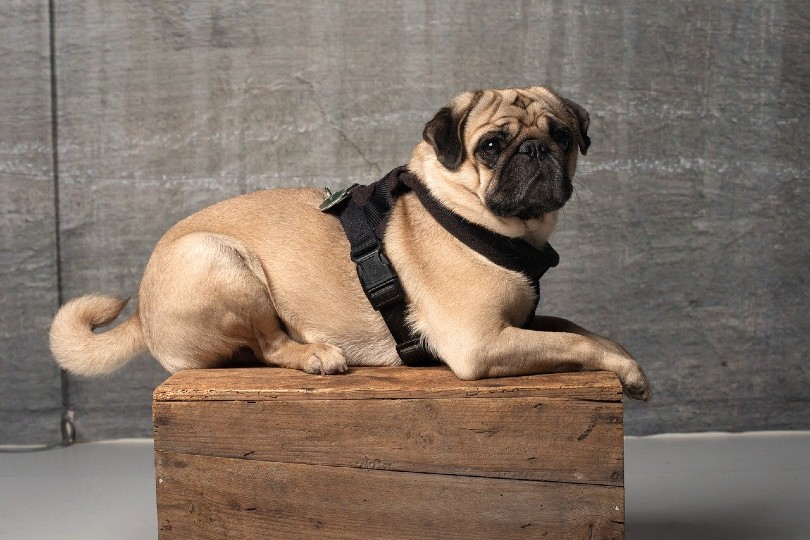
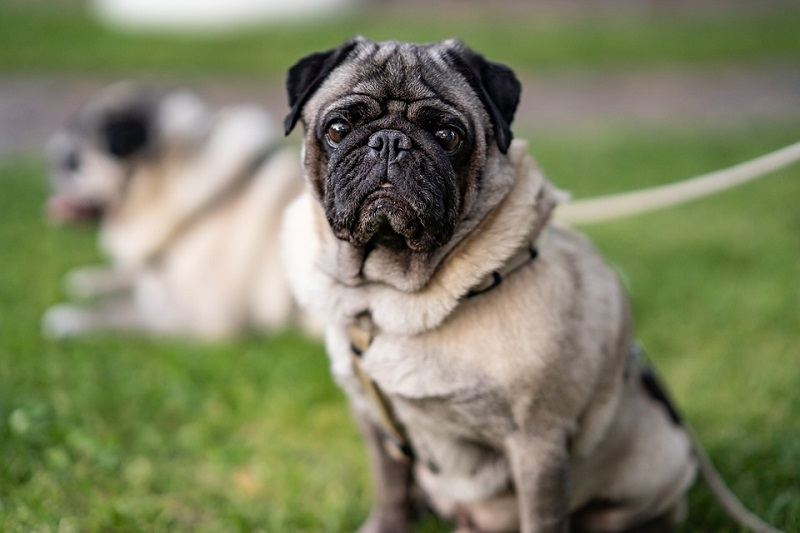
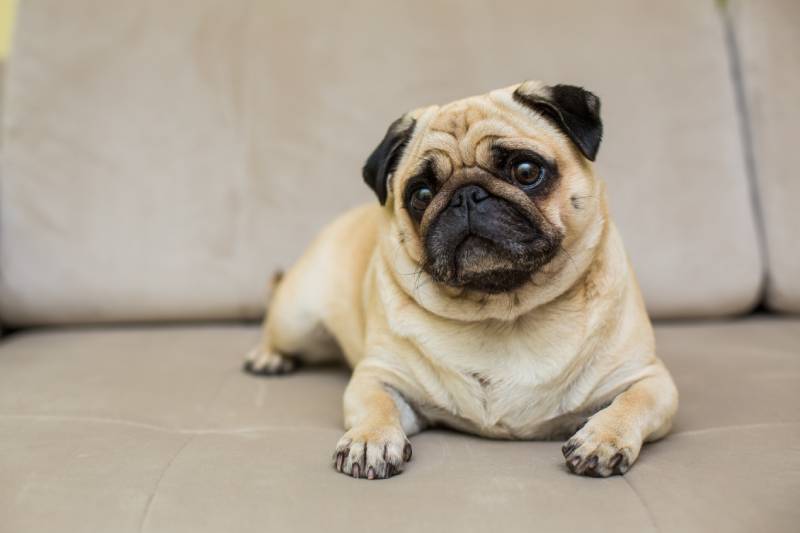
Flat-faced and friendly Pugs seem a strange fit in the domestic dog’s illustrious history of hunting with humans. Indeed, the adorable dogs took on a unique role since their first appearance, acting solely as pampered lap dogs for the wealthy. Pugs arose from selective breeding, with a genetic mutation resulting in flat facial features that royals and elites couldn’t resist replicating.
While it’s clear that Pugs are an enormous deviation from their wild wolf ancestors, they are by no means a new breed. Let’s explore why Pugs have flat faces and how they have helped and hindered these dogs through the centuries.

Why Do Pugs Have Flat Faces?
A Pug’s squashed face comes from a genetic mutation suppressing a protein that allows cells to stick and grow upon one another to build tissue. A 2017 study showed that a reduced expression in the calcium-binding SMOC2 gene accounted for 36% of the facial deformity.1
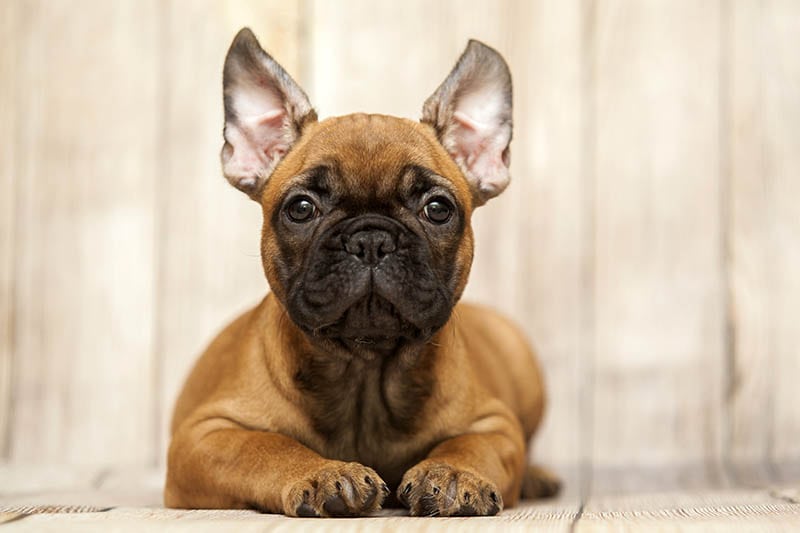
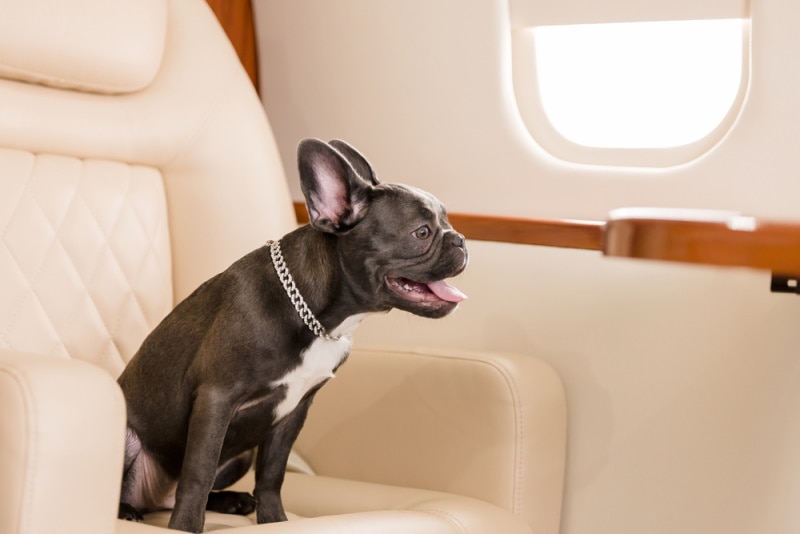
The insertion variant responsible for face lengths, alongside other chromosomal variations, causes varying levels of brachycephaly among Pugs, French bulldogs, Boxers, and other flat-faced dogs.

Why Did We Decide to Breed Pugs?
Pugs have been around since roughly 400 B.C.2 Unlike hunting and guard dogs, Pugs became popular only as companions for Chinese royalty, alongside other flat-faced canines, including the Lion Dog and Pekingese.
The Chinese bred Pugs because of their short muzzles, coat length and color, and mild temperament. The wrinkled brow of a purebred Pug was a prized trait because it looked like the Chinese character for “Prince.”
The Lo-sze, or ancient Pug, enjoyed a lavish life of luxury with their wealthy owners. Dogs often had dedicated guards and servants fulfilling their every need. As their popularity grew, Buddhist monks began keeping them as pets and guard dogs in Tibetan monasteries. Over time, Pugs spread to Russia, Japan, and eventually Europe, capturing the hearts of the world’s elite as they traveled.
European and Modern Pugs
In the 16th century, the Dutch brought Pugs to Europe. The charming animals quickly won favor in royal courts with their low-maintenance personalities. Pugs soon became preferred pets among Dutch, English, Italian, and French nobility and famous artists, cementing their status as one of history's ultimate lapdogs.
The Pug’s facial structure took a turn in the mid–late 19th century with a surge of imports from China. The newest breed had the familiar shorter legs and squashed, widened face of the modern Pug. Around this time, the Pug also began gaining acceptance in North America. In 1885, the American Kennel Club officially recognized the breed. The Pug ranked 36th out of 200 breeds in the AKC’s popularity ranking as of 2023.

Brachycephaly Health Hazards
Humans have always bred Pugs for their cute looks, selectively guiding them, alongside other brachycephalic dogs, toward flatter faces, bulging eyes, and widened mouths. Some breeders insist on strict standards to retain and enhance the defining features, despite the health problems and ethical issues they entail. As their popularity increases, so does awareness and hopes for reform to help these breeds.
The issue is that, although the face became shorter, the rest of the Pug’s anatomy didn’t keep up with the changes to fit comfortably in the new mold. Brachycephalic dogs can have various health issues ranging from their brains being too large for their skulls to respiratory, eye, and dental issues to pregnancy problems due to the puppy's odd head shape.
Research in the U.K. has shown that Pugs are nearly twice as likely to experience health problems than non-Pugs. Experts now suggest that owners and breeders should not consider the breed a typical dog. And the more purebred the Pug, the greater the risks of health hazards and a lower quality of life. The following are some of the most common Pug problems.
Brachycephalic Obstructive Airway Syndrome (BOAS)
The upper airway blockage called BOAS results from the shortened pathway from the nostrils to the throat.
The condition has several aspects, including:
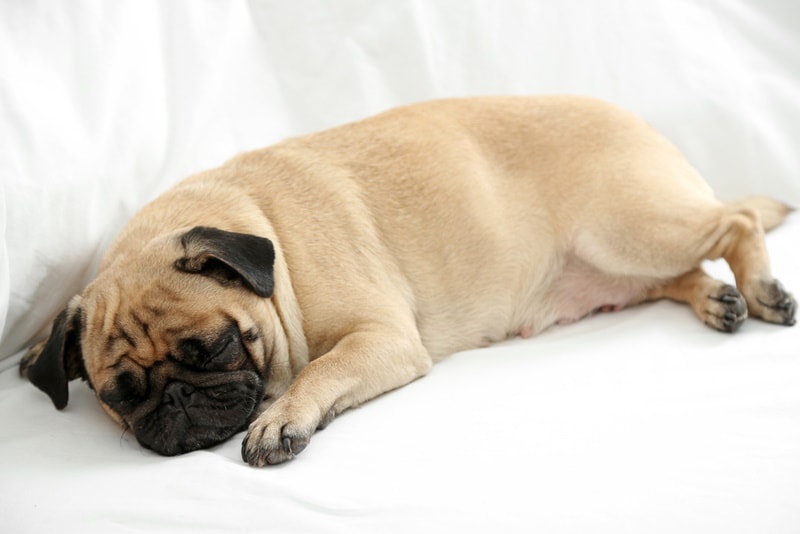
BOAS causes several problems for Pugs in everyday life. They have a low tolerance for excessive heat or long stretches of exercise, which can potentially cause cyanosis (a bluish discoloration of the gums and tongue) or fainting. Normal breathing often includes snorting, wheezing, and gagging. Sleeping trouble and snoring are also common.
Overweight and obese dogs are more susceptible to worsening issues. Unfortunately, Pugs easily pack extra pounds because of their limited exercise capacity. Gastrointestinal disorders may present in overweight Pugs with signs such as vomiting, retching, or reflux episodes.
Surgery is often necessary at an early age to keep BOAS from causing worsening health issues. BOAS is particularly pronounced in Pugs and French bulldogs. Without surgery, brachycephalic dogs have a lower quality of life and are more susceptible to diseases involving their respiratory tract.
Corneal Ulcers
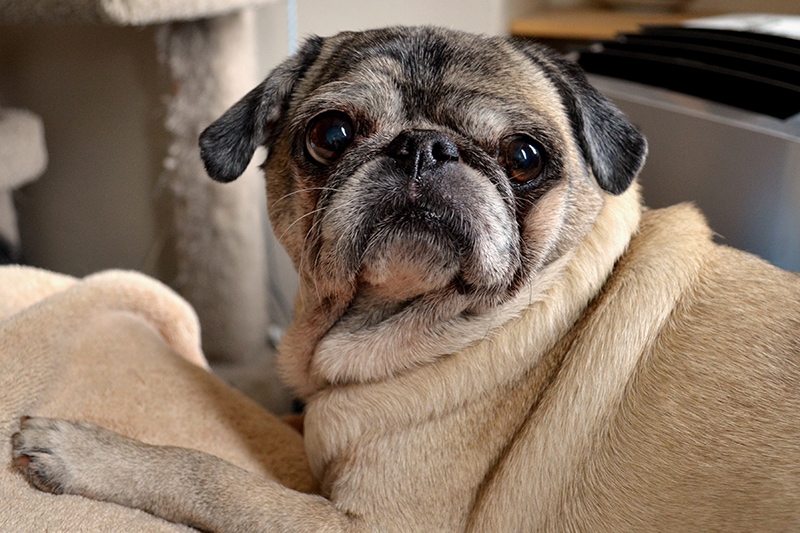
A Pug’s bulging eyes overexpose them to damage. Intertwined and turned-in eyelashes may make blinking challenging, further exacerbating ocular discomfort. Debris can more easily harm protruded eyes. Left untreated, scratches or injuries to the cornea may lead to infections and other complications, including the potential for blindness.

Skin Infections
Dermatitis affects many Pugs because of their signature skin folds. Pyoderma, a bacterial infection, is common in breeds like the Pug. The warm, moist area provides the perfect space for microbes to multiply. Pugs need frequent facial cleaning and drying to prevent ongoing irritation and pain.
Dental Issues
The Pug’s teeth haven’t adapted to their squashed faces. Misalignments and protrusions occur as too many teeth jockey for space. Extractions are often necessary to free up enough room. Diseases can be painful for Pugs, and untreated infections can travel to other body parts, including the kidneys, heart, and lungs.

Final Thoughts
A Pug’s flat facial structure has nothing to do with evolution and everything to do with our affinity for cute baby faces. Sadly, what’s good for us harms the Pugs, and many owners don’t realize the dangers behind their dog’s regular snorting and huffing. Pugs have been one of humankind’s favorite breeds for over two millennia, but we only now understand the costs of our companionship.
Sources
Featured Image By: JumpStory
Get Hepper In Your Inbox


Pet care tips from our vets and experts, straight to your inbox.
You may opt-out at any time. View our Privacy Policy for more information.
Nicole is a lover of animals of all sizes but is especially fascinated with the feline variety. She’s the proud mom of Baby, a Burmese, and works every day so he can relax in the sunshine or by the fire. She’s always had a cat in her home and has spent countless days with others, observing behaviors and softening up even the grouchiest of the lot. Nicole wants to share her kitty expertise with you so you and your cat can live happy, healthy, and care-free.
Join the conversation
Ask a question, share your story, or send private feedback.