Hepper is reader-supported. When you buy via links on our site, we may earn an affiliate commission at no cost to you. Learn more.
Why Is My Dog's Nose Running? 10 Vet-Reviewed Reasons


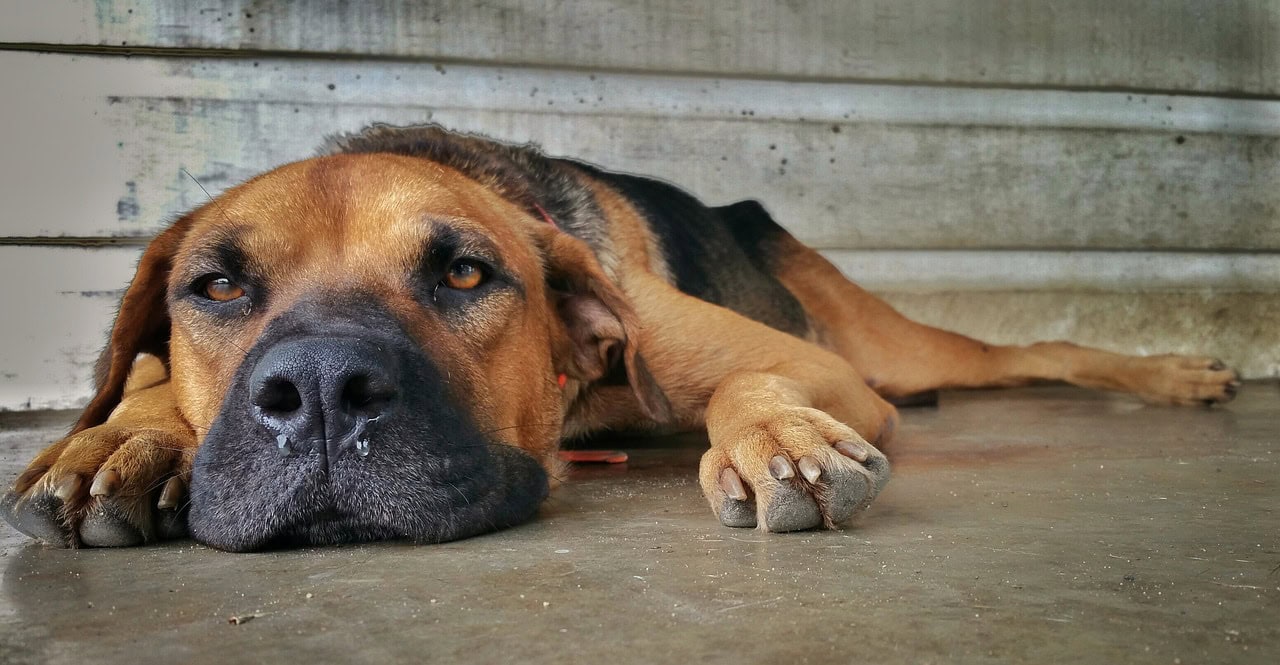
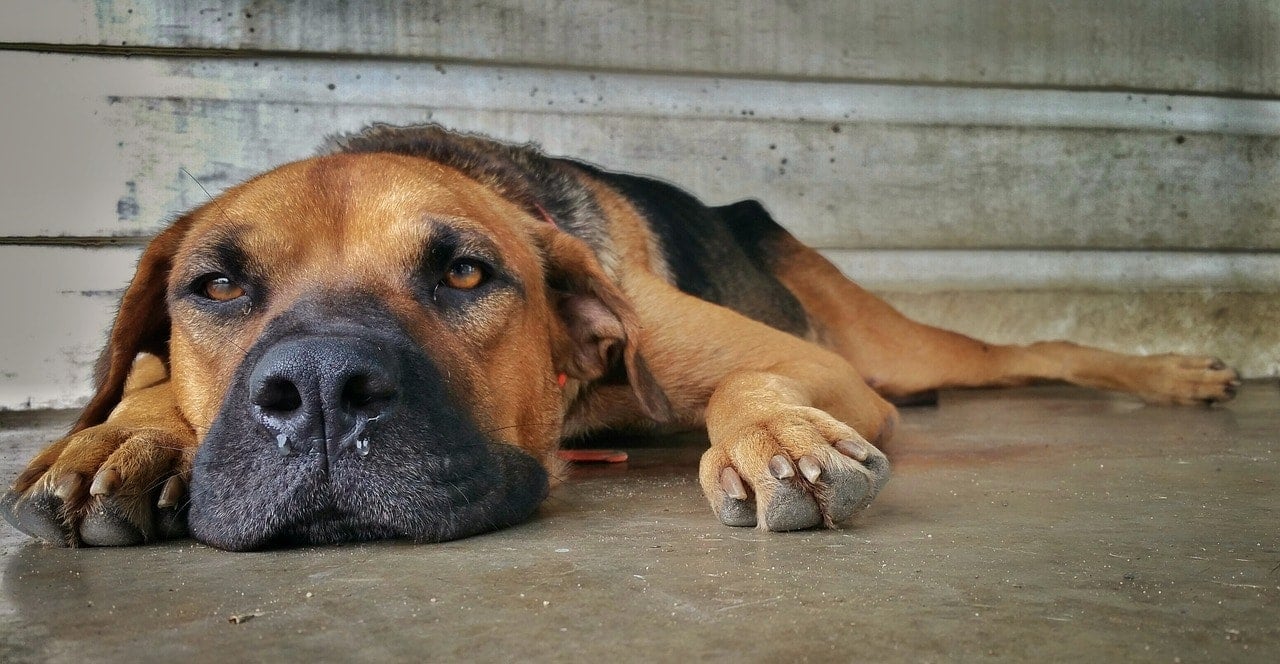
Like humans, dogs can get runny noses. Sometimes a drippy nose is no cause for concern; other times, it can indicate a health issue. The best way to determine the cause behind your dog’s running nose is to consult your vet. In the meantime, you may be interested in brushing up on the common causes of runny noses in dogs. In this article, we’ll look at 10 reasons your dog’s nose may be running and when your pet needs to visit the vet.

The 10 Reasons the Dog's Nose is Running
1. External Irritants
One of the simplest reasons your dog’s nose may be running is external irritants. Irritants in your dog’s environment can agitate his nose, causing it to run. To determine whether this is the cause of your dog’s runny nose, check your surroundings to see if there are any irritants in the air.
Examples of irritants may include:
- Dust
- Incense
- Smoke
- Perfume
- Cleaning products
- Pollen
- Mold
If your dog has inhaled any of these, they may trigger a drippy nose.
2. Body Temperature Regulation
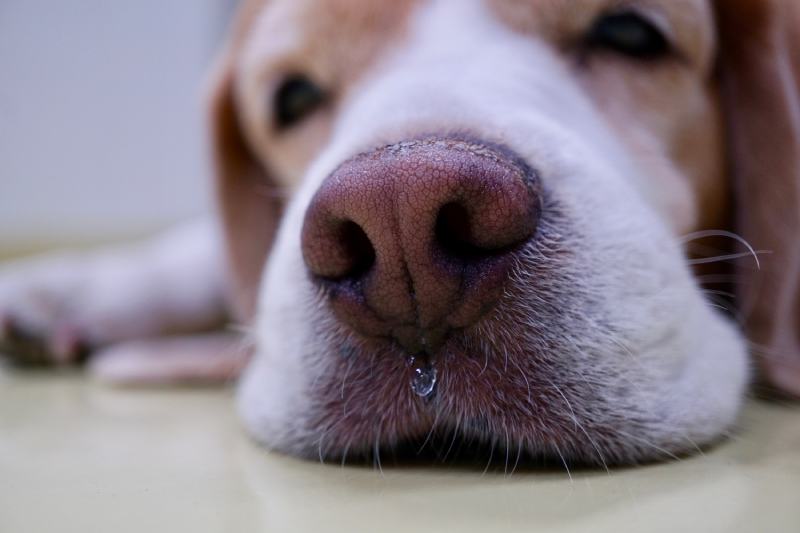
There is a perfectly normal and healthy explanation for why your dog’s nose is running, and that’s internal temperature regulation. Your dog’s nose has glands that produce a water-like material, giving your dog’s nose much-needed moisture. When the liquid travels out to the surface of your dog’s nose, it evaporates and helps keep your dog cool.
Dogs do not sweat the same way that humans do. The nose and footpads are the only places your dog can sweat, so your dog’s wet nose plays an essential role in keeping him comfortable and healthy.
3. Foreign Objects
Dogs are curious creatures that like to sniff around to learn more about their surroundings. Sometimes, this inquisitive sniffing can cause your dog to inhale something he shouldn’t have accidentally. If a foreign object, like a grass seed, gets lodged in your dog’s nasal passageways, his nose may start running.
If your dog has something stuck in his nose, you may notice him sneezing more than usual. He will also display significant discomfort and may paw around his nose excessively. In more severe instances, it can lead to infections. Contact your vet if you notice any of these signs or are concerned about a foreign body. Do not attempt to take it out yourself, as you may injure your dog and worsen the situation.
4. Kennel Cough
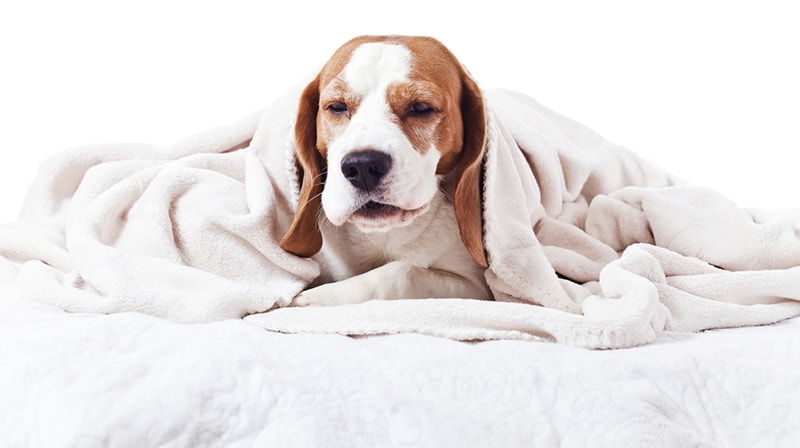
Kennel cough is a highly contagious upper respiratory infection of dogs. Along with the typical ‘honking’ cough, dogs may also have a runny nose, sneezing and sometimes lethargy and loss of appetite. The bacteria Bordetella Bronchispetica is the most common culprit, but some cases of kennel cough are caused by other infections including canine adenovirus, canine parainfluenza virus, canine respiratory coronavirus and mycoplasmas.
5. Tooth Root Abscess
A tooth root abscess is a pocket of infection around the root of a tooth under the gum line. But what does this have to do with a runny nose?
The roots of your dog’s teeth are very close to his nasal passages. So, when an infection occurs in the root of the teeth, your dog’s nasal passages can also be affected. An abscess is a painful condition for dogs. The pain can be so great that your dog will refuse to eat or play with his toys. Because of that, a tooth root abscess is a medical emergency. If you notice any signs of this condition, take your dog to the vet immediately.
Other signs of a tooth root abscess include:
- Bad breath
- Pawing around the face and mouth
- Swelling of the face or gums
- Redness of the gums
- Drooling
- Broken or discolored tooth/teeth
- Fever
- Unwilling to chew
6. Polyps and Tumors
No one wants to consider the idea that their dog has a tumor. Unfortunately, a nasal tumor is one of the possible causes of a runny nose. In most instances, if your dog has a nasal tumor, you will notice the presence of pus-like or bloody nasal discharge and other signs. If the tumor grows large enough, you may even notice facial deformity.
As well as a nasal discharge, other signs that your dog may show with a nasal tumor include:
- Loud breathing
- Weakness or lethargy
- Coughing
- Lack of appetite
- Significant weight loss
7. Distemper
Canine distemper is a serious condition. It is a highly contagious viral disease that impacts several of your dog’s bodily systems, including the respiratory, nervous, and gastrointestinal systems. Fortunately due to effective vaccines, distemper is seen much less commonly than it used to be. Vaccines for this condition are highly encouraged, as this condition is almost always fatal.
Your dog may catch distemper from another dog or from wildlife such as wolves, foxes, skunks, raccoons, and other carnivores. If your dog has developed canine distemper, you may notice signs such as:
- Coughing
- Sneezing
- Nasal discharge
- Vomiting and diarrhea
- Lack of appetite
- Depression
As the disease grows in severity, other signs may include:
- Tremors
- Seizures
- Paralysis (partial or complete)
- Pneumonia
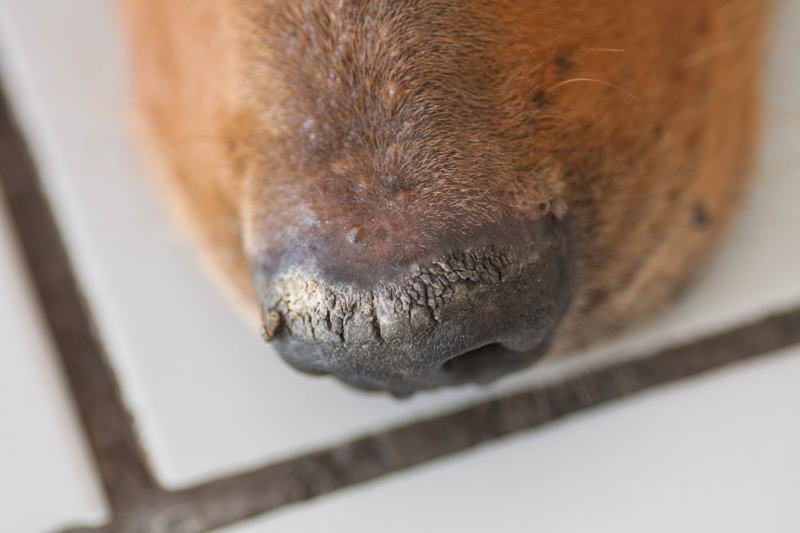
- Crusting around the nose and footpads
- Death
With prompt treatment, dogs can survive distemper; however, they will likely live with debilitating issues for the remainder of their life if they experience a significant impact on their nervous system.
8. Allergies
A runny nose can also be a sign of allergies. Your dog can be allergic to something in the environment or something that he eats.
Allergies in dogs commonly cause skin signs such as:
- Itchiness of the skin
- Excessive scratching
- Constant licking
- Rubbing of the face
- Redness of the skin
- Patchiness of the fur
- Frequent infections of the skin and ears
- Gastrointestinal distress ( for food allergies)
If you suspect your dog has an allergy, consult your vet to determine what it could be and how to treat it.
9. Cleft Palate
The roof of your dog’s mouth is known as the palate. When your dog has a cleft palate, there is an opening in the middle of the roof of his mouth. This opening can be as small as a few millimeters or as large as the entirety of the hard and soft palate. The opening makes it difficult for your dog to eat or nurse.
Signs of a cleft palate are often obvious, but not always. As well as having a runny nose after eating or even constantly, other signs include:
- Choking, sneezing, or gagging when drinking or eating
- Facial deformity
- Poor growth and development
Other issues may develop due to a cleft palate, such as aspiration pneumonia due to accidentally breathing in food and water. While some cleft palates may heal on their own, most require surgical intervention.
10. Canine Influenza
Think back to the last time you had the flu. Your nose was running like crazy, wasn’t it? Well, the same can be said for dogs. Canine influenza, or the dog flu, is fairly similar to the flu that humans experience. Common signs of this condition include a runny nose, cough, and fever. While any dog can catch canine influenza, elderly dogs, dogs with respiratory or cardiac conditions and brachycephalic (flat-faced) breeds are at a higher risk of complications.

How to Know When a Runny Nose Is a Problem
Some of the causes of your dog’s runny nose are natural and healthy, such as helping them regulate their body temperature. However, some of them are serious causes for concern. How do you tell the difference?
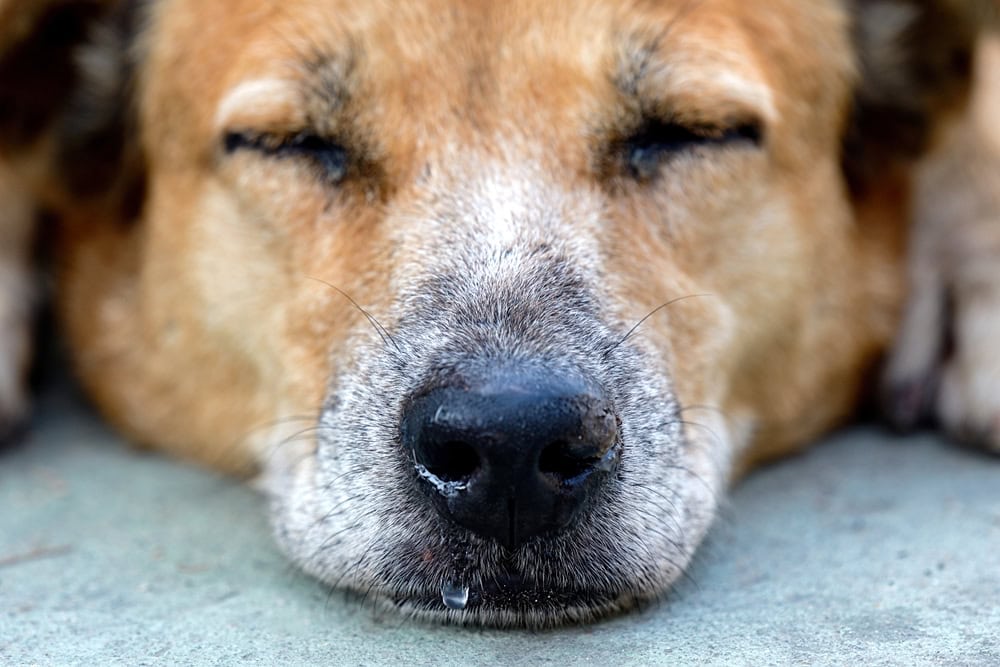
Pay attention to the color and amount of your dog’s nasal discharge. If your dog’s nasal drainage is watery, clear, and minimal, you likely have no cause for concern. However, something isn't right if the discharge is white, green, yellow, bloody, or excessive.
Likewise, pay attention to your dog’s behavior. If he is acting the same as usual, he is likely okay. On the other hand, if you notice disturbances to his normal eating, sleeping, or potty schedule, there is a good chance that a more significant health issue is at play.
Whenever you are concerned for your dog’s well-being, it’s vital to consult your vet. Regarding your furry friend’s health, being safe rather than sorry is always better.

Conclusion
While not all runny noses are causes for concern, monitoring your canine’s behavior is crucial to determine whether something is amiss. If your dog’s nasal discharge is discolored and he displays other signs, make an appointment with your vet as soon as possible. The sooner you treat your dog, the sooner he can return to his happy, healthy self again.
Sources
https://www.petmd.com/dog/general-health/why-do-dogs-have-wet-noses
https://www.akc.org/expert-advice/health/the-common-signs-and-symptoms-of-poisoning-in-dogs/
https://www.petmd.com/dog/conditions/respiratory/aspiration-pneumonia-dogs
https://www.petmd.com/dog/conditions/respiratory/c_dg_canine_distemper
https://www.petmd.com/dog/conditions/mouth/tooth-root-abscess-dogs
Featured Image Credit: RonaldPlett, Pixabay
Get Hepper In Your Inbox


Pet care tips from our vets and experts, straight to your inbox.
You may opt-out at any time. View our Privacy Policy for more information.
Pets are Jordyn’s passion, cats especially. Whenever she has the opportunity, she loves to learn about them and share her knowledge with everyone. She is devoted to her tabby cat named Jack and works hard to buy him his favorite treats and toys. Discovering new ways to better care for her pet is always on her to-do list, and she is eager to help pet parents everywhere who have similar pursuits. In her spare time, she loves to read, write, and take long walks. She has a creative spirit, which often helps her to come up with funny cat names.
Join the conversation
Ask a question, share your story, or send private feedback.