Hepper blog

Search our database of over 9,984 posts with up-to-date information from our experts and veterinarians.

Hepper is reader-supported. When you buy via links on our site, we may earn an affiliate commission at no cost to you. Learn more.

Why Is My Puppy Breathing So Fast When Sleeping? Vet-Approved Respiratory Rate & Facts

By Cassandra Kyser · Reviewed & fact-checked by Dr. Lorna WhittemoreVet Approved
Dr. Lorna Whittemore
Reviewed & Fact-Checked byDr. Lorna WhittemoreVeterinarian
Lorna is a Scottish vet who has lived, studied, and worked on three continents and has a love of travel. With 20 years of experience in small animal medicine andsurgery, both in the charity and private sector. Gaining a further qualification in feline medicine has given her a continued sense of amazement at the fabulous animals. Currently living in Cape Town, South Africa, with her family and expanding number of pets allows her to spend time in and around nature where she is at her happiest. With a love for learning, Lorna is enjoying researching, editing, and fact-checking for Hepper veterinary editorial team and truly feels that she has the best job in the world!View authorThe information is current and up-to-date in accordance with the latest veterinarian research. Read about our vets
Share
Ask us a question in the comments
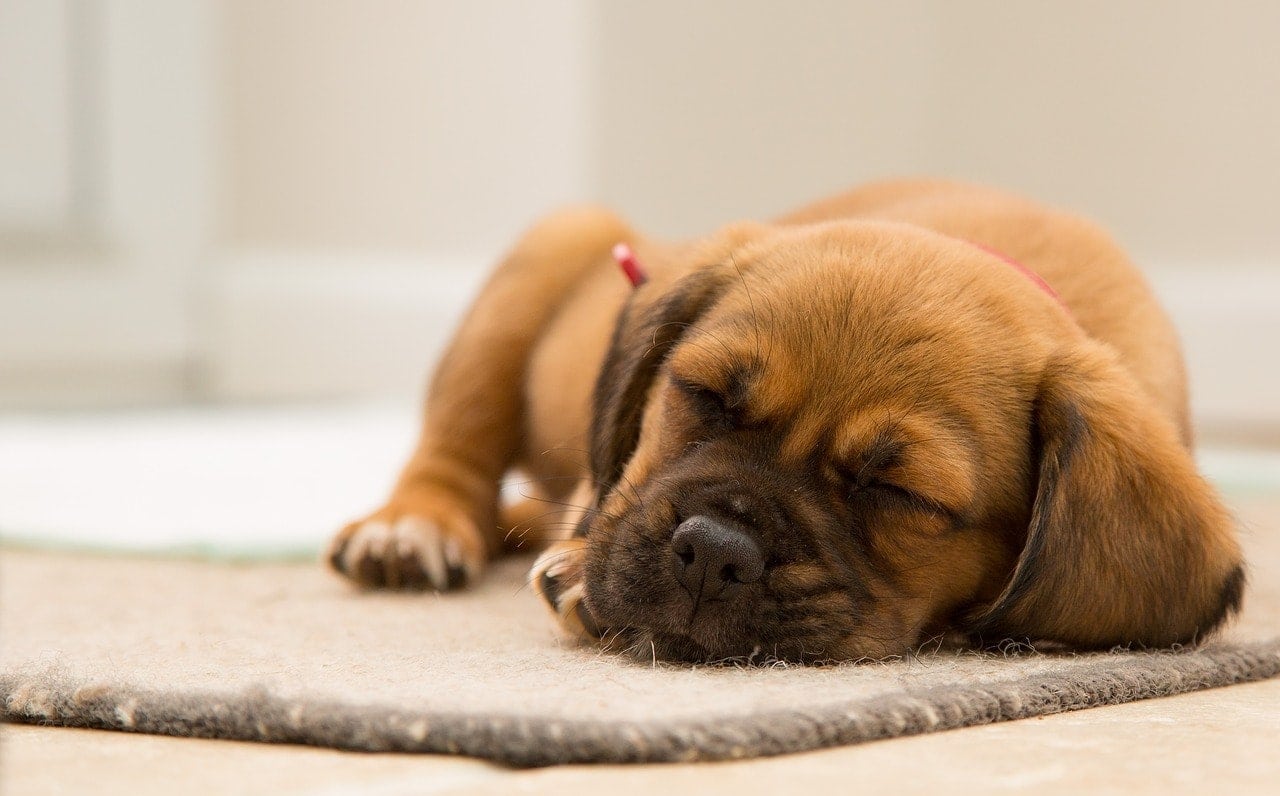
puppy sleeping in the mat

Puppies have a way of keeping their owners on their toes. Your puppy is probably rarely out of your sight, as you monitor it 24/7 to make sure it's safe and healthy.

Puppies play hard and sleep harder. If you’ve ever stared lovingly at your puppy while it naps (and let’s be honest, who hasn’t?), you may have noticed them breathe fast. While this behavior can be alarming, it’s completely normal. Sleeping puppies can breathe faster when they dream. Puppies that are dreaming may also make noises and move their legs or tails. Their breathing returns to normal in a few minutes or if you wake them up.

Fast breathing while awake and sedentary, however, can be a cause for concern. Learn how to monitor your puppy’s breathing, what is considered normal breathing, and when to call a vet.

What Is a Normal Respiratory Rate for Puppies?

“Fast” is a relative and subjective term. It’s not necessarily concerning if your new puppy breathes faster than your older dog while sleeping for example

An objective way to measure your puppy’s breathing is its respiratory rate, which is the number of breaths they take per minute. It is helpful for your vet to know your puppy’s respiratory rate whilst awake and asleep if you are concerned about its breathing.

When you watch your puppy, you’ll notice that its chest rises with each inhale and falls with each exhale. To measure your puppy’s respiratory rate, count each rise. You can monitor their breathing for 30 seconds, then multiply that number by two. Or you can count breaths for a full minute.

Most healthy dogs have respiratory rates between 10 and 30 breaths per minute. Your puppy may breathe faster than this when playing, for a few minutes after being active, and while sleeping.

Newborn puppies for the first two weeks will have a breathing rate of 15–36 breaths per minute 1. For the next 2 weeks 16–32 breaths per minute and after that they settle into the adult breathing rate.
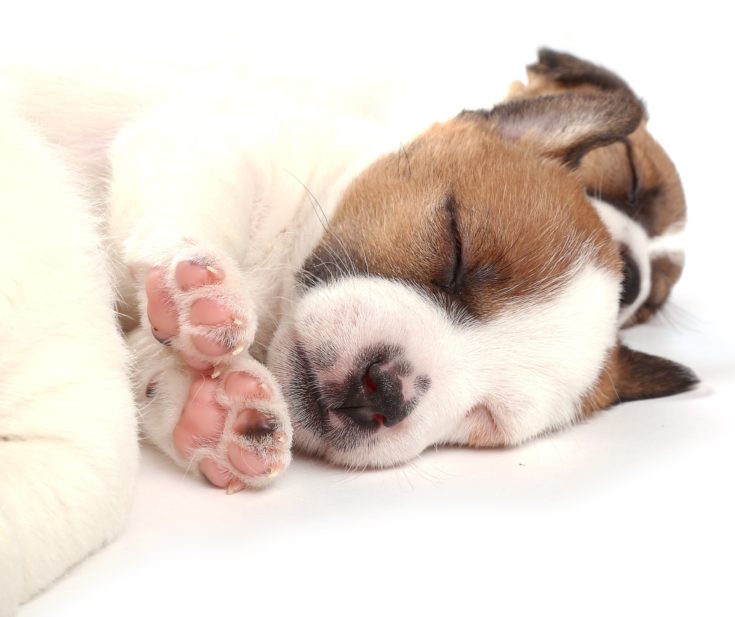
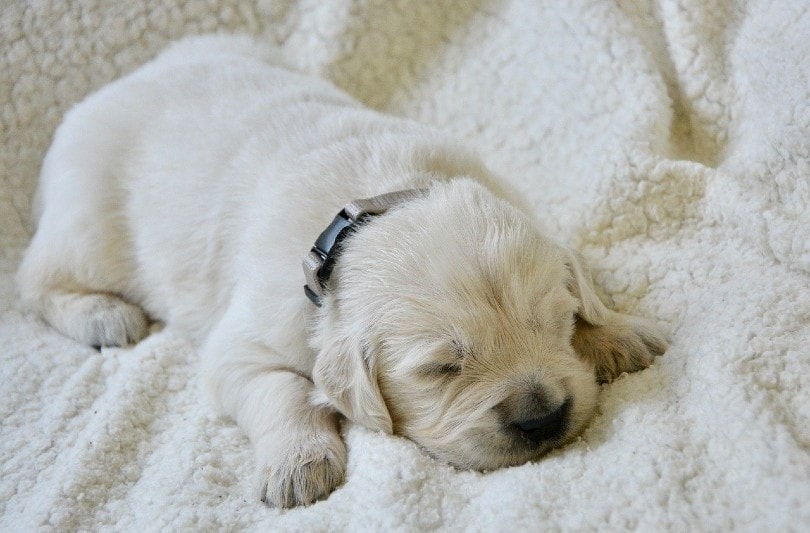
sleeping bo jack puppy
Image By: Adobe Stock

When to Call Your Vet

Signs that your puppy may have an underlying health condition include fast breathing (tachypnoea) accompanied by lethargy, poor appetite, diarrhea, vomiting, and coughing. Labored breathing or dyspnoea, is difficulty in breathing and includes increased effort to breathe. Schedule a vet appointment right away if your puppy shows any of these signs.

  • Fast breathing alone should not be confused with labored or difficult breathing but the two can be present at the same time.
  • Puppies that are struggling to breathe may stretch their necks and stand with their front legs further apart.
  • Their gums may be gray, blue, or purple instead of pink.
  • Dogs that are struggling to breathe may also have fluid dripping from their nose or mouth.

Labored breathing is a medical emergency. Bring your puppy to the nearest vet clinic or animal hospital if it struggles to breathe.

Conclusion

Seeing your puppy breathing fast while sleeping can be alarming but is rarely cause for concern. A healthy puppy over 4 weeks of age will take between 10 and 30 breaths per minute. However, some sleeping puppies can breathe faster while they are dreaming. Their respiration rates return to normal after a few minutes or upon awakening.

Sources

Featured Image Credit to: Pixabay

Get Hepper In Your Inbox

Pet care tips from our vets and experts, straight to your inbox.

List

Select all that apply.

You may opt-out at any time. View our Privacy Policy for more information.

Cassandra Kyser
Authored by

Cassandra Kyser

Join the conversation

Ask a question, share your story, or send private feedback.
Rate this post
Required to post. Only our editors see your rating.
Who should see this?

A human reviews every comment before it appears. Your email is never published.

Picked to go with this article

Why Is My Puppy Breathing So Fast? 8 Vet-Reviewed Reasons & FAQ

Why Is My Puppy Breathing So Fast? 8 Vet-Reviewed Reasons & FAQ

Puppies get out of breath occasionally. Whether they’re coming down from a case of the zoomies or excited about their humans coming home from work, a faster br…

Chantelle Fowler
By Chantelle Fowler ·
What Is the Normal Respiration Rate for a Dog? Vet-Verified Facts & Guide

What Is the Normal Respiration Rate for a Dog? Vet-Verified Facts & Guide

Dogs, like all mammals, have “vital signs” that pertain to their overall health. These signs set a baseline normal to help veterinarians determine if your dog…

Gregory Iacono
By Gregory Iacono ·
My Dog is Breathing Heavy, Should I Worry? (Vet Answer)

My Dog is Breathing Heavy, Should I Worry? (Vet Answer)

From personal experience, you know that breathing can vary enormously depending on circumstances or situations. It can get faster or slower and shallower or de…

Dr. Greg Steele
By Dr. Greg Steele ·
Do Cats Normally Breathe Faster When They Purr? Our Vet Explains

Do Cats Normally Breathe Faster When They Purr? Our Vet Explains

Cats can purr for many reasons, and purring has positive effects on them and their owners from a physical and mental point of view. When they purr, cats usuall…

Dr. Iulia Mihai
By Dr. Iulia Mihai ·

Keep reading

More stories you might like

Puppy Breath: Vet-Approved Causes & Concerns Explained

In the same way that newborn babies have a new baby smell, so do puppies; in particular, their breath. Puppy breath has a distinctly soft and sweet odor that s…

Annaliese Morgan
By Annaliese Morgan ·
Puppy Breath: Vet-Approved Causes & Concerns Explained

Why Do Puppies Get Hiccups? 5 Vet-Reviewed Reasons & FAQ

Believe it or not, dogs and puppies get hiccups just like people, and diaphragmatic contractions cause them. The diaphragm is a muscle between your dog's chest…

Lorre Luther
By Lorre Luther ·
Why Do Puppies Get Hiccups? 5 Vet-Reviewed Reasons & FAQ

Why Is My Puppy Shaking While Sleeping? 6 Vet-Approved Reasons

As loving dog parents, we’re always on the lookout for signs that something might not be quite right. If your puppy is shaking in their sleep, it’s understanda…

Kit Copson
By Kit Copson ·
Why Is My Puppy Shaking While Sleeping? 6 Vet-Approved Reasons

Should Puppies Sleep in the Dark? 4 Things to Consider

Bringing home a new puppy can be terribly exciting as well as a little scary. You’re busy getting to know each other, and you have to stay on top of a lot of n…

Kathryn Copeland
By Kathryn Copeland ·
Should Puppies Sleep in the Dark? 4 Things to Consider

What Are Normal Dog Vital Signs & How to Measure Them (Vet-Approved)

Our pets can tell us a lot when we take the time to listen. While they can’t easily articulate when they’re sick, assessing your dog’s vital signs can immediat…

Nicole Cosgrove
By Nicole Cosgrove ·
What Are Normal Dog Vital Signs & How to Measure Them (Vet-Approved)

What Do Dogs Dream About? Canine Sleep Facts & FAQs

If you have ever witnessed your pup twitching, whining, or running in their sleep, you may have wondered if they were in pain or just having a dream. You also…

Nicole Cosgrove
By Nicole Cosgrove ·
What Do Dogs Dream About? Canine Sleep Facts & FAQs

Why Is My Dog Breathing Fast? 8 Typical Reasons (Vet Answer)

Breathing too fast can be a result of a disease, such as lung cancer, or it can be a natural compensatory mechanism that happens normally, such as panting afte…

Dr. Chantal Villeneuve
By Dr. Chantal Villeneuve ·
Why Is My Dog Breathing Fast? 8 Typical Reasons (Vet Answer)

How to Calm a Panting Dog: 7 Great Ways That Work

Panting helps your dog circulate cool air throughout its body to better regulate its temperature. In most cases, panting is a completely normal side effect of…

Chantelle Fowler
By Chantelle Fowler ·
How to Calm a Panting Dog: 7 Great Ways That Work