





Click to Skip Ahead
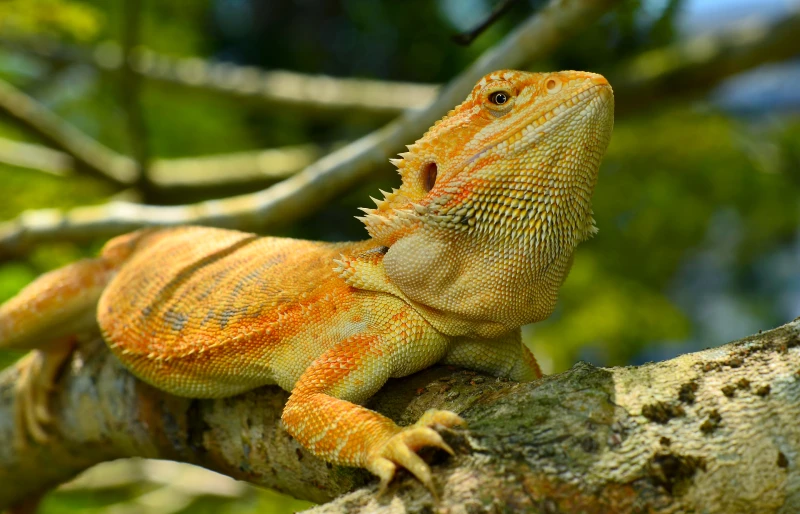
Bearded Dragons are native to Australia. They live in the desert and arid regions where they live primarily on insects and some vegetation. There are numerous species and subspecies of Bearded Dragon, and it is the Central Bearded Dragon (Pogona vitticeps) that is most commonly kept as pets. Although it is illegal to export Bearded Dragons from Australia, millions are captive-bred and traded legally on the pet market in countries across the world.
They have become the most popular pet lizard species because they are low maintenance, easy to care for, and tolerate being handled while being difficult to injure. They are also known to be intelligent lizards. While you won’t be able to teach yours to play fetch or to sit or roll over on command, you may be able to train a Beardie to come on command and even train some level of litter training.
Below, we look at Bearded Dragons in more detail, including information on how intelligent they are and how you can take advantage of this intelligence.

About Bearded Dragons
Bearded Dragons have become one of the most popular pets, and almost certainly the most popular pet lizard, in the world. They are big enough that they can be easily handled and small enough that they are easy to care for. They can also tolerate handling, although you will need to get a Bearded Dragon accustomed to being picked up and handled for it to be comfortable with the process.
They do, however, need live feeding, but most captive Bearded Dragons should be fed insects such as appropriately sized roaches and larval insects, along with daily leafy greens and vegetables. Owners also need to ensure that their Bearded Dragons have suitable living conditions, which means providing a suitable enclosure with appropriate heating, UVB lighting, and proper temperature gradients.

Are Beardies Smart?
Beardies are considered socially tolerant by reptilian standards. While they are not social animals in the mammalian sense, they do visually interact with other Bearded Dragons and typically tolerate human presence well. Many even appear curious about familiar caretakers, especially those associated with feeding and routine care. But does this curiosity mean they are intelligent?
In reptile terms, yes, Bearded Dragons are considered relatively intelligent. They are capable of learning patterns and routines, such as recognizing feeding times, light cycles, and regular handling schedules. Beardies can also learn through association, linking certain actions with specific outcomes, like approaching a food dish leading to a meal. Over time, many will clearly recognize the people who care for them regularly and respond more calmly or attentively to familiar individuals.
Bearded Dragons also show individual variation in learning ability, much like other animals. Some adapt quickly to changes or new routines, while others take more time. Interestingly, research suggests that early developmental conditions may influence cognition. One study found that Bearded Dragons incubated at cooler temperatures learned a social task faster and completed it more efficiently than those incubated at warmer temperatures. This research was conducted in the context of understanding how environmental temperature and climate change may affect cognition and behavior in this species.
Overall, Bearded Dragon intelligence is best described as practical and survival-oriented. They are observant, capable of learning from experience, and responsive to their environment. When provided with proper lighting, nutrition, enrichment, and gentle, consistent handling, many Beardies appear calm, aware, and quietly engaged; traits that make them especially rewarding companions for reptile keepers.
Do Bearded Dragons Know Their Owners?
Bearded Dragons will usually get to know the appearance and movement patterns of their owner, and they will react calmly when they see their owner talking to them or approaching their enclosure. This is especially true because they will associate your voice with being fed and receiving other treats.
Do Bearded Dragons Get Attached to Humans?
Bearded Dragons do not become emotionally attached to their humans, but they do recognize them, and they do associate them with predictable, non-threatening actions and positive outcomes.

Do Bearded Dragons Want Attention?
Bearded Dragons are happy spending time alone, and they need this solitary time each day. This is one of the reasons that many people enjoy owning independent Bearded Dragons. However, some may voluntarily spend time near their owners, and they may approach the enclosure door. They may also try to hop onto their owners’ hands when they open the enclosure to put food in or change the water.
Is It OK to Kiss Your Bearded Dragon?
When handling your Bearded Dragon, you do need to take certain precautions. You should wash your hands before and after handling, and you should never snuggle or kiss a Bearded Dragon. They carry Salmonella, which can make you sick. Even if you put your hands near your mouth when you have handled your Beardie, this may be enough to transfer the bacteria, if you haven’t properly cleaned them.
Conclusion
Bearded Dragons can make excellent pets, even for those who have never owned reptiles. They are relatively low-maintenance, and they tolerate proper handling more than other reptile species. They are also considered among the more intelligent species of reptile, as they are capable of learning routines, recognizing familiar caretakers, and adapting their behavior based on past experiences.
Because of this, Bearded Dragons can pick up on patterns in their daily care and may repeat certain behaviors when they expect a positive outcome. For example, many will learn to step onto a caretaker’s hand or move toward the enclosure door when they associate it with feeding time, especially when tasty roaches or fresh greens are involved.
- See Also: Can Bearded Dragons Eat Cicadas?
Featured Image Credit: Ery Azmeer, Shutterstock