Hepper is reader-supported. When you buy via links on our site, we may earn an affiliate commission at no cost to you. Learn more.
Are Dogs’ Mouths Cleaner Than Humans'? Vet-Approved Facts

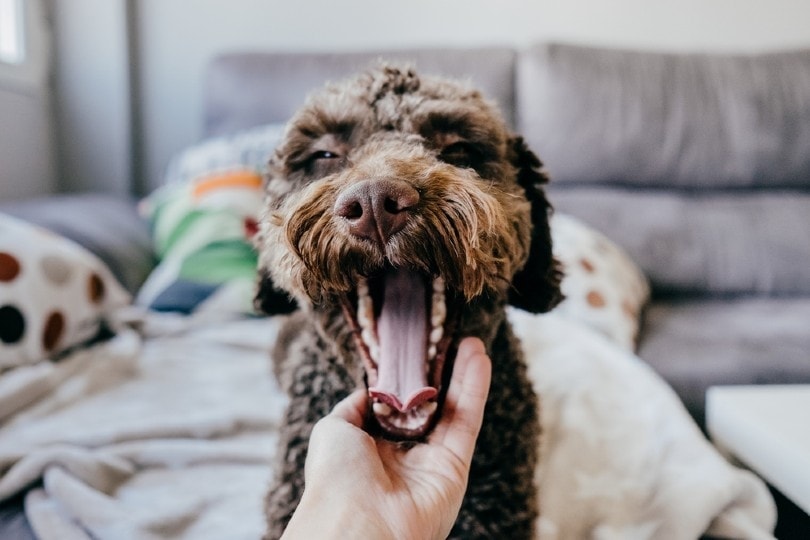
We’ve all heard the adage that a dog’s mouth is cleaner than ours, but where does this statement come from? More importantly, is it true? The American Kennel Club has weighed in on whether dogs have cleaner mouths than humans, and the most concise answer is “no, dogs' mouths are not cleaner than humans'.”1
However, it’s not a simple yes or no question. Comparing a dog’s mouth to a human’s is just inaccurate. They are not biologically or chemically similar enough to make the comparison.

Differences Between Dog Mouths and Human Mouths
Our mouths constitute the habitat of what we call “microbiome,” the community of hundreds of microbial organisms like bacteria that thrive and grow. All animals have a complex mix of bacteria in their mouths; not all bacteria are classified as a “pathogen,” something that makes you sick. Humans have about 615 different species of bacteria in their mouths at any given time, and many of these microbes are not present in dog mouths and vice versa. ²
This goes for both pathogens and beneficial bacteria. For instance, the bacterial family Porphyromonas is known for causing periodontal disease in humans and dogs. However, the strain of Porphyromonas found in humans is Porphyromonas gingivalis, while dogs usually get Porphyromonas gulae. While both germs would be considered pathogens to their respective hosts, these bacteria are not commonly found to cause trouble in both species’ mouths. But that doesn’t mean your mouth is cleaner than your dog’s; you might still have Porphyromonas gingivalis in your mouth!³
Can Humans and Dogs Swap Pathogens?
Some pathogens are transmissible between human and animal companions. For instance, ferrets can get the flu from humans, and influenza can be dangerous. However, most bacteria and viruses in your mouth can’t be “given” to your dog and vice versa. Assuming your immune system is functioning correctly, your immune system will kill off any bacteria or viruses passed from your dog to you.
To begin with, many illnesses common in dogs can’t spread to humans (like parvovirus or distemper). However, there are some notable exceptions. Both humans and dogs can contract salmonella. It’s more common for dogs who get fed a raw diet to contract salmonella, and this disease can be spread between humans and dogs.
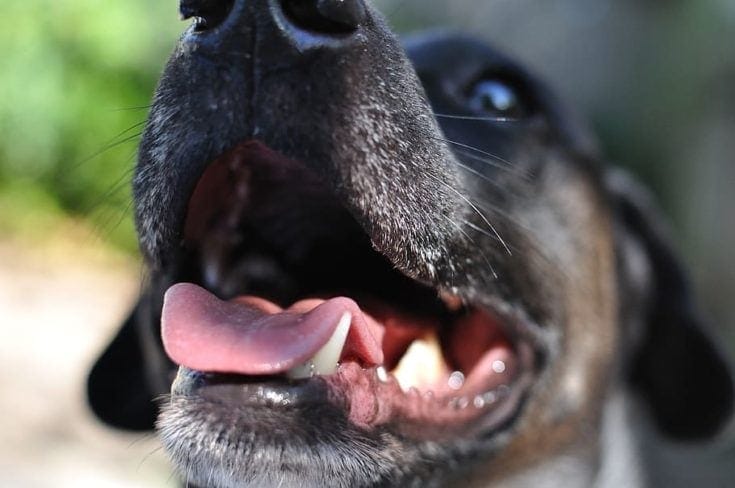
Dogs are also known for eating things that most humans would consider immoral to even touch, like cat feces. So, the number of external pathogens introduced to a dog’s mouth microbiome is much higher than humans. From a young age, we teach our children not to put things in their mouths to avoid introducing bacteria to their systems. Dogs don’t care about that wisdom!
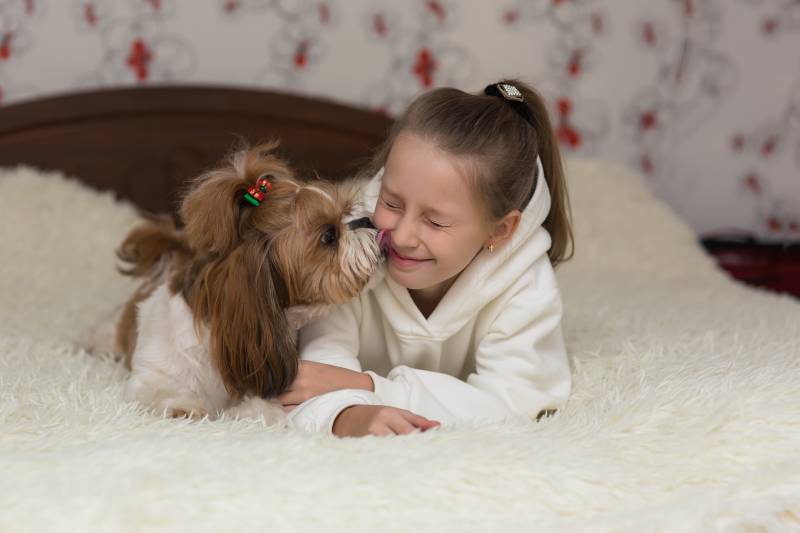
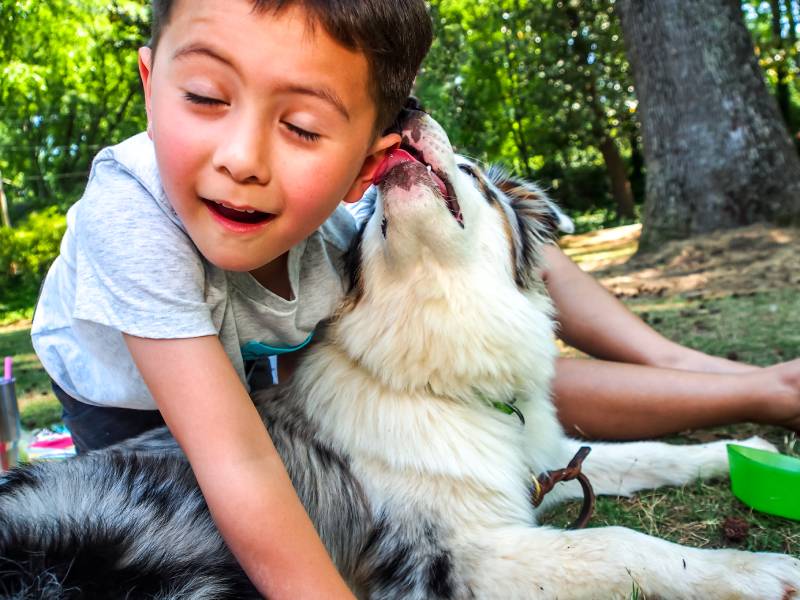
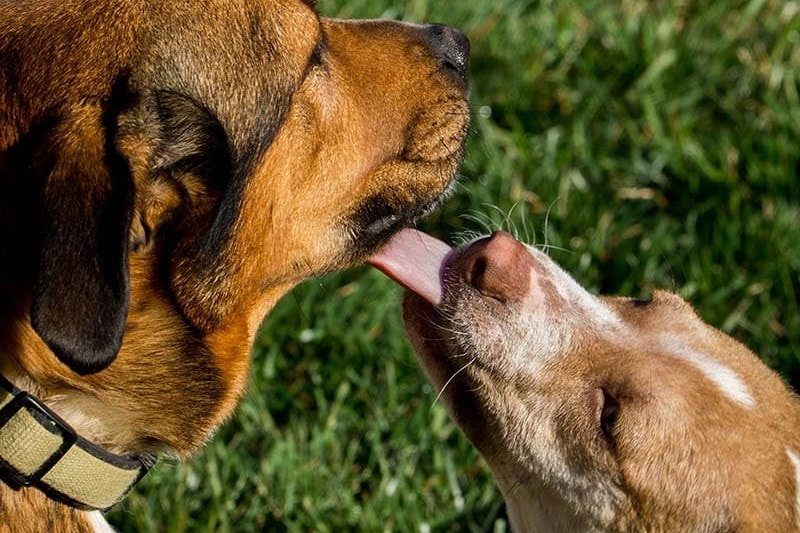
So, sharing a mouthy kiss with your dog is definitely best avoided. There is scientific evidence to say that you should try to avoid letting your dog lick your face.
The myth that a dog’s mouth is cleaner than a human’s mouth may originate from the fact it has historically been said that dog saliva can clean a wound and make it heal faster. And many people still let their dogs lick their wounds to improve healing. Looking at it like that, it might genuinely seem that a dog’s mouth is cleaner than a human’s mouth. But let’s explore this topic further.

Can Dog Saliva Heal Wounds?
When cats or dogs get injured, we often see them licking their wounds. This led the ancient Greeks to believe that dog saliva had a magical healing property. Indeed, they would use dog saliva in many of their herbal medicines for wounds, and dogs were featured in religious healing ceremonies. This history may have influenced the perception that dogs’ mouths are cleaner than humans.
The truth is that most mammals, humans included, are known to lick their wounds. We’ve all experienced that strong, primal urge to put our finger in our mouth after getting a paper cut. This primal urge extends back into the hunter-gatherer phase of humanity. When we lick a wound, the tongue removes dirt and debris from the damage. However, licking too much could worsen the injury or even create new injuries to the skin, such as in dogs who suffer from hot spots.
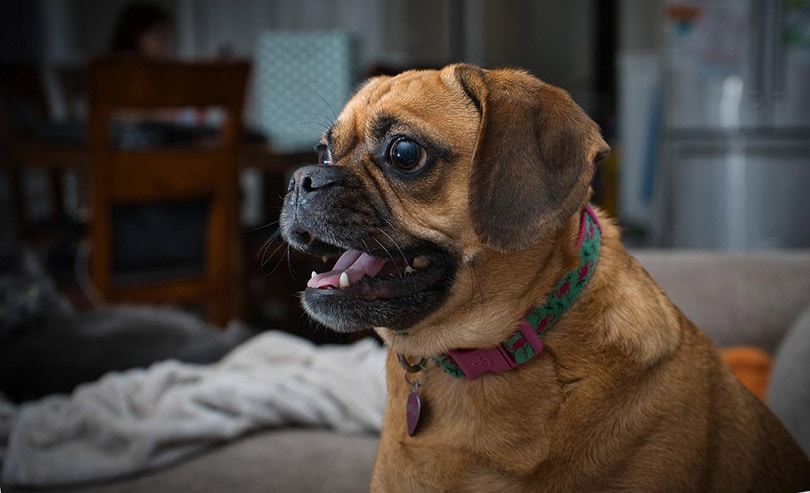
They may have been onto something regarding a healing property, though. We’ve found that saliva contains proteins called histatins that help protect the body against infection. Further research indicates that other beneficial compounds in saliva can protect cuts from bacterial infections.
Now, this doesn’t mean you should start letting your dog lick your or their wounds or that you should lick your wounds. Though saliva has healing compounds, licking wounds adds moisture and extra trauma to the current injury and presents special risks not present in more conventional medical methods. Saliva is still part of one’s microbiome, and it contains more than just beneficial proteins and compounds. It also includes pathogens.

Final Thoughts
Unfortunately, dogs don’t have cleaner mouths than humans. In the above article, we have shared some of the pathogens that could be spread if your dog kisses you or licks your face. Saliva seems to have some healing properties, but the risks of letting a dog lick a wound far outweigh the benefits.
Related Reads:
Sources
[Is being licked by dogs not dirty?]
Featured Image Credit: Lucia Romero, Shutterstoc
Get Hepper In Your Inbox


Pet care tips from our vets and experts, straight to your inbox.
You may opt-out at any time. View our Privacy Policy for more information.
Marta has been a veterinarian for over sixteen years working across the UK and Spain and as a remote veterinary consultant. She has wide experience in small animal internal medicine and surgery with a soft spot for cats.
Her main fields of interest are ophthalmology and critical care medicine enjoying every single aspect of animal’s care, and she is a member of the Royal College of Veterinary Surgeons. Marta enjoys sharing the most helpful information with pet parents across the world about every aspect of their life with their beloved ones.
As one of our in-house veterinarians, Marta enjoys sharing the most helpful information with pet parents across the world about every aspect of their life with their beloved ones. She loves knowing that she can support our readers and communicate about any medical topic that might be relevant to your pet’s health and well-being.
Education
Marta graduated from Cardenal Herrera-CEU University in Valencia, Spain. She holds two Ophthalmology Certificates, GPCert Ophthal from ESVPS and UAB.
Experience
Marta has been a veterinarian for over sixteen years working across the UK and Spain and as a remote veterinary consultant. She has wide experience in small animal internal medicine and surgery with a soft spot for cats. Her main fields of interest are ophthalmology and critical care medicine enjoying every single aspect of animal’s care. Marta is a member of the Royal College of Veterinary Surgeons.
Join the conversation
Ask a question, share your story, or send private feedback.