Hepper blog

Search our database of over 9,984 posts with up-to-date information from our experts and veterinarians.

Hepper is reader-supported. When you buy via links on our site, we may earn an affiliate commission at no cost to you. Learn more.

How to Clean a Dog Bite in 7 Easy Steps: Vet Approved Advice

By Luxifa Le · Reviewed & fact-checked by Dr. Lorna WhittemoreVet Approved
Dr. Lorna Whittemore
Reviewed & Fact-Checked byDr. Lorna WhittemoreVeterinarian
Lorna is a Scottish vet who has lived, studied, and worked on three continents and has a love of travel. With 20 years of experience in small animal medicine andsurgery, both in the charity and private sector. Gaining a further qualification in feline medicine has given her a continued sense of amazement at the fabulous animals. Currently living in Cape Town, South Africa, with her family and expanding number of pets allows her to spend time in and around nature where she is at her happiest. With a love for learning, Lorna is enjoying researching, editing, and fact-checking for Hepper veterinary editorial team and truly feels that she has the best job in the world!View authorThe information is current and up-to-date in accordance with the latest veterinarian research. Read about our vets
Share
Ask us a question in the comments
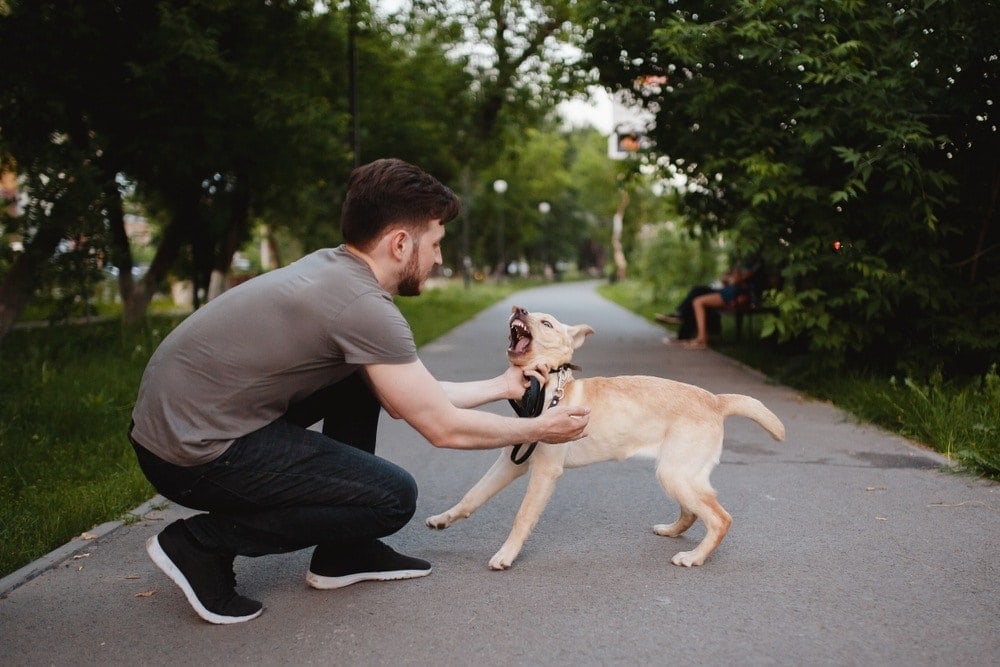
dog trying to bite man

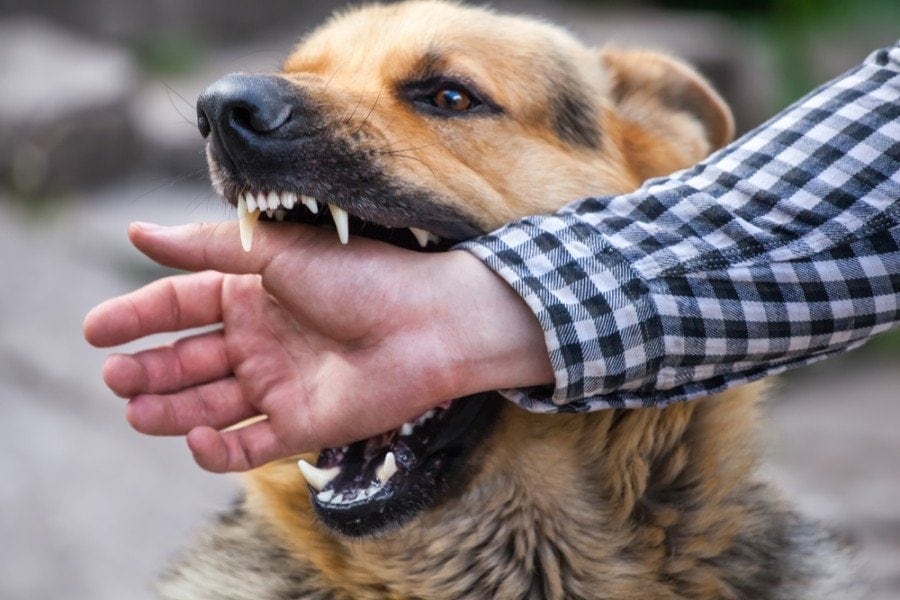
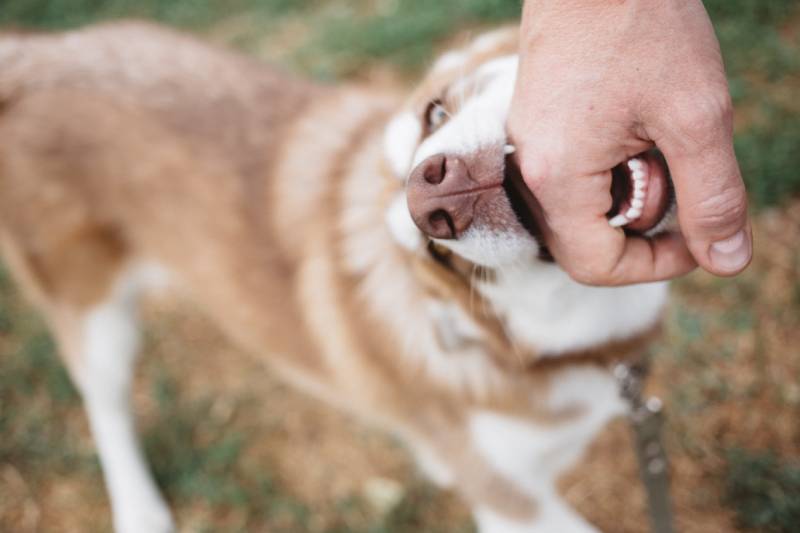
Animals can be unpredictable, and it’s almost impossible to be entirely removed from the incidence of dog bites if you have a dog. Whether your dog bites you, someone else, or another animal, or your dog is bitten, having a dog increases the likelihood of being involved in one of these incidents.

Here’s a quick guide to treating a dog bite; the steps will be relatively similar no matter who you treat. You want to be sure you’re following all the necessary processes to promote good healing. Always exercise caution and don’t hesitate to seek professional medical attention; it’s better safe than sorry.

The 7 Steps to Clean a Dog Bite

1. Apply Pressure to Any Bleeding Until the Bleeding Stops

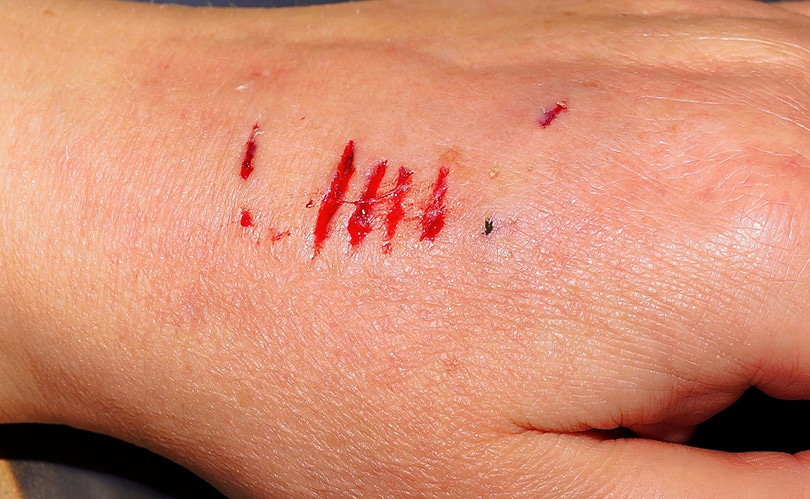
Start by applying pressure to any part of the bite that is bleeding. If no part is actively bleeding, consider yourself lucky and skip this step! Keep applying pressure to the wound until it stops actively bleeding. Many dog bites will not do too much damage, but dog bites can do serious damage in severe cases.

Puncture wounds, crush injuries, and open gashes must be seen by a medic, pain relief, antibiotics or stitches may be needed. Superficial wounds may be treated at home.
Dog Bite
Image By: Kapa65, Pixabay

2. Wash the Wound

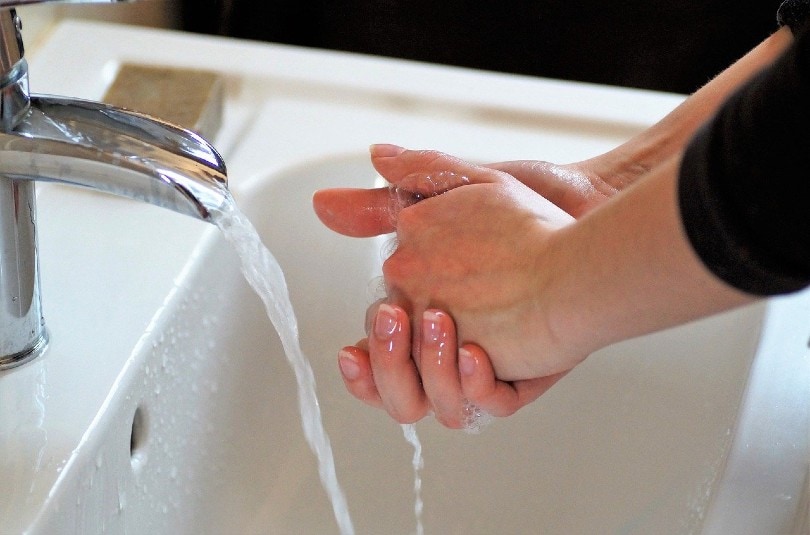
Start by washing any dirt or debris away from the wound. This will be important for healing so that the wound is not dirty or contaminated with debris. Flush with copious water, preferably sterile wound flush.


3. Disinfect the Wound

The open wound needs to be kept clean so it can heal properly. You’ll want to disinfect the wound with something gentle on you but tough on germs. Unfortunately, there’s no way for this to be a painless experience. Disinfectants usually contain ethanol or hydrogen peroxide, which causes a burning sensation when applied to the body, especially a sensitive spot like a cut.

Some non-stinging antiseptics like chlorhexidine soap are cheap, effective, and won’t sting like other antiseptics.
woman washing hands
Image Credit: ivabalk, Pixabay

4. Collect Rabies Information

We cannot stress enough how important it is to ensure that you collect the rabies tag information of the dog that bit you. If the owner cannot provide rabies tag information, go immediately to the emergency room. If you were bitten by a dog not vaccinated against rabies or whose rabies vaccination status cannot be confirmed, you must receive rabies shots after a dog bite.

When a rabies infection becomes symptomatic, the disease has a 100% mortality rate. No one has ever survived a symptomatic rabies infection. This is true for both humans and animals. So, ensure you collect proper rabies tag information to ensure that you and your dog are not in danger.


5. Apply an Antiseptic Ointment to the Wound

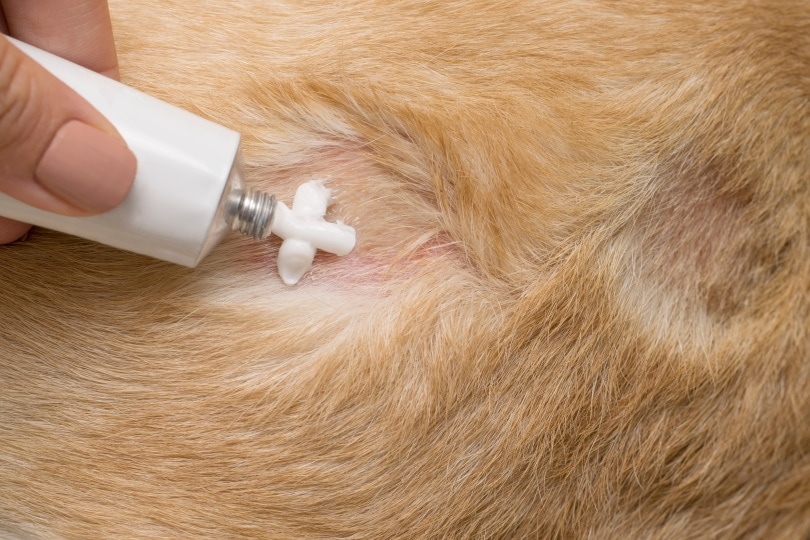
Triple antibiotic ointments containing bacitracin, neomycin, and polymyxin B can be found at almost any drugstore. Ensure that you don’t use any creams containing corticosteroids like hydrocortisone. Antiseptics such as Savlon, Germolene, and Betadine are also suitable.


6. Prevent Any Extra Trauma
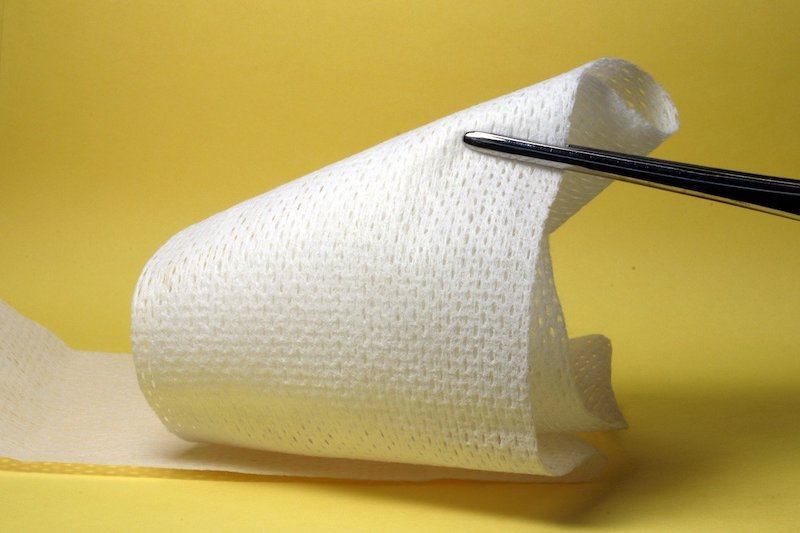
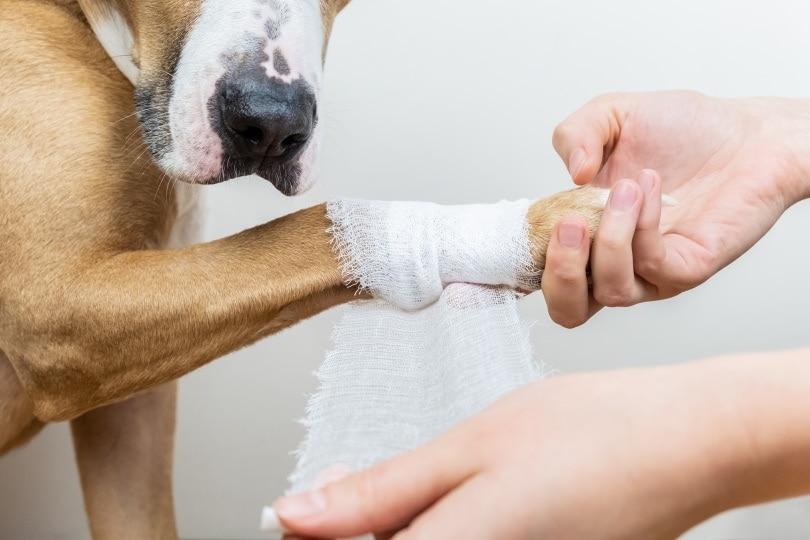
gauze bandage with tweezers
Image Credit: HeungSoon, Pixabay

If you can wrap a light bandage over the area, it will protect it from any external trauma like bumping on a table or licking. You’ll need to monitor the application and change it frequently if you bandage your dog’s wound.


7. Clean the Wound with an Antiseptic Solution a Few Times a Day

Apply antiseptic ointment until the skin is healed. If the wound worsens at any time or fails to resolve within a week, seek help from a professional of the medical discipline relevant to the bite victim.

How to Prevent Dog Bites

The best treatment for a dog bite is prevention. A dog bite that never happens does no damage. Professional dog trainers and other pet care professionals have weighed in on the most effective ways to mitigate threats and reduce the incidence of dog bites.

It starts by understanding the body language of a dog who feels threatened. Dog attacks are most common when the dog feels threatened or intimidated by another dog or person. An aggressive dog may try to make himself look bigger by rolling his shoulders forward. The fur on the back may stand up or puff out, and the tail will be stiff and might be straight up or even wagging.

The whole body will adopt a stiff, straight-legged posture that moves in the direction of the offending creature. The frightened dog may growl, bare its teeth, or bark. Continuing to approach dogs displaying this body language could result in a nasty bite. So, back off and let them decompress.

Nervous dogs may try to make themselves look smaller. They may shrink to the ground in a crouch, lower their heads, lick their lips, tuck their tails between their legs, flatten their ears against the head, and yawn. They may avoid eye contact, stay very still, or try to turn or slowly move away from what they think is a threat. Fearful dogs may also bite if their body language is not headed.

Avoid any dogs showing signs of fear or aggression. Even if these dogs are usually friendly, they’re trying to tell you that they need to be alone right now. Give them space to relax in peace before you try to approach them again.
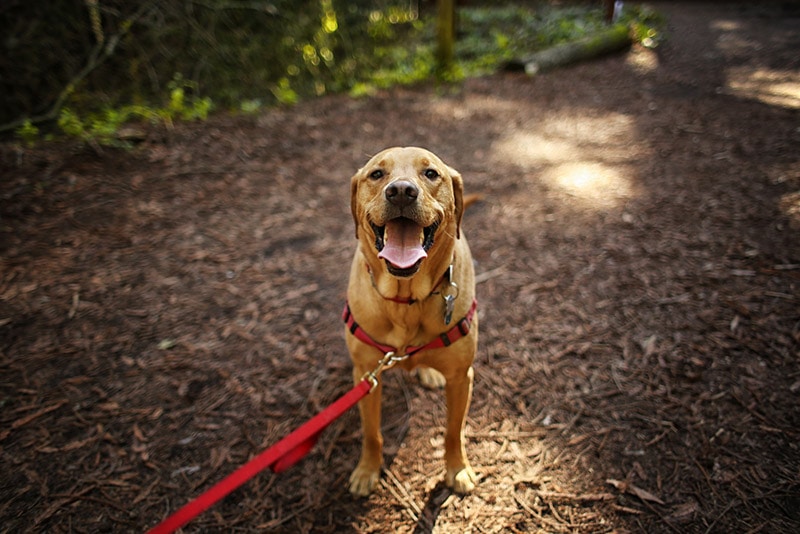
dog on a leash hiking with owner
Photo Credit: N K, Shutterstock

Safety Tips for Children

Children are particularly susceptible to dog bites because of their impulsiveness and inexperience with dogs. Teaching your children to interact with dogs respectfully and appropriately will save everyone a heartbreaking experience with dog bites. Here are some tips you can teach children:

  • Do not approach, touch, or play with a dog that is sleeping, eating, chewing on a toy or a bone, or caring for puppies. Animals are most likely to attack when they’re startled, frightened, or caring for their offspring.
  • Never approach a barking, growling, or scared dog. These dogs are likely to attack in self-defense against a perceived threat.
  • Teach children the signs of an anxious dog such as those mentioned above. Including whale eye, appeasement licks, and head-turning.  They must move away from the dog if they see these signs. Dogs are not people and do not like hugs.
  • Do not try to pet unfamiliar dogs without asking permission from the dog’s guardian first. If the guardian permits petting their dog, children should be prepared to let the dog approach in its own time and then sniff their closed hand first and then pet the dog on the shoulders or chest rather than the head.
  • Children should be taught never to try and pet dogs who are behind a fence or in a car. Dogs often feel they are compelled to protect their home territory and may be snappier and more disagreeable when they’re in their environment, and you’re outside of it.
  • If children see an off-leash dog outside, they should be taught never to approach the dog but to get an adult’s help instead.
  • If a loose dog comes near a child, teach them not to run or scream. Instead, avoid eye contact and stand still, like a tree, until the animal moves on. Once the dog loses interest, the child should slowly back away from the dog. Hands down by sides and fists closed, chin tucked down onto chest, and stand still.
  • If your child falls or is knocked to the ground by a dog, teach them to curl up in a ball with their knees tucked into their stomach and fingers interlocked behind their neck to protect the neck and ears. If they stay quiet and still, the dog will likely lose interest quickly.
  • Teach your children not to try and outrun dogs. If a dog attacks your child, teach them to feed the dog their jacket, bag, books, or anything that the dog can grab onto and put between themselves and the attacking dog.

Final Thoughts

Whether you’re a dog person or not, no one wants to deal with the fallout of a dog bite. But it’s almost inevitable to be at least in your periphery if you have a dog. So, learning how to treat the wounds effectively will make the experience easier when it does happen!

See Also:


Featured Image Credit: Parilov, Shutterstock

Get Hepper In Your Inbox

Pet care tips from our vets and experts, straight to your inbox.

List

Select all that apply.

You may opt-out at any time. View our Privacy Policy for more information.

Luxifa Le
Authored by

Luxifa Le

Join the conversation

Ask a question, share your story, or send private feedback.
Rate this post
Required to post. Only our editors see your rating.
Who should see this?

A human reviews every comment before it appears. Your email is never published.

Picked to go with this article

Dog Bitten by Another Dog? Our Vet Explains What to Do

Dog Bitten by Another Dog? Our Vet Explains What to Do

Just like people, dogs may not get on with every dog they meet. Dogs can bite for many reasons: they may be anxious, guarding an object, protecting you, or be…

Dr. Joanna Woodnutt
By Dr. Joanna Woodnutt ·
How to Clean a Dog Wound in 8 Vet-Approved Steps

How to Clean a Dog Wound in 8 Vet-Approved Steps

Accidents happen to everyone, and unfortunately, your dog is no exception. With their curiosity and ability to find mischief wherever they go, a few injuries h…

Nicole Cosgrove
By Nicole Cosgrove ·
Dog Bite Prevention Week: When It Is & How It’s Celebrated

Dog Bite Prevention Week: When It Is & How It’s Celebrated

More than 4 million adults and children are bitten by dogs every year in the United States, and over 800,000 require medical attention for dog bites according…

Nicole Cosgrove
By Nicole Cosgrove ·
A Cat Bit Me, Help! 6 Vet-Reviewed Steps to Take

A Cat Bit Me, Help! 6 Vet-Reviewed Steps to Take

Cats are amazing animals that have been beloved for centuries. Seeing one of these critters curled up in your home is a warming feeling. However, cats are also…

Melissa Gunter
By Melissa Gunter ·

Keep reading

More stories you might like

Can You Use Hydrogen Peroxide on Dogs for Cleaning Wounds? (Vet Answer)

Hydrogen peroxide is considered one of the most common disinfectants in the world. This solution has been used by people to clean superficial wounds due to its…

Dr. Iulia Mihai
By Dr. Iulia Mihai ·
Can You Use Hydrogen Peroxide on Dogs for Cleaning Wounds? (Vet Answer)

Is Neosporin Safe for Dogs? Vet-Approved Facts & Tips

As you probably know from watching your dog, canines are curious animals that like to explore, and sometimes, their adventures, whether in the home or outside,…

Nicole Cosgrove
By Nicole Cosgrove ·
Is Neosporin Safe for Dogs? Vet-Approved Facts & Tips

Why Do Dogs Bite? 8 Reasons & How to Stop It

It is concerning when your precious canine bites you. An occasional nip is usually nothing to be concerned about, but when it becomes a habit, you may have a b…

Jordyn Alger
By Jordyn Alger ·
Why Do Dogs Bite? 8 Reasons & How to Stop It

What Could Happen If My Dog Licks Human Blood? Vet-Reviewed Precautions & Prevention

If you've ever had an injury and found yourself bleeding, the chances are your dog has come over to investigate. Of course, not all dogs will, but some may att…

Nicole Cosgrove
By Nicole Cosgrove ·
What Could Happen If My Dog Licks Human Blood? Vet-Reviewed Precautions & Prevention

How to Stop Your Dog from Biting When Excited: 5 Simple Tricks

All dogs get excited at times, and when they do, they may bite or nip you, not realizing it’s an undesired behavior. Puppies are typically guilty of this becau…

Rachel Giordano
By Rachel Giordano ·
How to Stop Your Dog from Biting When Excited: 5 Simple Tricks

Why Does My Husky Bite Me? Dog Behavior Explained

Dogs and humans have lived together, thanks to domestication, for at least 20,000 years. Romanticized accounts suggest people and a now extinct wolf ancestor b…

Chris Dinesen Rogers
By Chris Dinesen Rogers ·
Why Does My Husky Bite Me? Dog Behavior Explained

Why Do Dogs Lick Your Wounds? Should You Worry?

As we move through our daily lives, it isn’t unusual to get a cut or wound on our bodies. More often than not, these wounds may be so small we don’t remember h…

Melissa Gunter
By Melissa Gunter ·
Why Do Dogs Lick Your Wounds? Should You Worry?

Top 10 Dog Breeds Most Likely to Bite Humans: Facts, Size & Temperament (Vet-Reviewed Info)

Dogs have found places in our lives and homes since early humans first domesticated wild canines. They’ve even earned the status of our best friends. That make…

Chris Dinesen Rogers
By Chris Dinesen Rogers ·
Top 10 Dog Breeds Most Likely to Bite Humans: Facts, Size & Temperament (Vet-Reviewed Info)