Hepper is reader-supported. When you buy via links on our site, we may earn an affiliate commission at no cost to you. Learn more.
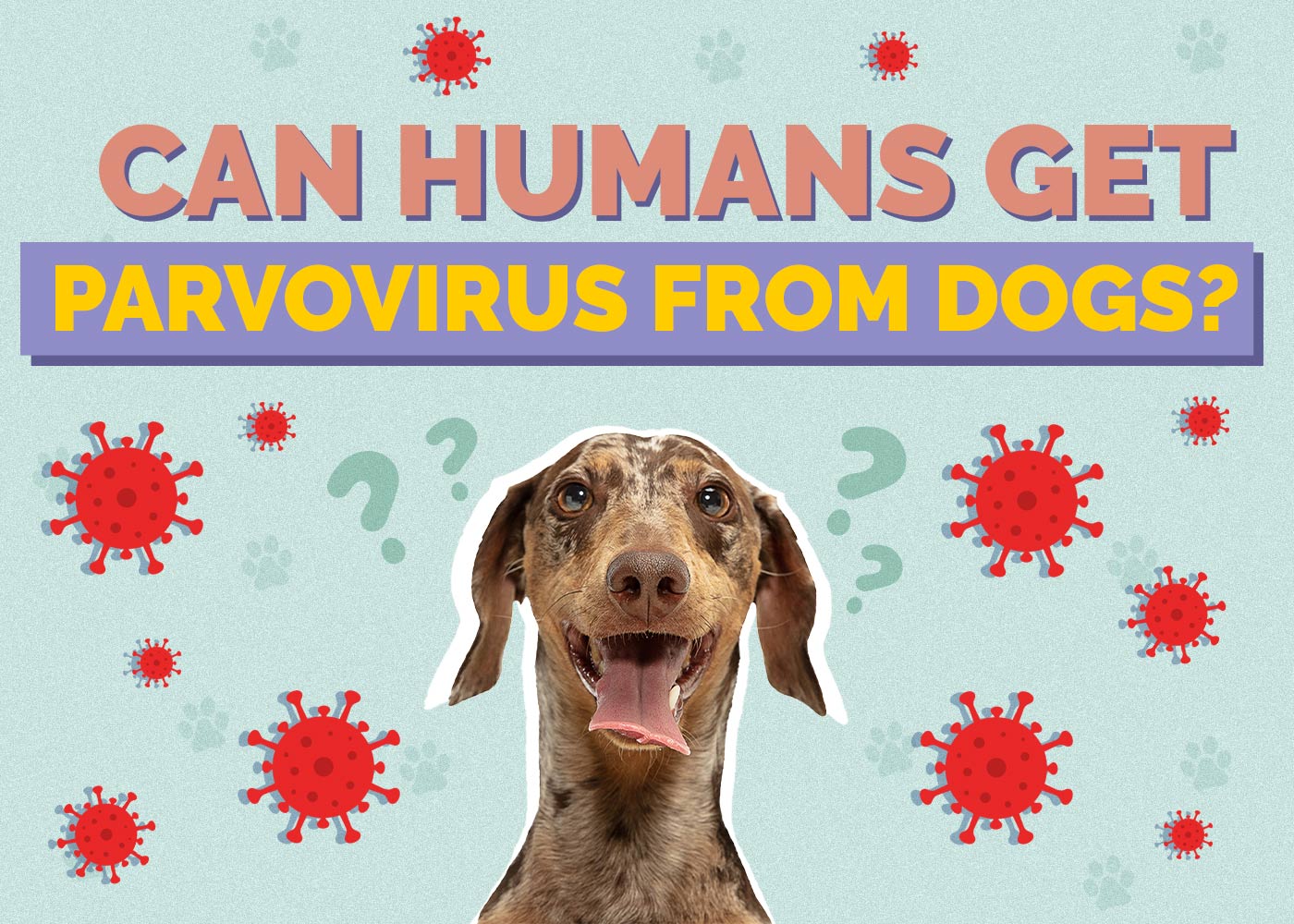
Can Humans Get Parvovirus From Dogs? Vet Reviewed Facts & FAQs

In this article
The Parvovirus that we know and dread that occurs in dogs is caused by the virus Canine Parvovirus 2 (CPV-2), which is part of a family of viruses known as Parvoviridae. The virus has evolved into three distinct variants, each with increasing pathogenicity and host range, and studies suggest that the virus can infect other members of the suborder Caniformia (consisting of dog-like animals such as wolves, foxes, and raccoons). In domestic dogs, unlike other infected species, it is often fatal, particularly if they are puppies or unvaccinated adults.
There are a few severe diseases known as core canine diseases. Parvovirus is a core disease, and vaccines have been developed against it to protect our dogs. If your dog has been unfortunate enough to contract parvo, then you might rightly ask, can I or other humans catch this threatening and debilitating virus from dogs?
While humans can develop parvovirus, it is not the same strain as that seen in dogs and it usually has a milder outcome than the effects seen in canines. With that in mind, humans cannot get parvovirus directly from dogs.1

Is Parvovirus in Dogs the Same as Parvovirus in Humans?
Parvovirus is a species-specific virus with various strains. The parvovirus which affects dogs, known as canine parvovirus 2, is highly contagious and a serious disease. This type of strain of canine parvovirus cannot infect humans, which you may be relieved to hear!
While humans can contract a virus called parvovirus B19 or fifth disease from contaminated surfaces, people, and places, there is no risk of people acquiring parvovirus from infected dogs, as the viruses are different.
What Are the Signs of Parvovirus in Humans?
Parvovirus B19, slapped cheek syndrome, or fifth disease is more common in younger children than adults. Around 50% of adults in North America have been infected with this during their childhood or teenage years.2 The following signs are often seen and are markedly different from those exhibited by dogs with CPV-2. It is worth knowing that adults may not show any signs at all should they contract parvovirus B19.
Common symptoms of Parvovirus B19:

Signs of Canine Parvovirus 2 (CPV2):
Signs of illness from CPV2 usually transpire between 3 and 7 days after dogs contracted the viral infection, and the following signs are exhibited by most dogs.
- Lethargy
- Loss of appetite
- Abdominal pain
- Bloating
- Vomiting
- Severe diarrhea, often bloody
- High temperature or very low temperature
- Dehydration
- Increased heart rate
- Difficulty breathing
- Death
Call your veterinarian immediately if you notice any of these signs or suspect parvo. Even if your dog is vaccinated, the same advice applies because vaccinated dogs can still contract the virus, although much less commonly. The quicker treatment begins, the better the outcome.
Can I Touch My Dog if They Have Parvo?
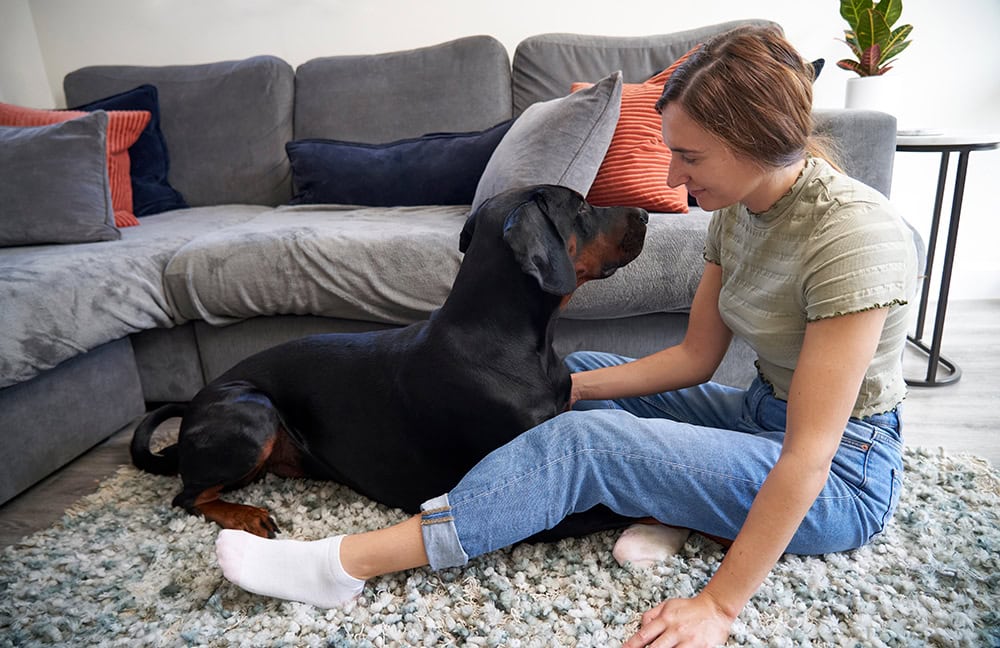
As the parvoviruses found in dogs and humans cannot be transmitted between the two species, you can safely handle, touch, and pet your dog should they have canine parvovirus. This attention can also help to speed up recovery in an indirect way. However, always bear in mind that although you won’t catch CPV-2 from a dog, fecal contamination can cause illness in you, so good hygiene is vital.
It is of utmost importance that anyone handling an infected dog or anything it has touched, must wear personal protective equipment, including disposable gloves and a disposable apron. This will help to prevent any cross-contamination with other dogs you may meet. CPV-2 is highly contagious between dogs and the virus can exist on contaminated bedding and clothing for long periods of time. It is resistant to heat, cold, humidity, and drying. Be sure to always wash your hands thoroughly after touching, stroking, or handling your dog if they have parvo.

Can Dogs Get Parvo From Humans?
Not exactly. While humans can contract and fall ill with parvovirus B19 (fifth disease), dogs are not affected by it. Transmission of this particular strain of parvo does not occur between dogs and humans.
Owners and other people, however, can unknowingly assist with the spread of canine parvovirus between dogs and increase the chance of their dog contracting canine parvo (not B19). Contamination occurs when humans encounter the parvovirus directly by coming into contact with an infected dog, infected environment, or infected object. For example, an owner may unwittingly bring CPV-2 into their home or to their dog via the bottom of their shoe, should they happen to have walked on a piece of contaminated land.
Canine parvovirus is a tough virus to eradicate, as it can live for months on surfaces, objects, and environments while being resistant to many cleaning agents and temperatures. This means clothes, bedding, boots/shoes, leashes, or any other item that has come in contact with a dog carrying canine virus can spread the virus to a healthy dog unless properly cleaned and decontaminated.

Summary
Canine parvovirus in dogs is an extremely serious and often fatal disease. While highly infectious among dogs, it is not, fortunately, a virus that is contagious to people. You can rest assured you will not get parvo from them, as the human form of parvo is a type of virus. Any concern about vaccinations, disease, or suspicions that your dog has contracted canine parvovirus needs to be discussed with your veterinarian who can assist, advise, and treat on all these topics.
Sources
https://my.clevelandclinic.org/health/diseases/16633-parvovirus-infection
https://my.clevelandclinic.org/health/diseases/16633-parvovirus-infection
https://www.avma.org/resources-tools/pet-owners/petcare/canine-parvovirus
https://wsava.org/wp-content/uploads/2020/01/WSAVA-Vaccination-Guidelines-2015.pdf
Featured Image Credit: Elena Loza, Shutterstock
Get Hepper In Your Inbox


Pet care tips from our vets and experts, straight to your inbox.
You may opt-out at any time. View our Privacy Policy for more information.
Annaliese began her career as a veterinary nurse in Edinburgh, later advancing her qualifications with a diploma in advanced veterinary nursing in surgery from London. Her work in small and mixed veterinary practices led her to become a head nurse, where she trained other veterinary nurses, managed the nursing department, conducted nurse clinics, and developed new patient care protocols.
Throughout her career, Annaliese has cared for thousands of patients and their owners, setting higher standards in nursing regimes with a focus on surgery and anesthesia. She co-authored multiple veterinary nursing textbooks and contributed to various mainstream publications in the UK and USA. After more than twenty years in the veterinary and pet care professions, she retired from clinical practice to pursue full-time writing. Having cared for thousands of patients and owners, Annaliese specialized in surgery and anesthesia. She was asked to co-author several veterinary nursing textbooks and contributed to a number of other publications in the UK and USA. After more than two decades in the veterinary and pet care industries, she retired her scrub suit and now works as a full-time writer.
Annaliese Morgan has been a dedicated veterinary nurse for over two decades, having completed a diploma in advanced veterinary nursing in surgery from London and qualifying from Edinburgh. Her professional experience includes managing a nursing department, training other veterinary nurses, providing patient care, and running nurse clinics in both small and mixed veterinary practices.
As an expert in surgery and anesthesia, Annaliese has treated thousands of patients and owners. In addition to being asked to co-author multiple veterinary nursing textbooks, she has written for a variety of publications in the UK and USA. After a long and successful career in the veterinary and pet care professions, Annaliese now dedicates her time to writing full-time. You can find out more about her work at www.annaliesemorgan.com.
Join the conversation
Ask a question, share your story, or send private feedback.