Hepper blog

Search our database of over 9,984 posts with up-to-date information from our experts and veterinarians.

Hepper is reader-supported. When you buy via links on our site, we may earn an affiliate commission at no cost to you. Learn more.

How To Keep Axolotl Tank Cool: 8 Safe & Effective Methods
By Lindsey Stanton
Share
axolotl

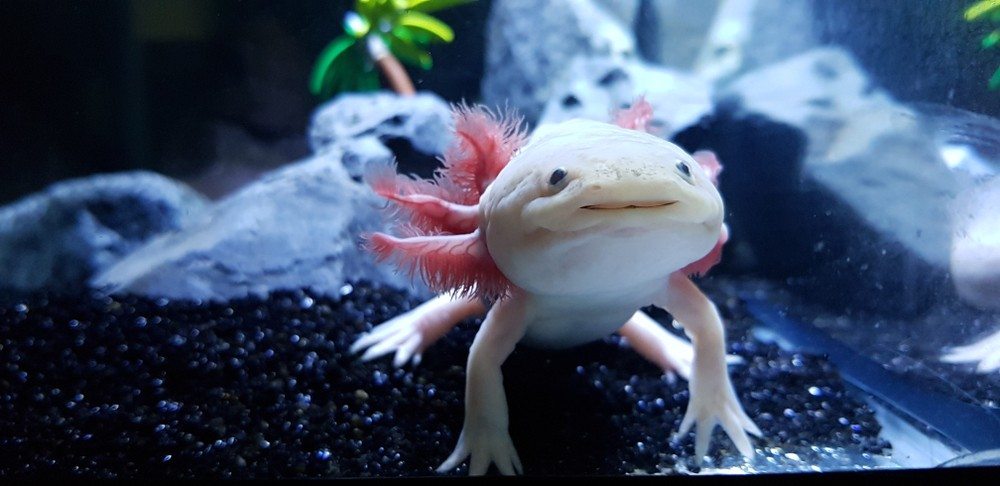
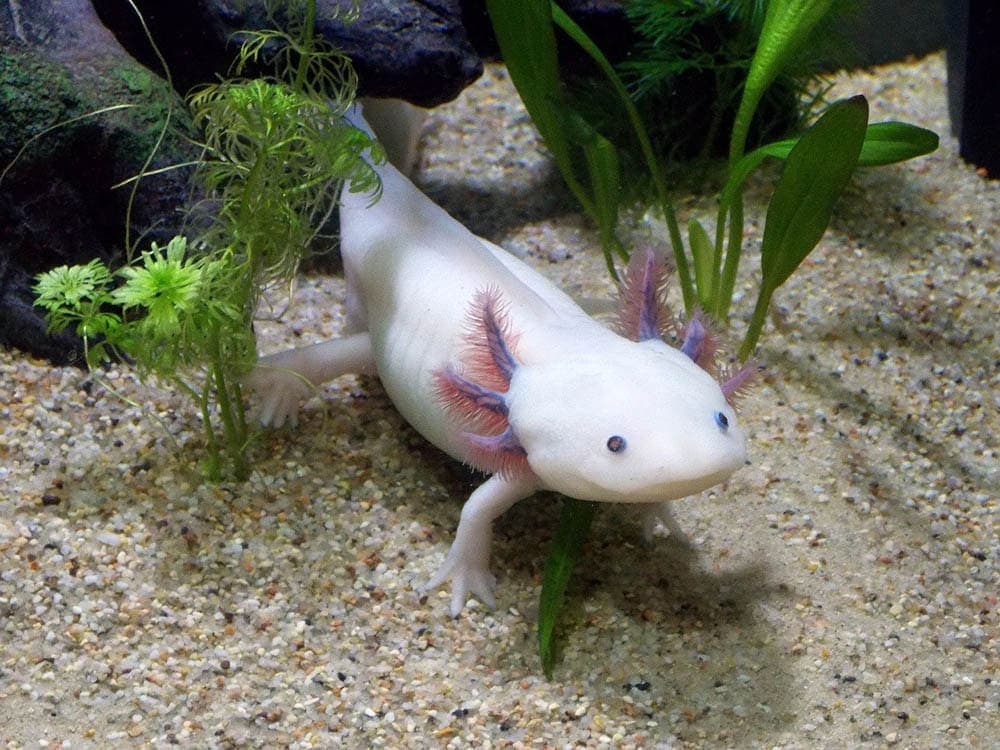
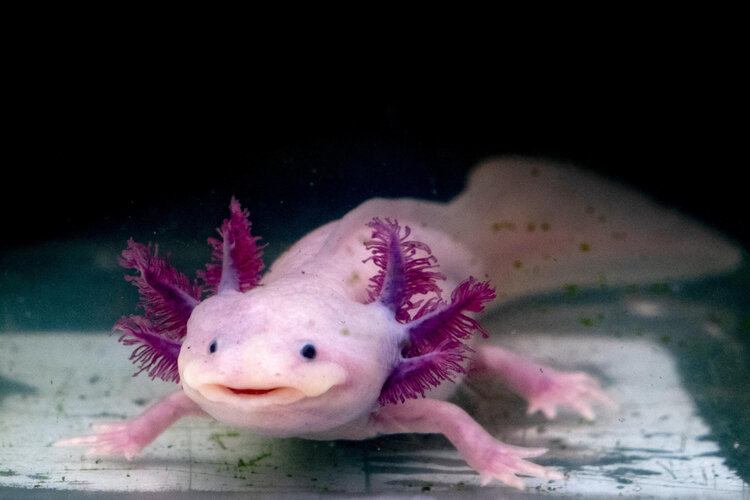
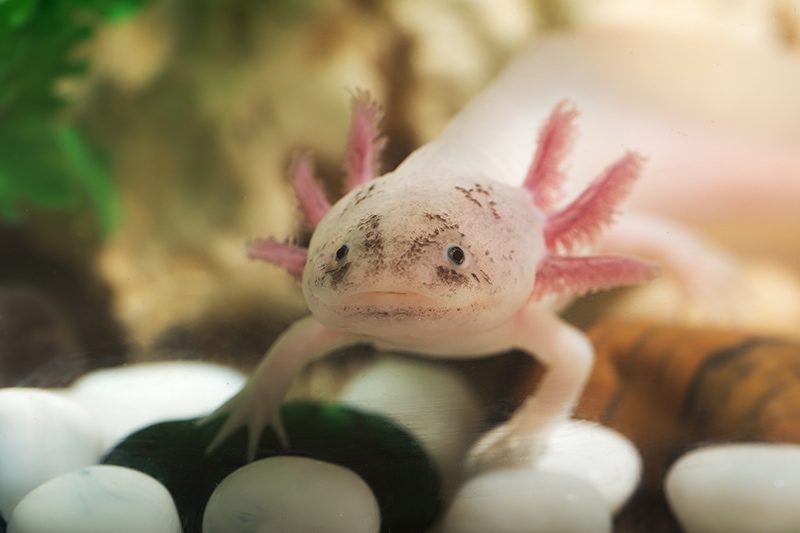
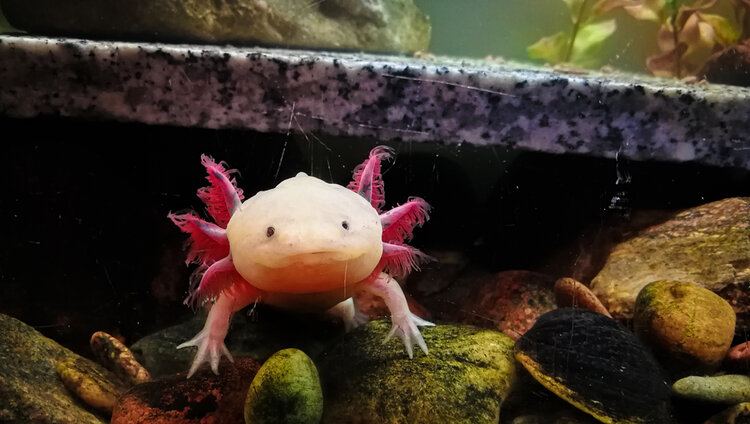
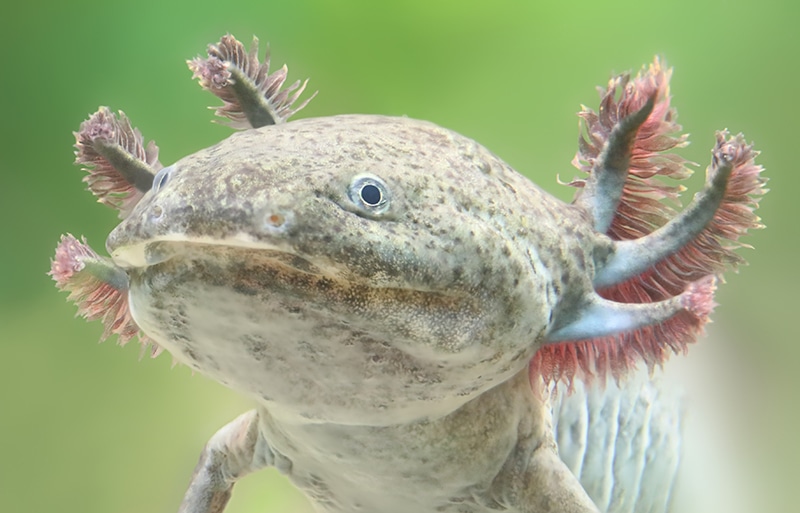
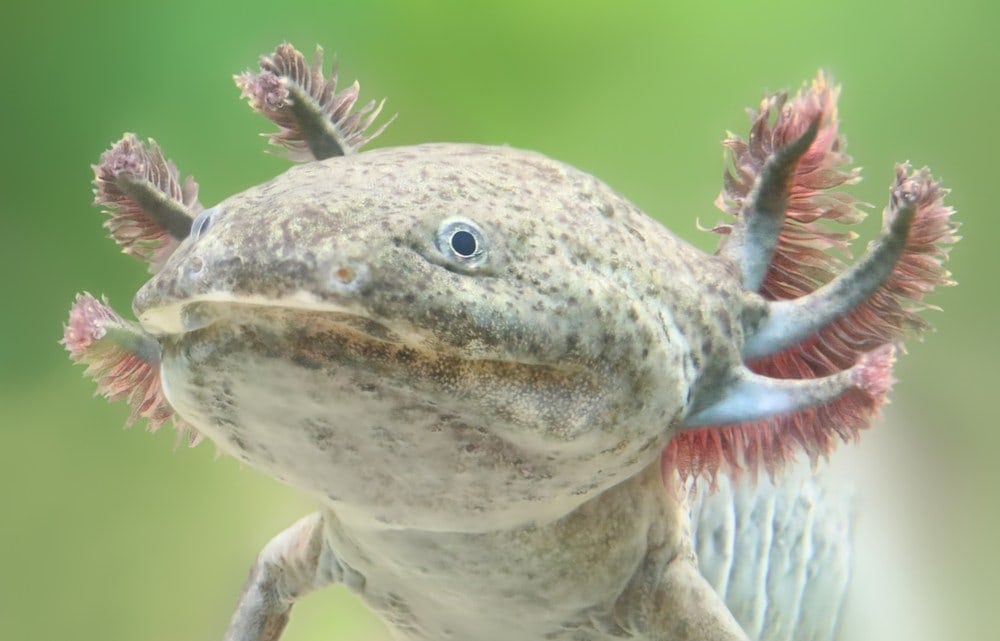
Axolotls are some incredible creatures as far as we are concerned. One of the first things to mention here is that axolotls are often confused for being fish, but they are not. Axolotls are amphibians, but are still often referred to as “Mexican Walking Fish”. Names, origins, and type of animal aside, the axolotl is an animal that likes things to be fairly cold.

They barely come out of the water, so a lot of this is keeping the water cool, but the air as well. Anyway, how to keep an axolotl tank cool is what we are here to talk about today.

Ideal Temperature for Axolotls Tanks
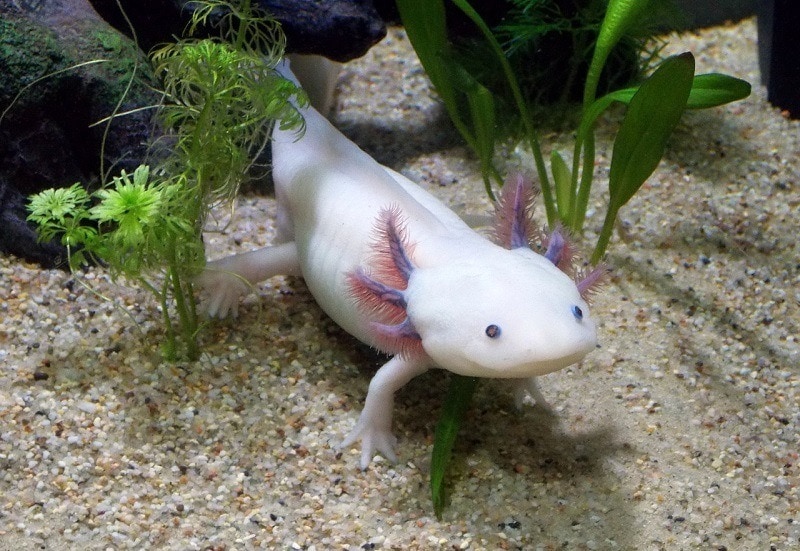
Image Credit: Tinwe, Pixabay

Before we talk about how to keep an axolotl tank cool, you probably need to know what the ideal temperature for them is. Both the water and the air in your axolotl tank should never exceed 18 degrees Celsius or about 64 degrees Fahrenheit. The minimum water and air temperature for an axolotl tank is 16 degrees Celsius or 60 degrees Fahrenheit. As you can see, these creatures like the cold, as opposed to the warmth which many other creatures like.

Keeping an axolotl tank cool is extremely important to its well-being. Sure, having the tank too cold can lead to behavioral changes, sluggishness, and a decreased metabolic rate. However, the tank being a little too cool is not nearly as bad as it is too hot.

Anything over the maximum of 18 degrees Celsius is very problematic for axolotls. Not only will they be very uncomfortable, but the health risks of being too hot are enormous for these creatures, and potentially fatal.

axolotl in tank
Image Credit: Jeffrey Lagmay, Shutterstock

How to Keep Your Axolotl Tank Cool

So, if you live in a warmer climate, or even in a place that has fairly warm autumns, springs, and summers, you are going to need to find a way to keep the tank cool or to cool it down. This is extremely important for the health of the axolotl, so you need to have an efficient and reliable way of doing so.

Here are some of the best tips we can give you in terms of how to keep an axolotl tank cool. On a side note, you should get an aquarium thermometer, preferably one that can read the air and water temperature simultaneously. Simply put, without a good thermometer, you won’t know the temperature the tank is at, which means that you won’t know what kind of adjustments need to be made.

Best Tips

  • The best thing you can do to make sure that your axolotl and the tank stay cool is to keep them in a cool place. While the basement of your home might not be visually appealing, it is most likely much cooler than floors higher up.
  • Try to keep the axolotl tank in a part of the home that does not receive much or any direct sunlight. Keep it in a room of your home that does not often get hit by the sun, while also keeping it away from windows.
  • The next thing you can do to ensure that your axolotl tank stays cool is to keep it away from electronics that create warmth. This might sound strange, but electronics like televisions and computers produce a lot of heat, so keep them away from your axolotl tank.
  • The next thing that you can do to keep your axolotl tank cool is to use a cooling fan. One that blows a decent amount of wind is a good idea, but not too much. Moreover, you want the fan to hit as much of the water’s surface as possible. This will help the heat dissipate from both the tank water and the air in the tank.
  • Any kind of air fan is a good idea. However, you might not necessarily want to use a fan with an actual cooling unit built-in, like a small air conditioning. Unless it has a good temperature adjustment feature that is very accurate, you could end up making the axolotl tank too cold.
  • Many people add ice cubes to the water in the tank or simply place a frozen water bottle in the tank itself. A couple of ice cubes in the water are fine but don’t put a whole frozen water bottle in the tank. If you are using the bottle method, keep the bottle mainly out of the water in a corner of the tank.
  • When doing the ice method, be sure to always have ice bottles or cubes ready. As soon as one is fully melted or thawed, you need to put the next one in. You don’t want the temperature to fluctuate too much because that is also not good.
  • Finally, you will want to get lights that don’t produce a lot of heat. Yes, you do want to meet the minimal lighting requirements of the axolotl, but that is it. The more lights you have and the stronger they are, the more heat they will produce. At the same time, for any in-tank electronics and moving parts, such as the filtration unit, make sure it does not create a lot of heat or consume a lot of power (which will create heat).

Conclusion

Keeping an axolotl tank at the right temperature is honestly a little difficult, but with some good knowledge and practice, it is still doable. As long as you follow the tips we have outlined above, you should have no problems with keeping the axolotl tank at the ideal temperature.

Related Reads:


Feature Image Credit: Henner Damke, Shutterstock

Get Hepper In Your Inbox

Pet care tips from our vets and experts, straight to your inbox.

List

Select all that apply.

You may opt-out at any time. View our Privacy Policy for more information.

Lindsey Stanton
Authored by

Lindsey Stanton

Join the conversation

Ask a question, share your story, or send private feedback.

Rate this post
Required to post. Only our editors see your rating.
Who should see this?

A human reviews every comment before it appears. Your email is never published.

Picked to go with this article

How Long Do Axolotls Live? Average Lifespan, Data & Care Guide

How Long Do Axolotls Live? Average Lifespan, Data & Care Guide

Axolotls are some of the most unique little creatures to have in an aquarium. These little fish-salamander hybrids, known as the Mexican walking fish, have qui…

Ashley Bates
By Ashley Bates ·
5 Amazing Axolotl Tank Mates: Pictures, Facts & Info

5 Amazing Axolotl Tank Mates: Pictures, Facts & Info

The axolotl, also known as the Mexican walking fish, is a cool creature to have in the aquarium. This part-fish, part-salamander hybrid looks about as amusing…

Lindsey Stanton
By Lindsey Stanton ·
Why Is My Axolotl Not Eating? 3 Reasons & FAQ

Why Is My Axolotl Not Eating? 3 Reasons & FAQ

Thanks to Minecraft, axolotls have become extremely popular in the last few years. With the rising popularity of axolotls, there has also been a significant in…

Brooke Billingsley
By Brooke Billingsley ·
Can You Hold An Axolotl? Risks & FAQ

Can You Hold An Axolotl? Risks & FAQ

The axolotl, also known as the Mexican walking fish, is one of the coolest aquarium animals to have, like a mix between a fish and a salamander. Seeing as they…

Lindsey Stanton
By Lindsey Stanton ·

Keep reading

More stories you might like

What's the Ideal Temperature for a Turtle Tank? What You Need to Know!

Turtles are reptiles so they regulate their body temperature using external heat sources. They depend on an adequate environmental temperature to survive. This…

Genevieve Dugal
By Genevieve Dugal ·
What's the Ideal Temperature for a Turtle Tank? What You Need to Know!

Where Did Axolotls Come From? Origin, History & Vet Approved Facts

Axolotls have some impressive gills on either side of their head. These help them breathe underwater, though they also have lungs that enable them to breathe a…

Nicole Cosgrove
By Nicole Cosgrove ·
Where Did Axolotls Come From? Origin, History & Vet Approved Facts

Does An Axolotl Lay Eggs? Vet Reviewed Facts & FAQ

Axolotls are unique creatures that have been causing a stir in the animal world for ages, but do they lay eggs? The answer is yes, axolotls do indeed lay eggs.…

Nicole Cosgrove
By Nicole Cosgrove ·
Does An Axolotl Lay Eggs? Vet Reviewed Facts & FAQ

15 Incredible Axolotl Facts You'll Love to Learn

The Axolotl (pronounced ACK-suh-LAH-tuhl) is, in every sense of the word, an astonishing animal with traits very few animals on Earth share. In the last few ye…

Gregory Iacono
By Gregory Iacono ·
15 Incredible Axolotl Facts You'll Love to Learn

Is an Axolotl an Amphibian? Vet Approved Facts & FAQ

If you’ve ever seen one, there’s no way to forget an Axolotl. This amazing creature always seems to be smiling and looks like a cross between a frog, a salaman…

Gregory Iacono
By Gregory Iacono ·
Is an Axolotl an Amphibian? Vet Approved Facts & FAQ

Why Is My Axolotl Shedding? 7 Reasons Why & What to Do

Axolotls are fascinating animals, often being studied for their regeneration abilities. Thanks to the video game Minecraft, interest in Axies has rapidly grown…

Brooke Billingsley
By Brooke Billingsley ·
Why Is My Axolotl Shedding? 7 Reasons Why & What to Do

30 Great Cold Water Fish for Your Aquarium: No Heater Needed

Keeping an aquarium can require a lot of electrical outlets to account for all the electronics, like filters, air pumps, lights, and heaters. If you’re running…

Brooke Billingsley
By Brooke Billingsley ·
30 Great Cold Water Fish for Your Aquarium: No Heater Needed

Neon Tetra Temperature Guide 2026 - Ideal Temperature & More Vet-Approved Info

Neon tetras are undoubtedly some of the most beautiful freshwater tropical fish that you could have in an aquarium. They love to be in groups, so their shiny c…

Lindsey Stanton
By Lindsey Stanton ·
Neon Tetra Temperature Guide 2026 - Ideal Temperature & More Vet-Approved Info