Hepper blog

Search our database of over 9,984 posts with up-to-date information from our experts and veterinarians.

Hepper is reader-supported. When you buy via links on our site, we may earn an affiliate commission at no cost to you. Learn more.

Can Dogs Eat Guar Gum? Vet-Approved Nutrition Facts

By Elizabeth Gray · Reviewed & fact-checked by Dr. Ashley DarbyVet Approved
Dr. Ashley Darby
Reviewed & Fact-Checked byDr. Ashley DarbyVeterinarian
Ash graduated from Sydney University in 2017 and has since worked in mixed and small animal emergency clinics and general practice. She grew up in South Africa and England before moving to Australia, and her passion for animals came from many childhood safaris in the Kruger National Park.View authorThe information is current and up-to-date in accordance with the latest veterinarian research. Read about our vets
Share
Ask us a question in the comments
Hepper_Can Dogs Eat_Guar Gum

If you’re the type of dog owner who likes to read pet food labels, you may have noticed an ingredient called guar gum listed and wondered what it is. You may have also found some foods that advertise that they don’t contain guar gum, causing you to worry about feeding it to your dog. According to available research, it’s safe for most dogs to eat guar gum in the amounts commonly found in pet food.

In this article, we’ll go into more detail about guar gum and how it is used in dog food. We will also look at what the science says about the safety of this ingredient. Finally, we’ll review whether guar gum presents any health concerns for your dog.

What Is Guar Gum?

Guar gum is a powdered product processed from legumes known as guar beans. It is commonly used in human and pet foods as a thickening agent. Ice cream, soup, cheese, yogurt, and salad dressing frequently contain guar gum.

Canned dog and cat food often contain guar gum or similar products to help them maintain their shape and texture.
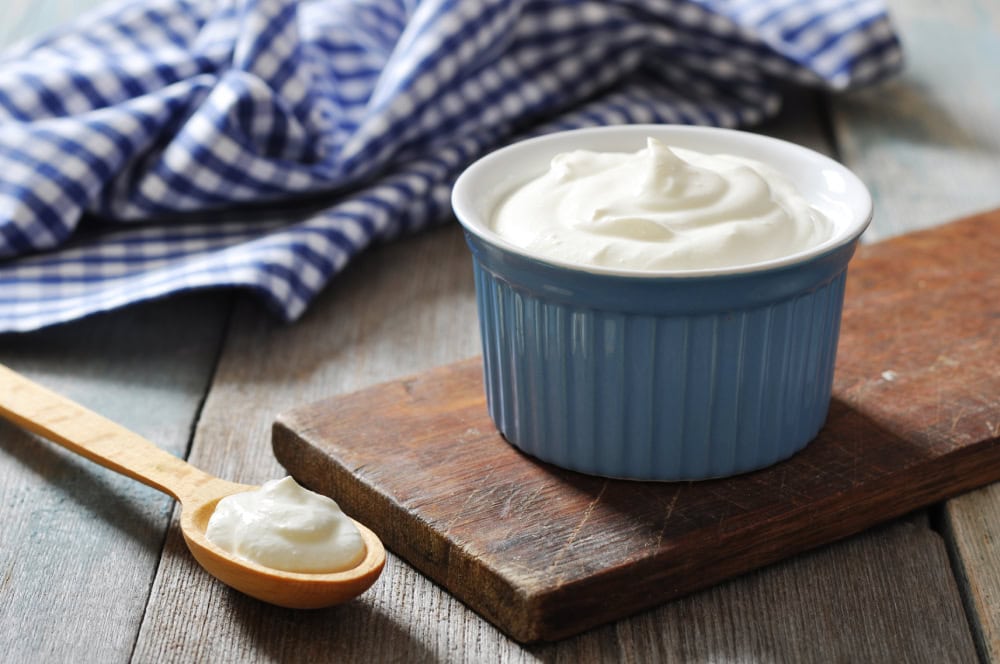
Greek yogurt in a ceramic bowl
Image Credit: mama_mia, Shutterstock

Is Guar Gum Safe for Dogs?

Guar gum is a legal human food additive in the United States and the (often stricter) European Union at controlled levels. It is not considered toxic or cancer-causing in adult humans. Safety has also been evaluated in animals eaten by humans such as chickens, fish, pigs and cattle.

Unlike in human foods, there is limited research regarding recommended levels of guar gum in dog diets. One study suggested 0.5% guar gum was enough to firm up canned dog food. However, guar gum is sometimes used alongside other thickening agents, which may alter the recommended amounts.

Guar gum has been shown to decrease blood sugar and cholesterol levels in humans and (inconsistently) in dogs. So far, the only scientifically supported health concern regarding guar gum is that it can interfere with protein digestion in dogs. However, the guar gum permitted in pet food doesn’t cause enough interference to negatively impact your dog’s protein levels.

Adverse effects in humans include skin irritation, irritation to the respiratory tract if inhaled, or gastrointestinal upset from eating large amounts. These effects could possibly be seen in dogs under these unlikely circumstances.

Why Do Some Dog Foods Advertise That They Don’t Contain Guar Gum?

As we’ve learned, guar gum is considered safe, non-toxic, and not cancer-causing by the US Food and Drug Administration and the European Food Safety Authority. Because it’s found in so many pet foods, the brands that avoid it are most likely trying to distinguish themselves from the competition. They may also be appealing to dog owners who don’t like feeding processed ingredients to their pets.
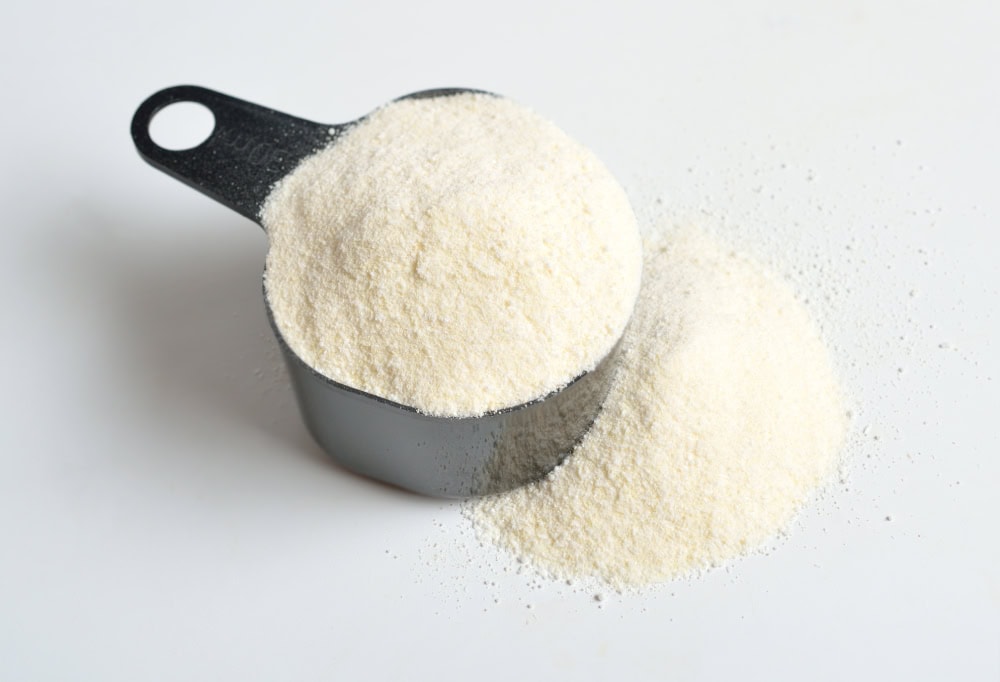
Guar gum, also called guaran, is a galactomannan polysaccharide extracted from guar beans
Image Credit: spline_x, Shutterstock

Conclusion

Like many ingredients in dog food, guar gum has pros and cons. However, there’s usually no reason that healthy dogs need to avoid it. Talk to your vet if your dog has any chronic medical conditions, particularly digestive issues, to make sure guar gum is okay for them to eat. Keep in mind that the pet food industry is highly competitive and increasingly lucrative. It is vital to distinguish science-backed health or nutrition claims from those made simply for advertising purposes.

Sources

Featured Image Credit: AB-7272, Shutterstock

Get Hepper In Your Inbox

Pet care tips from our vets and experts, straight to your inbox.

List

Select all that apply.

You may opt-out at any time. View our Privacy Policy for more information.

Elizabeth Gray
Authored by

Elizabeth Gray

Join the conversation

Ask a question, share your story, or send private feedback.
Rate this post
Required to post. Only our editors see your rating.
Who should see this?

A human reviews every comment before it appears. Your email is never published.

Picked to go with this article

Can Dogs Eat Xanthan Gum? Vet-Reviewed Facts & FAQ

Can Dogs Eat Xanthan Gum? Vet-Reviewed Facts & FAQ

If you’ve ever read the ingredients on your dog’s food, you’ve likely noticed xanthan gum listed. Xanthan gum is safe for dogs for the most part, as long as it…

Kathryn Copeland
By Kathryn Copeland ·
Powdered Cellulose in Dog Food: Controversial Ingredient Explained

Powdered Cellulose in Dog Food: Controversial Ingredient Explained

Powdered cellulose is a common ingredient in dog food, but many people don’t know much about it. If you’ve noticed it in the dog food your canine eats, you wer…

Visnja Radosavljevic
By Visnja Radosavljevic ·
Can Dogs Eat Chickpeas? Vet-Reviewed Info on Garbanzo Beans, Hummus & More

Can Dogs Eat Chickpeas? Vet-Reviewed Info on Garbanzo Beans, Hummus & More

Chickpeas are a fiber-rich source of protein that are part of the legume family. They are popular in Indian, Moroccan, and other cuisines. Chickpeas can be saf…

Nicole Cosgrove
By Nicole Cosgrove ·
Is Maltodextrin Safe for Dogs? Vet Approved Facts & FAQ

Is Maltodextrin Safe for Dogs? Vet Approved Facts & FAQ

Most dog owners would agree that proper nutrition is key to keeping their pets healthy, happy, and thriving. But do you know what is in your dog’s food? Maltod…

Chantelle Fowler
By Chantelle Fowler ·

Keep reading

More stories you might like

10 Ingredients to Avoid in Dog Food: Vet-Approved Facts & FAQ

Many pet owners tend to not read the ingredient labels on their pets' food. But more people are starting to become more aware of what should and shouldn’t be i…

Kathryn Copeland
By Kathryn Copeland ·
10 Ingredients to Avoid in Dog Food: Vet-Approved Facts & FAQ

Can Dogs Eat Cornmeal? Vet-Approved Health Review

If you have checked your dog food or treat ingredient lists, you might have found cornmeal as a common ingredient. Cornmeal is regularly used in dog foods, and…

Sarah Psaradelis
By Sarah Psaradelis ·
Can Dogs Eat Cornmeal? Vet-Approved Health Review

Can Dogs Eat Carob? How Healthy Is It?

Are you looking for a chocolate substitute you can give your dog safely? If yes, read on to find out everything you need to know about carob (Ceratonia siliqua…

Gregory Iacono
By Gregory Iacono ·
Can Dogs Eat Carob? How Healthy Is It?

Can Dogs Eat Protein Powder? Vet-Approved Facts & Risks

All responsible dog parents strive to provide their dogs with the best possible life, which also includes providing them with high-quality nutrition. As humans…

Visnja Radosavljevic
By Visnja Radosavljevic ·
Can Dogs Eat Protein Powder? Vet-Approved Facts & Risks

Menadione in Dog Food: Vet-Reviewed Safety Facts

Menadione is a synthetic form of vitamin K that’s often added to dog food as a nutrient source. While it helps ensure a balanced diet for our canine companions…

Genevieve Dugal
By Genevieve Dugal ·
Menadione in Dog Food: Vet-Reviewed Safety Facts

What Is Dog Food Made Of? 7 Typical Ingredients (Vet-Reviewed)

If you have a dog, you very likely feed them specific dog food of some sort. While all dog food has different ingredients, there are a few ingredients that are…

Kristin Hitchcock
By Kristin Hitchcock ·
What Is Dog Food Made Of? 7 Typical Ingredients (Vet-Reviewed)

Can Dogs Eat Cornstarch? Vet Reviewed Facts & FAQ

Cornstarch is a unique ingredient made from, of all things, the endosperm of kernels of corn. It’s often used to thicken sauces and is a ubiquitous part of mos…

Gregory Iacono
By Gregory Iacono ·
Can Dogs Eat Cornstarch? Vet Reviewed Facts & FAQ

Can Dogs Eat Pudding? What The Science Says

Pudding is a tasty dessert that comes in a variety of flavors and is a common staple in lunchboxes and pantries across the country. Many dog owners may have a…

Lindsey Lawson
By Lindsey Lawson ·
Can Dogs Eat Pudding? What The Science Says