Hepper is reader-supported. When you buy via links on our site, we may earn an affiliate commission at no cost to you. Learn more.
Can Dogs Eat Jackfruit? Vet-Approved Facts & FAQ



In this article
Jackfruit (Artocarpus heterophyllus) is a large, spiky exotic fruit from Southeast Asia. This once relatively unfamiliar fruit has gained much attention and popularity in the West over recent times, as more vegan and vegetarian dishes feature this sweet and mild fruit. It's abundant in nutrients and health benefits, so it makes sense that this healthy and nutritious fruit is one many pet parents may like to feed their dog as a snack or treat, but is it safe for them?
There are many fruits and vegetables perfectly safe for dogs, and while some others have been proven to be toxic, the jury is still out on Jackfruit. There are no scientific reports or studies (yet) to suggest it is safe to feed jackfruit to dogs, nor are there any reports of toxicity either.

What Does Jackfruit Contain?
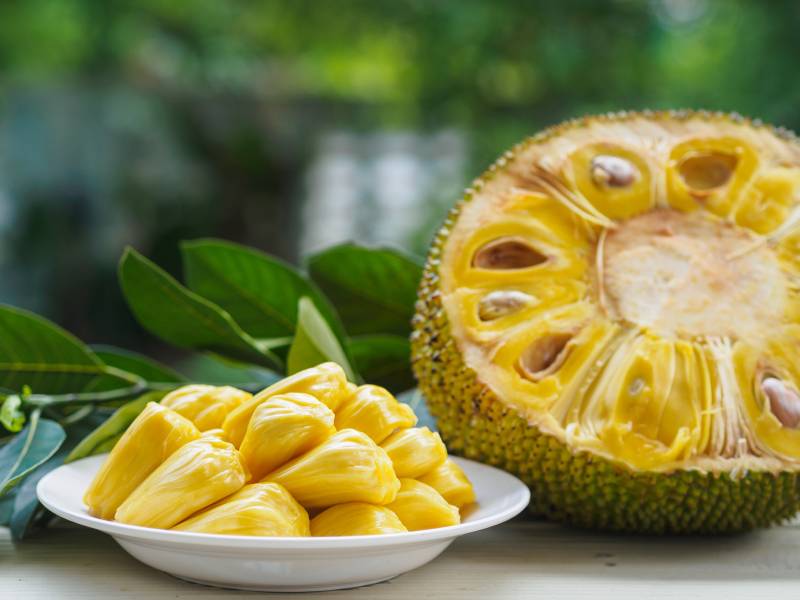
This superfood is large and can weigh anywhere between 10–100 pounds! It has thick, bumpy skin and flesh that’s ideal to shred like pork but it also contains huge seeds.
It is packed with nutrients, including high amounts of fiber and protein, and is a good source of vitamin A, vitamin C, vitamin B, potassium, and iron. It is worth noting, however, that despite the glorious nutritious combination jackfruit offers, your dog should not require any extra vitamins and minerals, as they should be obtaining all their daily requirements from their normal food.
Is Jackfruit Safe for Dogs?
Jackfruit is related to mulberries, and mulberry is considered safe for dogs, which at least gives an indication that jackfruit could also be safe. Many mammals and insects also eat the flesh of jackfruit where it grows in its natural habitat.
That said, due to the lack of official reports and studies, no one can say that jackfruit is 100% safe to feed dogs.
There are a few clues to suggest jackfruit in small amounts is safe to feed your dog:
Please keep in mind that while it is possible for the flesh of the jackfruit to be safe, you should never feed your dog the seeds or the rind.
How to Prepare Jackfruit for Your Dog
If you decide to give jackfruit a go, only a small portion of the flesh should be offered.
The skin or rind is exceptionally tough, rough, and nearly impossible for your dog to digest.
Due to the nature of the rind, if eaten, it can cause a variety of potential issues from mouth irritation to upset stomach to blockages, as the thick, chunky rind can easily become stuck in the gastrointestinal tract. The rough texture of the rind also carries the risk of cutting/severing through the wall of the intestines, which would cause a medical emergency.
Whether the flesh of the jackfruit is fed cooked or uncooked doesn’t appear to alter the position on whether it is safe for dogs.
Jackfruit Seeds
The seeds are very large (roughly the size of a grape) and hard, and an individual jackfruit can contain between 100–500 seeds. The size of the seed poses a choking risk, as well as having the potential to become stuck in the gastrointestinal tract and causing upset stomachs and blockages.
There are plenty of prepared or ready-made versions and dishes using jackfruit as well, and these are best avoided. Often, these dishes contain added ingredients, such as onion and salt, that are potentially toxic to dogs.
How Much Jackfruit Can I Feed My Dog?
Again we must stress that the safety of jackfruit is not known in dogs. If they get hold of some of the flesh to eat then watch for any signs of allergies or abnormal reactions, such as nausea, salivation, vomiting, upset stomach, guarding of the abdomen, changes in behavior, or swelling on the body or face. Any of these could indicate an allergic reaction.
If after approximately 2 days (48 hours) your dog has shown no adverse signs and all is well, it’s likely your dog will be fine and able to tolerate small portions of the flesh of jackfruit here and there.
If you do notice any of the above signs or unusual changes in your dog after they ate jackfruit, contact your veterinarian for advice. If they have consumed some of the rind or seeds, call your veterinarian straight away.
Final Thoughts
In most cases, your dog is most likely fine eating small offerings of jackfruit. Yet, given the lack of complete certainty around its safety in dogs and the lack of certified evidence, is it worth taking the risk of feeding this fruit as a snack to your dog when there are so many other options available we know are safe?
This is a question only you as the owner can decide.
Related Reads:
Featured Image Credit: Suriyawut Suriya, Shutterstock
Get Hepper In Your Inbox


Pet care tips from our vets and experts, straight to your inbox.
You may opt-out at any time. View our Privacy Policy for more information.
Annaliese began her career as a veterinary nurse in Edinburgh, later advancing her qualifications with a diploma in advanced veterinary nursing in surgery from London. Her work in small and mixed veterinary practices led her to become a head nurse, where she trained other veterinary nurses, managed the nursing department, conducted nurse clinics, and developed new patient care protocols.
Throughout her career, Annaliese has cared for thousands of patients and their owners, setting higher standards in nursing regimes with a focus on surgery and anesthesia. She co-authored multiple veterinary nursing textbooks and contributed to various mainstream publications in the UK and USA. After more than twenty years in the veterinary and pet care professions, she retired from clinical practice to pursue full-time writing. Having cared for thousands of patients and owners, Annaliese specialized in surgery and anesthesia. She was asked to co-author several veterinary nursing textbooks and contributed to a number of other publications in the UK and USA. After more than two decades in the veterinary and pet care industries, she retired her scrub suit and now works as a full-time writer.
Annaliese Morgan has been a dedicated veterinary nurse for over two decades, having completed a diploma in advanced veterinary nursing in surgery from London and qualifying from Edinburgh. Her professional experience includes managing a nursing department, training other veterinary nurses, providing patient care, and running nurse clinics in both small and mixed veterinary practices.
As an expert in surgery and anesthesia, Annaliese has treated thousands of patients and owners. In addition to being asked to co-author multiple veterinary nursing textbooks, she has written for a variety of publications in the UK and USA. After a long and successful career in the veterinary and pet care professions, Annaliese now dedicates her time to writing full-time. You can find out more about her work at www.annaliesemorgan.com.
Join the conversation
Ask a question, share your story, or send private feedback.