Hepper blog

Search our database of over 9,984 posts with up-to-date information from our experts and veterinarians.

Hepper is reader-supported. When you buy via links on our site, we may earn an affiliate commission at no cost to you. Learn more.

Can Dogs Eat Nutritional Yeast? How Healthy Is It?

By Rachael Gerkensmeyer · Reviewed & fact-checked by Dr. Maxbetter VizelbergVet Approved
Dr. Maxbetter Vizelberg
Reviewed & Fact-Checked byDr. Maxbetter VizelbergVeterinarian
Maxbetter grew up in New Orleans, Louisiana, and has been interested in veterinary medicine since childhood. Being read Russian children’s stories about “Doctor Aybolit” by his grandmother, interning at the Israeli Wildlife Hospital, and working at numerous small animal hospitals have all been part of his lifelong love of animals. Maxbetter currently practices in New York City, and enjoys educating others to help them give their animals the best possible lives. He always strives to provide excellent medical care to his patients. Outside the clinic, he can be found playing basketball and soccer, performing his rap songs at open mics, and going on hikes with family and friends.View authorThe information is current and up-to-date in accordance with the latest veterinarian research. Read about our vets
Share
Ask us a question in the comments
Can Dogs Eat Nutritional Yeast

Nutritional yeast is used by many people as a flavor enhancement for their meals. If you are a dog owner who enjoys using nutritional yeast in your kitchen, you may wonder if your dog can enjoy some too. The answer is yes, dogs can enjoy nutritional yeast as part of a healthy and well-balanced diet. Here is what else you need to know.

The Benefits of Feeding Your Dog Nutritional Yeast

Not only can your dog eat nutritional yeast, but they can also benefit from consuming this food. The first thing to note is that nutritional yeast is a powerhouse of vitamins, minerals, and antioxidants. It’s low in calories but provides an excellent source of niacin, folate, riboflavin, and B12, all of which a dog requires for good health and happy life. Nutritional yeast also contains all nine essential amino acids, so it’s a great source of protein too.

Trace minerals that are responsible for healthy growth and gene regulation are found in this food product. The powerful antioxidants found in nutritional yeast can help keep your dog's immune system healthy. In addition to being a benefit to your dog's health, nutritional yeast is thought to help fight off flea infestations due to the abundance of B complex vitamins. These vitamins may help make dogs and cats less attractive to fleas.
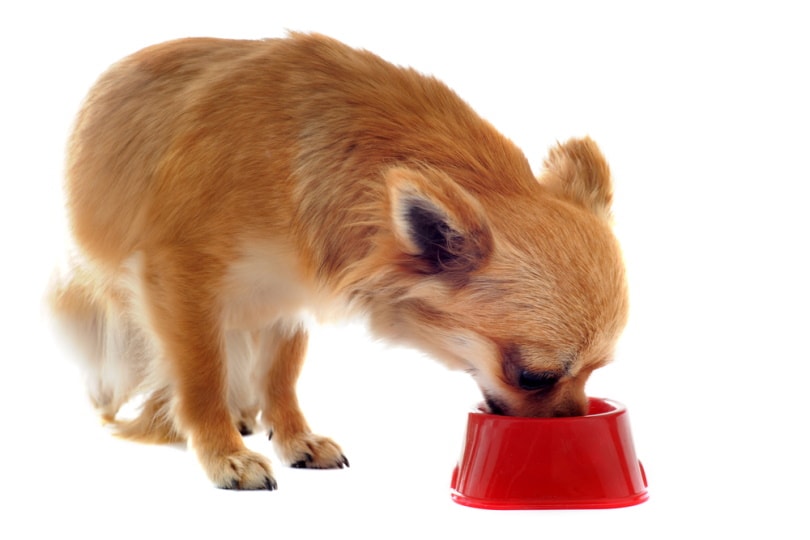
chihuahua dog eating
Image Credit: cynoclub, Shutterstock

Make Sure Your Dog’s Nutritional Yeast Is Fortified

Nutritional yeast comes in two forms: fortified and non-fortified. The non-fortified version contains important vitamins and minerals, but the fortified version contains even more, along with other minerals. Therefore, it’s best to choose a product that is labeled as fortified. You should see this label on the front of the packaging or right above the ingredients list.

It is important to note that there is a product available called brewer’s yeast, which is a by-product created through the process of beer production. This is not what’s being referred to when discussing nutritional yeast, but it does have nutrients such as B vitamins, iron, and magnesium that could benefit your dog’s health, so if you accidentally give them brewer’s yeast, there is no need to worry.

Ways to Feed Nutritional Yeast to Your Dog

This food product is flaky and dry, so it crumbles down into a powder easily. The flakes are thin, so they can be eaten as-is without being ground down. There are several ways that you can feed nutritional yeast to your dog:

  • Sprinkle it on their food.
  • Roll small balls of peanut butter in it to make homemade snacks.
  • Add it to a homemade dog smoothie recipe.
  • Include it in a homemade dog biscuit recipe.

A Quick Recap

Nutritional yeast can be a healthy addition to any dog’s diet. A little goes a long way, so this is a cost-effective food to keep around the house. It may also be healthy for your human household members too! Hopefully, this guide has provided you with insight into the benefits of feeding nutritional yeast to your dog and fun ideas for how to feed it to them!

Sources

Get Hepper In Your Inbox

Pet care tips from our vets and experts, straight to your inbox.

List

Select all that apply.

You may opt-out at any time. View our Privacy Policy for more information.

Rachael Gerkensmeyer
Authored by

Rachael Gerkensmeyer

Join the conversation

Ask a question, share your story, or send private feedback.

Rate this post
Required to post. Only our editors see your rating.
Who should see this?

A human reviews every comment before it appears. Your email is never published.

Picked to go with this article

Can Dogs Eat Sardines? Vet-Verified Facts & FAQ

Can Dogs Eat Sardines? Vet-Verified Facts & FAQ

Sardines are abundant in the Atlantic, Pacific, and Mediterranean seas. They are revered for their nutritional benefits, as well as their lower levels of mercu…

Nicole Cosgrove
By Nicole Cosgrove ·
What to Feed a Dog With a Yeast Infection: Vet-Reviewed Guide

What to Feed a Dog With a Yeast Infection: Vet-Reviewed Guide

If you have recently discovered that your dog has a yeast infection on their skin, between their toes, in their ears, or all over, you want to work diligently…

Ashley Bates
By Ashley Bates ·
5 Foods High in Vitamin E For Dogs: Vet-Approved Options

5 Foods High in Vitamin E For Dogs: Vet-Approved Options

The right dose of vitamin E will boost and supplement your dog’s immune system and promote healthy muscles, heart, liver, skin, and coat. Vitamin E is also a p…

Cheryl Regan
By Cheryl Regan ·
Is Bee Pollen Good For Dogs? Vet Reviewed Benefits, Risks & FAQ

Is Bee Pollen Good For Dogs? Vet Reviewed Benefits, Risks & FAQ

Bees seem to be getting a lot of credit that they deserve these days. Everything from honey to pollen has certain nutritional and health perks for people and p…

Ashley Bates
By Ashley Bates ·

Keep reading

More stories you might like

Do Dogs Need Supplements? Vet-Approved Facts & Tips

One of the most important jobs that we have as dog owners is keeping our pets healthy throughout their lives. Going on walks together, playing in the house, of…

Rachael Gerkensmeyer
By Rachael Gerkensmeyer ·
Do Dogs Need Supplements? Vet-Approved Facts & Tips

Can Dogs Eat Beef Liver? What The Science Says

Dogs are not typically picky when it comes to what they will eat. You have likely witnessed your dog get into the garbage or snatch something from your plate.…

Rachael Gerkensmeyer
By Rachael Gerkensmeyer ·
Can Dogs Eat Beef Liver? What The Science Says

Can Dogs Eat Truffles? How healthy are they?

Truffles are a prized culinary delicacy and taste amazing in a variety of dishes, such as pasta, risotto, and sauces, and they can also be shaved over dishes a…

Nicole Cosgrove
By Nicole Cosgrove ·
Can Dogs Eat Truffles? How healthy are they?

Can Dogs Eat Bugs? Keep Your Dog Safe!

When it comes to dietary choices for our beloved furry friends, it can be difficult to know what’s best. While many pet owners are well aware of the benefits o…

Nicole Cosgrove
By Nicole Cosgrove ·
Can Dogs Eat Bugs? Keep Your Dog Safe!

Can Dogs Eat Cumin? Vet-Approved Nutritional Info

Cumin is a popular spice that can be found in many pantries and kitchens. It is in many healthy recipes and natural home remedies and is famous for its health…

Nicole Cosgrove
By Nicole Cosgrove ·
Can Dogs Eat Cumin? Vet-Approved Nutritional Info

Can Dogs Eat Sea Moss? Vet Approved Facts & FAQ

Sea moss, Chondrus crispus, is a type of algae or seaweed. It's a low-fat, low-calorie food often touted by health experts as a superfood since it is packed fu…

Lorre Luther
By Lorre Luther ·
Can Dogs Eat Sea Moss? Vet Approved Facts & FAQ

Is Apple Cider Vinegar Good for Dogs? Our Vet Explains Its Health Benefits

Apple cider vinegar (ACV) has been used by people for centuries in various ways: for cooking or cleaning or its medicinal properties. But is it just as good fo…

Dr. Iulia Mihai
By Dr. Iulia Mihai ·
Is Apple Cider Vinegar Good for Dogs? Our Vet Explains Its Health Benefits

Can Dogs Eat Flour? Vet Approved Facts & FAQ

Flour has existed for thousands of years and is a common ingredient in many foods to this day. While humans have been consuming flour almost daily, you’ve prob…

Oliver Jones
By Oliver Jones ·
Can Dogs Eat Flour? Vet Approved Facts & FAQ