Hepper is reader-supported. When you buy via links on our site, we may earn an affiliate commission at no cost to you. Learn more.
I Can’t Find My Cat Anywhere in the House: Useful Tips On What To Do


In this article
Losing sight of your cat for too long is an incredibly distressing experience. Though it may be difficult to do so, try and stay as calm as possible to be able to effectively get to work finding your wandering feline. The good news is that missing house cats don’t typically go far provided they can find a suitable place to hide.
The steps, in brief, are to do a thorough search of your home—especially in areas where it is easy for your cat to hide out—before proceeding to an outdoor search and spreading the word. Let’s go through the steps in more detail.

The 5 Tips On What To Do If You Can’t Find Your Cat Anywhere in the House
1. Perform a Thorough House Search
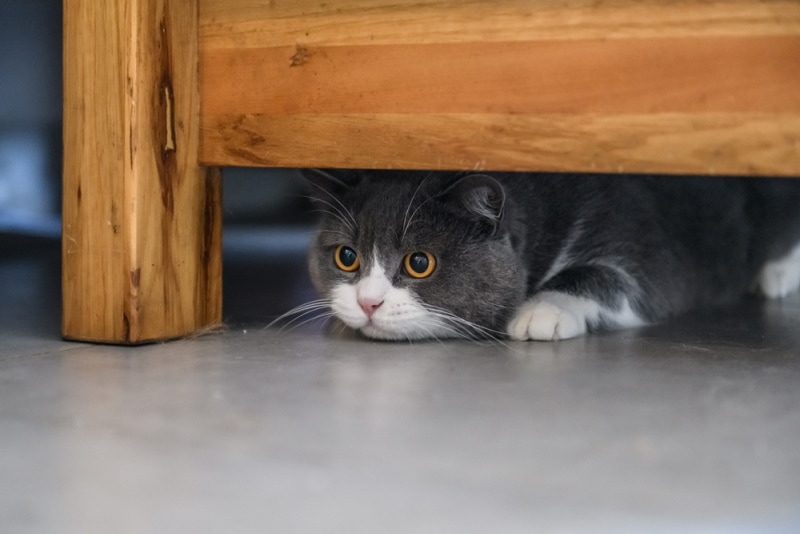
If your cat isn’t in their usual spots, they might be sleeping or hiding in an inconspicuous area. If family members or housemates are home, get them searching, too. Speak to everyone at home to find out where and when they last saw the cat.
Check attics, basements, garages, under and behind furniture, behind electrical appliances like fridges (these are warm, and cats love warm spots), laundry baskets, cupboards, and any tight spots your cat could be concealed within. Also, consider open ducts in HVAC systems. Basically, investigate everywhere you can think of.
Use a torch if it’s dark (this is especially useful because the light will make your cat’s eyes shine). For dark, small spots that you can’t see into well, try to tempt your cat out with a chaser wand or another toy they love.
2. Tempt Your Cat Out
Try shaking your cat’s kibble dish or serving some of their wet food, as the noise or smell might tempt your cat to come out of hiding. Since it’s a special situation, you might want to whip out some canned tuna, as this smells especially strong and inviting to cats. Walk around the house with the food to ensure your cat smells it.

3. Start Searching Outdoors
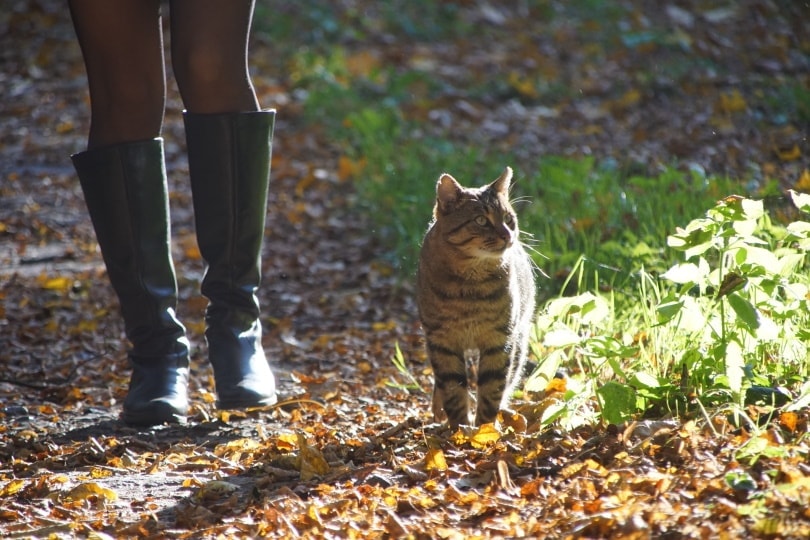
If you can’t find your cat anywhere inside the house, head out to check the areas around your house, like under your car, in the bushes, in sheds, and your yard. House cats don’t tend to stray far—usually no further than a three to four-house radius—and they typically look for somewhere to hide straight away because the outdoor world is overwhelming for them.
Try to think as if you were your cat—when you go out of your door, which way is your cat most likely to head? Which way has the best possible hiding spots? If your cat has escaped before, they might be hiding in the same spot as last time.
Call your cat’s name as you search and listen carefully for signs of their presence, like meows or rustling in the bushes. Take your cat’s food bowl with you, as the smell might get their attention.
If you don’t find your cat during the day, it’s a good idea to do another search at night with a flashlight, as this is when cats are more likely to come out of hiding. Leave some strong-smelling food (like wet cat food or tuna) outside and sprinkle some dry food around.
Place items with the scent of your house outside, like blankets, towels, clothes, sheets, or even the litter box. These will smell familiar to your cat and may encourage them to come back.
4. Tell Neighbors
Once you start searching outside, inform your neighbors and ask them to check their gardens and sheds. Even if they don’t find your cat straight away, letting your neighbors know means more people are keeping an eye out in case your cat turns up. Be sure to show your neighbors a recent photo of your cat if they’re not familiar with them.
5. Search the Neighborhood
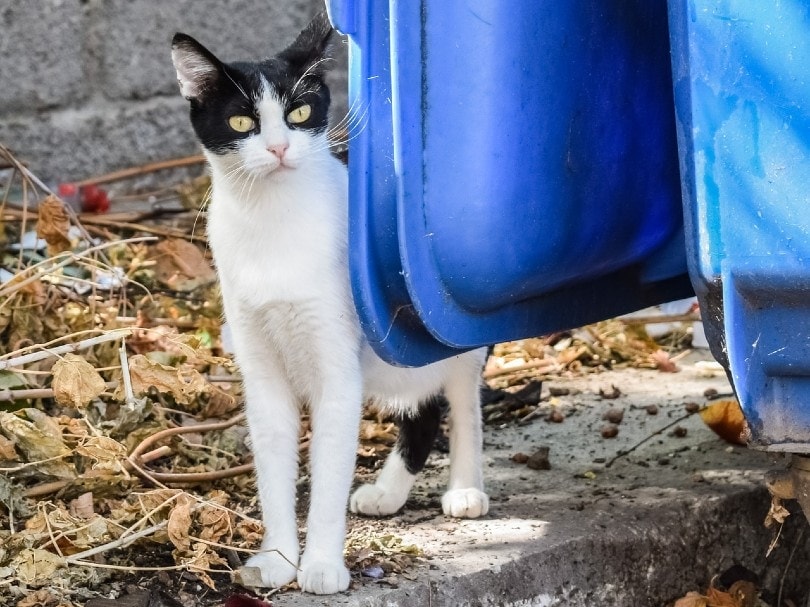
If you don’t find your cat close to your home, take a walk or slow drive around your neighborhood, calling your cat’s name as you go. It’s important to do this because the sound of your voice will be familiar to your cat and may encourage them to show themselves. Ask passersby if they’ve seen a cat and ask them to keep an eye out and contact you if they do. The more people who know to look out for your cat, the better.
Getting the Word Out
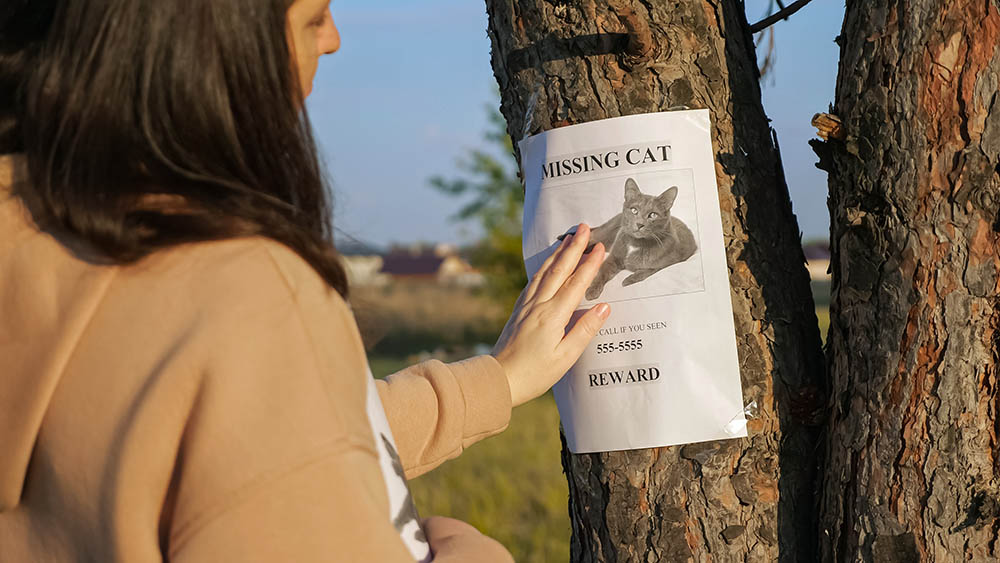
If you’ve had no luck finding your cat around your home or in your neighborhood, don’t give up. Post on local social media groups and missing pet groups with a recent photo of your cat and create “lost cat” posters. Put these in newspapers, on social media, and in local establishments like vet clinics, shops, grocery stores, and community centers (check the next section for some important safety tips for advertising).
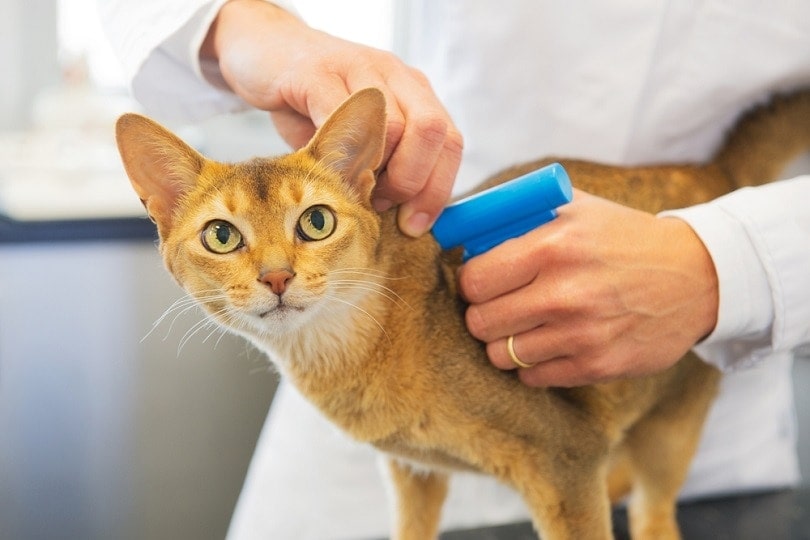
If your cat is microchipped, let the microchip company know that they are lost. It’s also possible that your cat has been found and handed into a local shelter or veterinary clinic or has been picked up by animal control.
Get on the phone with local veterinary clinics, animal control agencies, and shelters to let them know about your situation, and ask if you can email over or deliver photos and information about your cat to make sure they know who to look out for. If you adopted your cat from a local shelter or rescue organization, they may be able to help with the search and spread the word. It’s ideal to visit shelters in person with photos of your cat to be distributed to all staff.
You’ll want to get in touch with shelters quickly because some rescue organizations may put cats up for adoption if they aren’t claimed. Continue to check in with all local shelters every day, because some cats don’t end up in shelters until weeks after going missing.

Finding a Missing Cat: Extra Tips
Useful Lost Pet Sites in the US
Some sites are dedicated to helping find missing pets, so you might want to check these out. Lost pet sites include:
Final Thoughts
On a final note, if your cat comes home and you haven’t already done so, it’s wise to get your cat microchipped to increase your chances of them being returned to you in the event of future escapes. It’s also a good idea to secure your home (for example, by installing pet window barriers) to help prevent future escapes.
Last, but not least, if you haven’t been reunited with your lost cat yet, there is still hope. Some cats turn up weeks, months, or even years after going missing, so don’t give up. Best of luck.
Featured Image Credit: Krakenimages.com, Shutterstock
Get Hepper In Your Inbox


Pet care tips from our vets and experts, straight to your inbox.
You may opt-out at any time. View our Privacy Policy for more information.
Kit Copson is a freelance writer and lifelong animal lover with a strong interest in animal care. She has parented various furry beings over the years and is currently a proud cat mom of two—one skittish but adorable Domestic Shorthair and very chilled (unless hungry) Siamese and a —and dog mom of one—an adopted Bichon Poodle cross. When not writing about or spending time with pets, Kit can be found doodling in her sketchpad, reading, or more often than not, drinking tea.
Join the conversation
Ask a question, share your story, or send private feedback.