Hepper is reader-supported. When you buy via links on our site, we may earn an affiliate commission at no cost to you. Learn more.
12 Common Portuguese Water Dog Health Issues (Vet Answer)


The Portuguese Water Dog originated in Portugal, and they may be related to the Barbet Water Dog, Poodle, and/or Irish Water Spaniel. This breed is included in the eighth group of the International Canine Federation (Fédération Cynologique Internationale), which are all water dogs.
They are intelligent, brave, and energetic pets that like to please their owners. They're also generally healthy. That said, they can be prone to certain health conditions, just like any other breed.

The 12 Common Portuguese Water Dog Health Issues
1. Hip Dysplasia
Hip dysplasia is a condition with hereditary (inherited) or environmental causes. The word dysplasia comes from the Greek dys, which means “abnormal/condition,” and plassein, which means “to form.” It is a frequent orthopedic condition in dogs and represents an abnormal and/or defective development of the hip joint. This can cause excessive wear of the joint cartilage due to bearing the body's weight. All this ultimately leads to the development of osteoarthritis, a painful joint disorder.
The best time to have your dog examined by a specialist to detect hip dysplasia is at the age of 5–6 months. The clinical signs of hip dysplasia in Portuguese Water Dogs depend on the individual and the severity of the condition. If your dog has hip dysplasia, you may notice the following signs:
- Lameness in the hind end
- Stiffness after rest
- Intolerance of physical activity
- Stiff walk
- “Bunny hopping” gait (the dog holds their back legs together and hops rather than runs)
- Pain of reduced intensity
The diagnosis of certainty is made only after the radiological examination, and treatment includes surgical intervention and weight, effort, and nutritional management.

2. Elbow Dysplasia
Elbow dysplasia in dogs is a disease that affects the elbow joint (which does not develop properly) and occurs during growth. Puppies with elbow dysplasia will suffer a change in bone tissue if not treated in time, and severe complications can occur. It is a genetic disease that is passed down from generation to generation, but diet also plays a crucial role.
As in the case of hip dysplasia, as the dog develops, the elbow joint wears and deteriorates, leading to a loss of function. Clinical signs of elbow dysplasia in Portuguese Water Dogs generally occur at 4–5 months of age and may include:
- Lameness in the forelimbs
- Getting up with difficulty
- Stiffness
- Pain
The definitive diagnosis is made only after the radiological examination, and the treatment consists of surgical intervention, physical therapy, anti-inflammatory drugs, and joint supplements.
3. Cataracts
Cataracts is a common cause of blindness in older Portuguese Water Dogs. With this condition, the lens becomes opacified (partially or totally), which prevents the passage of light to the retina. When the cataract is total, the affected dog can no longer see.
Clinical signs of cataracts may include:
- Cloudy pupils
- Change in pupil size or shape
- Changes in eye color
- Hitting surrounding objects
- Reluctance to climb stairs or jump
- Pawing at the eyes
- Eye infections
- Thick discharge in the inner corner of the eyes
- Squinting
- Dry appearance of the eyes
The diagnosis is established following verification of the clinical signs and an ophthalmological examination. Treatment involves surgical intervention. A more modern cataract surgical technique, called phacoemulsification, involves liquefying the cataract-affected lens, aspirating the "melted" material, and replacing it with a saline solution.

4. Progressive Retinal Atrophy
Progressive retinal atrophy (PRA) is a hereditary eye disease in which the affected dog becomes progressively blind. Portuguese Water Dogs are more prone to this condition than many other breeds.
The clinical signs of PRA in Portuguese Water Dogs generally occur around the age of 3–5 months and are manifested by the loss of night vision. As the affected dog ages, loss of day vision also occurs.
Clinical signs may include clumsiness, reluctance to go up the stairs or jump, and dilated pupils. It can be years before the affected dog is completely blind. There are genetic tests that can diagnose this condition, and affected dogs should not be bred. PRA has no treatment.
5. Juvenile Dilated Cardiomyopathy
Juvenile dilated cardiomyopathy (JDCM) is a hereditary heart disease. For a puppy to be affected, they must acquire a recessive gene from each parent. Puppies with this condition die in 6–27 weeks.
Clinical signs of JDCM may include:
- Weakness
- Vomiting
- Low energy level
- Breathing difficulties
- Fast heart rate
Unfortunately, death can occur within 12–24 hours once these clinical signs have occurred. To diagnose JDCM in Portuguese Water Dogs, Linked Marker DNA tests can be done. It has no treatment.

6. GM1 Gangliosidosis
Gangliosidosis is a recessive genetic disease that involves the alteration of cellular metabolism, which causes severe neurological damage. This condition affects several body systems and it has two forms:
- GM1 (β-galactosidase deficiency) — This can occur around 2 months of age, and unfortunately, there is little hope of survival past the age of 1 year, death being caused by a state of total paralysis. This type can be found in Portuguese Water Dogs and is caused by mutation c.179G >A in the GLB1 gene that affects the beta-galactosidase synthesis.
- GM2 (acid β-hexosaminidase deficiency) — Death occurs within 5 months of life.
Clinical signs include:
- Tremor
- Loss of sight
- seizures
- Paresis
- Behavioral changes
- Gait abnormalities
GM1 is detected through genetic testing. Some dogs may be carriers and should not be bred. However, the rate of carrier Portuguese Water Dogs is less than 1%.
There is no treatment for this condition. The affected dog’s quality of life diminishes until euthanasia is recommended.
7. Addison’s Disease
Addison's disease, or hypoadrenocorticism, is a deficiency of the adrenal gland in the production of corticosteroid hormones, and the Portuguese Water Dog is one of about 10 breeds most prone to it. Corticosteroid hormones have the role of managing stress and metabolism.
This disorder can arise from several causes, the most common being primary adrenal insufficiency, which usually leads to a deficiency of glucocorticoid (cortisol) and mineralocorticoid (aldosterone) hormones.
Addison's disease has extremely vague and non-specific clinical signs, meaning it mimics many other conditions. The signs of Addison's disease in Portuguese Water Dogs may include:
- Vomiting
- Loss of appetite
- Lethargy
- Diarrhea
The adrenocorticotropic hormone stimulation test is the basic test used for diagnosing Addison’s disease. Rapid diagnosis and institution of treatment are vital. This condition is treatable, and affected dogs can live normal lives if it is diagnosed in time.

8. Inflammatory Bowel Disease
Inflammatory bowel disease (IBD) represents a group of diseases that manifest in the intestine (large or small) and cause inflammation. It is more like a syndrome that manifests itself through the persistence of digestive clinical signs (vomiting, diarrhea, etc.), even if the affected dog is being treated. Any digestive condition that lasts more than 3 weeks requires professional treatment.
IBD can occur at any age but is more common in middle-aged and older dogs. The exact cause is unknown, but possible ones include parasites, bacterial infections, food allergies, medications, etc.
Clinical signs of IBD in Portuguese Water Dogs may include:
- Vomiting
- Diarrhea
- Melena
- Hematochezia (bloody stools)
- Weight loss
- Decreased appetite to lack of appetite
To diagnose the disease, blood tests (hematology, serum biochemistry, specific rapid tests, etc.), abdominal ultrasound, X-rays, endoscopy, and even biopsy from the affected organs may be required. All these tests combined will help rule out or establish a cause. The treatment will be recommended depending on the underlying cause of the condition.
9. Follicular Dysplasia
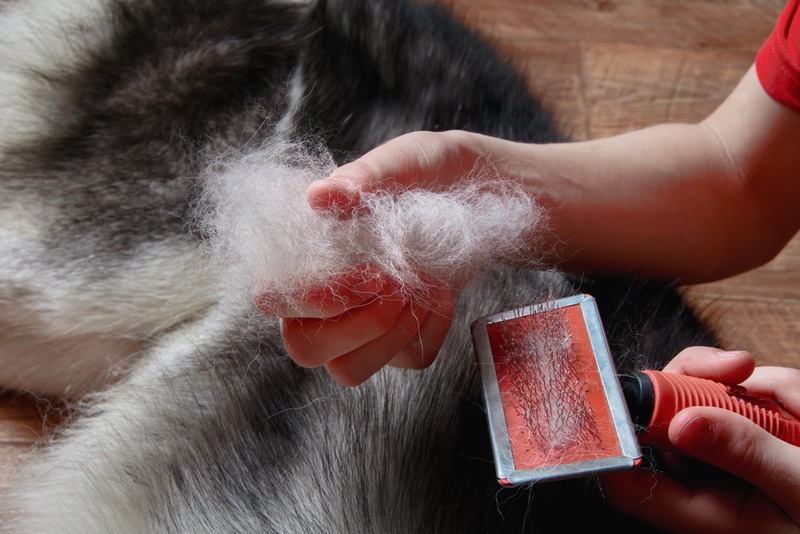
Follicular dysplasia is a type of alopecia (hair loss) that is genetically determined. Portuguese Water Dogs can suffer from structural follicular dysplasia, which means they will grow hair that will become more affected, and after numerous episodes of hair loss and growth, it will stop regenerating.
In Portuguese Water Dogs, the affected hair is mainly on the dog's trunk, but the condition can also affect other regions of the body over time. In this breed, it has been observed that this condition appears more often in dogs that come from a mother with curly hair and a father with curly hair.
Clinical signs do not include itching and scratching, as follicular dysplasia does not cause these signs. That said, itching and scratching can be caused by sun exposure, dry skin, parasites, food allergies, etc.
The diagnosis of follicular dysplasia in dogs is made with certainty following a skin biopsy in which the hair follicle is examined. It has no treatment.
10. Cancer
Cancer is the cause of death for many dogs. Portuguese Water Dogs are prone to certain types of cancer, which can occur at an early age:
- Lymphoma or lymphosarcoma — This is one of the most common malignant tumors in dogs. Up to 20% of all dogs with cancer have this form. The disease mainly affects the lymph nodes but then attacks internal organs, such as the spleen or liver. This type of cancer can be detected with a complete blood count test. Lymphoma is treatable and has an excellent success rate in dogs that receive treatment (chemotherapy).
- Hemangiosarcoma — This is a malignant tumor originating in the vascular endothelium, occurring around the blood vessels. Portuguese Water Dogs have a higher incidence of this type of cancer compared to most other breeds. It can occur anywhere in the body, but there are common locations, such as the spleen. Some tumors can get so large that they reach the size of volleyballs. These can rupture and lead to internal bleeding and sudden death.
11. Hemophilia
Hemophilia is an inherited blood disorder that causes the affected animal to have a coagulation deficit, which will lead to massive bleeding. It occurs mainly in males, while females are typically carriers.
Clinical signs of hemophilia in dogs may include:
- Repeated bleeding
- Bleeding under the skin
- Bruising after an injection
- Bleeding during teething
- Nosebleeds
- Blood in feces or urine
There can also be internal bleeding that shows no physical signs on the outside. When the internal bleeding is severe, the affected dog has pale mucous membranes, an increased heart rate, low pulse, and breathing difficulties. There are no genetic tests to diagnose this condition, and there is also no treatment.
12. Underbite
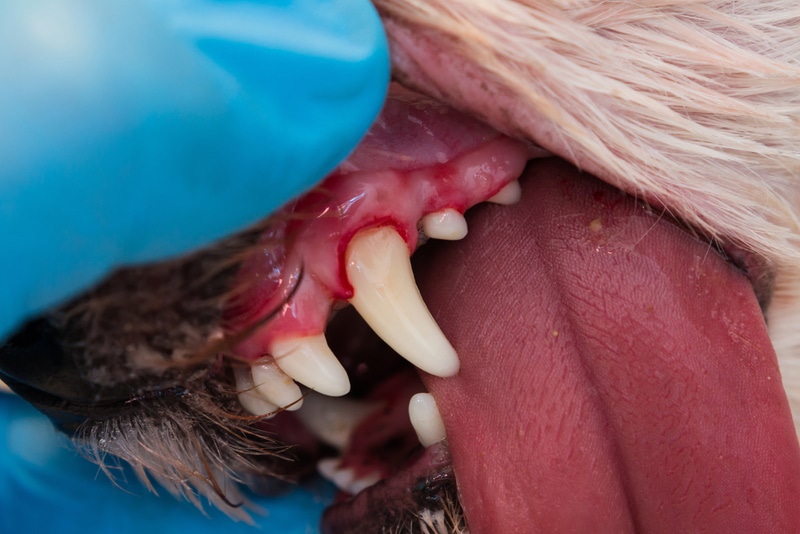
A prominent lower jaw can be a sign of a physical abnormality called prognathism (underbite). This malocclusion creates discomfort when cutting and chewing food. Underbite affects Portuguese Water Dogs more than many other breeds.
Most underbite cases do not require treatment. However, tooth extractions or orthodontic procedures may be necessary if the affected dog's teeth are abnormally positioned and cause chronic pain.
Conclusion
The Portuguese Water Dog is a medium-sized dog breed originating from Portugal. They are usually healthy dogs, but they can suffer from certain diseases, mainly hereditary ones. The most common conditions that affect Portuguese Water Dogs are elbow and hip dysplasia, hemophilia, cataracts, progressive retinal atrophy, inflammatory bowel disease, underbite, cancer (lymphoma and hemangiosarcoma), juvenile dilated cardiomyopathy, GM1 gangliosidosis, Addison's disease, and follicular dysplasia. For a few of the hereditary diseases, genetic tests can diagnose the condition. Dogs found positive should not be bred. If changes in behavior or certain clinical signs occur, it is recommended to contact the veterinarian for a proper diagnosis and treatment.
Sources
https://www.pwdca.org/site_page.cfm?pk_association_webpage_menu=8889&pk_association_webpage=18323
https://www.pwdfoundation.org/health/gm1-or-storage-disease/
https://vetspecialists.co.uk/fact-sheets-post/progressive-retinal-atrophy-pra-fact-sheet/
https://www.embracepetinsurance.com/dog-breeds/portuguese-water-dog
Featured Image Credit: Lynda McFaul, Shutterstock
Get Hepper In Your Inbox


Pet care tips from our vets and experts, straight to your inbox.
You may opt-out at any time. View our Privacy Policy for more information.
Iulia Mihai is a veterinarian with more than 13 years of experience in pet pathology, laboratory, and cancer. She studied at the University of Agronomical Sciences and Veterinary Medicine of Bucharest, Romania Iulia earned a master’s degree in equine and pet pathology and studied epithelial cancer for her Ph.D. Dr. Mihai's passions for internal medicine and parasitology inspired her to volunteer at the faculty’s clinic in her third year of college. She has worked in a couple of veterinary clinics over the years as an internal medicine specialist, and loves to write and educate pet parents about pet nutrition, behavior, and diseases.
Iulia is a passionate veterinarian with a strong affinity for veterinary parasitology, internal medicine, and laboratory. She is excited to share her experience and knowledge with pet owners around the world through her writing and hopes to educate people on pet nutrition, diseases, and behavior.
Education
Iulia graduated from the University of Agronomical Sciences and Veterinary Medicine, Bucharest, Romania, in 2012 and has a Master’s degree in Small Animals and Equines Pathology and is certified in HAACP food safety system implementation. Iulia started her Ph.D. in epithelial cancer in dogs and cats in 2013. Her research is published in national and international veterinary journals.
Experience
Dr. Iulia has been a veterinarian for more than 14 years. She is experienced in animal pathology and laboratory and has experience with exotic animals, such as pet rats and ferrets. She also has skills in the field of clinical pathology, laboratory, microscopy, cancer, and imaging.
Join the conversation
Ask a question, share your story, or send private feedback.