Hepper is reader-supported. When you buy via links on our site, we may earn an affiliate commission at no cost to you. Learn more.
8 Common Newfoundland Dog Health Issues (Vet Answer)

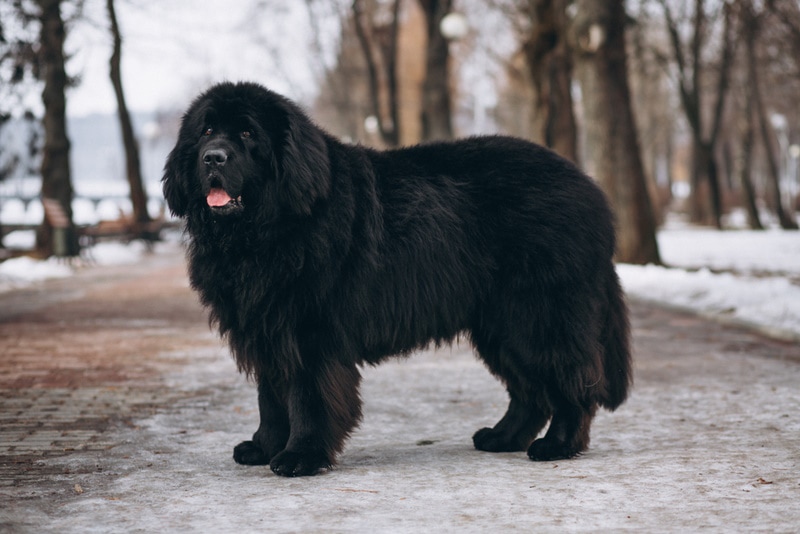
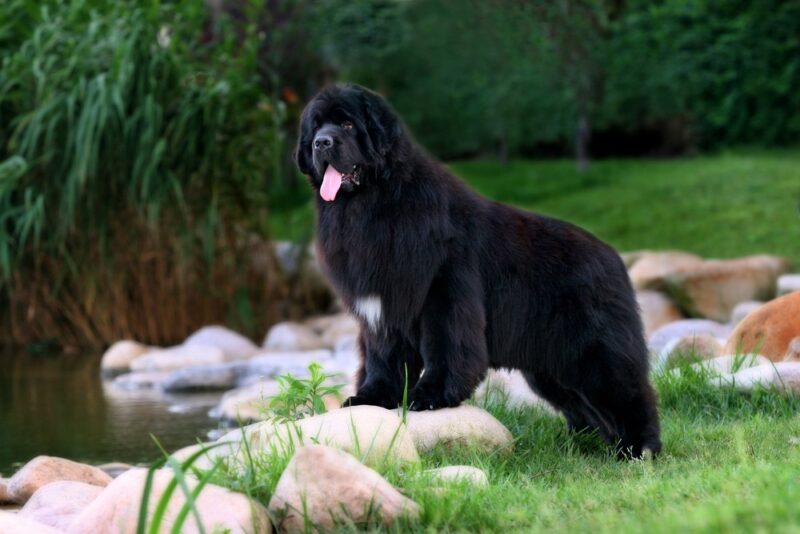
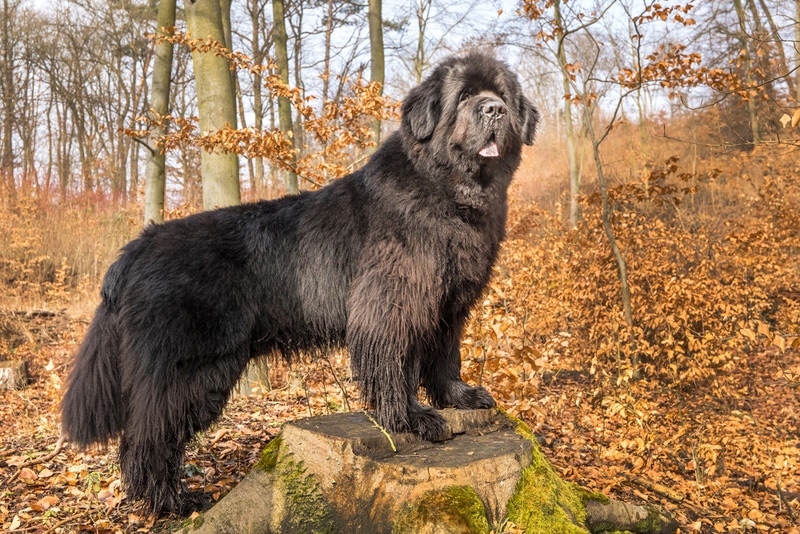
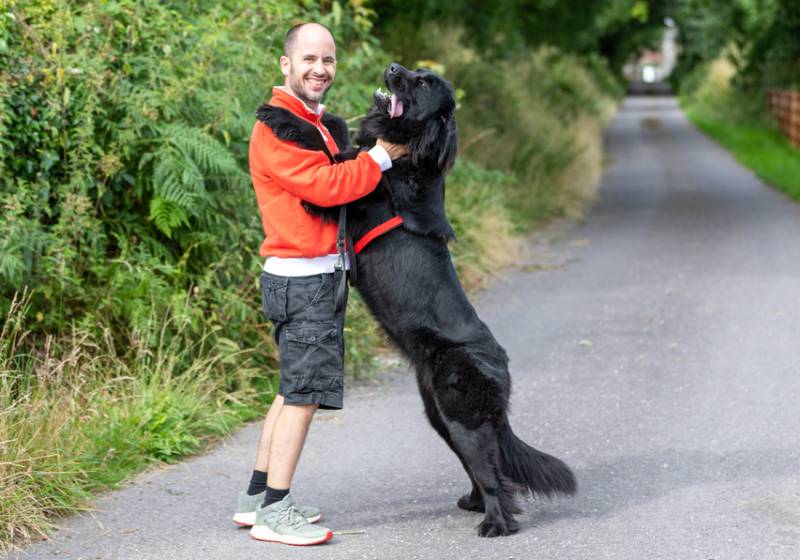
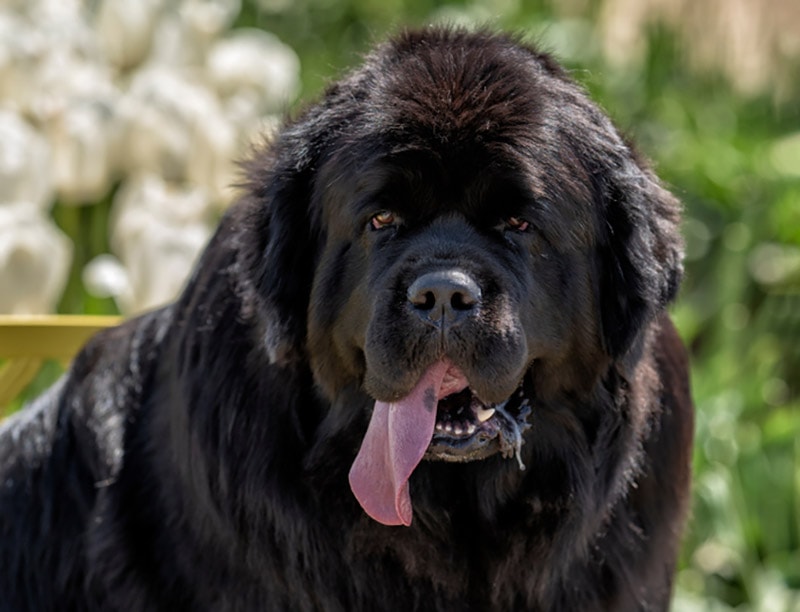
Newfoundland dogs are large, friendly giants, and just like any dog breed, they can get infected with the usual suspects: day-to-day tummy aches, arthritis, skin allergies, and ear or skin infections.
Any breed of dog can get those types of problems; they are a part of life. However, there are some diseases that Newfoundland dogs seem particularly, uniquely, predisposed to, whether it's because the disease is genetically linked to the breed or a congenital abnormality. Or even a factor of being a large dog breed. The following eight diseases are particularly common in Newfoundland dogs.

The 8 Common Newfoundland Dog Health Issues
1. Megaesophagus
In this congenital disorder, the throat (the esophagus) muscles do not contract correctly. As a result, it's as if the throat is stretched open, making swallowing very difficult. The intricate task of swallowing food and water suddenly becomes difficult and dangerous.
Dogs with megaesophagus choke too easily and inhale food and water into their lungs—a deadly side-effect. They also struggle to keep their food in their stomach and easily regurgitate and, in turn, choke on that. Look for these signs:
2. Ectropion
For dogs with big, saggy eyelids, ectropion is common. In this anatomical problem, the saggy eyelid droops outwards and struggles to close completely, and the lower eyelid can even crack, creating a fissure in the eyelid.
The drooping eyelid exposes the conjunctiva (the sensitive mucous membrane inside the eyelid), which dries it out. Environmental debris gets stuck in it, and bacteria easily congregate in the vulnerable spot, exposing the eye to infection and secondary problems.
Medical treatment may help fight off short-term infections, but surgery can sometimes help fix the anatomy of the eyelid making it more effective. Be aware of these signs:

3. Dilated Cardiomyopathy
Heart disease is common in large dogs, but a specific type of heart disease called dilated cardiomyopathy is particularly common in Newfoundlands.
In dilated cardiomyopathy, the muscles of the heart get stretched out and weaken. As a result, they cannot contract as strongly, and the heart struggles to pump blood around the body. As the disease progresses, the heart becomes bigger and weaker. Signs of dilated cardiomyopathy include:
4. Subaortic Stenosis
Another type of heart disease particularly common in Newfoundland dogs is called subaortic stenosis. In this type of heart disease, a congenital defect of the heart causes interference as the blood is pumped through. As a result, the heart must work extra to compensate and eventually fail to keep up.
In this type of heart disease, the valve that allows blood to pass out of the heart and into the arteries is deformed, so the exit flow is smaller than it should be. This makes it hard to pump all the blood out of the heart and into the body, and eventually, the heart cannot keep up with the extra strain.
All heart disease is diagnosed at the vet, and treatment will depend on the individual and the disease. Signs of subaortic stenosis are similar to dilated cardiomyopathy:
5. Bladder Stones
Bladder stone disease can be genetically passed on in Newfoundland dogs. This genetic disease is called cystinuria and causes cystine to accumulate in the urine. Cystine is an amino acid that belongs in the body, but in dogs with this disease, too much of it gathers in the urine. As the amino acid gathers in the bladder, it turns into tiny crystals which get stuck in the bladder and urethra. They are painful to pee out and can even cause the bladder to get blocked.
Dogs with this genetic disease have recurring bladder stones—repeatedly and need careful veterinary treatment. It is a lifelong disorder. Be aware of the following signs in your Newfoundland:
6. Osteosarcoma
Osteosarcoma is a cancer of the bones. It often occurs on the legs, and the first sign of it is a limp. Often the cancer is very aggressive and spreads (metastasizes) to other body parts quickly. It is usually fatal. Amputating the affected leg and chemotherapy are the usual treatments. Osteosarcomas are common in large dog breeds, of which the Newfoundland dog is one. Look for the following signs:
7. Gastric Dilation-Volvulus
Gastric dilation-volvulus is an emergency. It is when the stomach twists around on itself, and the entrance and exit to the stomach gets twisted shut. In the newly created closed-off stomach, gas quickly builds up and becomes very painful.
To correct this anatomical accident, surgery must be performed as soon as possible. Newfoundland dogs are predisposed to this type of emergency because they are big dogs. Here are the common signs of gastric dilation-volvulus:
8. Hip or Elbow Dysplasia
Newfoundland dogs are predisposed to both hip or elbow dysplasia because they are large dogs, and both diseases are common in large dog breeds—some more than others.
In both cases, these joint diseases (one affecting the hips, the other affecting the elbows) are caused by a combination of genetics and environment. Growing too fast, not having the right nutrition, and genes all play an intricate role in the development of hip/elbow dysplasia.
In these complex developmental and degenerative diseases, either the hip joints or the elbows develop abnormally and then slowly degrade over time, becoming more painful and more dysfunctional.
Summary
Newfoundland dogs are lovely companions. Their large size and adorable faces make them instantly huggable. Every breed has pros and cons, and each one will bring different health problems to the table. The trick is finding the right combination so the wonderful outweighs the inconvenience.
Hopefully, this article helped you learn more about the Newfoundland dog and their unique health challenges.
Related Read: Are Newfoundland Dogs Hypoallergenic? Vet-Reviewed Facts
Sources
Featured Image Credit: PH888, Shutterstock
Get Hepper In Your Inbox


Pet care tips from our vets and experts, straight to your inbox.
You may opt-out at any time. View our Privacy Policy for more information.
Dr. Chantal is passionate about the human-animal bond and improving animals' lives through their connections with their human companions. She has worked with many different species, big and small, including dogs, cats, birds, rabbits, guinea pigs, reptiles, amphibians, and even horses and mice. Chantal is excited to share her knowledge using her writing to help people connect with their animal friends.
Dr. Chantal believes that the best way for animals to be healthy is for their humans to understand their needs and well-being. She loves spreading her knowledge to as many people as she can through her writing.
Education
Dr. Chantal graduated from the Royal Veterinary College in London, England, where she received her vet degree. She then received her Masters in Conservation Medicine from Tufts University.
Experience
Dr. Chantal has worked with animals her entire life in many fields, even outside of veterinary medicine. She managed horse barns, worked as a dog trainer, and as a wildlife biologist before attending vet school. Chantal has been a veterinarian for over three years and continues to work with dogs, cats, and exotic animals. And, she still knows a thing or two about horses.
Join the conversation
Ask a question, share your story, or send private feedback.