Hepper is reader-supported. When you buy via links on our site, we may earn an affiliate commission at no cost to you. Learn more.
Cuterebra (Warbles) in Dogs: Causes, Symptoms, and Care (Vet Answer)

In this article
Cuterebra, warble, botfly—while the names are different, the “yuck” factor is the same. If your veterinarian has diagnosed your dog with Cuterebra, you may have many questions about what this parasite might mean for your pup.
The following article will discuss Cuterebra in dogs, including the causes, signs, and potential dangers of this condition. We'll also discuss frequently asked questions regarding Cuterebra, including treatment and prevention tips to keep your furry best friend in tip-top shape.

What is Cuterebra?
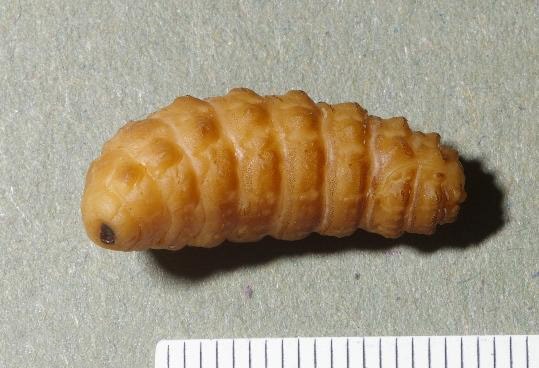
Cuterebra is a genus of botflies with 34 different species spread throughout North America. These flies typically parasitize rabbits and rodents, where they undergo larval development in the tissues of their hosts.
In a normal botfly life cycle1, the mature fly will lay its eggs near the burrow or nest of a small mammal. Once hatched, a larva from these eggs will attach to a passing rodent or rabbit, and enter its body through a natural opening. The larva will then travel through the soft tissues of its host to the subcutaneous tissue (the deepest layer of the skin), where it grows and matures. After 3–6 weeks the mature larva will exit its host through a small hole or pore, and burrow into the soil to finish its development. An adult fly will then emerge within several months to years.

What Are the Causes of Cuterebra?
Cuterebra can occur in dogs when they become the accidental hosts of the botfly's parasitic larvae. This most often occurs when a curious canine is sniffing or nosing around a burrow or hole where a botfly has laid its eggs. Similar to what occurs in the Cuterebra’s normal life cycle, a hatched larva will attach to the fur of an unsuspecting dog, enter its body through an opening (such as the mouth, nose, or a wound), and migrate through the body to its final resting place in the subcutaneous tissue.
In warmer climates, dogs may be at risk of Cuterebra infection throughout the year2, as adult flies lay eggs year-round. In colder climates, cases of Cuterebra are more frequently noted in the summer and fall months.
What Are the Signs of Cuterebra?
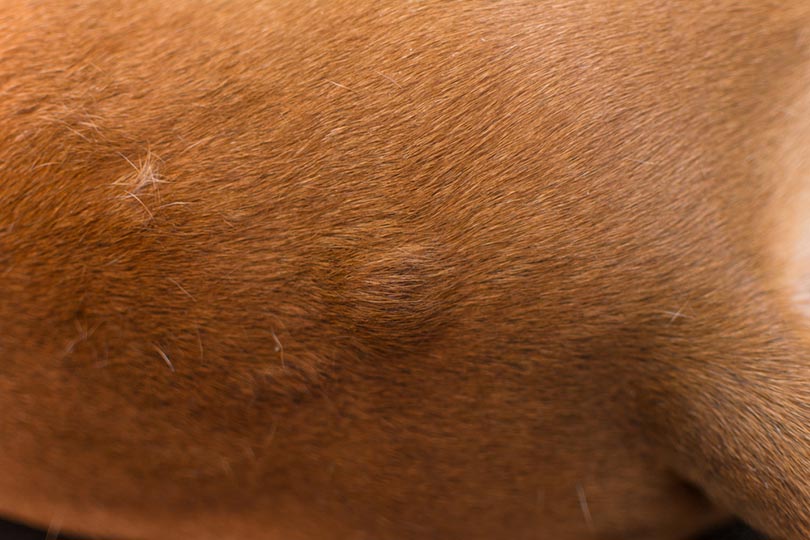
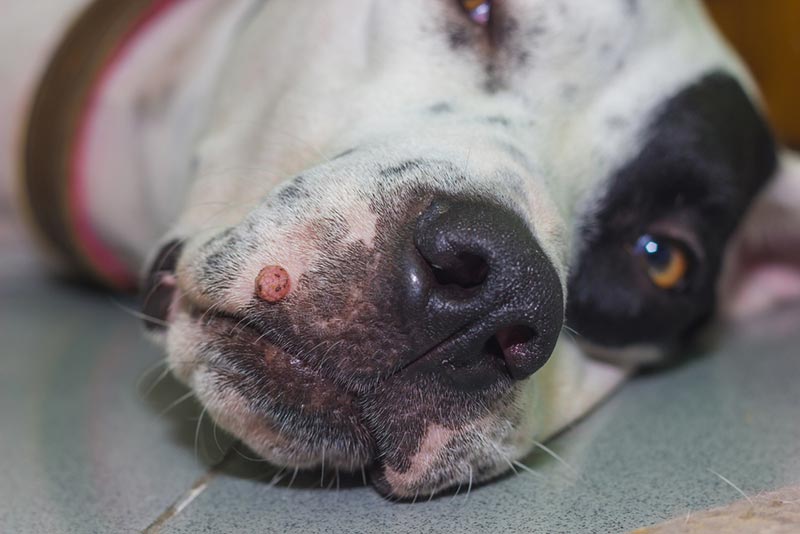
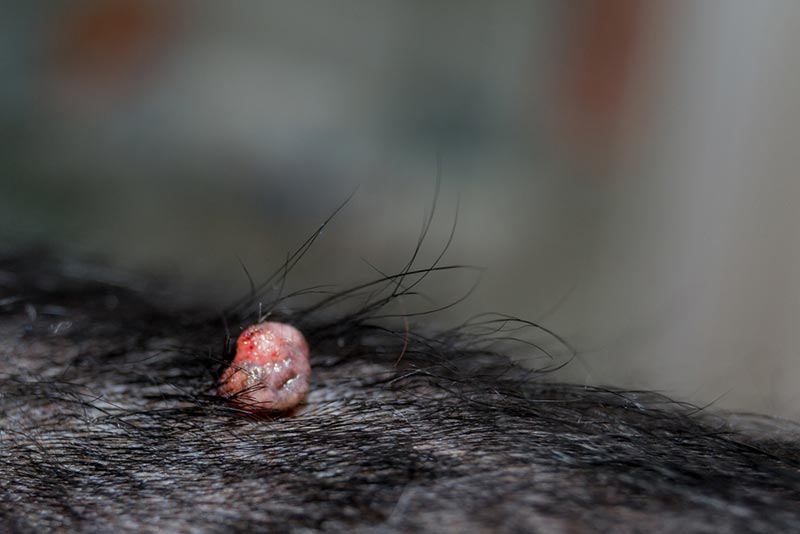
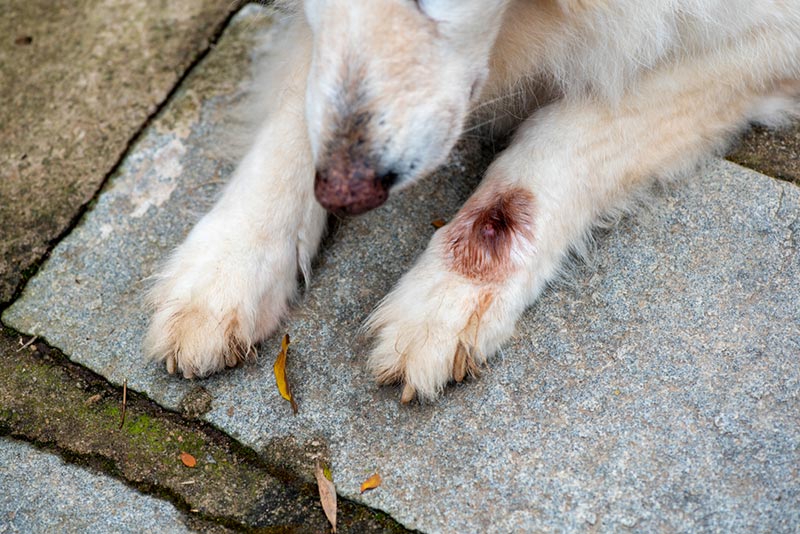
The most common finding in cases of Cuterebra is a swelling or lump with a small, central, approximately 5 mm hole; clear to yellow-tinged discharge may also be present. These lesions can be painful, and secondary infection (characterized by redness, swelling, or cream-colored discharge) may also develop at the site of infestation. Cuterebra lesions are most often noted on the head, neck, shoulders, or trunk of affected animals.
While cystic skin lesions are the most frequently noted sign of Cuterebra in canines, additional clinical signs may be noted, depending on the specific location in the body a larva may have migrated:
- Signs of neurologic disease may include seizures, circling, blindness, head tilt, behavior changes, or impaired coordination.
- Symptoms of respiratory disease include sneezing, nasal discharge, swelling around the nose, or difficulty breathing.
- Ophthalmic disease may manifest as eye twitching or squinting, discharge from the eye, swelling of the conjunctival tissue, or inflammation within the eye.
What Are the Potential Dangers of Cuterebra?
In general, serious illness in canines with cystic Cuterebra lesions is uncommon. While neurologic disease can occur due to parasite migration through the brain or spinal cord, this is less frequently noted in dogs than cats, and is considered to be rare, overall. Respiratory and ophthalmic disease, as noted above, are also considered to be uncommon.
A 2017 study reported that small breed dogs may be at risk of severe, systemic illness secondary to infection with Cuterebra—with Yorkshire Terriers being more commonly affected by serious disease. Disseminated intravascular coagulation (DIC), systemic inflammatory response syndrome (SIRS), protein-losing nephropathy (PLN), and kidney failure were among the conditions documented, that often led to the death or euthanasia of infected canines.
Frequently Asked Questions (FAQs)
How is Cuterebra diagnosed?
A diagnosis of a subcutaneous Cuterebra can typically be made by your veterinarian via visualization of the distinctive lesion. Larvae may also be identified through close inspection of suspicious lesions. Dogs experiencing respiratory, neurologic, or other systemic signs may be more difficult to diagnose, and a sedated exam with advanced imaging, such as magnetic resonance imaging (MRI), may be required.
How is Cuterebra treated?
Treatment for Cuterebra involves surgical removal of the larvae. Larvae present in skin lesions can typically be manually removed by your veterinarian, using a small pair of forceps. If a secondary infection is present, your veterinarian may recommend treatment with antibiotic medication.
While it may be tempting, it is important to note that you should never squeeze a suspected Cuterebra, or attempt removal at home—this may result in additional inflammation, or rarely, severe allergic reaction if the larva is ruptured during removal.
Larvae located in less common areas including the eyes, mouth, nose, or throat may require more invasive surgical removal. Successful removal of larvae present in nervous tissue, such as the brain or spinal cord, has not been documented.
Is Cuterebra contagious to humans?
According to the Companion Animal Parasite Council, the larvae from an infected dog are not considered to be a health risk to humans. Reports of Cuterebra in humans have been documented, however, when newly-hatched larvae enter the body through an orifice, such as the mouth or nose—similar to the manner in which dogs are infected.
How can I prevent Cuterebra in my dog?
Prevention of Cuterebra in canines involves limiting access to areas such as nests, dens, or burrows where Cuterebra eggs may be present.
Final Thoughts
In conclusion, Cuterebra infection in dogs most commonly results in localized, cystic swelling that can be treated by surgical removal of the embedded larva. Serious, life-threatening disease secondary to Cuterebra infection is uncommon, however, may be noted more frequently in small breed dogs including the Yorkshire Terrier. If you are concerned your dog may be infected with Cuterebra, a prompt visit to your veterinarian is recommended for further evaluation and initiation of treatment.
Sources
Featured Image Credit: AlessandraRC, Shutterstock
Get Hepper In Your Inbox


Pet care tips from our vets and experts, straight to your inbox.
You may opt-out at any time. View our Privacy Policy for more information.
Dr. Leigh is a US-based veterinarian with over 9 years of experience. She is a lifelong animal lover who grew up with all kinds of pets, including dogs, hamsters, and fish. Leigh received her Doctor of Veterinary Medicine degree from the University of Minnesota and has specialized in shelter medicine and small animal clinical practice ever since. She enjoys small animal preventative medicine and surgery and loves helping pet owners by sharing her knowledge on a wide variety of veterinary topics. Leigh lives with her husband, two young children, and Hershey, her elderly pug mix. Outside of work Leigh likes traveling, reading, and hanging out with her family.
When Dr. Leigh was a child, her passion for animals started. She grew up tending to hamsters, guinea pigs, rats, fish, and dogs. She now shares her home with her husband, her two young children, and Hershey, her geriatric pug mix. When she's not working, Leigh loves spending time with her family, reading, and traveling.
Education
Leigh graduated from the University of Minnesota, where she received her Doctor of Veterinary Medicine degree. She has worked in both small animal clinical practice and shelter medicine since graduation.
Experience
Dr. Leigh has over 9 years of veterinary experience. She enjoys small animal preventative medicine and surgery and is passionate about helping pet owners through sharing her knowledge on a wide variety of veterinary topics.
Check out some of our top posts written by our veterinarian team:
Can I Put Vaseline on My Cat’s Paws? Is It Safe?
Join the conversation
Ask a question, share your story, or send private feedback.