Hepper is reader-supported. When you buy via links on our site, we may earn an affiliate commission at no cost to you. Learn more.
Do Dogs Get Hemorrhoids? Vet Approved Facts & Common Anal Problems


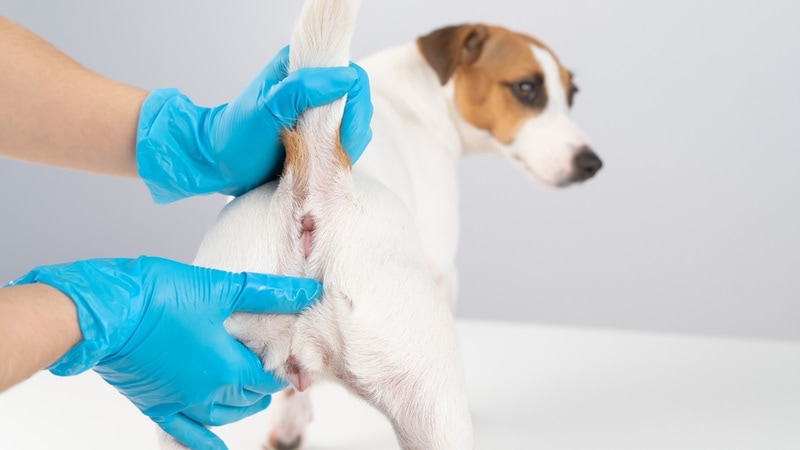
Hemorrhoids can be a painful and concerning health condition for people, but that doesn't mean all mammals need to worry about them. In fact, it's a problem that most mammals don't need to worry about. Thankfully, dogs don’t need to worry about getting hemorrhoids.
But why can't they get hemorrhoids, and what does it mean if they're having health concerns around their anus? We've answered those questions and more for you. That way, you can make an informed decision about what you need to do if your pup is having problems in this sensitive area.

Why Dogs Don't Get Hemorrhoids
Hemorrhoids are swollen veins in the anus and lower rectum, usually caused by increased pressure on the vessels. While hemorrhoids are a common health concern with humans, the same isn't true with dogs. That's because humans have a vertical digestive system while dogs have a horizontal digestive system.
While this might not seem like a big deal, a dog standing on four legs puts less pressure on their anus and the rest of their digestive system. Because of this, they won't develop hemorrhoids. But just because they can't get hemorrhoids doesn't mean they can't get any health problems "down there."
Why Do Dogs Scoot?
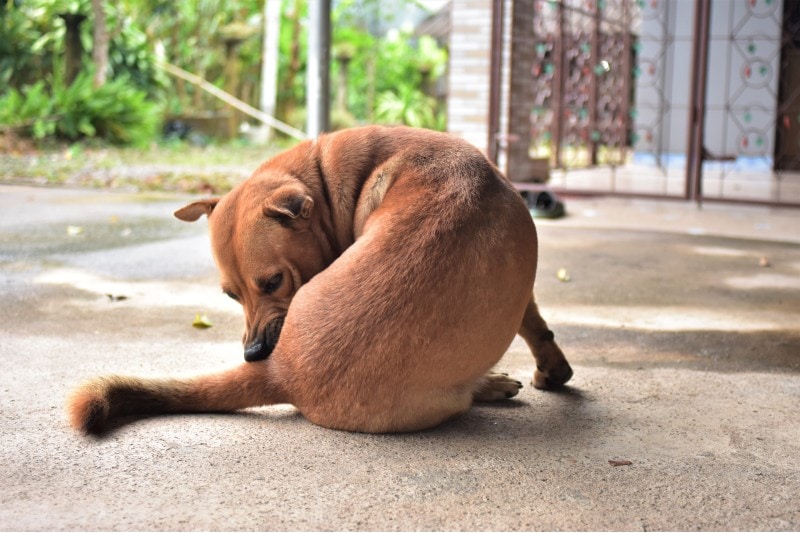
If your dog is doing the booty-hole scoot across your living room floor, it's not because they're suffering from hemorrhoids. This may be due to an occasional ‘normal’ itch, but underlying health concerns such as anal gland issues might be at play, especially if it becomes a common occurrence or is accompanied by other signs.

Other Anal Problems to Be Aware Of
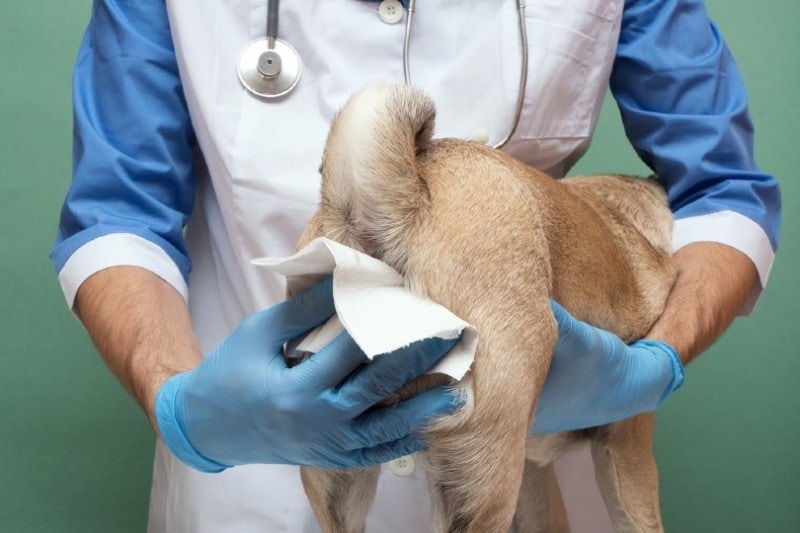
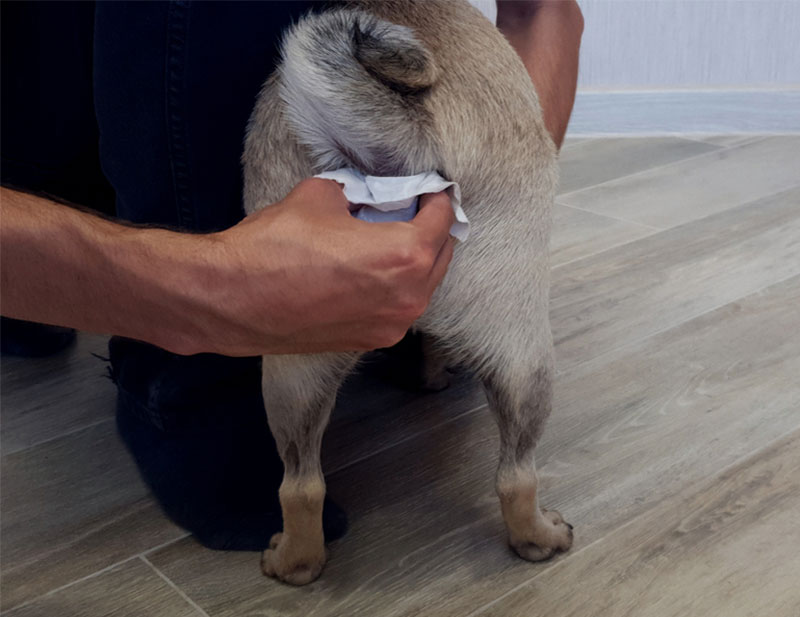
While your dog won't have hemorrhoids, that doesn't mean you shouldn’t keep an eye out for other problems. If you suspect your dog has a medical problem around their anus, you need to take them to a vet right away for a proper diagnosis and treatment.
Anal Sac Problems
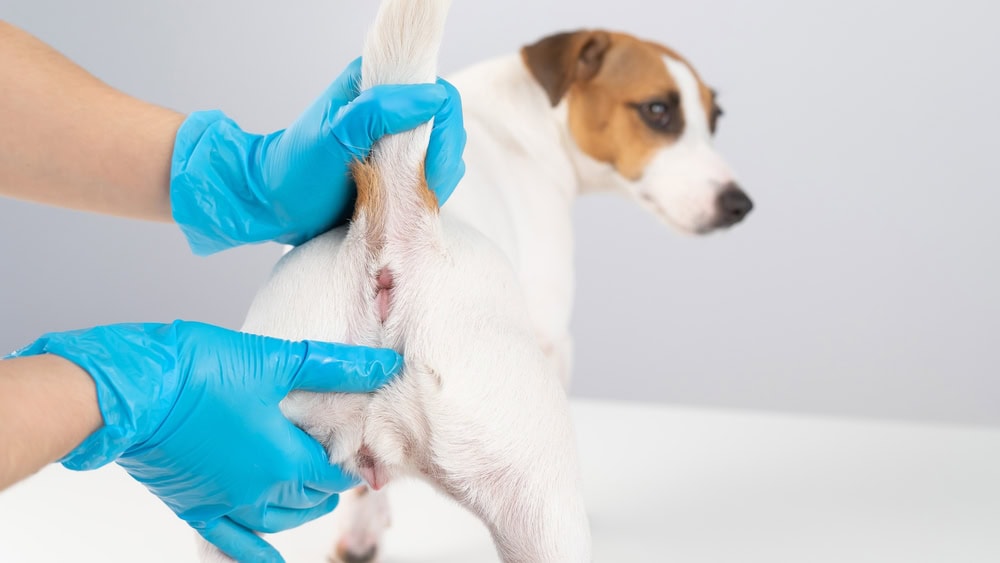
Dogs have two scent glands, one on either side of the anus, which produce a strong smelling liquid normally released when a dog passes a stool. Sometimes these can get blocked or impacted, causing irritation and sometimes swelling around the anus. If not treated they can get infected and form painful abscesses.
Prolapsed Rectum
A much less common condition that can be confused with hemorrhoids in dogs is a prolapsed rectum. This happens when a part of the rectum protrudes from the anus, it’s more common in puppies that have severe diarrhea and are straining to defecate. This needs veterinary attention straight away.
Polyps
While this is technically an uncommon occurrence for dogs, it does happen from time to time, especially with older dogs. Polyps are growths of extra tissue, usually on a stalk. They're usually benign, but if they're presenting issues for your pet, a vet will need to remove them.
Masses
Any kind of tumor on your dog is something you need to take seriously. Masses can be either cancerous or benign, but either way, you want to play it safe and have a vet assess and remove them as soon as possible to give your dog some relief and help stop it from spreading if it is cancerous.

Perianal Fistulas
These are draining holes around the anus and usually look like open, ulcerated wounds. This can become a serious, extensive and very painful problem. Genetics are involved and the majority of dogs suffering from this condition are German Shepherds.
Perineal Hernia
Perineal hernias can most commonly be seen as swelling on either or both sides of the anus. Dogs usually have difficulty passing feces and constipation and often strain. It’s important to get them assessed by your vet as soon as possible.

Final Thoughts
While you don't have to worry about your dog getting hemorrhoids, there are numerous health problems you need to keep an eye out for. If you suspect any problems with your pet’s anal health, don't take any chances and take them to the vet right away.
You might be able to catch a problem while it's small, but if you ignore it for too long, it can turn into an expensive, painful or even life-threatening condition for them.
Featured Image Credit: Reshetnikov_art, Shutterstock
Get Hepper In Your Inbox


Pet care tips from our vets and experts, straight to your inbox.
You may opt-out at any time. View our Privacy Policy for more information.
Adam, a dedicated freelance writer and animal advocate, has a long history of rescuing animals and creating compelling written content. For over ten years, he has worked as a freelance writer, and his passion for rescuing animals extends even further back. Adam is also a proud father of three, always ready for a challenge and eager to embark on new adventures.
Join the conversation
Ask a question, share your story, or send private feedback.