Hepper is reader-supported. When you buy via links on our site, we may earn an affiliate commission at no cost to you. Learn more.
Does Garlic Kill Fleas? Vet Approved Tips On Safety & Effectiveness


In this article
A flea infestation is the last thing you want in your home and on your pets. Treating the fleas in your home and on your pet is the top priority, but knowing what works to kill them effectively can be confusing. There's a lot of speculation about the effectiveness of the garlic plant (Allium sativum) and how it affects fleas, but the fact is that garlic has not been proven to kill fleas and can be very dangerous for pets. Fleas won't be killed or repelled by garlic; even if they're not fond of it, it won't keep a hungry flea from biting your pet for its next meal! If your pet has fleas or you want to prevent them we encourage you to seek advice from your veterinary clinic.

Why Doesn't Garlic Kill Fleas?
Garlic can't kill fleas because it has no insecticidal properties. Fleas are very hardy insects that can live without sustenance in their egg forms for months. Then, they become voracious larvae and quickly grow until they pupate.
Flea pupae are also hardy and will emerge as adult fleas in most cases; only certain insecticides and insect growth regulators have been proven effective against fleas of all life stages, and garlic is not one of them. If it were to kill fleas, the garlic would have to poison them and stop them from breathing, eating, or performing other essential life functions. Garlic can't do any of these things, and there are no studies that have proved it can harm fleas1.
The “evidence" available online is anecdotal at best. Fleas are not likely to be put off by the pungent smell of garlic no matter how it's applied or given to pets, and the same is true for other biting insects such as ticks, lice, and mosquitoes.
What Does Garlic Do to Fleas?
The idea behind using garlic as a flea deterrent is that giving your pet garlic to ingest will mean they sweat it out through their pores, or it will enhance their blood and repel or kill fleas who attempt to bite them. Another similar concept is that by rubbing garlic on your pet, the fumes will repel any fleas. This claim probably originates from the fact that a compound in garlic does find its way out of human skin pores via sweat (allyl methyl sulfide), which gives us "garlic breath" and body odor2.
Both claims are unproven. First, cats and dogs don't sweat as humans do; they only have sweat glands in certain places on their bodies (like their paw pads) and don't sweat through their skin. If garlic did travel through the body this way, it would only come out on the underside of your pet's paws. The same goes for any garlic tainting in the bloodstream; though allyl methyl sulfide is transported via blood, the blood itself doesn't take on an odor. It is these sulfur-based compounds that make garlic toxic to cats and dogs.
Does Putting Garlic on Your Pet Harm Them?
Yes, putting garlic on your pet can harm them since it is toxic to cats and dogs. Cats and dogs groom themselves, so they will likely ingest any garlic slathered on their skin and fur almost as soon as it's put on. Garlic is toxic to many pets including dogs and cats and can even kill them if ingested.
Garlic is part of the allium family of plants, which are all very toxic to cats and dogs. Substances found naturally in garlic are released when the garlic is crushed, chewed, and cooked and further released when digested. The compounds that cause damage are absorbed by the red blood cells in the animal's body, causing permanent damage to them and preventing oxygen from being carried around the body.
This leads to the destruction of the blood cells (hemolysis), which peaks around 3 to 5 days after the garlic has been given to the animal. The effects of garlic ingestion can be apparent within 24 hours, and death can occur quickly. The signs of garlic toxicity in cats and dogs include:
- Depression and lethargy
- Ataxia
- Increased heart rate
- Increased respiration rate
- Weakness
- An inability to exercise or walk properly
- Liver damage and jaundice
- Collapse
- Death
Garlic is three to five times more toxic than onions (another member of the allium family) to cats and dogs, and harmful effects have been seen in cats after consuming less than a teaspoon.
What Works to Kill Fleas?
The only substances that can kill fleas are suitable insecticides. Typically, you need two types of insecticide that are often combined in flea products, that can destroy every life stage of the flea. In addition, treating adult and juvenile (larva, pupa, and egg) fleas is different, as each is resistant to certain types of insecticide.
Adult fleas need an insecticide that will kill them either before or just after they bite ( an adulticide), and all other life stages (eggs, larvae, pupa) need an insect growth regulator to stop them in their tracks and prevent them from developing into an adult. A few products can be used to achieve this, but speaking to your vet about what's best for your pet should always be your first step.
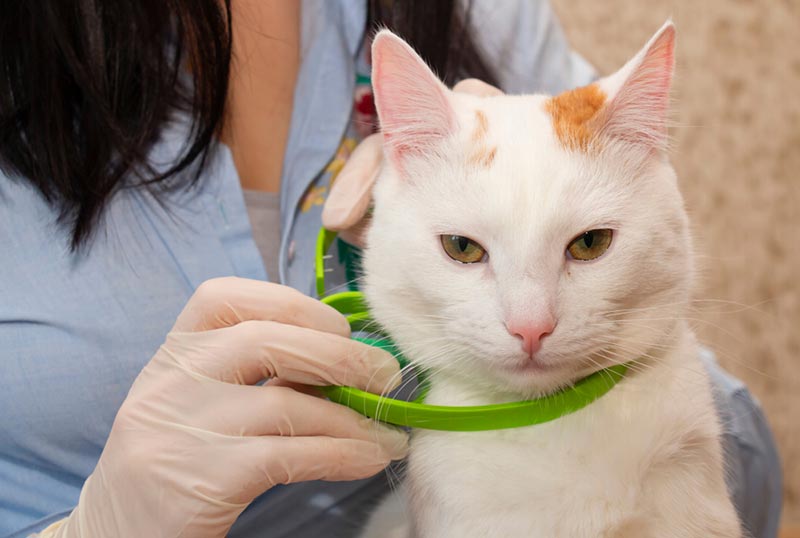
Some products are more appropriate for animals of different sizes, ages, and even species; it's important to note that you should never use dog flea products on a cat, as some contain an ingredient that is highly toxic to cats. Your vet can advise you on what is best, but a few examples of flea treatments for pets include:
- Topical flea treatments that contain an insect growth regulator, adulticide, or both
- Flea tablets
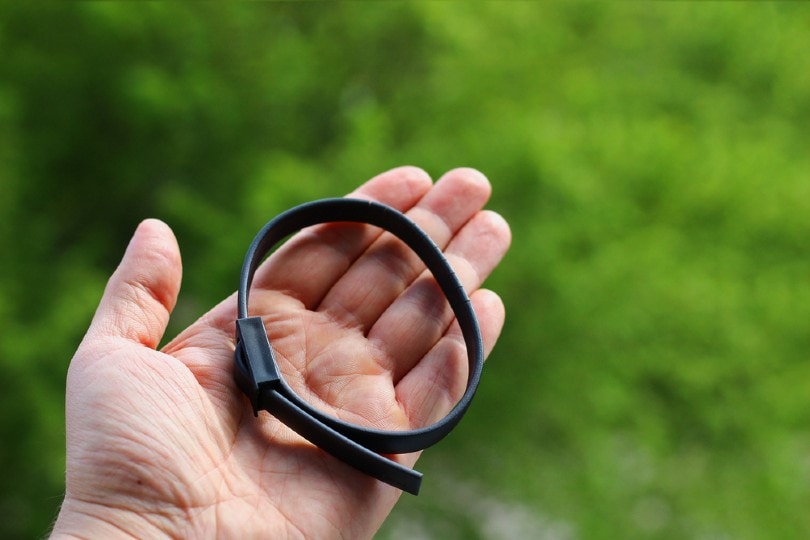
- Flea collars
- Sprays
- Shampoos
Environmental treatment is also needed to completely destroy all fleas in the home since only 5% of an active flea infestation will be visible as adults on your pet.
The Flea life-cycle
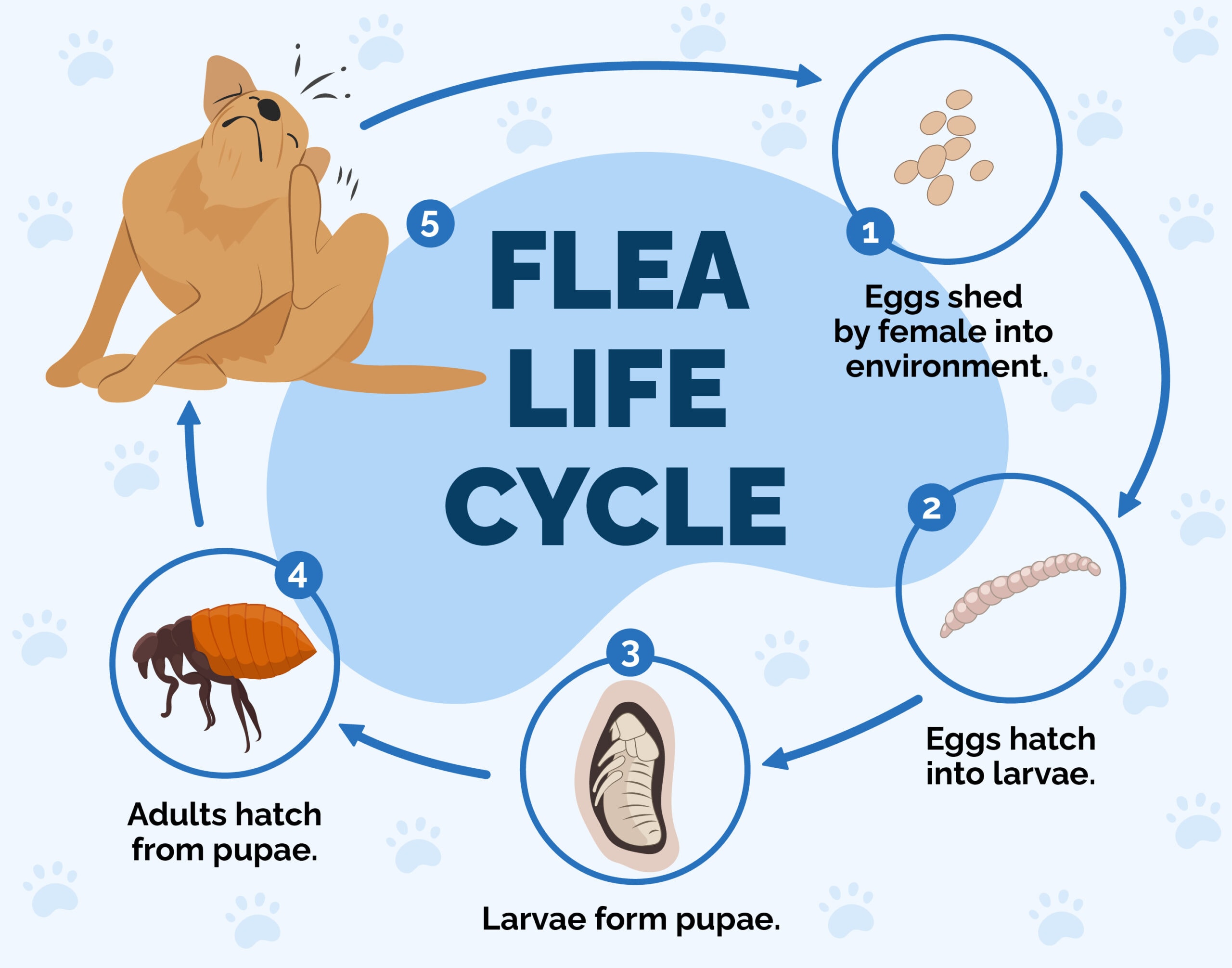
Fleas begin life as an egg freshly laid by an adult female flea. In around 2 days, the egg will hatch into the second stage, the larva. Flea larvae are mobile and well-equipped to hunt for food. The larvae will eat any skin cells, flea poop, or other food they can find in their area. Then they will burrow down into the carpet or in cracks in the floorboards to hide from the light. After 7 days, the larva will create a cocoon around itself and transform into a pupa.
The pupa protects the larva as it grows into its final adult form. The pupation stage takes another 7 days, after which a new adult flea emerges. The flea will jump onto the first mammal it finds (people or animals) and bite. If the flea is female, she will lay 25 eggs a day, and the life cycle will start again as she spreads them on your pet and the environment.
The flea life-cycle typically takes around 17 to 26 days to complete, but the home’s environmental conditions can affect it.
Warm, moist environments with plenty of food and no flea control can help fleas complete their entire life cycle in as little as 12 days! That is why effective flea control is so essential; 25 fleas, each laying 25 eggs, can create an infestation of 625 new fleas after just one lays her eggs!
Final Thoughts
Fleas are an unpleasant but expected part of pet ownership, and we should control them as best we can as responsible owners. Despite myths about the effectiveness of garlic as a flea killer, there is no evidence that garlic even repels fleas (let alone kills them). If cats or dogs ingest garlic or garlic powder by licking it off their skin or being fed directly, they can die due to hemolysis and damage to internal organs. Garlic is toxic to cats and dogs, so they should never be exposed to it. A pet-friendly pest control service can treat your home for fleas, and your veterinarian can prescribe an effective treatment to kill the fleas on your pet and protect them from future infestations.
Featured Image Credit: Anrita1705, Pixabay
Get Hepper In Your Inbox


Pet care tips from our vets and experts, straight to your inbox.
You may opt-out at any time. View our Privacy Policy for more information.
Beth is a mom to two babies: one with four legs, and one with two. Beth has years of practical experience as a veterinary care assistant, working in both the operating room and in consult, expanding her knowledge to gain certification in her favorite subject: feline behavior and well-being! When she's not writing about her favorite topics (cats, dogs, and creature comforts), she's looking after her two-year-old daughter and her energetic eight-year-old Nebelung, Kiba. When she gets a moment's respite, Beth loves to read fiction books. Horror is her number one genre, with fantasy and rich history being her second option.
Join the conversation
Ask a question, share your story, or send private feedback.