Hepper is reader-supported. When you buy via links on our site, we may earn an affiliate commission at no cost to you. Learn more.
How to Crate Train a Puppy: 5 Easy Steps to Follow
In this article
Crate training can be a controversial topic, but there are many benefits to crate training your puppy. Like humans, sometimes your dog needs somewhere cozy and private to curl up in. Crates become a secure, safe space for them to relax and ease anxiety. So, let’s take a closer look at these benefits and how to crate train your puppy in easy, manageable steps.

Why Is Crate Training a Good Idea?
There are many benefits to crate training, but here are just some to consider:
- It will aid in settling your new puppy, so they have somewhere safe that is only theirs to get used to the new environment.
- They have somewhere to go when they need to be alone.
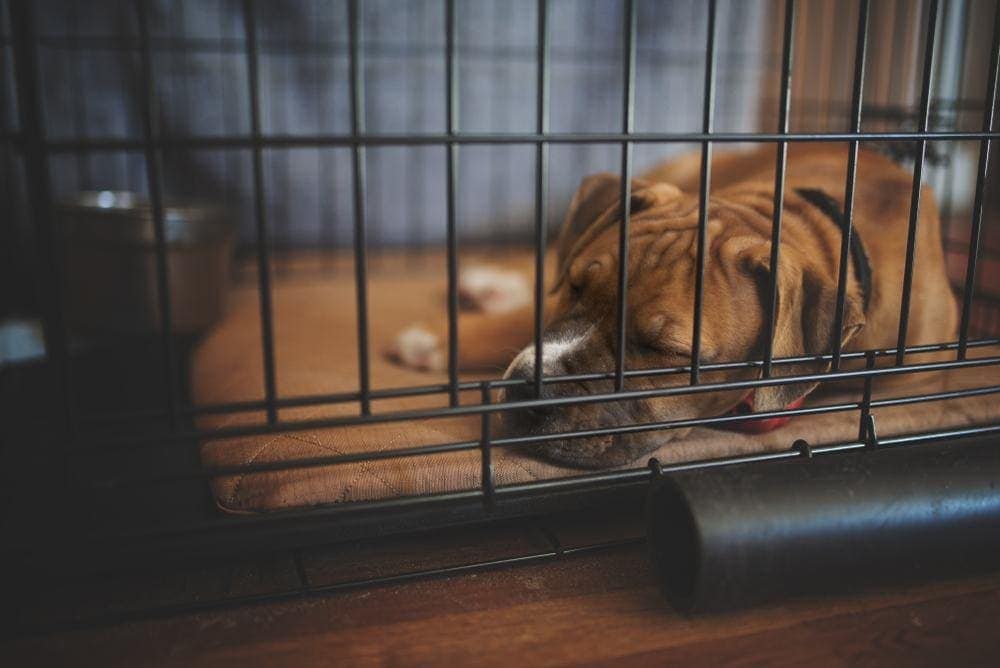
- It’s a safe, comfortable place to sleep at night.
- You can use a crate to keep your puppy safe when you aren’t there to supervise them. It keeps them away from hazards and getting themselves into trouble.
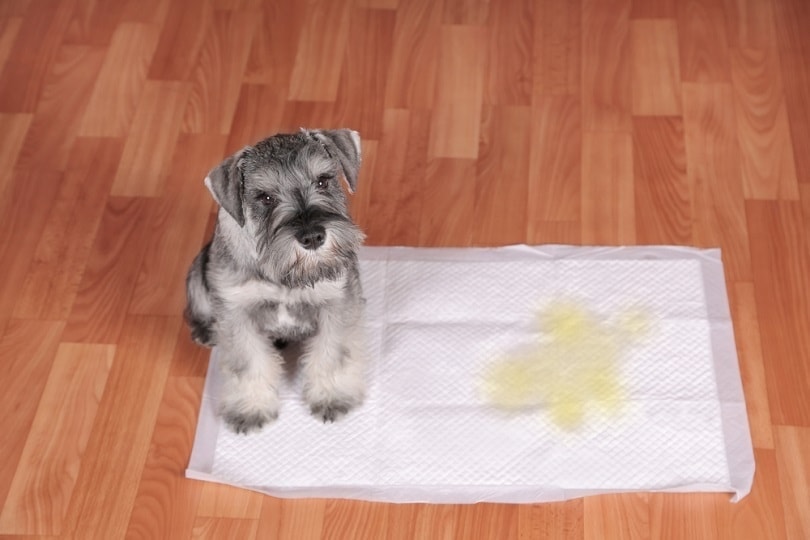
- A crate can help you with toilet training.
- Traveling with a dog is made a little easier if they are used to being in a crate.
- It gives them a safe, comfortable place to heal after a vet visit.
A recent survey from This Old House found that 70% of dog owners reduced puppy accidents with the help of a crate and sufficient crate training1. If you train your pup right, she will look at her crate as a secure and calm place for her to go whenever she wants, instead of a place she’s banished to after a misstep.
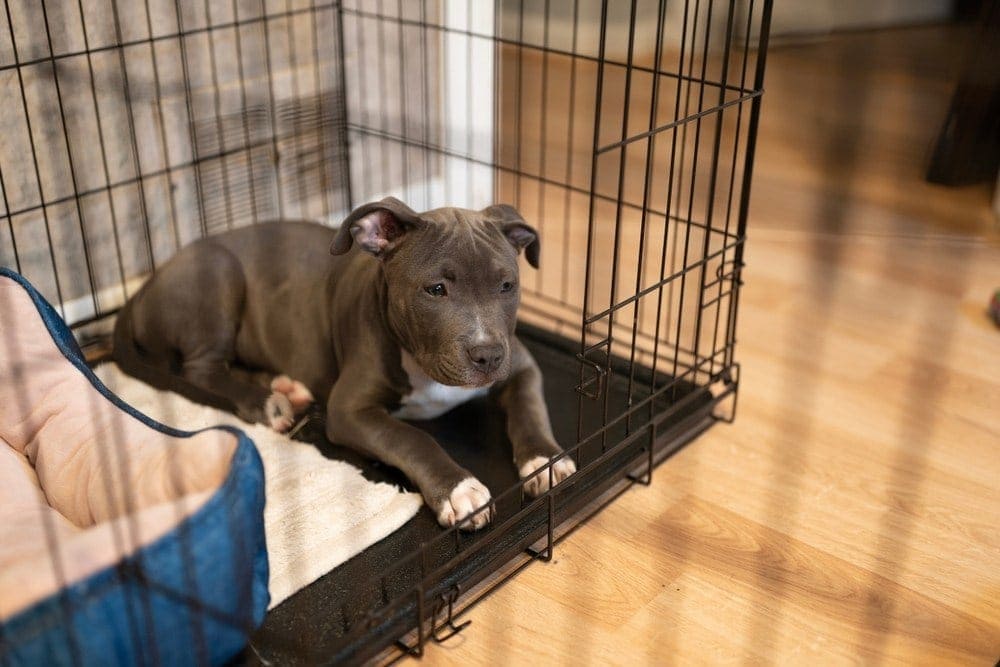
How to Crate Train a Puppy Fast in 5 Easy Steps
Training a puppy in anything takes a lot of time and patience. Every dog will learn at their own rate, and sometimes steps will need to be repeated, and that’s okay—it’s easy to look at a guide such as “how to crate train your puppy in 3 days,” for example and think you have to stick to that timeframe rigidly. But work on the assumption that everything is an estimation.
It might take you 3 days or a couple of weeks. You might get through our guide in the 5 steps, or it could take 8 to get your puppy settled. Remember, the whole world is brand new for a puppy, which can be overwhelming!
1. Introductions
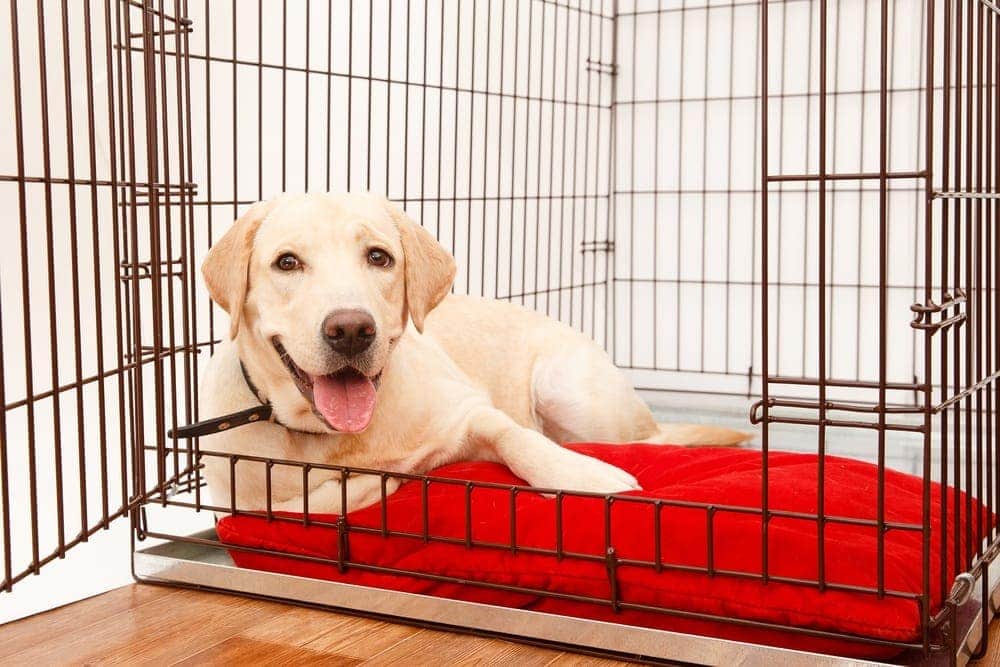
The crate should be set up so it’s comfortable and cozy; your aim is for it to be a place your puppy wants to spend time. Then the first step is to introduce your puppy to their crate.
The important point here is to allow your puppy to do this on their own terms; keep the door open, and even put in some yummy treats and fun toys to entice them in, and let your puppy wander in and out as much as they like.
2. Praise and Commands
You’re going to make going into the crate more deliberate now by using command words to get your puppy in when you want. Continue with whatever method you’ve been using in training; if you’re using commands, stick to that; if you’re using the clicker method, then do that.
Use commands like “in” or “crate,” for example, throw a treat into the crate, and remember to praise your puppy when they do. Follow on with commands like “out” or whatever word you prefer and throw a treat outside the crate, praising your puppy again when they leave. Repeat these steps until your puppy understands and seems comfortable.
If you need help with training your dog, we suggest speaking with a vet online.
3. Mealtime
You’re going to increase your puppy's time in the crate by introducing a dining-in experience. Your puppy might go into the crate willingly, but if they won’t, it isn’t the end of the world, just place the bowl next to the crate and move it gradually inside over the space of a few mealtimes until they seem more comfortable.
This is to create a positive association with the crate—the puppy likes food, and if the crate has food inside, the puppy will hopefully like it too! During all of this, keep the door open, so your puppy can leave when they want to.
4. Closing the Door
This will be a slow process and require a lot of patience on your part—it isn’t a case of shutting the door and walking away. Shut the door for a short period, around 15–20 seconds, or until your puppy shows signs of wanting to leave, and then slowly build it up each time you do it.
You can make the crate interesting by doing it during mealtimes, putting a toy in there, or a puzzle toy like a Kong. Make sure you always stay next to the crate and open the door as soon as your puppy shows signs of wanting to get out.
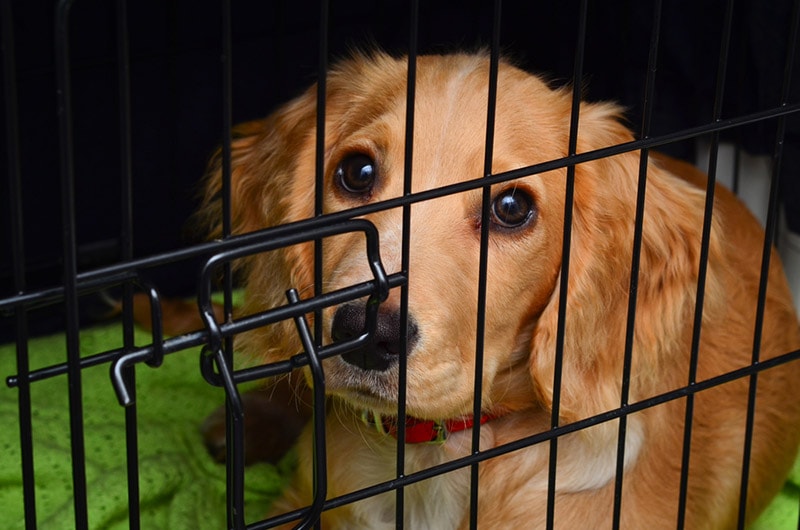
5. It’s Time to Leave
You’re going to leave the room now, but not for long periods of time. This step is basically a repeat of step 4, but you’re going to attempt to leave the room. Start with short periods and stay close by, so if you hear your puppy wants to leave the crate, you can get to them quickly. You can’t leave your puppy for too long, of course, as puppies don’t have the bowel or bladder control to be in a crate for an extended period of time.
If your puppy struggles and doesn’t want you to leave the room, start slowly by moving to the other side before building up to leaving it altogether.
How Long Can a Puppy Be in a Crate?
Even if your puppy gets used to being alone in the crate quickly, you still need to be aware that there are time restrictions because puppies need to pee more than adults. When you first bring home a puppy, they tend to be about eight weeks old. PetMD suggests taking them out every 30–60 minutes just to get them used to peeing outside.
An excellent way to remember how long they can hold their urine is their age in months plus one, and the answer is how many hours you have before they will pee in your house!
| Age | Maximum Time |
| 2 months | 2–3 hours |
| 3 months | 3–4 hours |
| 4 months | 4–5 hours |
| 4+ months | No more than 6 hours |
The Important Dos and Don’ts of Crate Training
Training has the potential to go wrong, and when that happens, fixing the problem can be more complicated than if you hadn’t started training at all yet. If your puppy develops a negative association with their crate, it can be tricky and time-consuming getting them back to a place where they are comfortable around it again. So, here are some things to consider:
Do's of Crate Training
- Do make the crate inviting and comfortable
- Do be consistent and patient
- Do use praise and positive reinforcement
- Do make sure your puppy goes to the toilet before going into their crate
- Do observe their body language and be aware of signs of fear and stress (such as changes to posture, ears, and eyes, panting, yawning, licking, or drooling, and hiding or escape behavior)
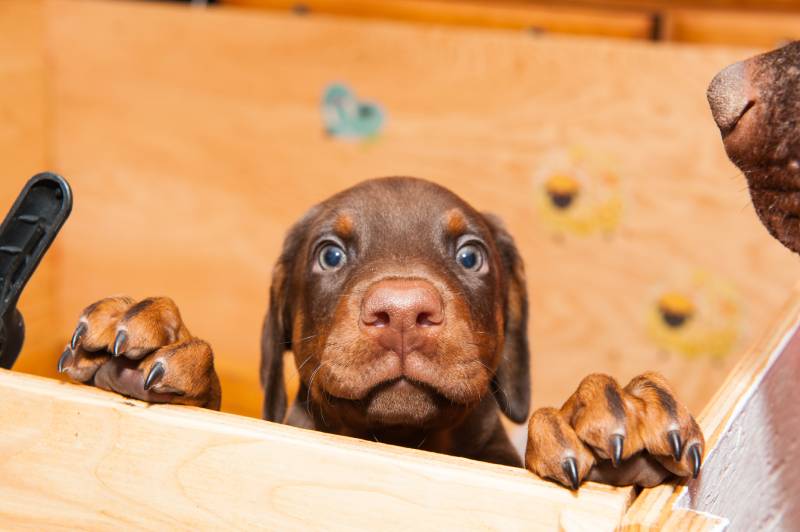
Don's of Create Training
- Don’t use the crate as punishment
- Don’t leave your puppy in the crate for extended periods
- Don't try to rush through the steps
- Don't use harsh words
- Don’t leave on collars or IDs that could get caught in the bars and cause your puppy an injury
How to Pick the Perfect Crate
You’ve decided that crate training is for you, but you now realize how many different styles and types of crates there are: how do you possibly choose? Well, first, you might consider getting a crate based on your dog’s fully grown size. This could save you money and means you don't need to get them used to a new crate in the future. But first, let’s take a look at how to measure your dog for a crate.
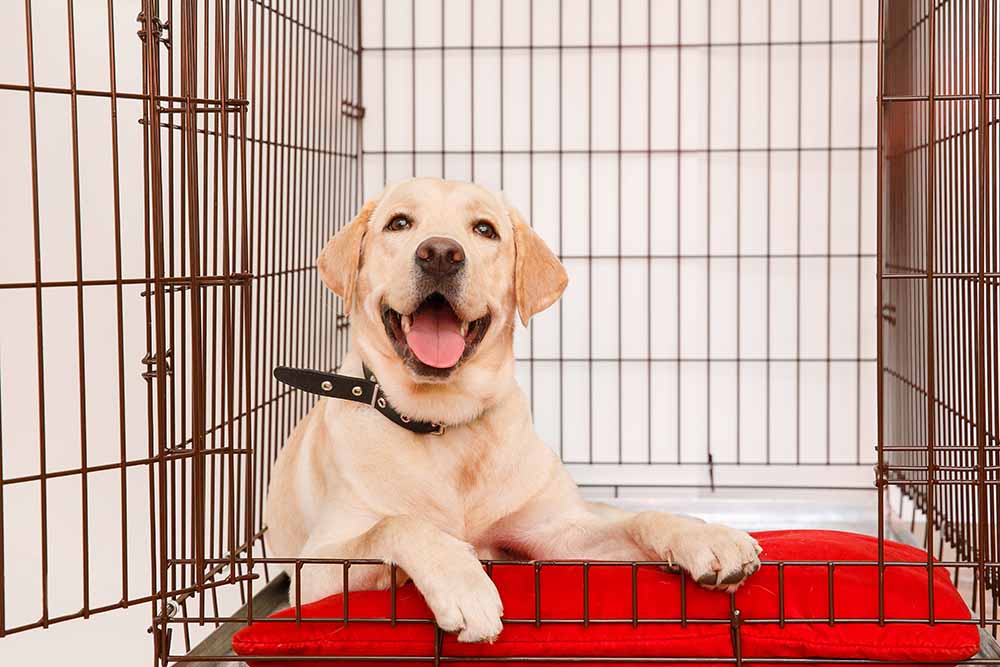
Measuring Your Puppy for a Crate
To measure their length, start at the tip of the nose to the base of the tail and add two to four inches for the perfect length. To get the height, measure your dog when they’re sitting, start from the floor, stop at the top of their head, and add two to four inches.
If you are getting a crate based on your dog’s adult size, there are ways to get the crate to “grow with” your dog. So, in this case, you would get a full-sized crate, and you can always base the measurements on the estimated height and length of your dog’s breed. You could then purchase or make your own divider so the crate isn’t too big; too much space could result in accidents because your puppy might pee on one side and sleep on another.
What Kind of Crates Are There?
There are many different styles of crates, and what works for you will depend on a few factors, like your dog’s breed, temperament, and what you need the crate for. For example, fabric crates are a good choice if you like to travel as they move more easily.
- Plastic crates: Excellent for traveling but not suitable for leaving your dog in for an extended period as they tend to be on the small side and don't allow your dog to stand and turn around.
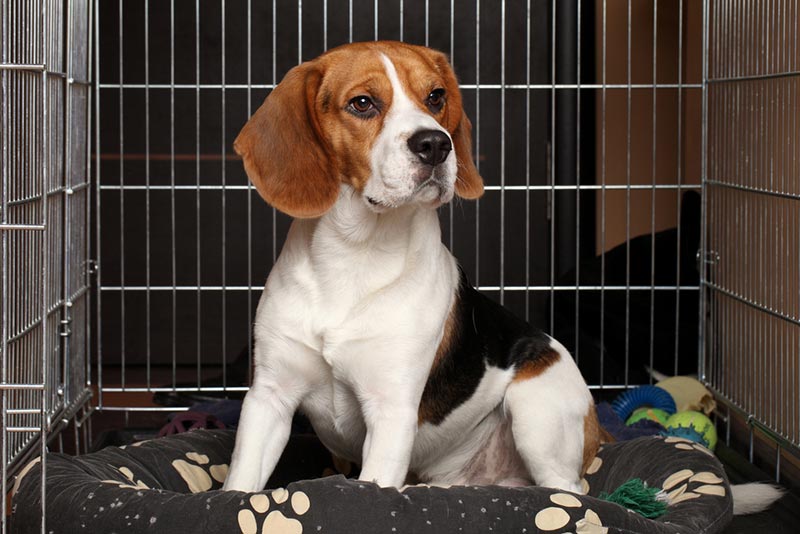
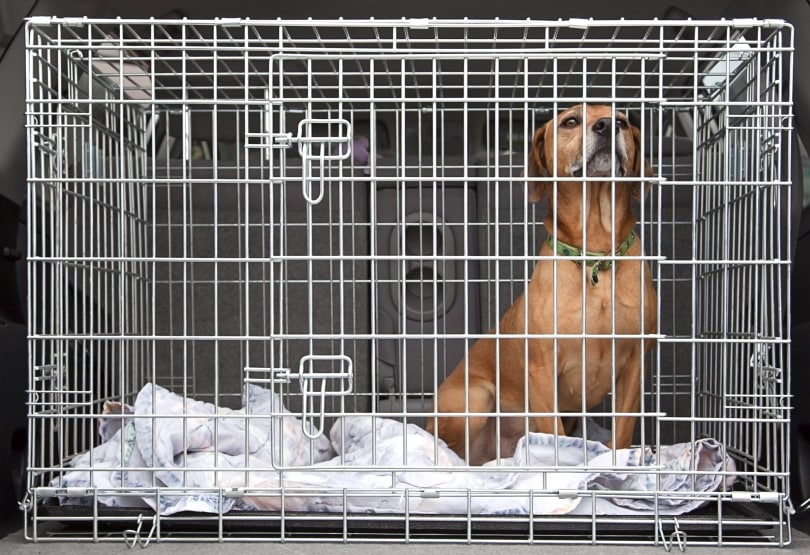
- Metal crates: These crates will “grow with” your dog and are among the most popular choices. They are open and fold flat for easy storage, but if your dog likes privacy, it does mean adding extra accessories to make it cozier.
- Soft-sided crates: They can be used indoors and outdoors and are an excellent choice for traveling, but they aren’t as forgiving if your dog has an accident because they are made of fabric.
- Heavy-duty: These might be necessary if your dog is a professional escape artist. They are crash protected if you travel a lot, but they are also expensive, heavy, and not as pretty as other options. Like the plastic crate, you couldn’t keep your dog in one for long periods as they are small.
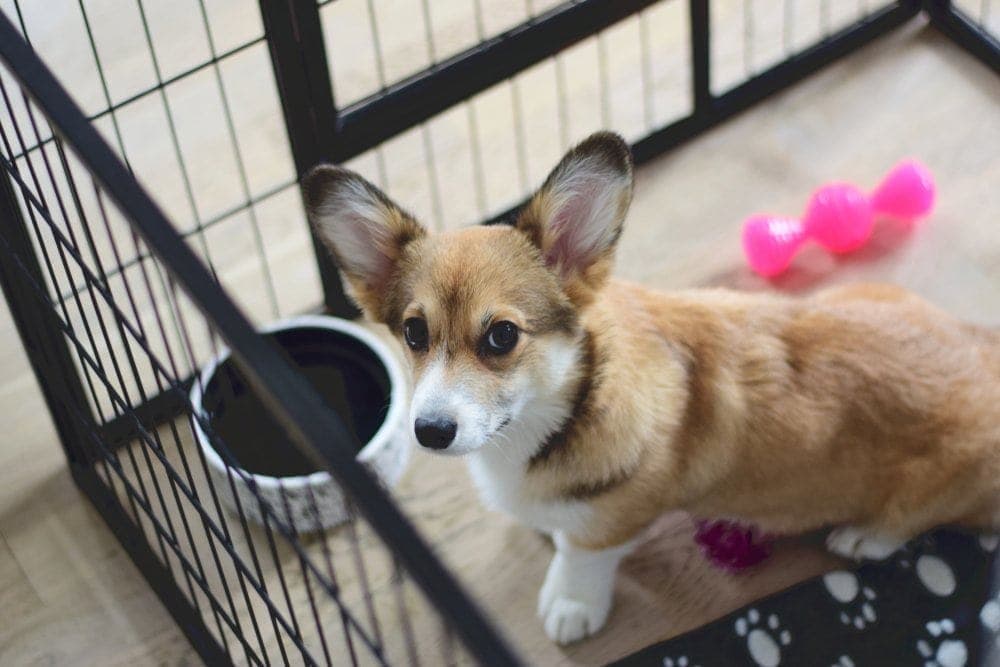
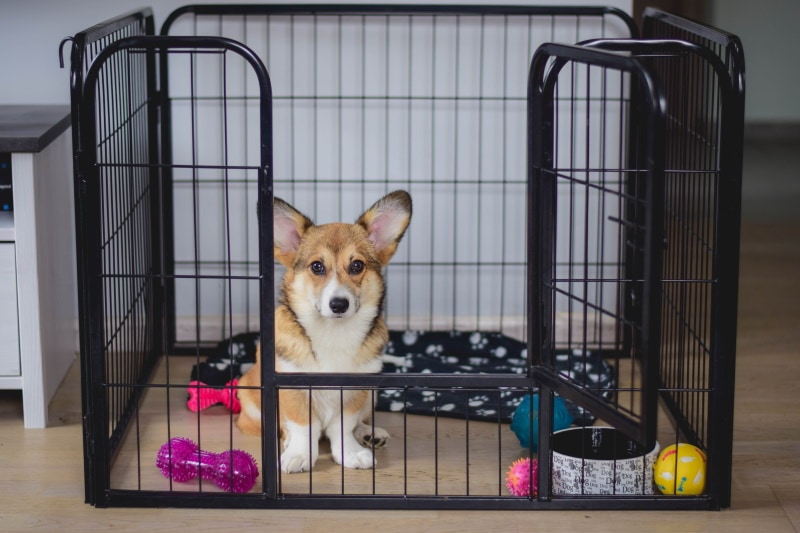
- Exercise pens: Ex-pens are not quite crates, but they do the job and are also a good addition if you have a crate that is on the small side, as they can be used to extend the crate’s space if you keep the crate door open. They are flexible and versatile.
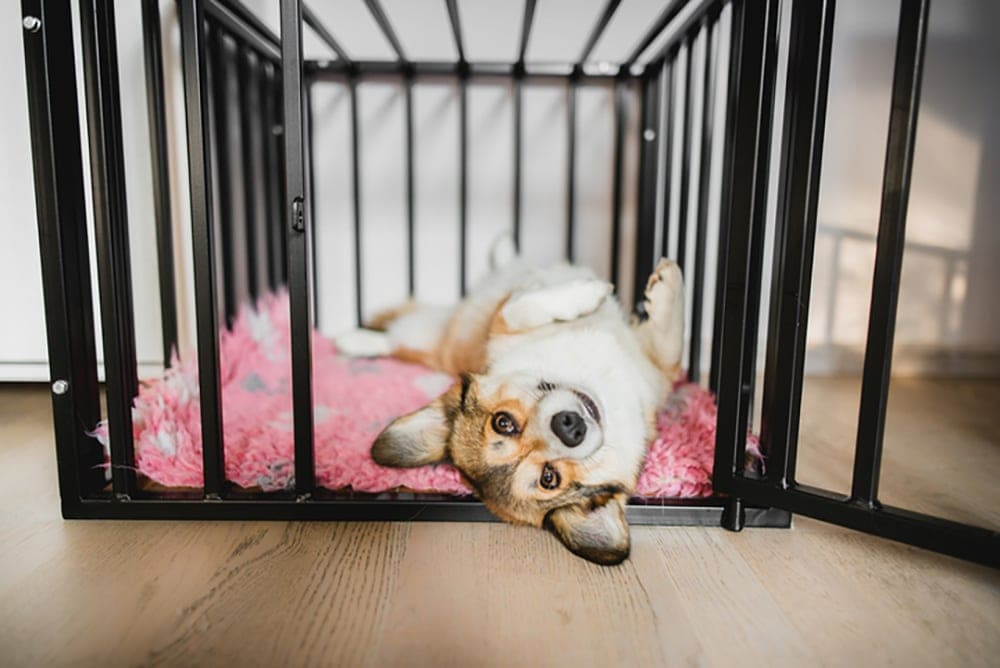
- Furniture style: These crates are more aesthetically pleasing and can also be very expensive as a result. If you’re a handy DIY-er, you could always upcycle an old piece of furniture that could double as a table as well as your dog’s crate.
Final Thoughts
The key to successfully crate training your puppy is consistency, patience, and fun. Remember, if it takes you longer or you have more steps involved in your training journey, it doesn’t mean you’re failing—every dog learns at their own pace, so don't try and rush the process.
Praise, treats, and toys will help you and your puppy to adjust, and it will all be worth it when your dog has this wonderfully functional, safe place they can call their own, all thanks to you!
Related Read: Crate Training a Dog With Separation Anxiety
Sources
https://www.akc.org/expert-advice/training/how-to-crate-train-your-dog-in-9-easy-steps/
https://be.chewy.com/how-to-crate-train-a-puppy-a-step-by-step-guide-from-an-expert/
https://www.uk.pedigree.com/puppy-advice/puppy-training/crate-training-puppy
https://vcahospitals.com/know-your-pet/signs-your-dog-is-stressed-and-how-to-relieve-it
https://www.petmd.com/dog/behavior/how-keep-new-puppy-peeing-house
https://www.preventivevet.com/dogs/how-to-measure-and-choose-a-dog-crate
Featured Image Credit: Jus_Ol, Shutterstock
Get Hepper In Your Inbox


Pet care tips from our vets and experts, straight to your inbox.
You may opt-out at any time. View our Privacy Policy for more information.

Kerry-Ann lives in Scotland and wishes her garden was bigger so she could have her very own Highland cow. But her dogs probably wouldn’t like that very much. She has a La Chon called Harry who was poorly with a liver shunt when he was a puppy. It wasn't likely he would make it into adulthood, which was difficult, but he beat the odds and is a healthy old man now. She also has a Pug called Maddie who is a big foodie. She’s small, sassy, and every day she finds a new way to mess with her brother.
When she isn’t writing you can find Kerry-Ann going for long walks when the weather isn't bad, reading, or watching cartoons when she should be tidying her house. She would one day like to be a tourist in her own country and travel through the Highlands with her family.
Join the conversation
Ask a question, share your story, or send private feedback.