Hepper is reader-supported. When you buy via links on our site, we may earn an affiliate commission at no cost to you. Learn more.
How Do Turtles Poop? Their Digestion Explained (Vet Answer)
In this article
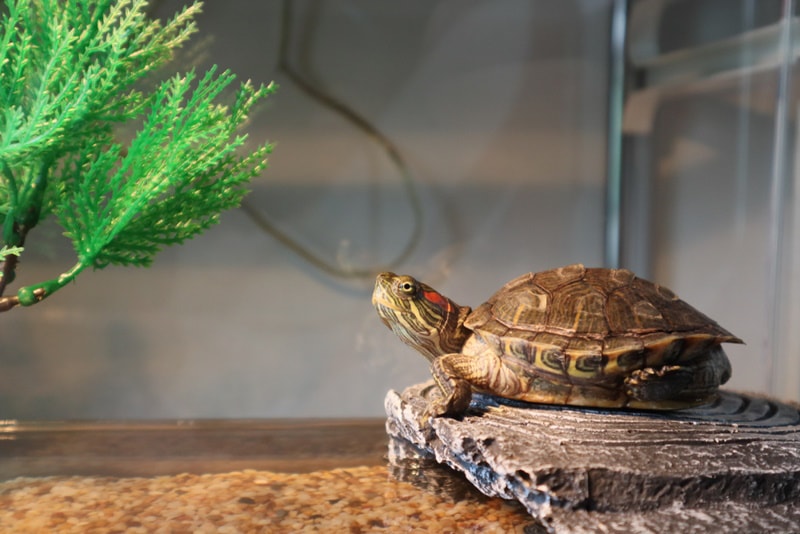
Turtles are a type of reptile belonging to the order Chelonia. It is important to note that there are several different types of turtles and tortoises within the order Chelonia, and that species-specific differences exist. Overall, their digestive tracts mirror that of humans with a few small differences. Continue reading to learn more about the digestion process in turtles.

The Digestive System in Turtles
Turtles’ digestive tract resembles that of most animals, including humans, with a few small differences. The start of digestion occurs with the ingestion of food into the oral cavity and ends with defecation through the vent. The transit time of ingesta from the oral cavity to the vent in turtles may be longer than in some animals, as body temperature, hydration, and frequency of food intake can influence transit times. The diet of turtles varies greatly based on the species.
Oral Cavity
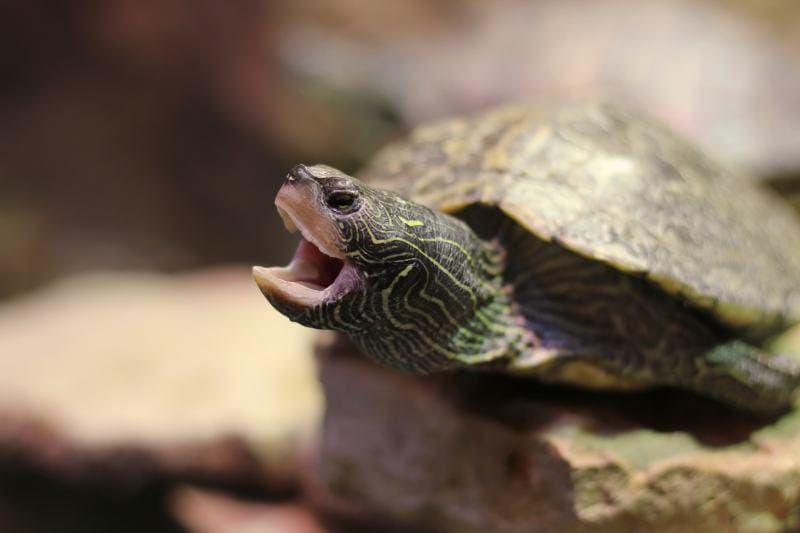
The oral cavity of the turtle consists of lower and upper jaws with a strong beak, tongue, and salivary glands. The beak helps to mechanically break down food taken into the oral cavity, as turtles do not have teeth. The beak grows throughout life. The tongue helps propel the food toward the esophagus located toward the back of the mouth. Salivary glands within the oral cavity help to break down food.
Once the food reaches the back of the oral cavity, it is swallowed and passed down the esophagus. The food is propelled through the esophagus and enters the stomach.
Stomach, Pancreas, Liver, and Intestines
The stomach of the turtle helps to physically break apart food. The stomach contents exit into the small intestines through the muscular portion of the stomach called the pylorus. Like humans and dogs, turtles have three parts to their small intestines: the duodenum, jejunum, and ileum.
The appearance of the different intestinal portions is externally indistinguishable from one another. The location of the intestines within the body helps to identify the portion of the intestines. As food enters the duodenum, bile produced by the liver and pancreatic enzymes are deposited, which help to break down food. Nutrient absorption occurs along the small intestines.
The cecum connects the small intestines to the large intestine, called the colon, where water absorption occurs. Depending on the species of turtle, the cecum may not be very large. Unused food turns into feces within the colon. The colon then connects to the last portion of the digestive tract, the cloaca.
The Cloaca
The cloaca is a specialized sinus that the urinary, digestive, and reproductive systems empty into. This is where feces will be deposited prior to being expelled into the environment through the vent. Some types of turtles are even able to use the cloaca for respiration when submerged in water. Cloacas are not specific to turtles; other reptiles, amphibians, and birds possess these unique chambers.
In Summary
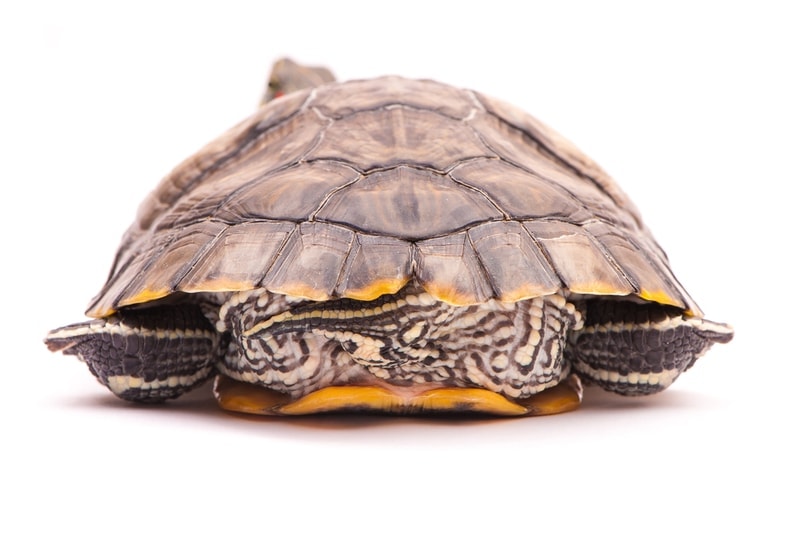
The digestion tract of the turtle is not much unlike that of our own. Turtles have a unique sinus called the cloaca that collects products from the gastrointestinal urogenital tract. Feces collect in the cloaca prior to expulsion into the environment. Variations in the digestive tract likely exist between species of turtles; however, the overall digestion process is similar.
Sources
Featured Image Credit: Mark Leung, Shutterstock
Get Hepper In Your Inbox


Pet care tips from our vets and experts, straight to your inbox.
You may opt-out at any time. View our Privacy Policy for more information.
Meet Dr. Marti Dudley, a dedicated small animal veterinarian who possesses a strong passion for preventive medicine and client education. She takes pride in serving as a valuable resource for pet owners, firmly believing that a collaborative approach results in the optimal care for our beloved animal companions. In addition to her clinical work, Dr. Dudley has a fondness for writing, using this skill as an innovative means to educate pet owners beyond the confines of the traditional veterinary office setting.
Meet Dr. Marti Dudley, a dedicated small animal veterinarian who possesses a strong passion for preventive medicine and client education. She takes pride in serving as a valuable resource for pet owners, firmly believing that a collaborative approach results in the optimal care for our beloved animal companions. In addition to her clinical work, Dr. Dudley has a fondness for writing, using this skill as an innovative means to educate pet owners beyond the confines of the traditional veterinary office setting.
Professional Background:
Dr. Dudley has been actively practicing veterinary medicine since 2014, accumulating a wealth of experience. Her special interest lies in preventive care, and she places significant emphasis on the importance of educating clients about the well-being of their pets. Dr. Dudley's professional journey in veterinary medicine has been diverse, having worked as a general practitioner, affording her the opportunity to encounter and address a wide array of medical conditions in animals.
Educational Achievements:
Dr. Dudley's academic background includes a bachelor's degree in biology earned from Longwood University in Virginia. She further pursued her passion by obtaining a Doctor of Veterinary Medicine (DVM) degree from Ross University.
Join the conversation
Ask a question, share your story, or send private feedback.