Hepper is reader-supported. When you buy via links on our site, we may earn an affiliate commission at no cost to you. Learn more.
How Much Food Should a Rabbit Eat? Vet-Approved Options & Feeding Tips


In this article
Proper nutrition is vital for good rabbit health, especially for pets. A domestic bunny will not survive long in the wild while trying to find enough food. According to the American Rabbit Breeders Association (ARBA), you have your choice of 49 recognized breeds 1. That’s an essential point since bunnies can range from a 2.5 pound Netherland Dwarf to the massive Flemish Giant, the largest of the bunch at around 15 pounds. Suffice it to say that the amount you should feed a rabbit is variable.
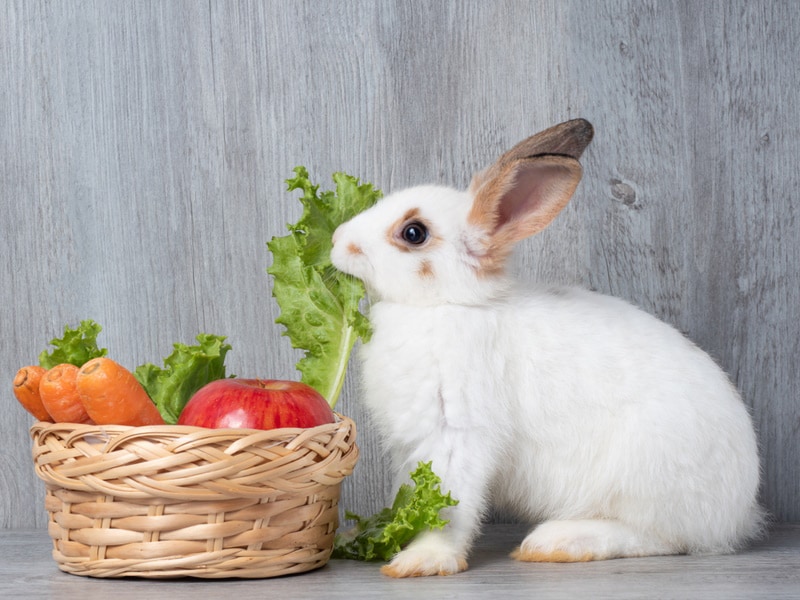
However, it also depends on what you’re offering your pet. The ideal diet consists primarily of good quality hay ( and grass if possible). This should be supplemented with commercial pellets and leafy greens. Let’s break it down by the type of food you can give your bunny. We also have the data gleaned from centuries of domestication to provide additional context.

The Rabbit Diet
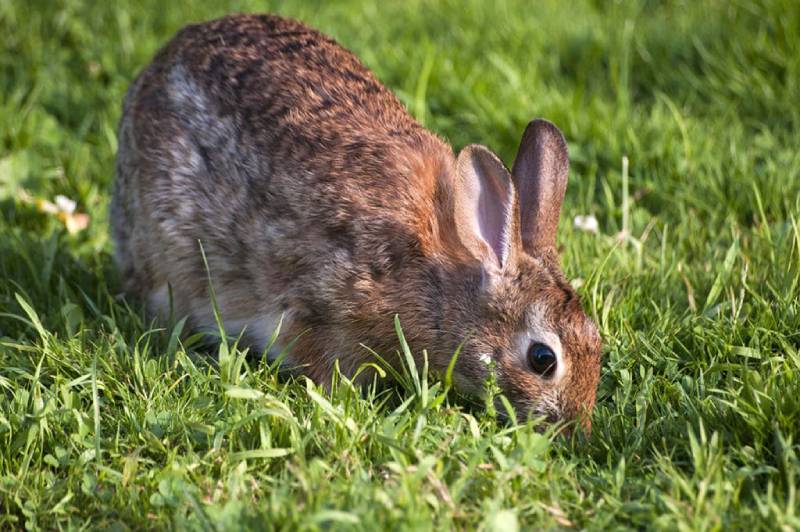
Understanding how much food a rabbit needs begins with knowing what it eats and how it digests what it consumes. Our lagomorph pets are a domesticated form of the Old World or European Rabbit (Oryctolagus cuniculus). This animal is a herbivore that eats a variety of plant materials . In the wild the majority of their diet is grass and they graze for up to 6-8 hours a day. It is important to try and replicate this diet as closely as possible for our pet bunnies, as from their teeth through their digestive tract, they are specially adapted to this kind of diet.
As rabbits eat food which is high in fiber and difficult to digest , they digest their food twice ! Foods such as hay, grass and leafy greens need to pass through the digestive system twice for rabbits to get the maximum nutrition from them. They do this by producing softer feces called caecotrophs, which they re-ingest and pass through the digestive system again. The remaining nutrients can then be absorbed instead of wasted.
Hay
- Amount: Unlimited
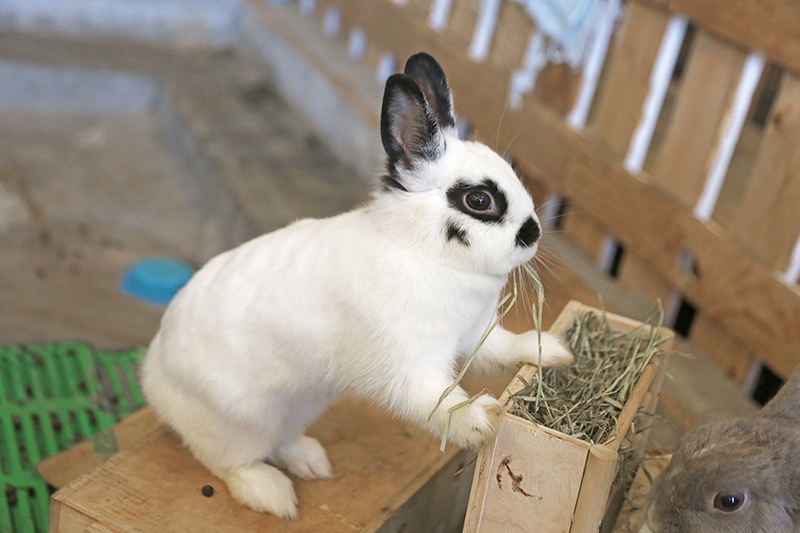
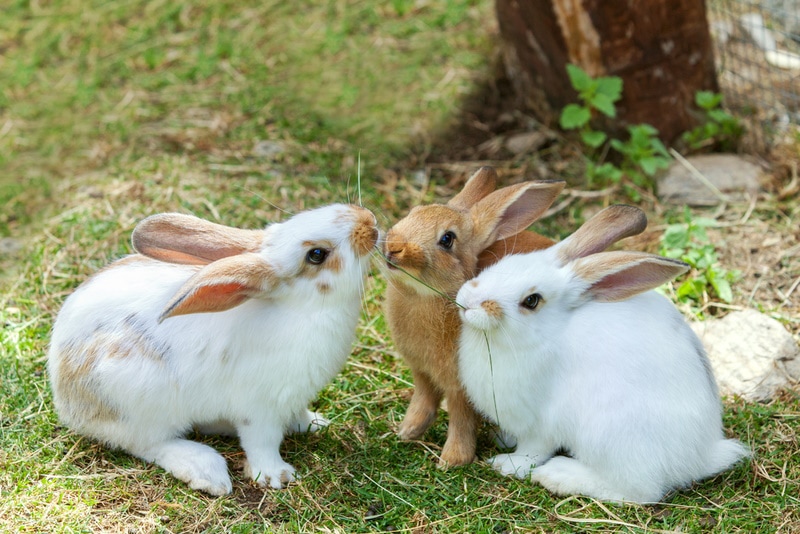
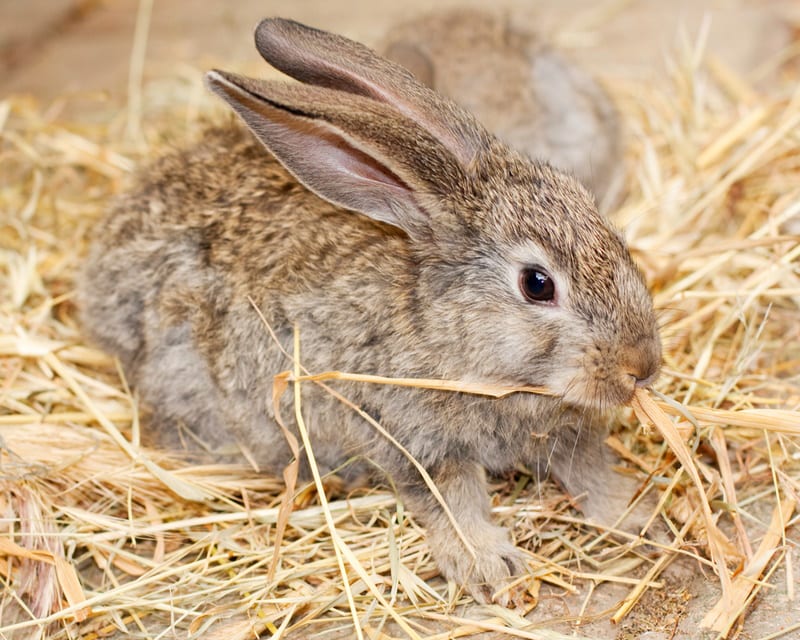
Hay should ideally be fed in unlimited amounts, as a minimum it is said they should have a bundle at least as big as their body size. Good quality grass hay ( and grazing grass if available) should account for around 80-85% of your rabbit’s diet. Timothy hay is the most commonly recommended type of hay and an excellent source of fiber. Alfalfa hay is more nutritionally dense than other hay varieties , however due to its higher amounts of calcium and protein it should only be fed in small amounts to adult rabbits as a treat. Young, growing or pregnant rabbits can enjoy it in larger amounts, speak to your vet for advice on this.
You can offer your bunny unlimited amounts of hay since it’ll also use it for bedding. However, it’s also essential to keep your pet’s cage clean and swap out the old hay frequently to prevent disease. Eating plenty of hay or grass helps wear down rabbit’s teeth which are continuously growing. It also keeps their digestive system healthy and allows foraging and grazing which are important natural behaviors. It’s worth noting that hay is one of the primary ingredients in commercial rabbit diets, albeit in a compressed form.
Commercial Pellet Diets
- Amount: Per the manufacturer’s feeding instructions
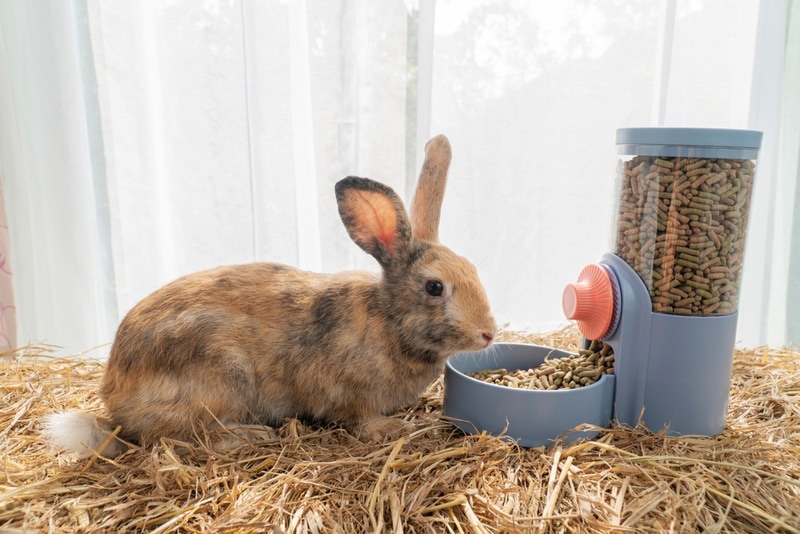
Rabbits have a penchant for choosing nutrient-rich foods. That’s an excellent adaptation for an animal living in the wild and dealing with the elements. It’s also vital for providing enough energy to evade predators. However, it can be problematic for captive rabbits to have free access to nutrient rich foods.
Commercial pellet diets provide another source of nutrients, although they also contain a lot of calories. Overeating can increase your pet’s risk of obesity and also fill them up so they will eat less of the essential hay, which can lead to dental and digestive issues. Therefore, you should follow the manufacturer’s recommendations for feeding portions depending on the size of your rabbit, but it’s often only around a tablespoon amount once or twice a day.
Fruits, Vegetables, and Treats
- Amount: Fresh greens daily, fruit and treats in small amounts.
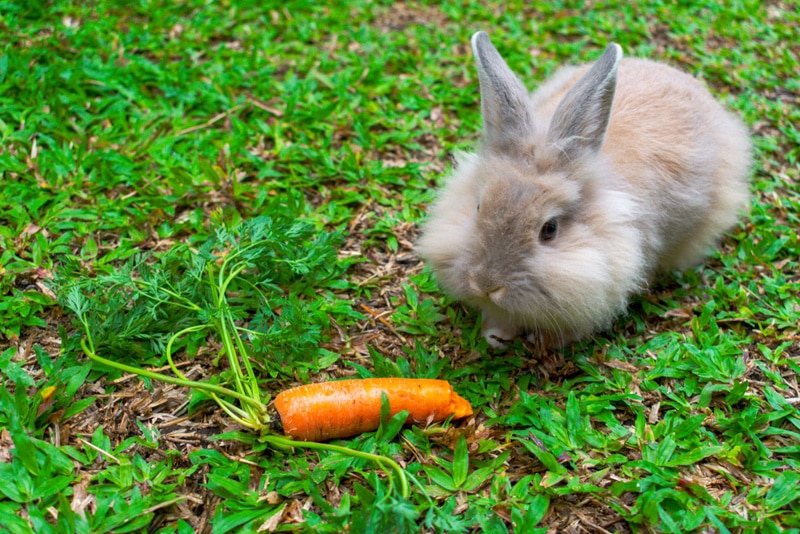
Your rabbit should have access to safe leafy green vegetables/herbs/weeds daily. Take care as some plants are poisonous, some safe greens include:
- Carrot tops
- Spring greens
- Cilantro
- Parsley
- Dandelions
Do not feed lawnmower clippings as these can upset a rabbit's sensitive digestive system.
Rabbits can have small amounts of fruit as a treat. Fruit and rabbit treats from pet shops are often very high in sugar which is not good for their guts or waistline!
Safe fruits include:
- Melon
- Bell Peppers
- Apples
- Blueberries
- Strawberries
Make sure to wash any produce before giving it to your bunny. We recommend dicing it in smaller pieces to make it easier for them to eat. You should also introduce new foods slowly to your rabbit to avoid GI distress. Offer a small bit at a time and observe your pet for any adverse effects before giving it to your rabbit again.
Rabbits should, of course, always have access to fresh clean drinking water.
The Nutritional Breakdown
The ideal rabbit diet satisfies all its nutritional needs while ensuring the animal maintains a healthy weight. Of course, its age and life stage influence how much you should feed your pet. An adult rabbit’s nutrient requirements (that isn’t pregnant or lactating) include around 12% total protein, 45% carbohydrates, 2% fat, and 20% fiber.
Final Thoughts
Two of the biggest challenges to raising rabbits are ensuring they get enough fiber while maintaining a healthy weight. Hay should be fed in unlimited amounts, alongside commercial pellets and leafy greens. They will provide enough fiber to ensure proper digestion while improving your pet’s quality of life. It’s also essential to limit treats such as fruit to prevent obesity.
Sources
You Might Also Be Interested in: Why Is My Rabbit Not Eating? 6 Vet-Reviewed Reasons
Featured Image Credit: Arlee.P, Shutterstock
Get Hepper In Your Inbox


Pet care tips from our vets and experts, straight to your inbox.
You may opt-out at any time. View our Privacy Policy for more information.
Chris is an experienced pet writer specializing in science topics, with a particular passion for health and the environment. She has been a writer for over 15 years and lives with her husband and three cats in Michigan.
Beyond writing about cats and dogs, Chris loves to learn about wine. She has WSET 1 and 2 certifications and is currently pursuing her Certified Wine Specialist Award (CSW).
Join the conversation
Ask a question, share your story, or send private feedback.