Hepper is reader-supported. When you buy via links on our site, we may earn an affiliate commission at no cost to you. Learn more.
Why Do Rabbits Eat Their Poop? 5 Vet Reviewed Reasons


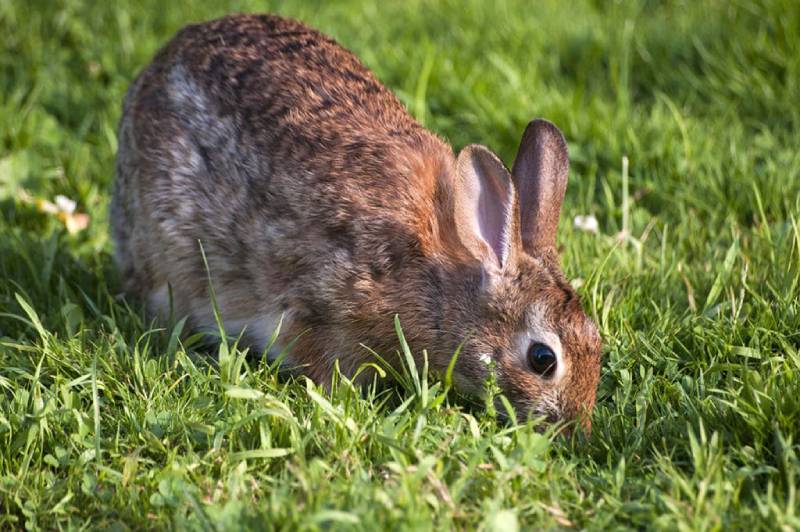
Poop—it’s a part of pet ownership that most of us hate dealing with. But your rabbit loves dealing with poop…by eating it! Coprophagia, or poop-eating, is normal and even necessary for some animals, including rabbits.1
Rabbits have a two-stage digestive system that requires all their food to go through twice. That means that it’s necessary for them to eat their poop so their nutritional needs can be met. Here are five reasons why rabbits eat their poop, the two types of rabbit poop and how to differentiate between them, what is normal for your rabbit, and when you should contact your vet.

The 5 Likely Reasons Rabbits Eat Their Poop
1. They Eat a High Fiber Diet
Fiber is an important nutrient, but it also makes food harder to digest. Most animals can’t eat foods that are high in fiber, like hay or bark. Animals that eat high-fiber foods, like rabbits, need adaptations to help them break down the fiber and get the nutrients. Coprophagia, or poop-eating, is the rabbit’s solution to this problem and has the same function as cows chewing their cud.
2. Rabbits Can Digest Their Food Twice
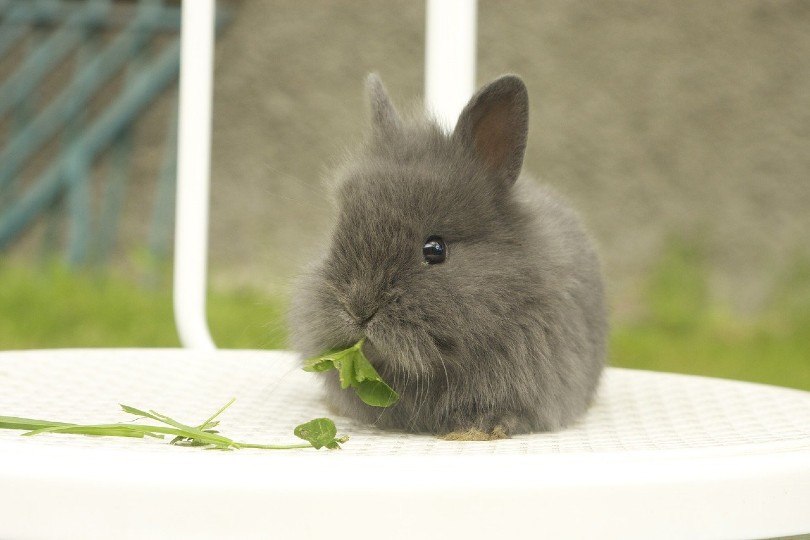
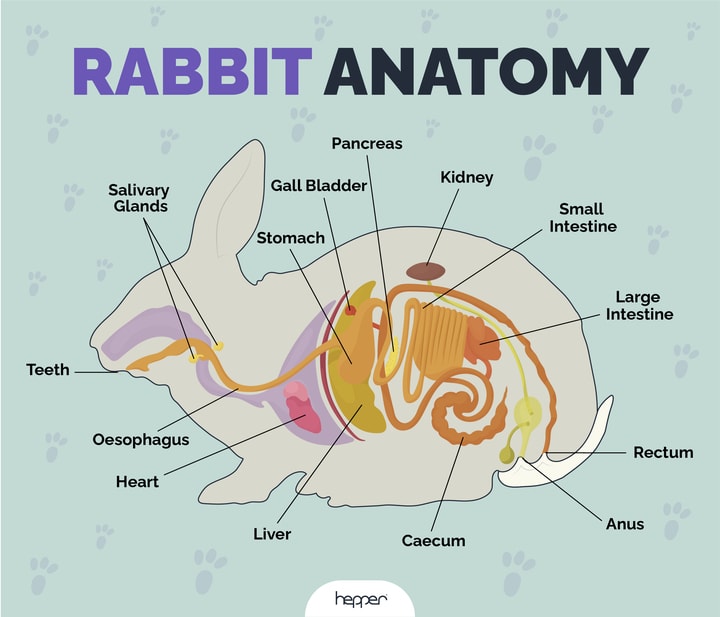
Rabbits have a special adaptation to help them digest their food. When they eat food, their digestive system works overtime to separate all the larger fiber (> 0.5 mm) that is indigestible from the smaller digestible, nutritious parts of their food. The indigestible fiber part comes out in the rabbit fecal pellets we’re all familiar with. They’re hard, dry balls that look like tiny chocolates or beans.
The non-fibrous parts, but also the small digestible fibers from their food, are broken down by intestinal bacteria in a process called fermentation and formed into a different type of poop called cecotropes. Cecotropes are small, soft, sticky, elongated balls that are greenish in color, coated in mucus, and have a strong odor.2 They often cluster together like tiny grapes.
Cecotropes are packed full of nutrients. As rabbits produce cecotropes, they’ll eat them, and on the second pass through, they’ll digest everything easily. This is because cecotropes contain a large number of beneficial cecal bacteria.3
The cecum is a large blind sac, or pouch, that comes off the junction of the small and large intestines that contains a natural community of bacteria and fungi that provide essential nutrients and may even protect your rabbit from potentially harmful pathogens. When the bunny ingests the cecotrope, the mucus coat helps protect the bacteria as they pass through the stomach, then re-establish in the cecum. This re-ingested material provides microbial protein, vitamins (including all the B vitamins needed), and small quantities of volatile fatty acids, which are essential in rabbit nutrition.
3. It’s a Natural Instinct
Rabbits eat cecotropes by instinct; in fact, they’ll eat them as they produce them, so you might not even realize it’s happening! From the outside, it can look like your rabbit is just cleaning its bum. That poop-eating instinct occasionally causes them to eat regular poop pellets too. It’s generally not a cause for concern; chewing on a regular pellet won’t hurt your rabbit, and most of the time, they won’t even swallow it.
4. They Don’t Have Enough Fiber
The other reason some rabbits might go after their normal poop is a nutritional deficiency. Large fiber isn’t digestible, but it is important—it helps your bunny’s digestive tract keep moving and running smoothly. If your rabbit’s diet isn’t high in fiber, it might go for seconds on the fiber-rich pellets so it can get enough fiber in its diet. Rabbits who don’t get enough hay and other high-fiber foods in their diet can get a fiber deficiency.
A generous amount of dietary fiber (~15% crude fiber) is needed to promote intestinal motility and minimize intestinal disease. High fiber intake can come from fresh timothy hay, offered at all times (~30%–35% fiber). Fiber may also absorb bacterial toxins and help eliminate them via the hard feces. Diets low in fiber produce an increased incidence of intestinal problems.
5. They’re Bored
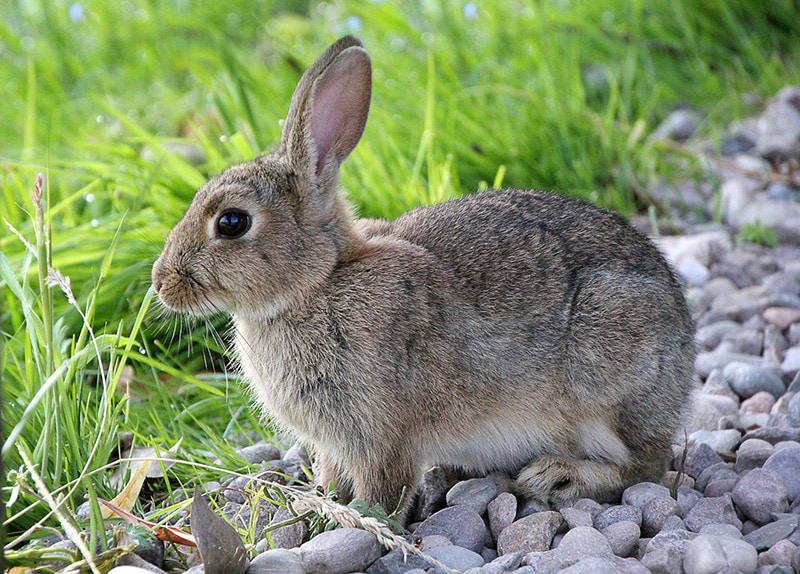
If you do see your rabbit munching on their pellet poop on a regular basis, one possible explanation is boredom.4 Rabbits without enough stimulation might chew on anything and everything, including non-nutritious poop. Bored rabbits will fill their time by eating. If they eat too much and don’t move around they’ll put on weight, which can cause heart problems and arthritis. Bored rabbits also groom themselves too much and get hairballs, which can cause life-threatening blockages in their stomach.

What Is Night Feces?
The nutritious cecotrope feces is also sometimes called night feces. That’s because it takes several hours to produce it. If your rabbit eats earlier in the day, it’ll produce most of its cecotropes at night. However, it can also show up at any point in the day.
Help, My Rabbit Isn’t Eating Its Poop!
If you see the sticky cecotropes hanging around your rabbit’s hutch, that might be a problem. Occasionally, a little bit might get missed, but if you see it every day, it can be a sign of illness. Healthy rabbits will eat their cecotropes directly from the anus and you will not see these droppings in the cage. If a rabbit has a medical problem that prevents him from reaching the anus, then you may see cecotropes on the cage floor.
Mobility issues can cause problems for rabbits—if your rabbit is arthritic, obese, or injured, it might not be able to reach its anus. Consult your veterinarian if you see a large number of cecotropes in the cage because your rabbit may be missing vital nutrition. If a rabbit is eating a diet that is too rich in nutrients, such as one that contains mostly commercial pellets, there may normally be a few cecotropes dropped in the cage and your rabbit may become overweight.
A rabbit should be fed unlimited grass hay, such as timothy, brome, wheat, or oat. Alfalfa hay is too rich in calories and protein for daily feeding. Fiber from the grass hay is crucial for intestinal motility (peristalsis) and if fiber is lacking due to excessive amounts of commercial pellets or fruit that contain high levels of sugar and starch, normal peristalsis may become sluggish. This causes the passage of food through the cecum to slow down, and important bacteria from the cecum are disrupted, promoting cecal imbalance and illness. This is why it’s important to remember that the high fiber content of grass hay is crucial for a healthy intestinal environment.
A diet too rich in sugar and starch is one of the most common causes of runny cecotropes in rabbits. Reducing commercial pellets or switching to a high-fiber, low-calorie, timothy-based pellet can make a great difference. Replace any starchy treats with fresh herb treats. Fruit can be given only as an occasional small treat.
Conclusion
It might sound gross at first, but it’s actually pretty cool that rabbits eat their own poop. There are all sorts of ways that animals have adapted to eat tough, poorly digestible foods, and rabbits have found a solution that’s elegant and effective. Coprophagia lets rabbits eat all sorts of unappetizing things—like bark, grass, and hay—so that they can survive in environments that would make most animals starve.
See Also:
Sources
https://avianexoticsvet.com/blog/why-does-my-rabbit-eat-his-poop/
https://www.rabbitcaretips.com/why-do-rabbits-eat-their-own-poop/
https://www.canr.msu.edu/news/fecal_matter_can_tell_us_a_lot_about_the_health_of_our_rabbits
https://www.mcgill.ca/oss/article/did-you-know/rabbits-eat-their-own-poop
https://www.msdvetmanual.com/exotic-and-laboratory-animals/rabbits/nutrition-of-rabbits
https://veterinarypartner.vin.com/default.aspx?pid=19239&id=4952894
https://companion-animals.extension.org/the-digestive-system-of-the-rabbit/
Featured Image Credit: T. M. McCarthy, Shutterstock
Get Hepper In Your Inbox


Pet care tips from our vets and experts, straight to your inbox.
You may opt-out at any time. View our Privacy Policy for more information.
Chelsea Flake Mortensen is a writer with a passion for pets. She grew up around everything from cats to chameleons and loves working with all kinds of animals. Chelsea has a BA in English and Creative Writing from Brigham Young University.
Chelsea loves reading, writing, sewing, and board games. She's lived in half a dozen US states and two countries. She is currently living in New England with her husband. Her articles have been featured in various magazines and literary journals for children and adults. Her writing has been translated into over 40 languages.
Join the conversation
Ask a question, share your story, or send private feedback.