Hepper is reader-supported. When you buy via links on our site, we may earn an affiliate commission at no cost to you. Learn more.
Are Rabbits Omnivores or Herbivores? Vet Approved Facts & FAQ


In this article
When you’re thinking about bringing a new pet home, particularly one that you’ve never owned before, you should learn everything about them first.
For example, if you’ve been contemplating having a rabbit for a pet but are not sure what you are supposed to feed them, you’re doing the right thing by researching beforehand. So, if you’re unsure if rabbits are omnivores or herbivores, we’re here to tell you that rabbits are indeed herbivores.
Here, we explain the differences between herbivores and omnivores and the best diet for your new rabbit.

What Are Herbivores?
Herbivores are animals that have a diet of plant-based material only and don’t require protein from animal sources. They primarily eat grasses, roots, leaves, fruits, and bulbs, depending on the species. Well-known herbivores include horses, deer, elephants, koalas, cows, and giraffes, to name a few.
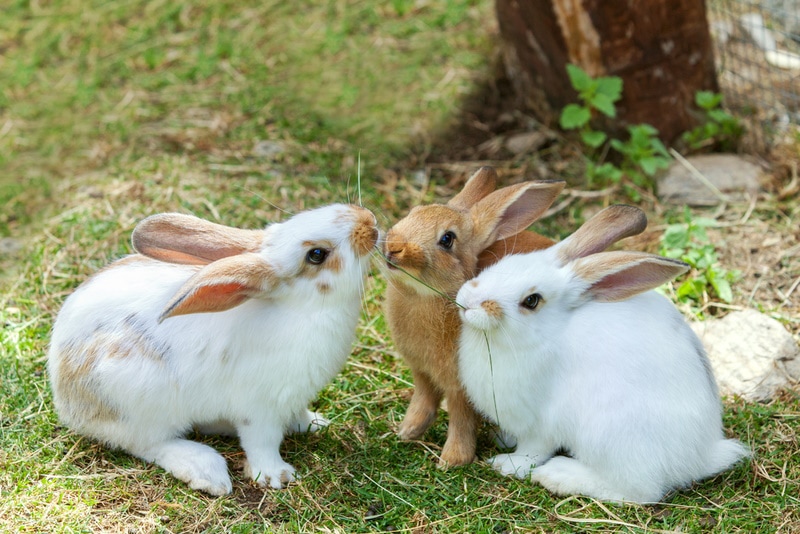
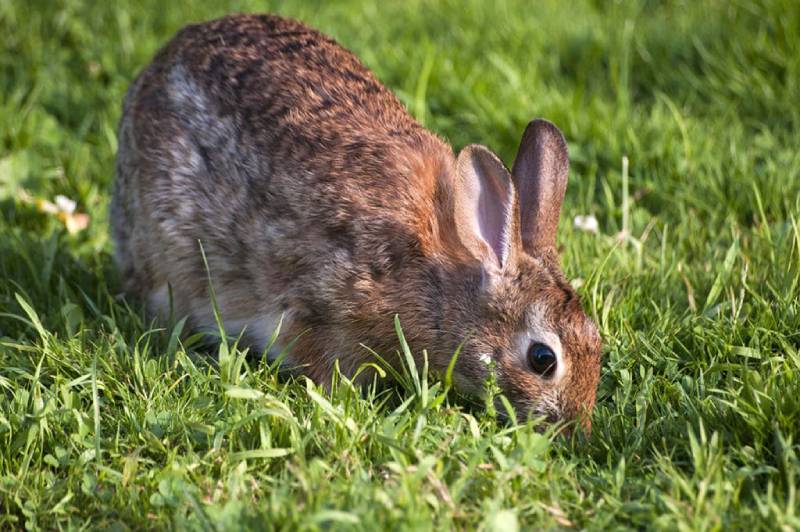
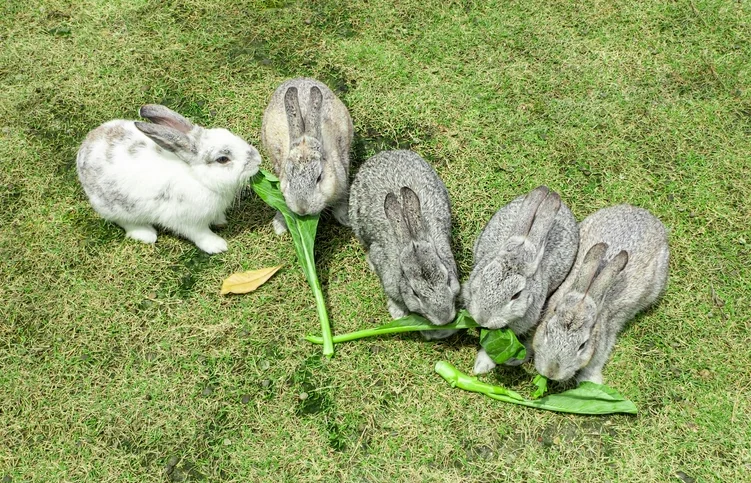
Rabbits in the wild will eat clover, some weeds and primarily grass. If they come across it, they will also eat some bark, buds, roots, fruits, and seeds.
What Are Omnivores?
Omnivores in comparison, are animals that require both plant and animal origin foods. Depending on the species, omnivores eat varying quantities of vegetable matter and other animals. Dogs, foxes, humans, some birds and bears are examples of omnivorous species.
Why Can’t Rabbits Eat Meat?
Rabbits are considered obligate herbivores, which essentially means they must eat plants in order to thrive and survive. It also means their digestive systems aren’t designed to digest animal protein effectively. The stomach’s enzymes and gut bacteria are specialized to break down the cellulose found in plant fibers. A rabbit also has a long and large vermiform appendix, which aids in digesting tougher plant materials.
The digestive enzymes of rabbits are primarily amylase, maltase and pectinase which are all needed for plant digestion. They do have proteinase which can break down protein sources but meat is not a natural part of their diet on a daily basis.
Do Rabbits Ever Eat Meat?
There are instances in which rabbits have eaten meat. For example, they have been known to cannibalize their young when stressed, particularly if the threat of predators is there. It’s also been documented that snowshoe hares will eat meat when food is scarce in the winter and will even eat the flesh of their usual predator, the lynx1.
But these instances are quite rare, and under no circumstances should a rabbit be purposefully given meat.

What Should You Feed Your Rabbit?
There are quite a few plant foods that can be a part of your rabbit’s diet. Here’s what you need to know regarding how much and what kinds of foods to feed your rabbit and what to avoid.
Hay
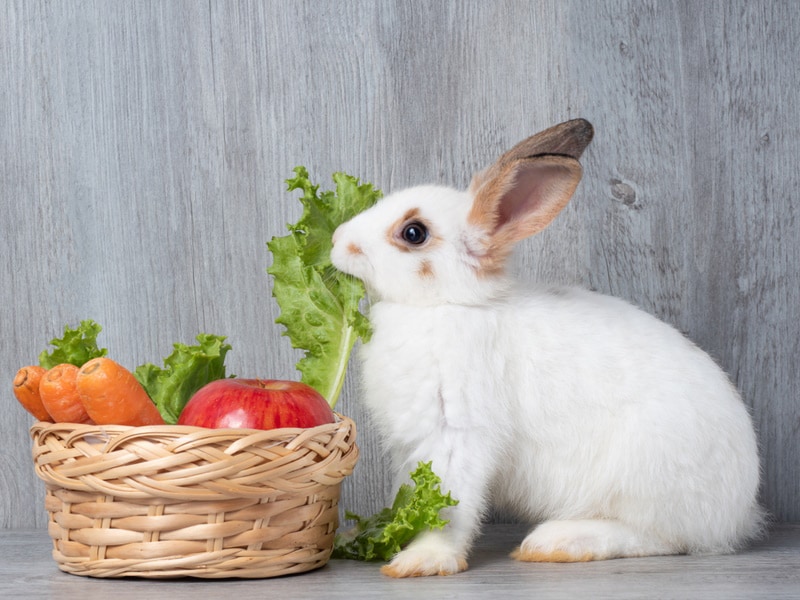
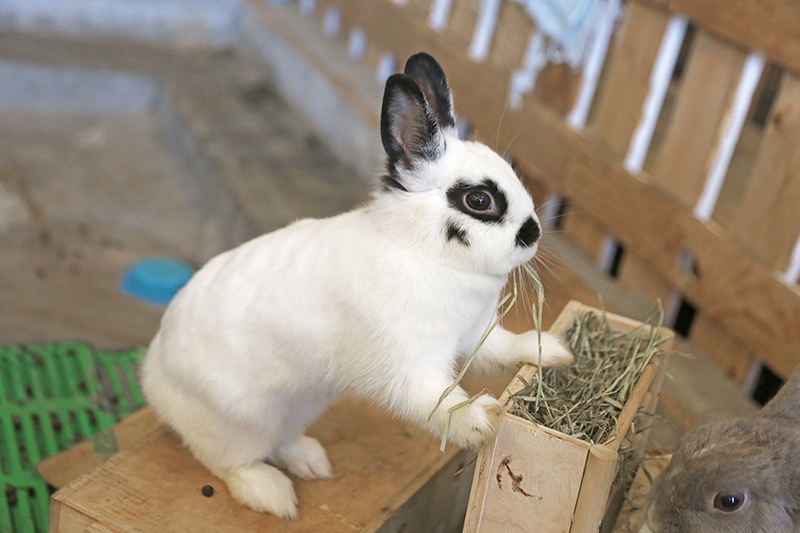
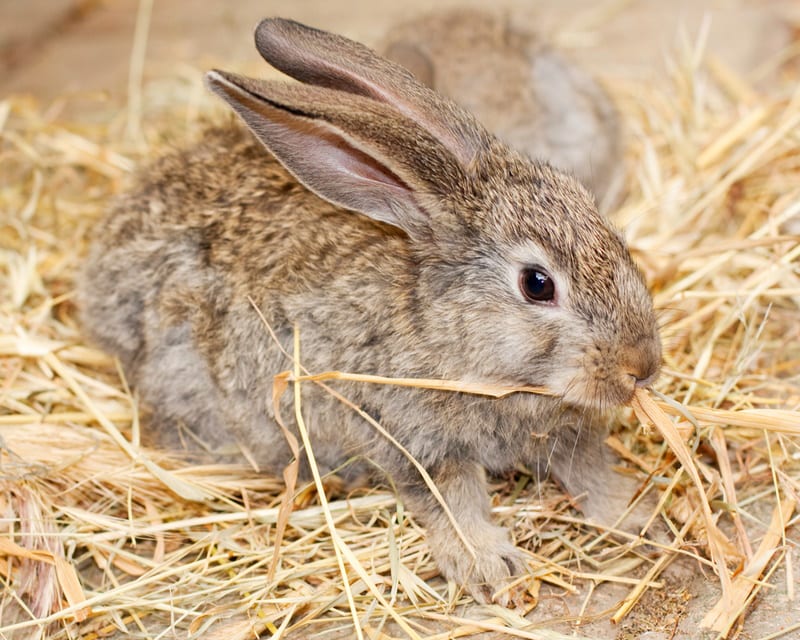
The most essential food for a rabbit is hay, and it should constitute roughly 80% of their diet. Hay keeps the rabbit’s digestive system healthy and helps grind down their teeth, which is critical to prevent their teeth from overgrowing.
Timothy hay is a great choice and the most recommended, and it should be made available to your rabbit at all times. You can also use oat, orchard, or brome hay, but if your rabbit loves timothy hay, just stick with it.
If you have a baby rabbit, alfalfa hay is a great choice. However, if your bun is over 7 months old, you shouldn't feed them alfalfa hay, as it can potentially lead to kidney stones or obesity.
Vegetables
Vegetables should make up about 10% of your bun’s diet, which works out to about 1 to 2 cups daily. Veggies can provide additional vitamins and fiber, but when introducing a new food to your rabbit, only give them a small amount gradually to allow their system to adjust.
Dark, leafy greens are the healthiest choices. These can include:
- Arugula
- Basil
- Bok choy
- Broccoli leaves
- Butter lettuce
- Cabbage
- Carrot tops
- Cilantro
- Collard greens
- Dandelion greens
- Dill
- Leafy lettuce
- Kale
- Mint
- Oregano
- Parsley
- Radicchio
- Romaine lettuce
- Sage
- Spinach
- Thyme
- Turnip greens
- Watercress
- Wheatgrass
Rabbit Pellets
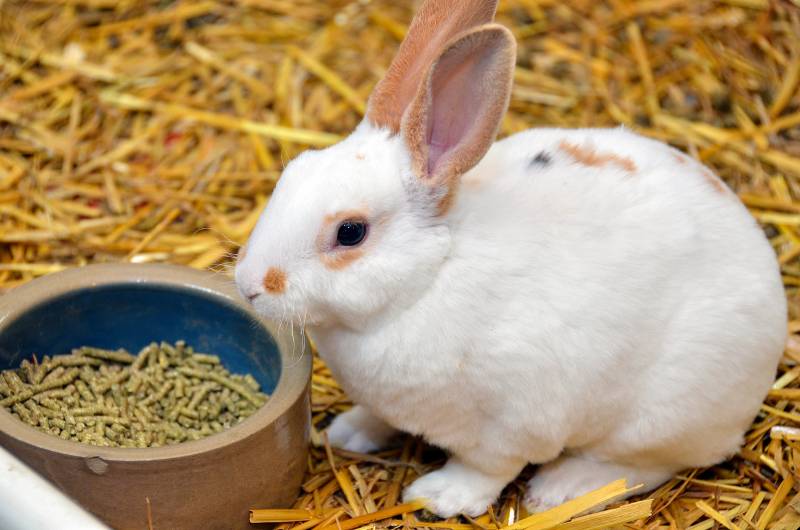
Rabbit pellets contain extra vitamins and minerals, but rabbits should be getting most of their nutritional needs from hay and vegetables. Pellets can be great additions but should ultimately only constitute about 5% of the diet.
Treats
Treats make up the last 5% of your rabbit’s diet and are typically fruits. This works out to roughly 1 tablespoon of treats every day.
Rabbit-safe fruits and vegetables include:
- Apples (no seeds)
- Apricot
- Asparagus
- Bananas
- Bean sprouts
- Beet greens
- Bell peppers
- Blackberries
- Blueberries
- Broccoli
- Cantaloupe
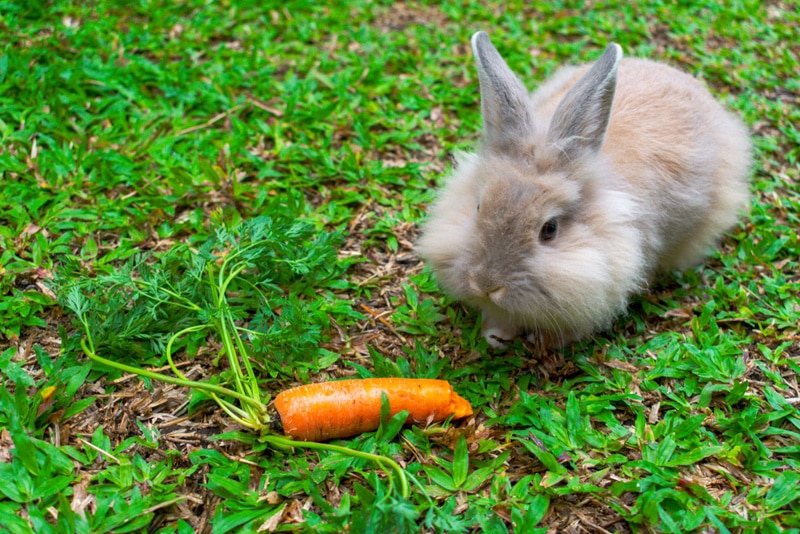
- Carrots
- Celery
- Cucumbers
- Grapes
- Green beans
- Honeydew
- Kiwi
- Mangoes
- Oranges
- Papayas
- Peaches
- Pears
- Plums
- Pumpkins
- Raspberries
- Squash
- Strawberries
- Turnips
- Watermelons
- Zucchini
What You Shouldn’t Feed Your Rabbit
Beyond meat and most human foods, there are a few other foods that are unsafe for rabbits to eat. These include:
- Almonds
- Avocados
- Beans
- Chard
- Coffee
- Corn
- Currants
- Dates
- Edamame
- Figs
- Garlic
- Kelp
- Leeks
- Lentils
- Mushrooms
- Nuts
- Olives
- Onions
- Peanuts
- Popcorn
- Potatoes
- Quinoa
- Rhubarb
- Rice
- Seeds
- Sweet potatoes
- Walnuts
Possible Health Issues Due to an Improper Diet
Dental Issues
Without enough fiber to eat, rabbits can suffer from overgrown teeth. Their teeth grow continuously, so they must be worn down. If their teeth become too long and develop sharp edges, they can cut the rabbit's tongue and cheeks.
It can also lead to the rabbit being unable to close their mouth properly. All of this will impact their ability to eat.
Obesity
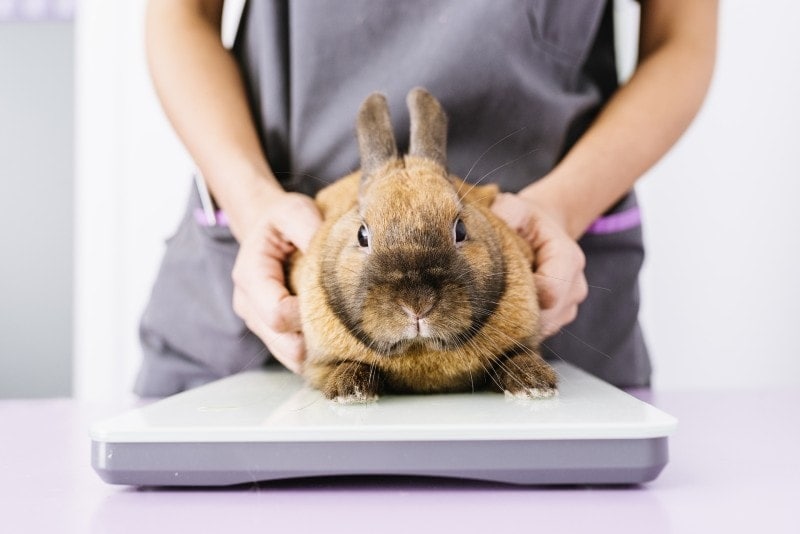
Pet rabbits are increasingly prone to becoming overweight or obese. Proper nutrition in the right amounts and adequate exercise are important to prevent obesity and the health problems that go with this.
Gastrointestinal Stasis
Gastrointestinal stasis is a serious and often fatal condition resulting from a diet high in carbohydrates and fat and low in fiber or when the rabbit isn’t eating enough overall.
This slows the GI tract, which then creates a buildup of faeces, hair and other matter. This can lead to impaction, which causes pain and eventual death if left untreated.
Pregnancy Toxemia
Pregnant and lactating rabbits can develop pregnancy toxemia, which results from not receiving the proper nutrients. It’s also known as ketosis and can be fatal if not treated immediately.
Urinary Stones
If the rabbit’s diet is too high in calcium (which is commonly from animal-based products), it can lead to sludge in the bladder, which then leads to calcification and urinary stones.
Conclusion
It’s clear how essential a rabbit’s diet is to their good health. Without the right nutrition, they can fall victim to several serious health conditions, some of which can be fatal.
Rabbits are obligate herbivores and must eat plant matter, with most of it being high-quality hay. It’s good for their teeth and their digestive systems. While a tiny bit of meat that your rabbit snatched off the floor is likely okay, it’s best to keep meat well away from your bun.
If you’re ever concerned about your rabbit’s diet or health or just have questions about their care, don’t hesitate to speak to your vet.
Sources
Featured Image Credit: Diana Macias, Shutterstock
Get Hepper In Your Inbox


Pet care tips from our vets and experts, straight to your inbox.
You may opt-out at any time. View our Privacy Policy for more information.
Kathryn was a librarian in a previous lifetime and is currently a writer about all things animals. When she was a child, she hoped to work in zoos or with wildlife in some way, thanks to her strong love for animals. Unfortunately, she's not strong in the sciences, so she fills her days with researching and writing about all kinds of animals and spends time playing with her adorable but terribly mischievous tabby cat, Bella. Kathryn is hoping to add to her family in the near future – maybe another cat and a dog.
Join the conversation
Ask a question, share your story, or send private feedback.