Hepper is reader-supported. When you buy via links on our site, we may earn an affiliate commission at no cost to you. Learn more.
How Big Are Coyotes Compared to Dogs? Size Chart & Key Differences

In this article
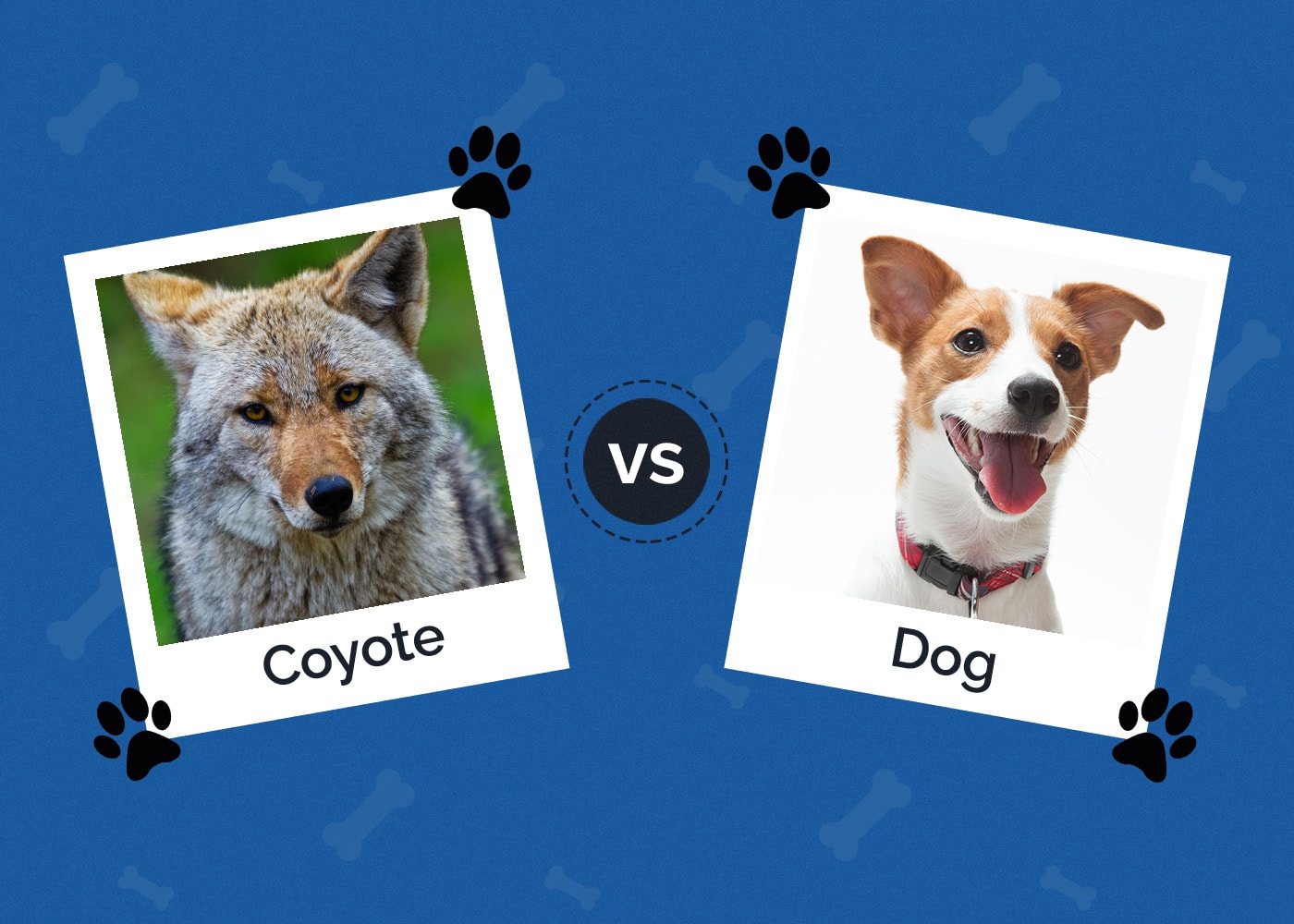
Coyotes and dogs are related and belong to the Canidae family. For the most part, coyotes are about the same size as medium-sized dogs. Coyotes and dogs share several other similarities, but they also have several key differences that make them distinct from each other. Coyotes aren’t domesticated animals, while dogs have evolved to become companion pets.
Both animals are fascinating and worth getting to know. Our comparison of coyotes and dogs will help you gain a better understanding of both amazing animals and how they relate to each other.

Comparison of Coyotes & Dogs
The scientific name for coyotes is Canis latran and the scientific name for dogs is Canis lupus familiaris. Because they belong to the same family, you can find a few similarities, despite their differences in appearance and behavior. Here are comparisons of some of their traits.
Size
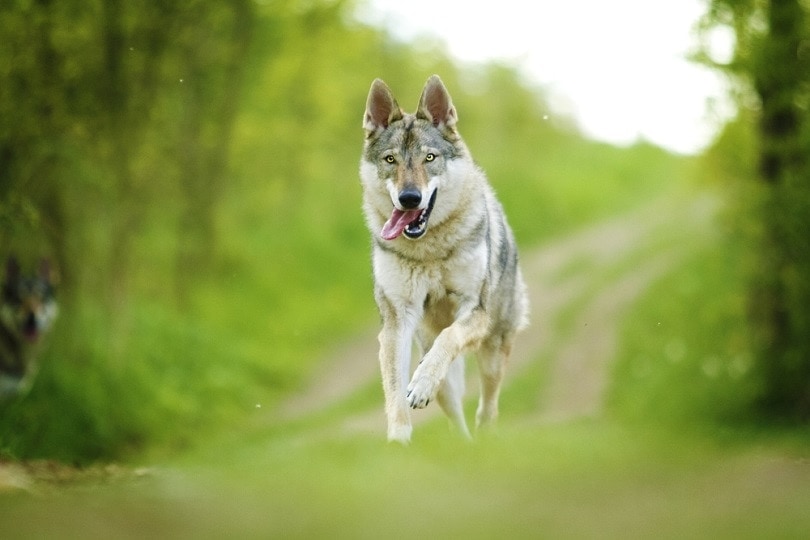
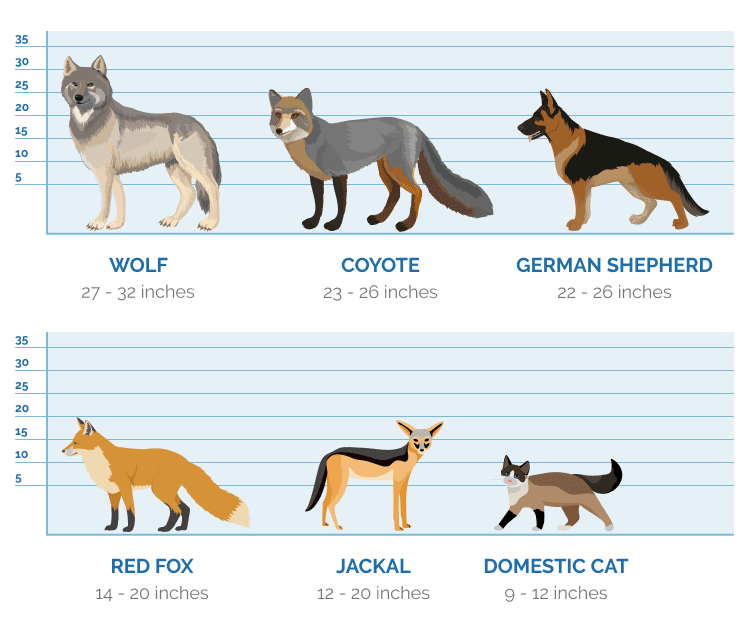
Adult coyotes can reach about 23-26 inches in height. For comparison, German Shepherds have an average height of 22-26 inches. While they may be similar in size, coyotes are much leaner and weigh between 15-45 pounds, and German Shepherds weigh between 49-71 pounds. The chart below will help you get a better grasp of a coyote’s size and how it compares to other animals.
| Animal | Height |
| Coyote | 23 - 26 inches |
| German Shepherd | 22 - 26 inches |
| Wolf | 27 - 32 inches |
| Red Fox | 14 - 20 inches |
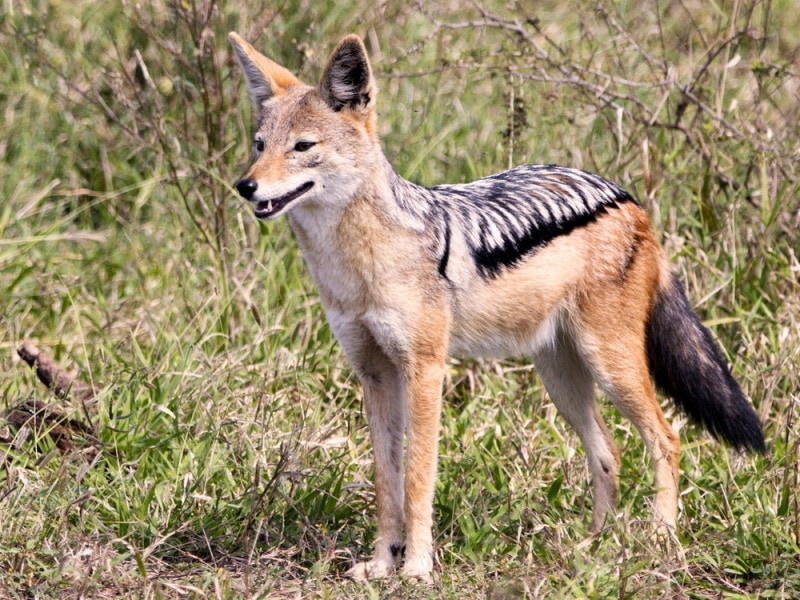
| Jackal | 12 - 20 inches |
| Domestic Cat | 9 - 12 inches |
Physical Features
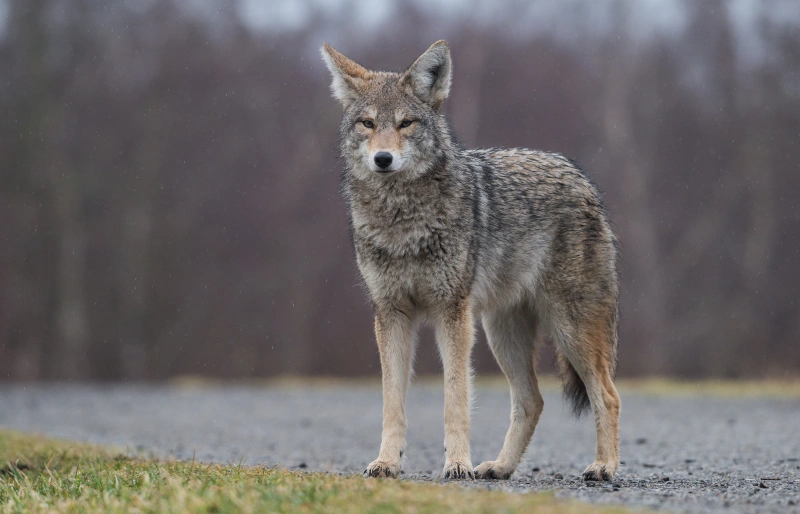
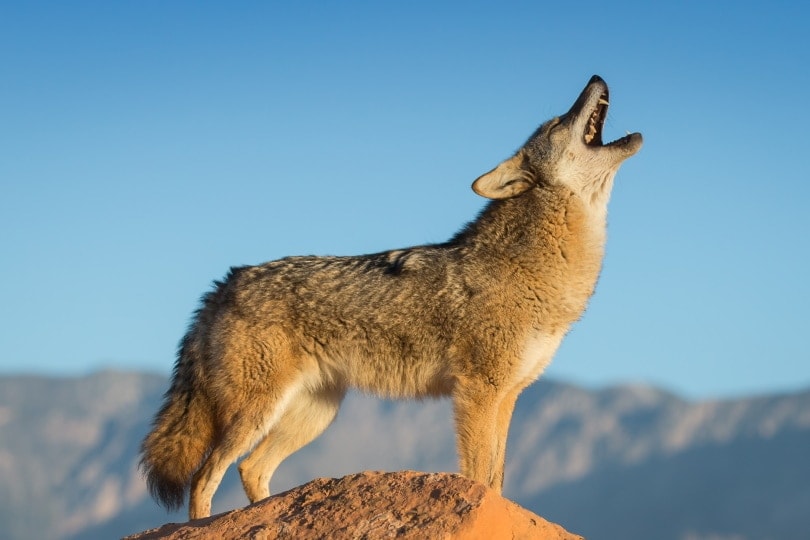
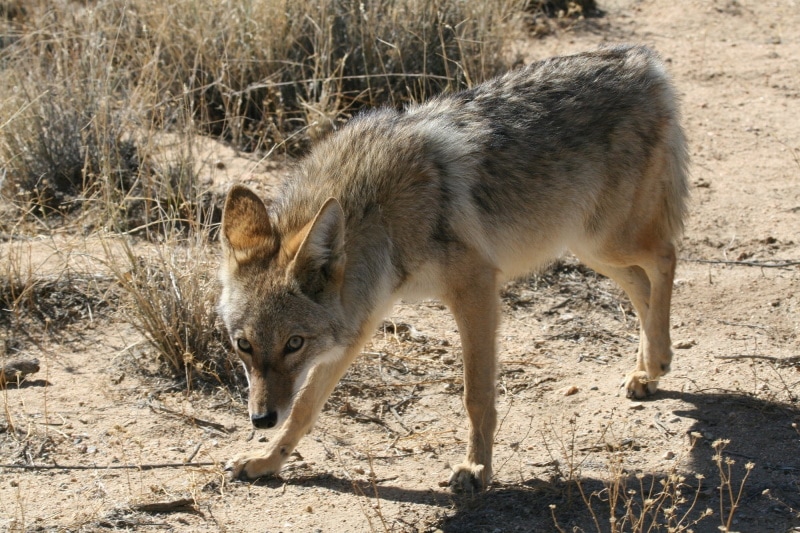
While you can find many different kinds of purebred dogs, coyotes have 19 subspecies. The subspecies of coyotes vary slightly in size and color, but their appearances are very similar. Coyotes have grayish-brown or yellowish coats and straight, bushy tails. They have pointed, triangular ears and a narrow muzzle.
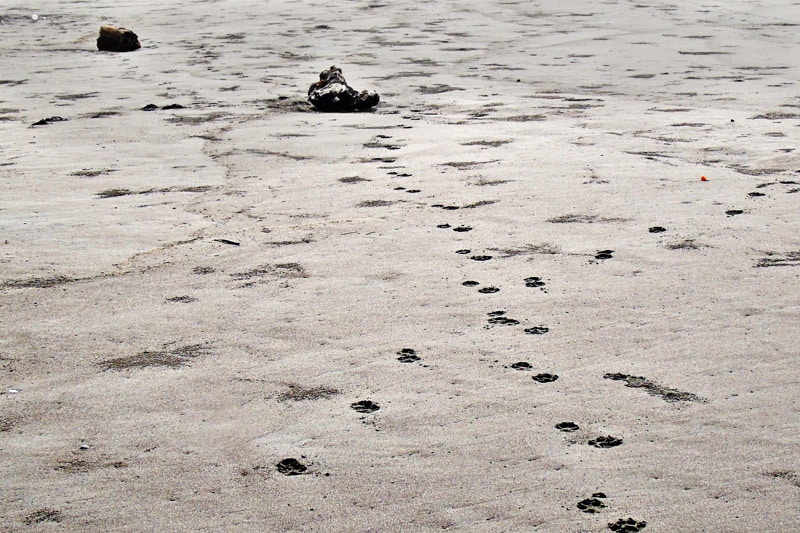
Coyotes have different tracks than dogs, which tend to be narrower and more oval than dog tracks. They also have longer strides than dogs.
Domestic dogs have much more variety in their size and appearance. You can find all kinds of coat lengths and colors. Dogs can have short or long muzzles, and their ears can be pointed or floppy. In general, most dogs have deeper chests than coyotes.
Behavior
Unlike dogs, coyotes aren’t domesticated animals and are usually nervous and avoidant towards humans. You may have some success with keeping a coyote as a pet if you raise it when it’s a pup. However, coyotes are highly active and have a strong prey drive. They can be unpredictable and can’t be trusted with smaller animals. It’s illegal to have coyotes as pets in over half of the US states.
Coyotes are social, but not like how dogs are known to be social. They don’t form packs like wolves do but can live in family groups. They often travel and hunt alone or in loose pairs. Coyotes form territories and can defend themselves from other competitors.

How to Coexist with Coyotes
Coyotes are resilient and adaptable animals and have assimilated well to living in suburban and urban areas. While they’re pretty good at hiding, you may come across a few, especially at night when they’re the most active. So, it’s important to know how to coexist with them peacefully to prevent any negative interactions.
Don’t Give Food to Coyotes
Coyotes are naturally shy, so they’ll usually run away or avoid interacting with humans. So, it’s important never to feed a coyote or leave food out. This will make them more used to human interactions and may make them more likely to act aggressively or attack.
Make sure your garbage bin lids are shut tightly, and don’t leave them with the lids off. Keep your property clean so that you don’t attract any interest from coyotes.
Keep Your Dog Leashed and Close to You
Sometimes, coyotes can share playful interactions with dogs, but they can also act aggressively, especially if your dog takes an aggressive stance. So, if you’re walking your dog and see a coyote, maintain as much distance between you as possible.
Keep your dog at your side and make yourself appear as large and as tall as possible. Maintain eye contact with the coyote as you calmly back away, and never turn your back towards the coyote. You can also be loud and assertive to discourage the coyote from coming any closer. Just don’t scream and perform any actions that will alarm your dog.
If the coyote persists in approaching you, you can try throwing sticks, rocks, and other objects toward it. Your goal isn’t to hit the coyote. It’s to discourage the coyote and make it lose interest in you and your dog.

Avoid Going on Walks During Certain Hours
While coyotes aren’t strictly nocturnal, they’re typically most active at sunset and during the night. So, if you live in an area known to have coyote appearances, avoid walking your dog at night. If you plan to walk your dog at dusk, it may be helpful to invest in a dog collar light and wear reflective material to keep coyotes away. Carrying animal deterrent spray can be an extra safety measure for your walks.
Final Thoughts
In general, dogs can grow larger than coyotes, and they’re more social with people. Subspecies of coyotes have less variety than dogs, and they’re all naturally avoidant of people. While coyotes may be similar in size to some dogs, they don’t make ideal pets because they can be very unpredictable and are much more challenging to train.
So, if you find an injured or orphaned coyote, it’s best to contact your local wildlife rescue rather than try to care for it yourself. You can also contact your local animal control department if a wild coyote is threatening people’s safety.
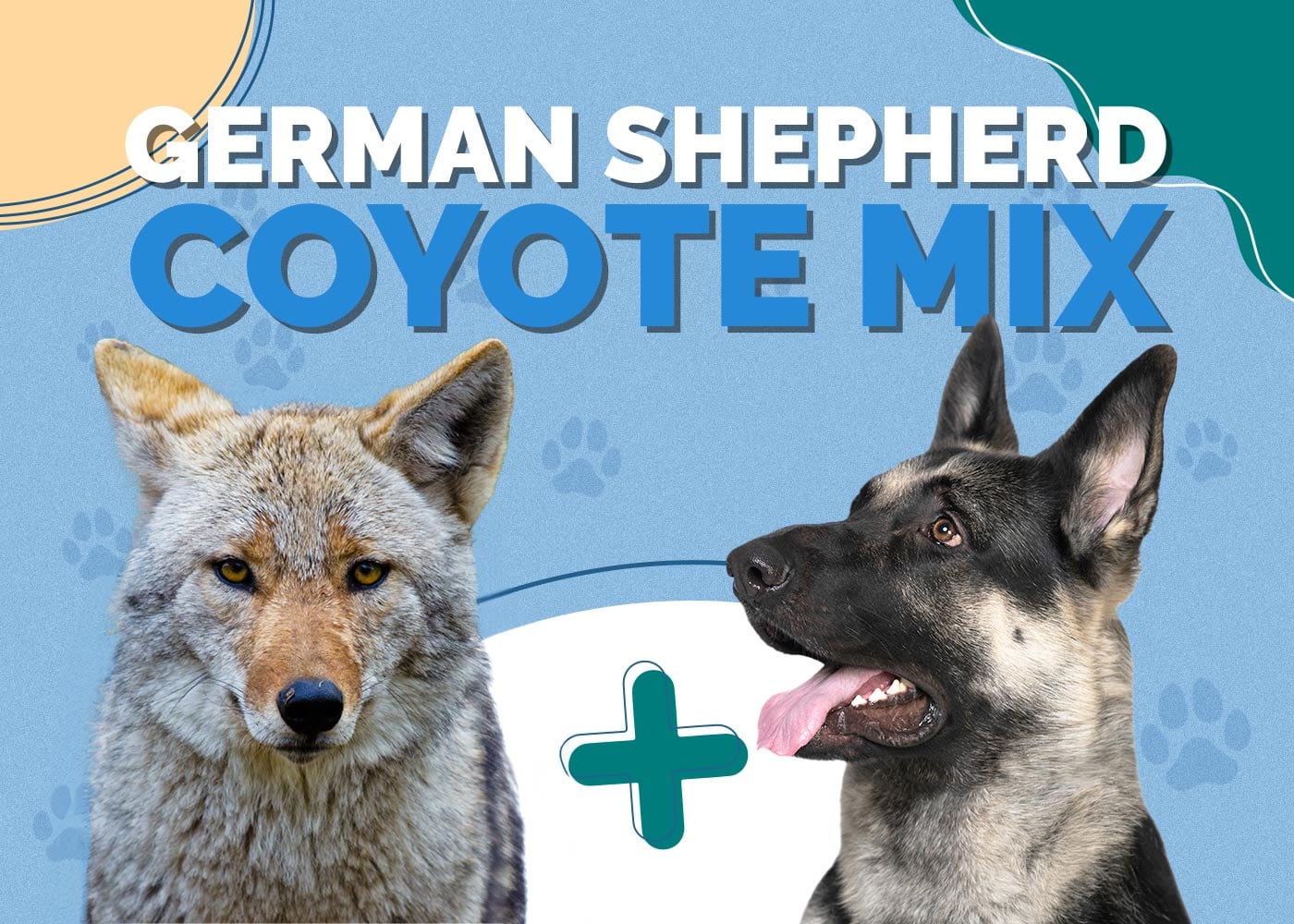
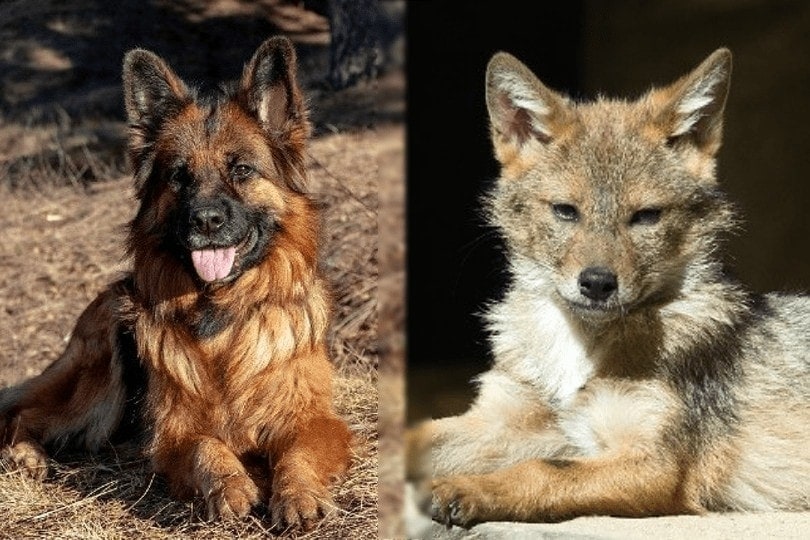
Featured Image Credit: Left - German Shepherd (Natalia---S, Pixabay); Right - Coyote (Spykerf1, Pixabay)
Get Hepper In Your Inbox


Pet care tips from our vets and experts, straight to your inbox.
You may opt-out at any time. View our Privacy Policy for more information.
Jessica is a freelance writer who spends most of her day reading and writing while her fluffy Cavapoo, Nora, naps beside her. She loves and appreciates pets and animals because there’s so much to learn from them, and they do so much for people. As a dog mom, she understands the special relationship that pet parents have with their pets. So, she loves sharing helpful information that people can use to better understand their pets. When she’s not writing, you can find her walking dogs, tending to her plant babies, or drinking her nth cup of coffee.
Join the conversation
Ask a question, share your story, or send private feedback.