Hepper is reader-supported. When you buy via links on our site, we may earn an affiliate commission at no cost to you. Learn more.
Wolf vs Dog: The Differences (With Pictures)
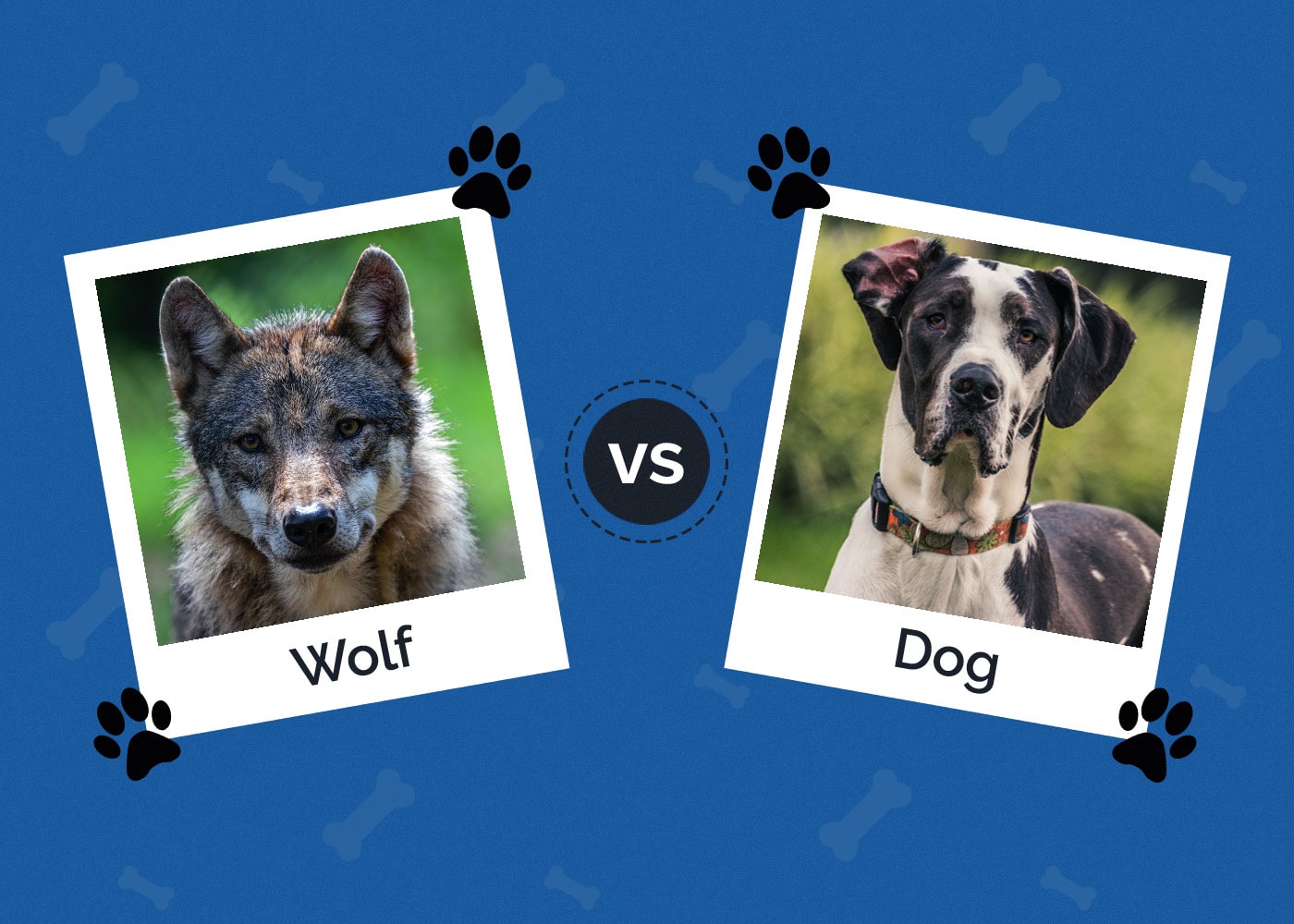
If you’re like most of us, you’ve probably heard or assumed that dogs and wolves are related. While the species share a common ancestry, their paths split long ago. Dogs and wolves are not the same, and it’s important to know how they differ. Everything from training methods to nutrition has often relied on assumptions about similarities between dogs and wolves. In this article, we’ll look closely at the differences between wolves and dogs, including comparing physical appearance and behavior.

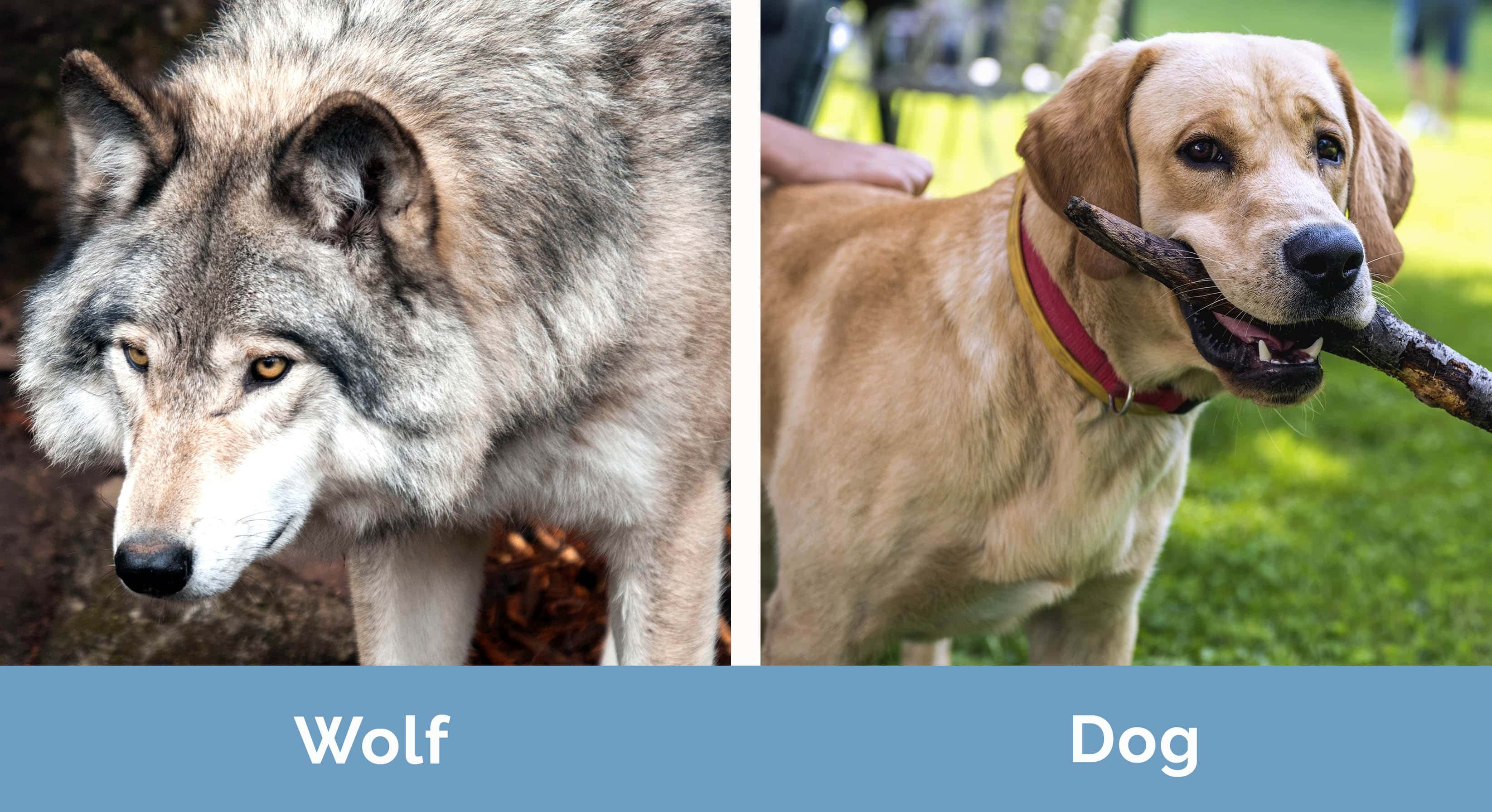
Visual Differences
At a Glance

Wolf Overview
Characteristics & Appearance
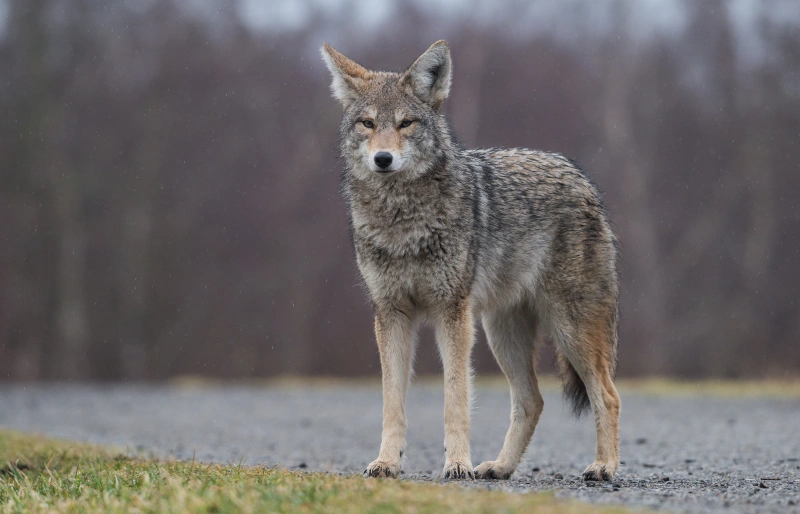
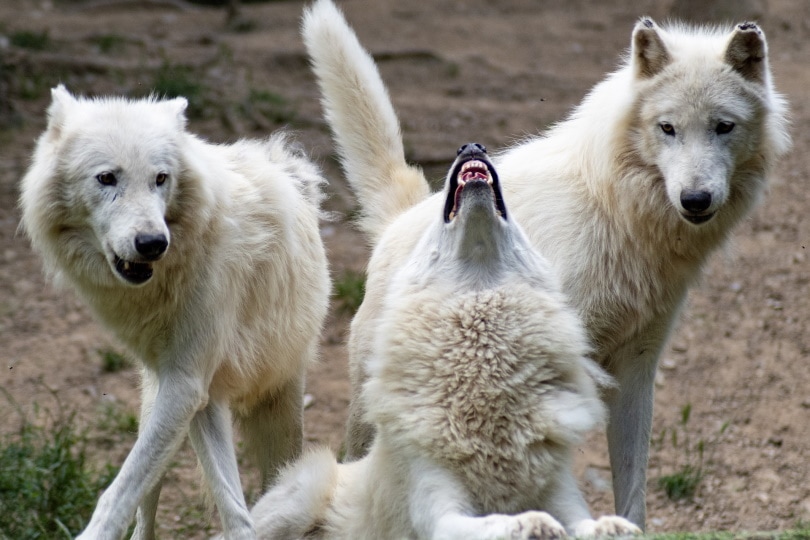
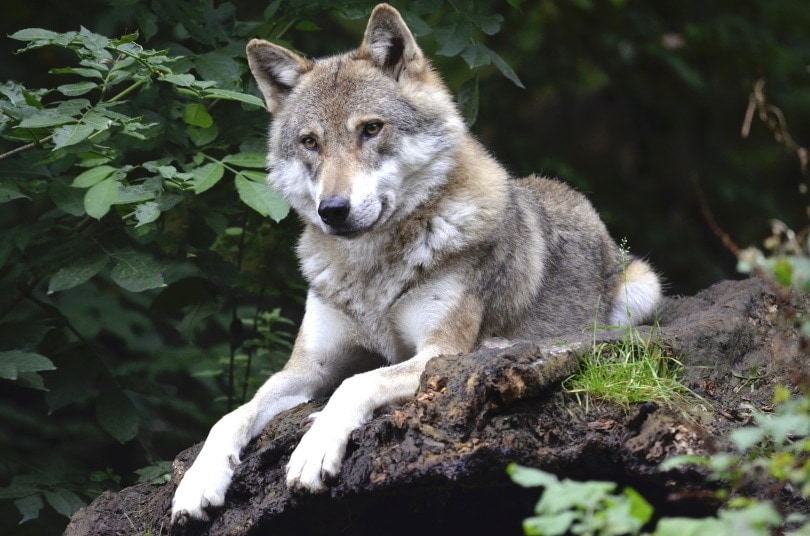
Wolves are divided into two species, gray wolves and red wolves. Researchers are still trying to identify other subspecies and separate species, but wolf genetics are complicated! For example, red wolves may not even be true wolves but coyote-wolf hybrids. Wolves are found in North America, Europe, Africa, and Asia. They are adaptable and live in such diverse habitats as forests, deserts, rainforests, and the Arctic.
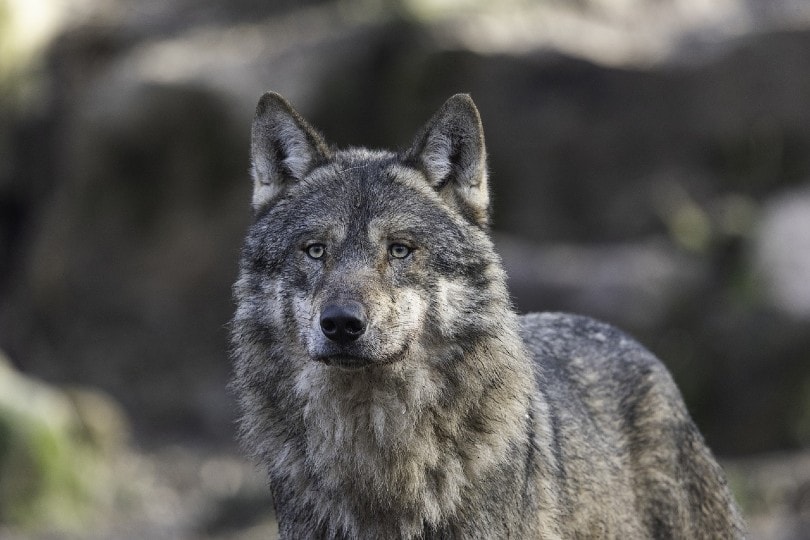
Gray wolves are usually bigger than red wolves, although their size varies widely depending on where they live. Despite their name, gray wolf coats can also be brown, black, red, or white, with lighter legs and bellies. Red wolves are critically endangered, and most surviving members live in captivity. The few that do live in the wild are found in the southeastern United States. They are smaller and lighter than gray wolves, with brownish-red coats.
Wolves live in packs consisting of a breeding pair and their offspring of various ages. Gray wolf packs average six to 10 members but may get as large as 20 to 30. Red wolf packs usually number two to eight animals. Wolf packs roam and hunt through a territory of 30–1,200 square miles. The pack forms strong social bonds and works together to hunt. Young adults may stay with the pack for 2 years or longer.
Within the pack, the wolves maintain levels of dominance, although the terms “alpha male and female” are no longer used. Wolf pups are born in the spring and cared for by the whole pack. Gray wolves prey mostly on large, hoofed animals like deer and elk but also eat smaller mammals and fish. Red wolves hunt primarily small mammals and deer. If wild prey is scarce, wolves will hunt livestock.
Uses
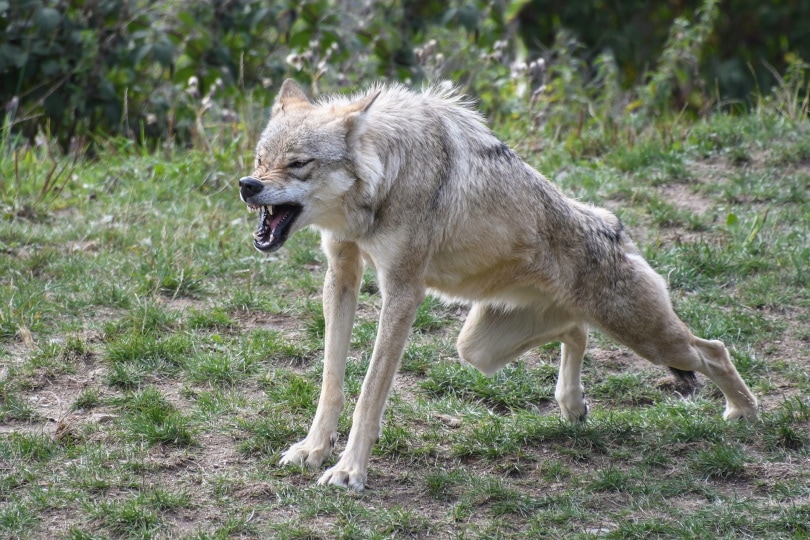
Wolves are essential parts of a healthy ecosystem. By hunting mammals like deer and elk, wolves help keep their populations under control. Without this natural balance, population growth could overwhelm available food sources and habitats.
Other plant and animal species are also impacted when the wolves’ population is thrown out of balance. The large deer and elk populations compete with other species for food sources. They may overeat plant species that serve as food and shelter for birds, mammals, and insects.
Humans have long been the primary threat to wolves because they were viewed as threatening livestock or competition for hunters. However, eliminating wolves from an ecosystem can have harmful impacts that scientists are still studying.

Dog Overview

Characteristics & Appearance
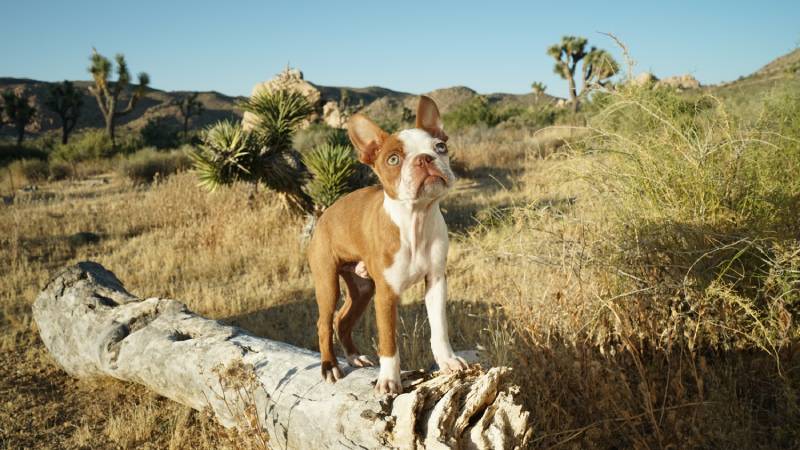
At some point, thousands of years ago, humans began to domesticate wolves. Again, scientists are still learning about the origins of the dog-human relationship, including when exactly it started. After the first dogs were domesticated, humans began selectively breeding them to develop the purebred pups we know today.
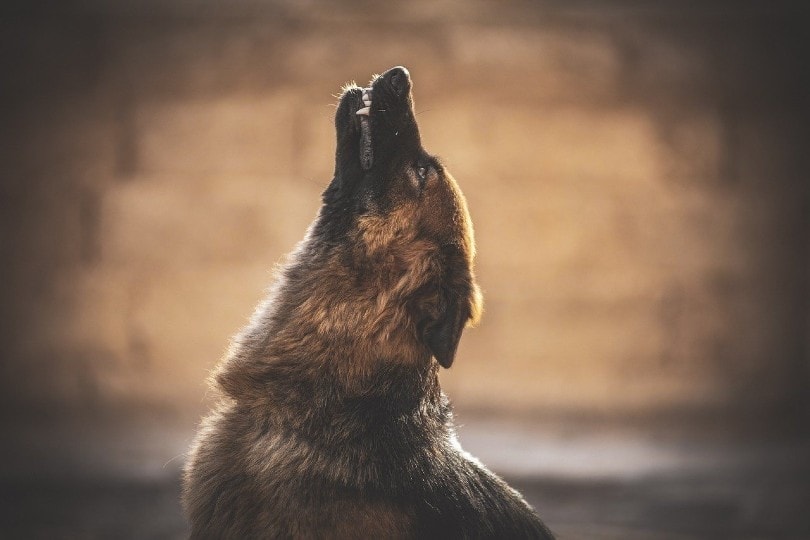
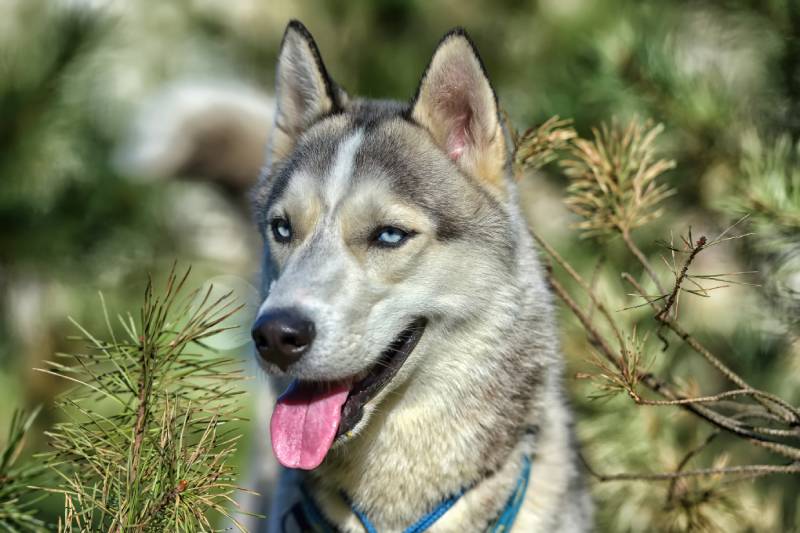
All those years of breeding have resulted in a species with enormous diversity. From tiny Chihuahuas to massive Great Danes, the physical characteristics of dogs vary wildly. You’ll find short coats, long coats, curly coats, and even hairless dogs. Dogs and wolves walk on four legs and have the same number of teeth, but beyond that, their physical characteristics are not consistent.
Dogs are found all over the world, living indoors and outdoors, roaming free, or lounging on the bed. Unlike wolves, who are true carnivores, domestic dogs adapted to eat a similar diet as their human companions. This makes them more accurately classified as omnivores because they can process nutrients from plant and animal sources.
Unlike wolves, dogs can usually have as many as two litters of puppies per year. Male dogs are not involved with raising the puppies, unlike the wolf pack, where all members assist.
Uses
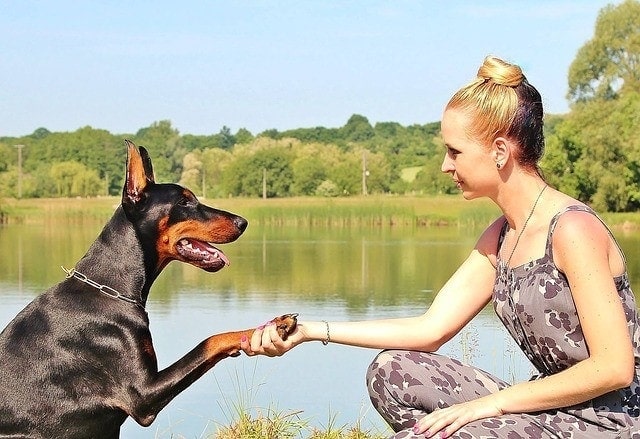
Most modern dogs serve primarily as companion pets, but these domestic canines have fulfilled many purposes over time. Working dogs continue to be helpful to humans around the world. Dogs serve in the military and law enforcement as protection and scent detection animals.
Farm dogs help guard and herd livestock. They can also pull carts, perform search-and-rescue work, and assist people with various disabilities. Dogs may also be used as therapy or emotional support animals.
Hunters rely on dogs to find and retrieve game, and in past years, dogs provided pest control services by hunting and eliminating rats and other nuisance rodents. These are just some of the many ways dogs have worked alongside humans over their time together.
What Are the Differences Between Wolves & Dogs?
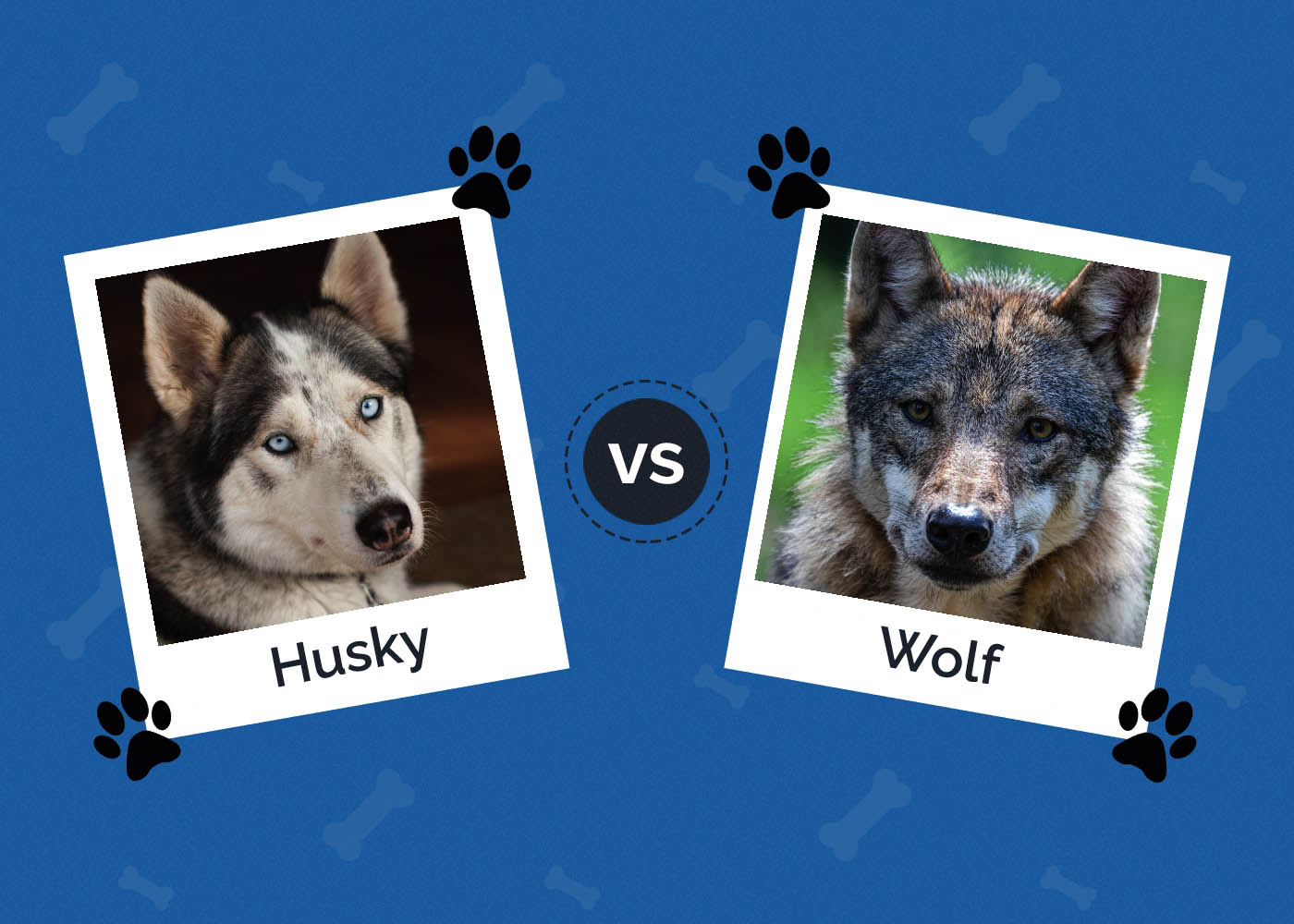
The major difference between wolves and dogs is that one is a wild animal, and the other is domesticated. Dogs and wolves share more than 99% of their DNA, but that still leaves a lot of genetic differences between them.
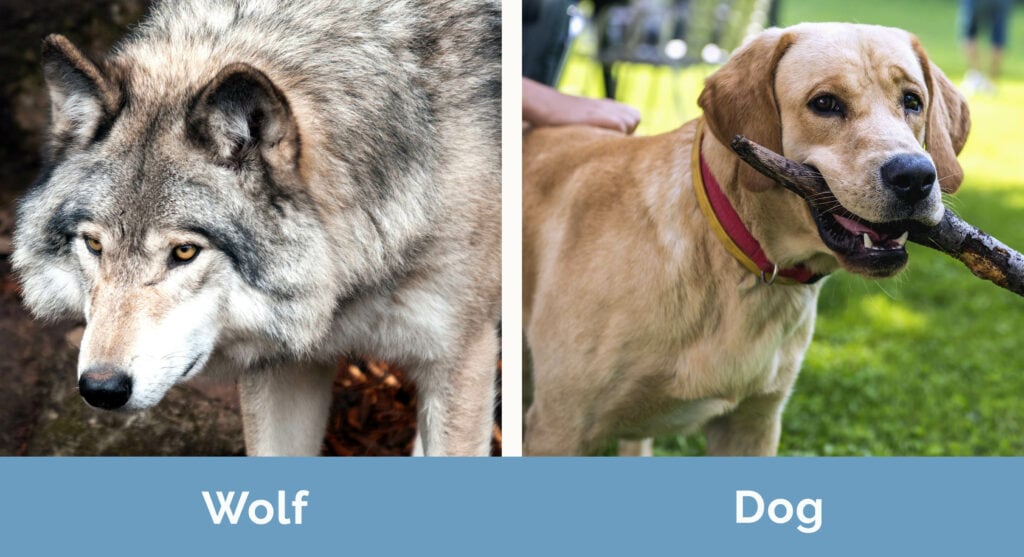
Physically, dogs and wolves display many differences in appearance. Gray wolves vary in size depending on their habitat, but their appearance is relatively similar. Dogs vary in size, color, weight, coat type, ear shape, tail length, and nearly any other physical features you can think of.
Wolves are used to surviving on their own, using their intelligence and instincts to solve whatever issues they encounter. Domestic dogs rely on humans to take care of them. Thousands of years of domestication have made dogs dependent on humans.
Dogs can bond with each other, but their strongest attachments are usually with humans. Wolves form tight bonds with their pack and rely on them for everything. Even “tame” wolves can’t bond with people like dogs do and will never really be pets.
Despite their scary reputation, wolves usually go out of their way to avoid humans. Dogs, even the shyest among them, generally don’t do that. They want to interact with people, learn from them, and please them. They can also bond with other species, like cats, which wolves won’t do either.

Conclusion
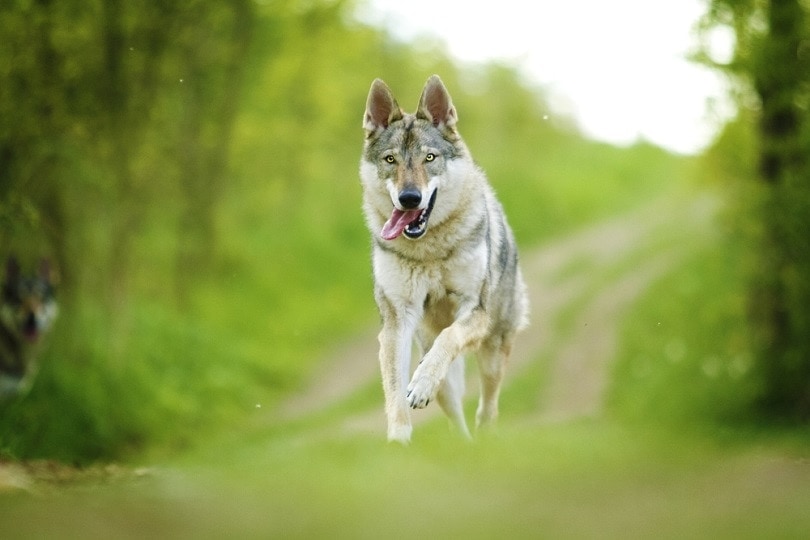
Although dogs and wolves are closely related and most likely share a common ancestor, they are very different animals in nearly every way. Interpreting dog behavior or nutritional needs based on wolves ignores the thousands of years of domestication and selective breeding that now separates the two canine species. While wolves aren’t the scary villains of fairy tales, they aren’t pets either. Multiple dog breeds look like wolves but are fully domesticated if you want to safely own an animal with the same look as a wild wolf.
Featured Image Credit: (L) Mario Losereit, Unsplash | (R) Earl Wilkerson, Shutterstock
Get Hepper In Your Inbox


Pet care tips from our vets and experts, straight to your inbox.
You may opt-out at any time. View our Privacy Policy for more information.

A lifelong lover of all creatures great and small, Elizabeth got her first cat at 5 years old and at 14, she started working for her local veterinarian. After spending more than 20 years working as a veterinary nurse, Elizabeth decided to step away to become a stay-at-home parent to her daughter. Now, she is excited to share her knowledge with our pet parents. Elizabeth lives in Iowa with her family, including her two fur kids, Linnard, a husky mix and Algernon, the worldʻs most patient cat. When not writing, she enjoys reading, watching soccer, and spending time outdoors with her family.
Join the conversation
Ask a question, share your story, or send private feedback.