Hepper is reader-supported. When you buy via links on our site, we may earn an affiliate commission at no cost to you. Learn more.
How To Tell Dog & Coyote Tracks Apart (4 Signs to Look For)

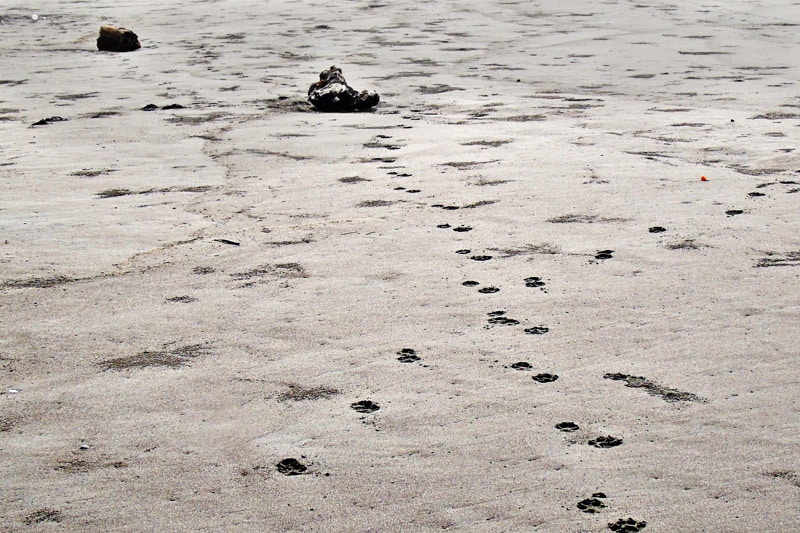
It can be alarming to spot an animal track you don’t recognize, especially if there is a chance that the track belongs to a coyote. Coyotes live in abundance across the United States, and they are capable of adapting to almost any habitat. While they prefer open wilderness, they can also thrive in urban areas. No matter where you live in the United States, a coyote may live there, too. That is why it is vital that you can tell the difference between coyote tracks and dog tracks.
You can determine whether a track belongs to a coyote or a dog in several ways. In this article, we will look over the key differences between both prints and provide advice on how to avoid conflict with coyotes.

The 4 Signs That Help to Tell Dog & Coyote Tracks Apart
1. Size
Since different dog breeds come in all shapes and sizes, their prints can vary. However, the average dog’s print tends to be wider than the average coyote’s. Coyote prints measure around 2.5 inches in length and 2 inches in width.
Another way to determine if prints belong to a coyote or a dog is to look for any difference between the front and hind prints. Coyotes have larger front footprints than hind prints.
2. Shape
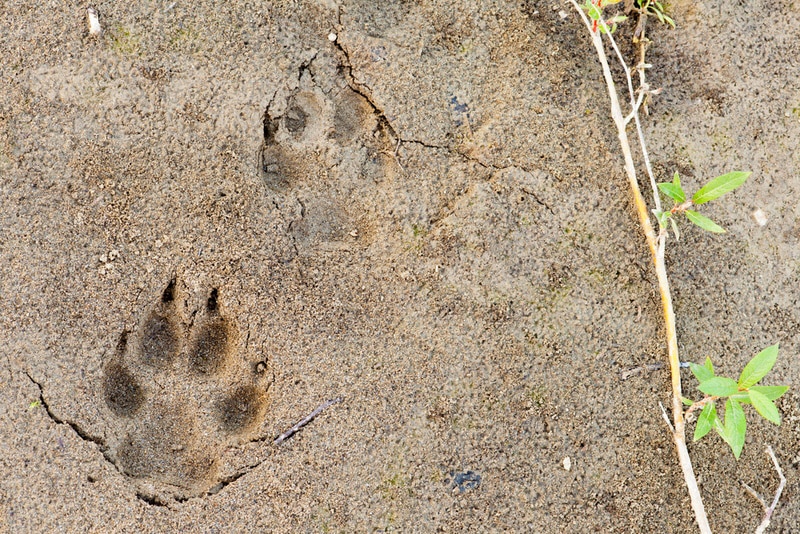
Although coyote prints and dog prints can appear similar in shape at a glance, some key differences can help you to tell them apart. Coyotes have oval-shaped prints (see image above), which are more narrow than a dog’s. They also have more space between their footpad and their toes. An X-shape can be drawn in the negative space between a coyote’s footpad and toes. This cannot be done with most dog prints.
3. Claws
When trying to distinguish prints, pay attention to the claws. Coyotes leave behind thin, sharp claw prints, while a dog’s claw prints tend to be thicker and blunter. The claws point outward if the dog is domesticated because domesticated dogs tend to spread their toes.
4. Gait
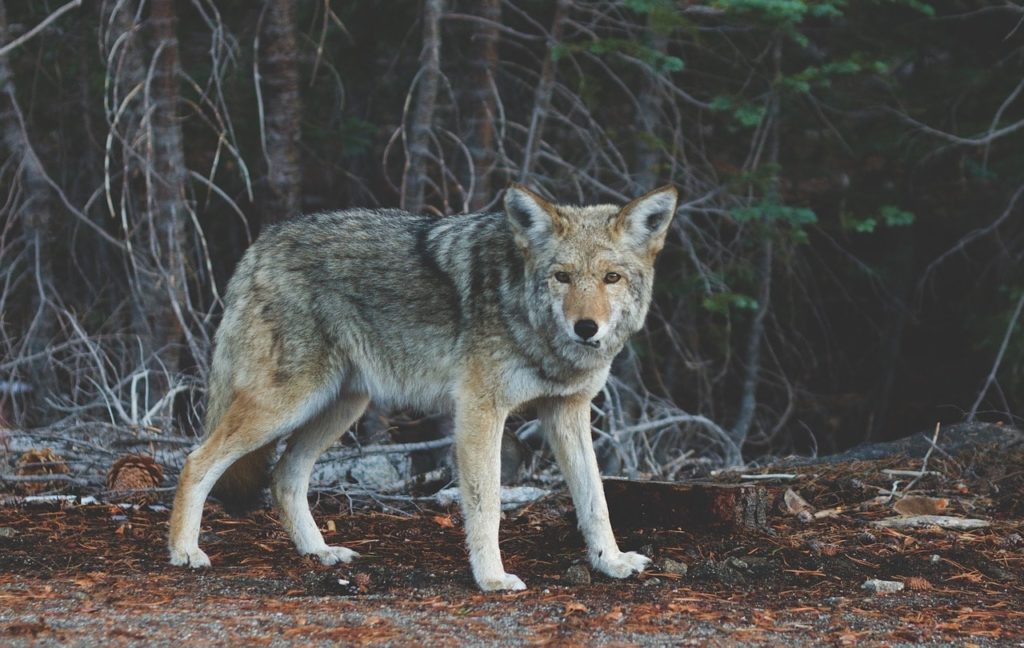
Coyotes walk with an interesting variety of strides. They are known to walk, trot, and gallop. One of the most common gaits a coyote uses is the overstep trot. This is where the front and hind prints will land close together, with the hind print landing slightly ahead of the front.
Coyotes leave straight and narrow lines of tracks. When trotting, the distance between tracks often measures 15–22 inches. Dogs, on the other hand, walk in zig-zagging patterns or circles.

The 6 Ways to Avoid Conflict with Coyotes
It can be frightening to discover coyote tracks around your home. Although there have been instances where coyotes have attacked humans, the chances of this are slim. As long as you know how to behave if you ever encounter a coyote, there is relatively little risk of an attack or aggression.
1. Do Not Feed Coyotes
One of the most effective ways to limit your exposure to coyotes is to avoid giving them a reason to return. If you leave food out for coyotes or other animals, you are certain to have some wild visitors.
You may be accidentally feeding coyotes by leaving your garbage out at night. Coyotes tend to avoid human foods, but they will make exceptions if their prey population is low. If you notice an increase in coyotes around your area, you must modify your behavior to ensure that you are not encouraging the coyotes to come to you for food.
2. Do Not Leave Pets Unattended
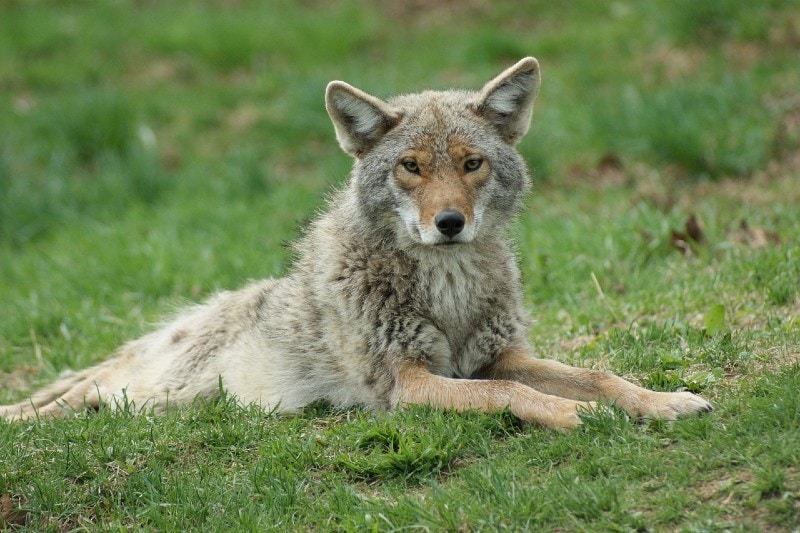
Even if you have never seen a coyote in your area, there is a good chance that they live nearby. For this reason, you should never let your pets roam loose, as they could be in great danger of a coyote attack.
All pets allowed outdoors should be supervised. A determined coyote can still attack your pet even if you have fencing. Unattended dogs or free-ranging cats can attract wild coyote populations, putting your pets in danger. So, it’s best to keep your pets inside unless you can keep an eye on them.
3. Use Repellents and Obstructions
Repellents such as flashing lights and sound-making devices may keep coyotes at bay. Spray repellants have yet to see much success in keeping coyotes away. Fences can be useful for securing your yard as well. This is especially true if they are higher than 6 feet and have a roll bar or other obstruction across the top. If you can keep a safe distance between your home and a coyote, the chances of an aggressive encounter decrease.

4. Don’t Run or Play Victim
If you ever encounter a coyote, resist the urge to run. If you run away, the coyote may chase you. When you encounter a coyote, the best thing to do is shout or throw something near it. If you see a coyote during the day, take extra caution. This could signify that this specific coyote has grown accustomed to humans and will be more confident in attacking you. If the coyote approaches you, yell, wave your arms over your head, and throw something.
5. Don’t Be an Aggressor
Most often, coyotes will avoid humans. If a coyote is near you but is trying to get away from you, do not provoke it. Simply allow the coyote to pass by without harassing it.
6. Report Aggressive Coyotes Immediately
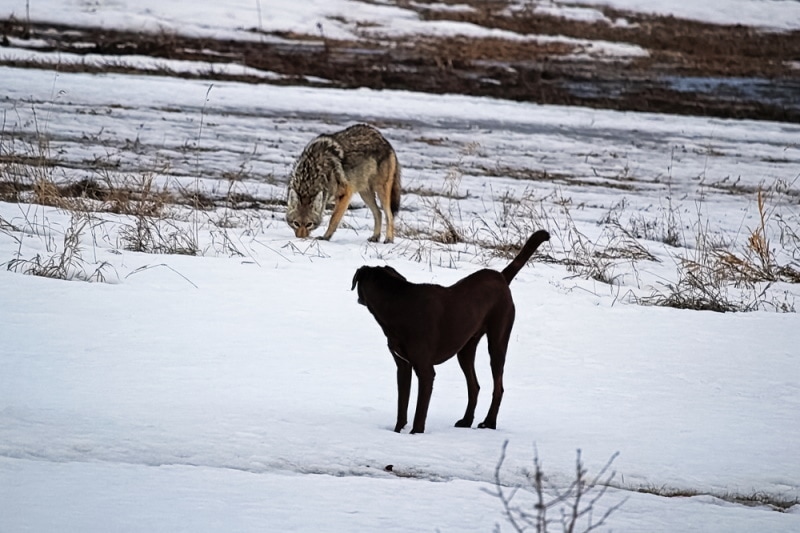
If you notice signs of aggression in any local coyotes, report it to your local animal control or police department. Aggressive behaviors in coyotes look similar to aggressive behaviors in dogs, such as barking, snarling, or growling. You may also notice that the coyote has raised hackles. In some instances, an aggressive coyote may lunge at you. Their aggression could be due to an illness, such as rabies.
Final Thoughts
Coyote tracks and dog tracks may look similar at a glance, but thankfully some distinct features can help you to tell them apart. By discerning whether or not the tracks near your home belong to a coyote or a dog, you can take the proper steps to avoid conflict with coyotes if needed. If you notice an aggressive coyote, contact your local authorities, and avoid the animal. Other than that, most coyotes are eager to stay away from humans, so they shouldn’t cause too much trouble.
Sources
Featured Image Credit: Jumpstory
Get Hepper In Your Inbox


Pet care tips from our vets and experts, straight to your inbox.
You may opt-out at any time. View our Privacy Policy for more information.
Pets are Jordyn’s passion, cats especially. Whenever she has the opportunity, she loves to learn about them and share her knowledge with everyone. She is devoted to her tabby cat named Jack and works hard to buy him his favorite treats and toys. Discovering new ways to better care for her pet is always on her to-do list, and she is eager to help pet parents everywhere who have similar pursuits. In her spare time, she loves to read, write, and take long walks. She has a creative spirit, which often helps her to come up with funny cat names.
Join the conversation
Ask a question, share your story, or send private feedback.