Hepper is reader-supported. When you buy via links on our site, we may earn an affiliate commission at no cost to you. Learn more.
How to Massage a Dog with Arthritis - Vet Approved Tips


Arthritis is a fairly common canine problem, especially in older dogs. Just like humans, dogs’ joints wear down as they age. Therefore, many dogs end up with joint issues later in their life. Larger dogs are especially likely to develop joint problems.
There are many ways that arthritis can be managed, including massage. While massage will not cure your dog’s arthritis, it can help significantly with their pain. There are some specific ways to give a massage for arthritis, though. Below, we’ll review some tips to help improve your dog’s pain as much as possible.
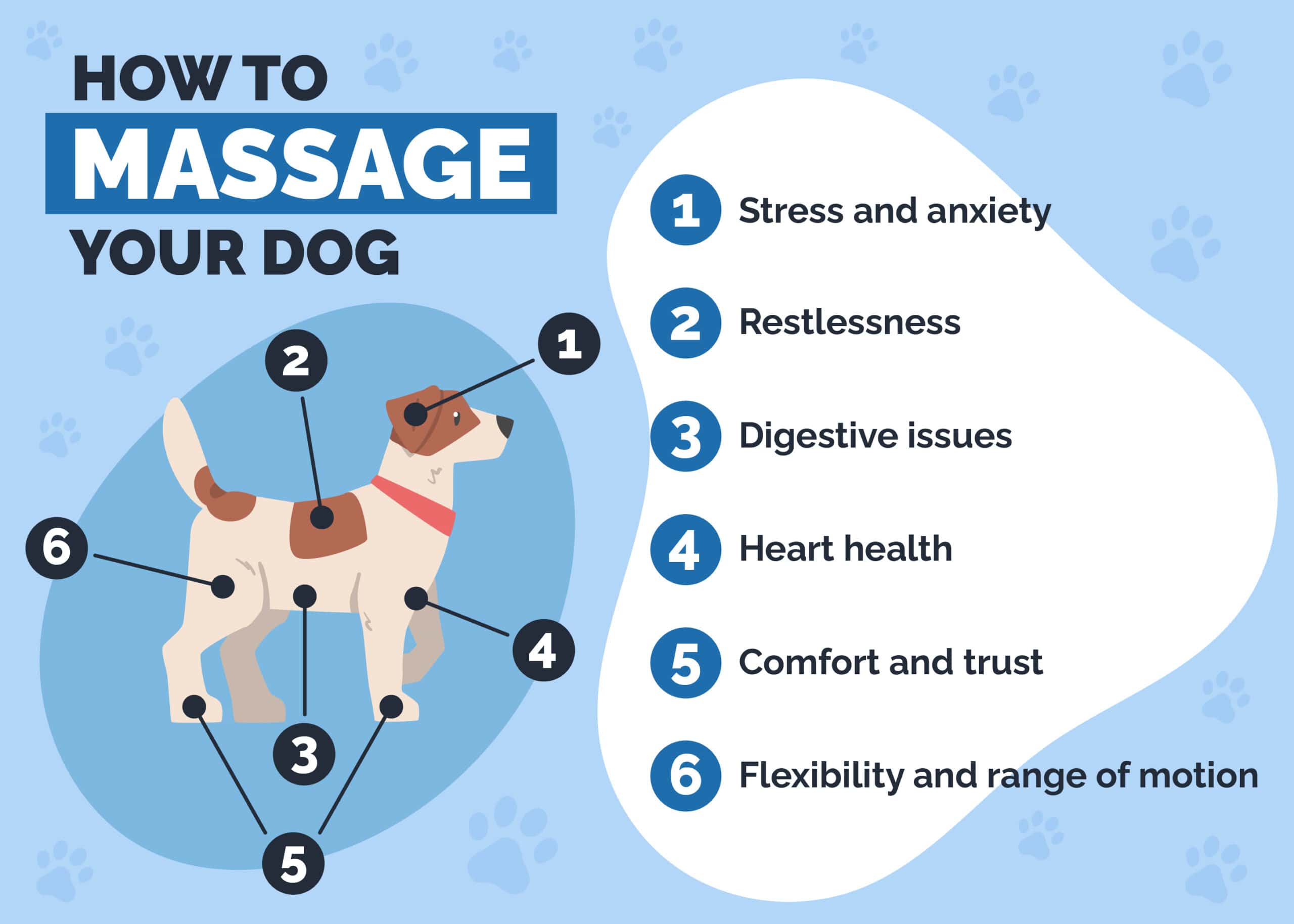

How to Massage a Dog with Arthritis
1. Stay on a Schedule
You should stick to a schedule to avoid overdoing the massage. In some cases, overdoing massage can make the joint pain worse. At the same time, you want to perform the massage enough for it to help. A schedule can help in both of these categories.
Often, massaging your dog in the morning and evening is enough. However, different dogs have different massaging requirements. Therefore, experiment to see what works best for your canine.
Usually, massaging in the morning is the best option, as it loosens up the joints after a night of lying down. Massaging at night can help loosen the joints to make sleeping easier. Try to do both, but if your dog doesn’t do well with two massage sessions, pick the time that seems to do the most good.
2. Make the Area Comfortable
You and your dog must stay in the same spot for a few minutes. Therefore, you should make the area comfortable. If your dog likes their dog bed, then that may be an excellent place to do the massage. Choose wherever your dog finds most comfortable.
Make sure the area is comfortable for you too. You should be able to reach your dog easily from both sides.
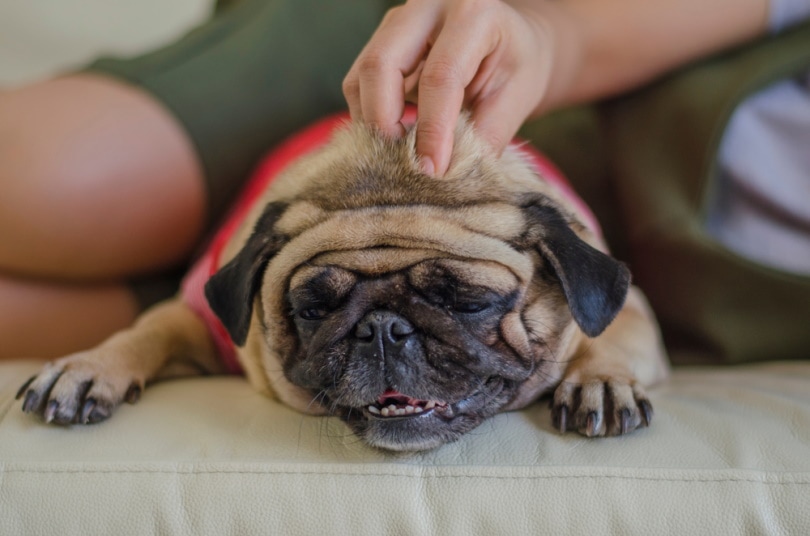
3. Start in Tense Areas
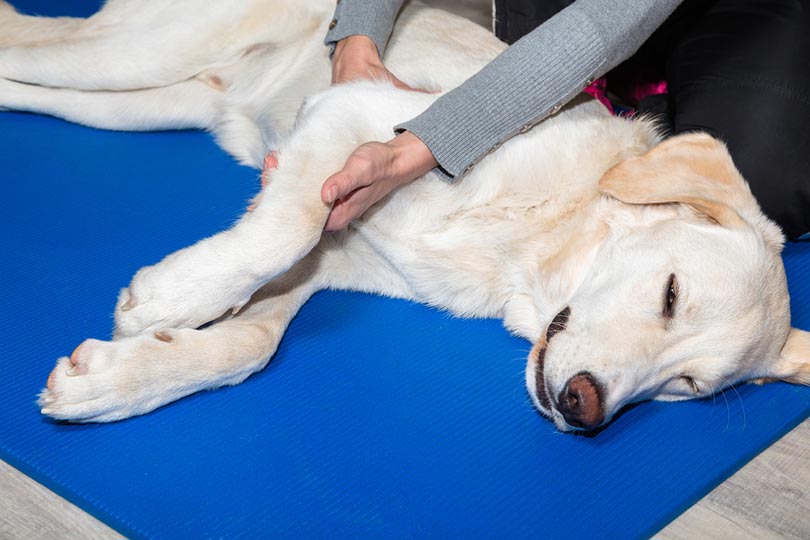
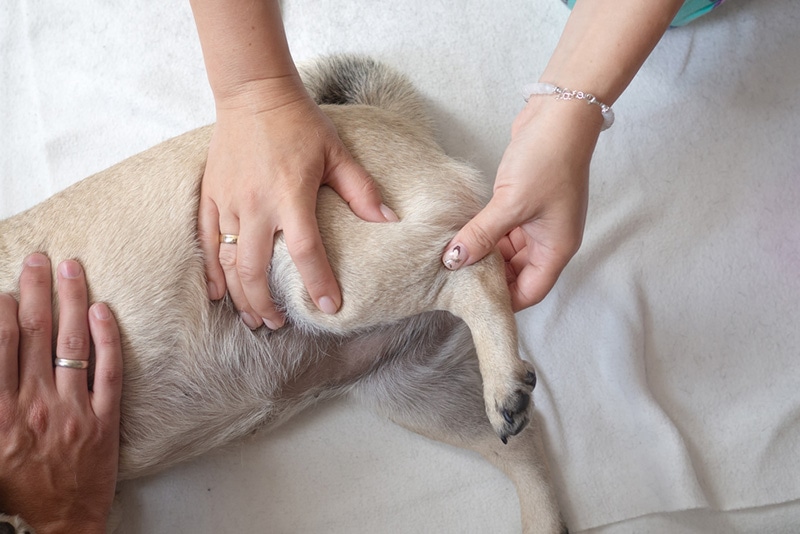
Firstly, you should start massaging the tense muscle groups. You should not massage your dog’s joints, which can cause more damage. However, you want to massage the tense muscle groups near the joints. If you know where your dog is normally stiff, you should aim for those areas.
Otherwise, you can start by stroking your dog’s neck and slowly making your way down their back. Continue to the muscles on the legs and even the tail (gently). A good massage should spend a few moments on each muscle group and touch on all major muscle groups.
4. Watch Your Dog’s Body Language
Always watch your dog’s body language. Dogs may not like to receive touch in certain areas if they are sore. Their joints may be too stiff for massage to be helpful, or you may be massaging them too much. Some dogs benefit from massage three times a day, while others may only like it every other day. Watching your dog’s body language is the only way to know how they feel about your massage.
Your dog’s preferences may change over time, too. Therefore, don’t assume your dog will like something forever just because they once liked it.
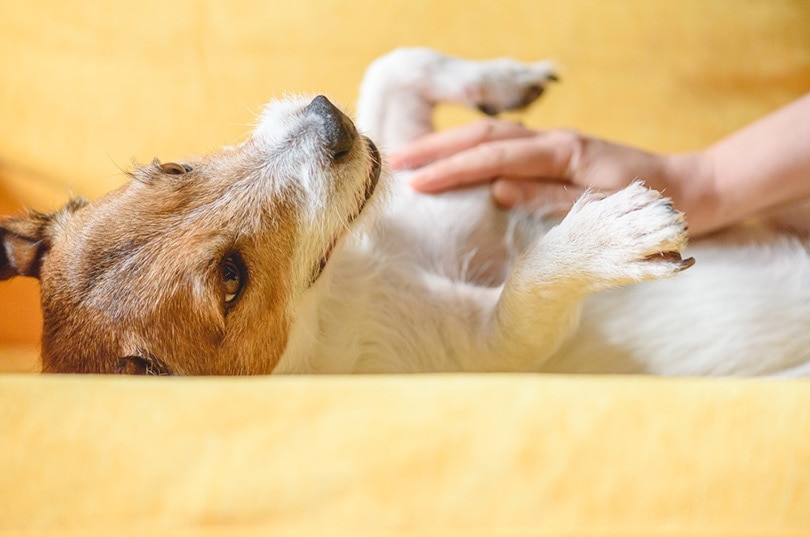
5. Gentle Stretches
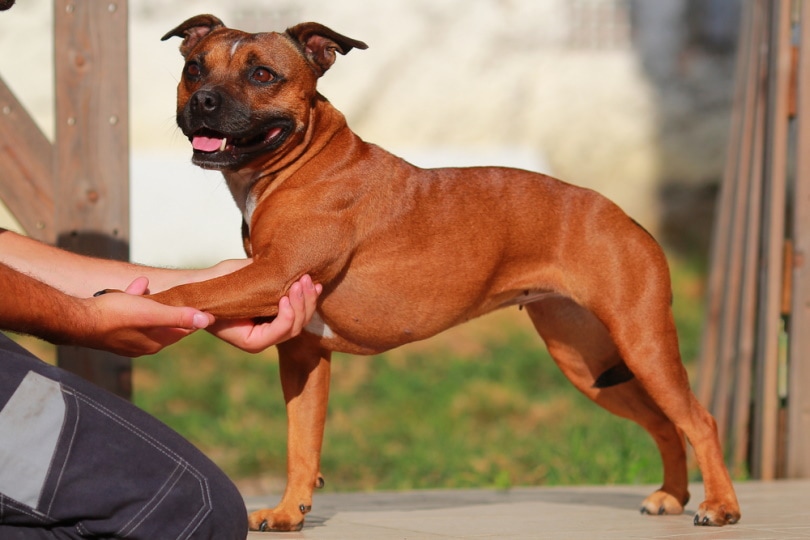
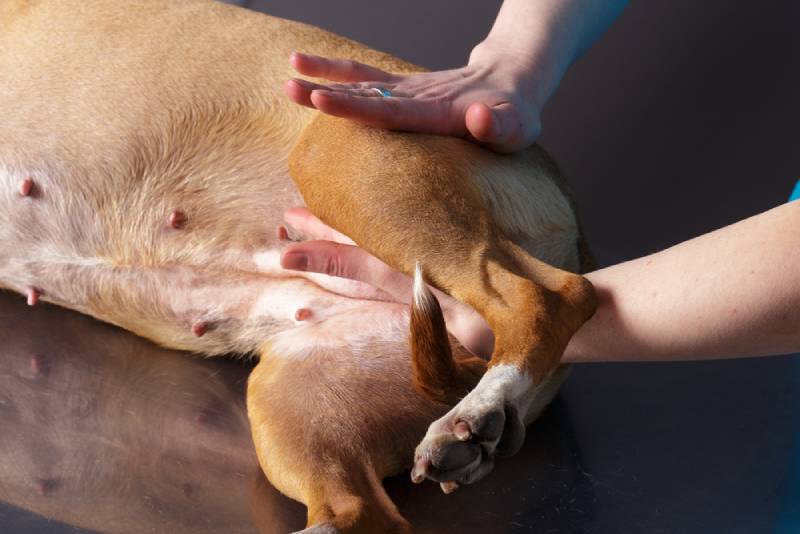
On top of massaging the muscles, move the legs back and forth to help loosen the joints. Be gentle, as your dog will likely be stiff. Always watch your dog’s body language when stretching, as you do not want to over-extended any of their limbs.
Don’t force stretch your dog if they show discomfort, but a little stretching can go a long way.
6. Always be Positive
Be sure to praise your dog and give a few treats during the session. You want your canine to be happy about being massaged—not look at the experience as stressful. Therefore, you should praise your dog regularly and keep the experience positive. You want it to be something they look forward to.
Furthermore, you may want to work with some simple petting in the session. You don’t want to scare your dog by suddenly jumping into massaging. Instead, work up to it slowly. Start with some petting and then move into the massage portion.
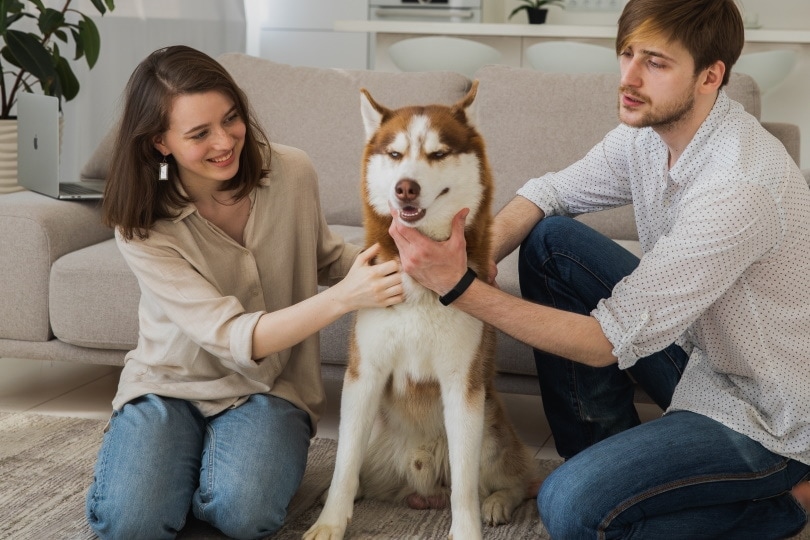
7. Don’t Overwork One Area
We recommend not overworking one area, as this can lead to soreness and pain. Continuously move your hand as you massage your dog, spending only a few moments on each spot. If your dog resists or doesn’t seem comfortable, avoid the area. Some muscles may just be too sore to massage well.
Alternate between kneading and stroking to prevent overworking, too. You’ll want to be gentle on smaller muscle groups and apply more pressure on larger ones. Treating the smaller muscles like larger ones can make them sore, so be sure to be gentle.
8. Ask Your Vet for Tips
Your vet likely knows where your dog’s joints are aching and how massage may be helpful. Therefore, they can provide specific tips for where and how to massage your dog. They may even be able to show you a basic massage to help make your dog feel better.
Not all vets are informed about this alternative pain management technique, though. You can still use this technique even if your vet isn’t familiar with it.
Of course, if your vet doesn’t recommend massage for one reason or another, it is often best to listen to them. Some dogs simply don’t do well with massage.

9. Don’t Perform Deep Tissue Massage
Deep tissue massage can help with your dog’s pain. However, it should only be performed by a professional. If you think your dog may benefit from this massage, we highly recommend getting a professional to perform it. It just isn’t safe to perform this type of massage yourself.
Conclusion
Massaging your dog can help prevent pain caused by arthritis. However, you have to do it carefully and gently. Do not push on the joints directly, or you could injure them further. Instead, you should focus on the tense muscle groups around the joints. Only use light strokes—deep tissue massage can be dangerous if you aren’t a professional.
Ask your vet for specific tips on massaging your dog as they may know the best place to focus your efforts. Massage does not take the place of medication. Therefore, even if you utilize massage as part of your dog’s treatment plan, they’ll likely need other treatments.
Sources
Featured Image Credit By: Burdun Iliya, Shutterstock
Get Hepper In Your Inbox


Pet care tips from our vets and experts, straight to your inbox.
You may opt-out at any time. View our Privacy Policy for more information.
Kristin is passionate about helping pet parents create a fulfilling life with their pets by informing them on the latest scientific research and helping them choose the best products for their pets. She currently resides in Tennessee with four dogs, three cats, two fish, and a lizard, though she has dreams of owning chickens one-day!
Join the conversation
Ask a question, share your story, or send private feedback.