Hepper is reader-supported. When you buy via links on our site, we may earn an affiliate commission at no cost to you. Learn more.
How to Potty Train a Poodle: 7 Vet-Reviewed Tips & Tricks


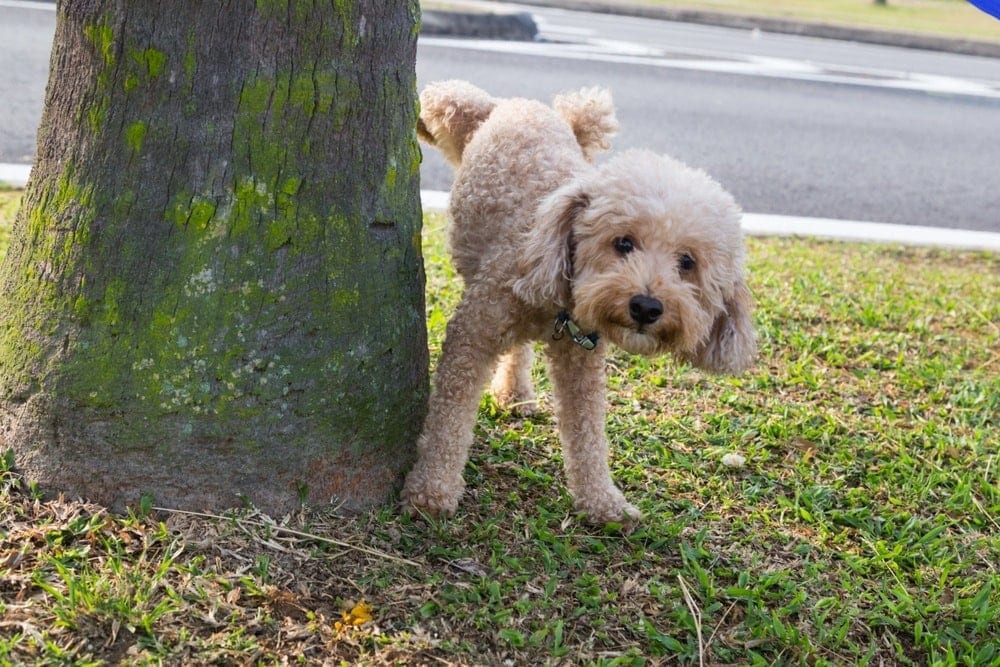
Bringing home a new poodle, whether an adult or a puppy, is an exciting and life-changing adventure. You’ll have many years together, so don’t let your excitement about bringing home a new pet overshadow the need for training.
If you’re a first-time dog owner, you need to commit to a strict training schedule, as the early days of your venture into puppy parenthood are critical in developing healthy habits and behaviors. One of the most arduous and time-consuming tasks you’ll need to commit yourself to is potty training your new poodle.
Potty training is a long process that requires patience and commitment. The key to successfully housebreaking your new puppy is positive reinforcement and consistency. With a little help from your friends here at Hepper, your poodle can be fully potty trained in just a few months.
Keep reading to find our tips on how to make the potty training process as easy as possible for both you and your pooch.

The 7 Tips on How to Potty Train a Poodle
1. Take Your Puppy Outside Often
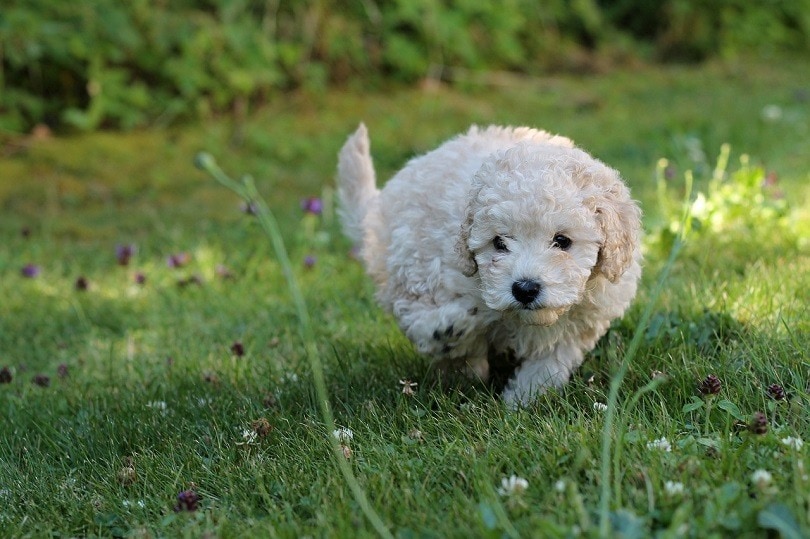
Young puppies, especially those under three months, should go outside to pee every one or two hours. Before 12 weeks, puppies are still developing the muscles they need to hold their urine and feces. After your poodle reaches 3 months of age, you can increase the intervals to the same number of hours as their age in months. You should also take it outside after naps, play sessions, meals, and even after they’ve finished drinking.
2. Establish a Designated Zone
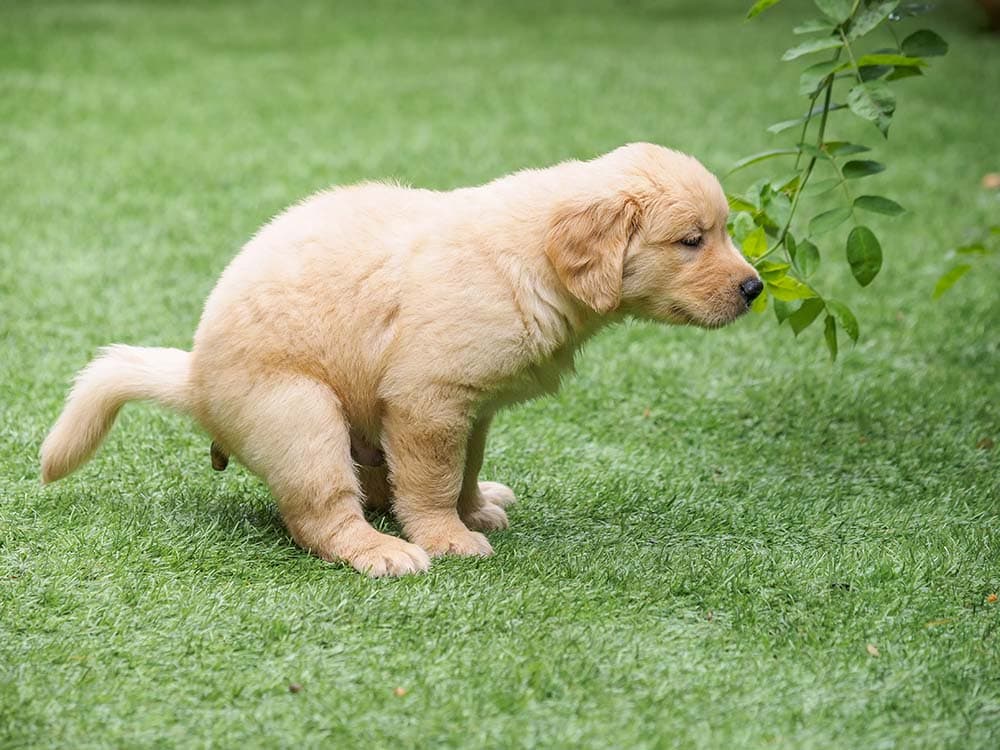
Puppies taken outside to eliminate their bladder or bowels don’t understand what you expect them to do. If you leave them outside long enough, though, they may pee or poop, but that simply could be because they had to go and not because they understand why you’ve taken them outside in the first place.
Your goal for potty training should be to go above and beyond by instilling in them the importance of eliminating in a designated area.
Choose somewhere in your yard where your pup can feel safe and somewhere that will be accessible in all seasons. The corner of your lot by the fence might be okay in the summer, but will your poodle want to wade through the snow to get there in the winter?
Take them to the same spot every time you take them outside to go potty. Over time, it will start recognizing its scent in the area, telling them that it’s their territory and where it needs to be eliminated.
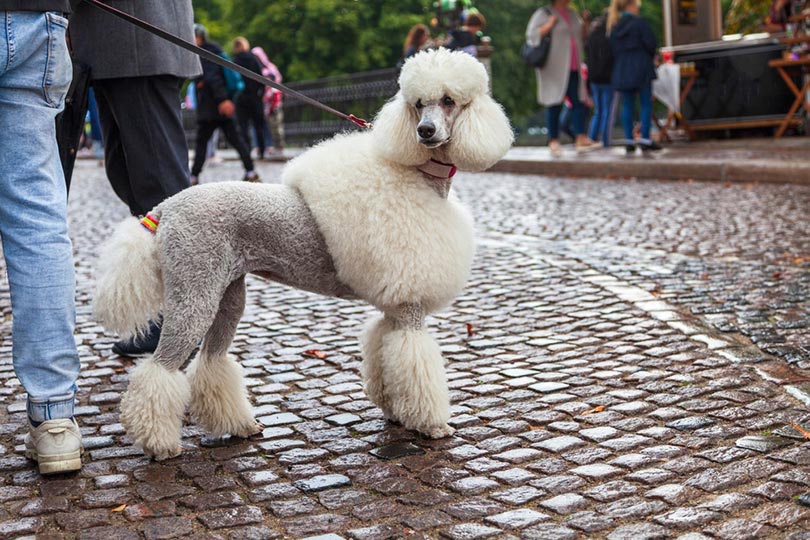
Put your dog on a leash whenever you take them outside to the bathroom. This will not only help your poodle become comfortable with its leash, but it ensures you’ll be close by to reward it for staying close by, not pulling its leash, and going to the bathroom.
3. Get Into Routine
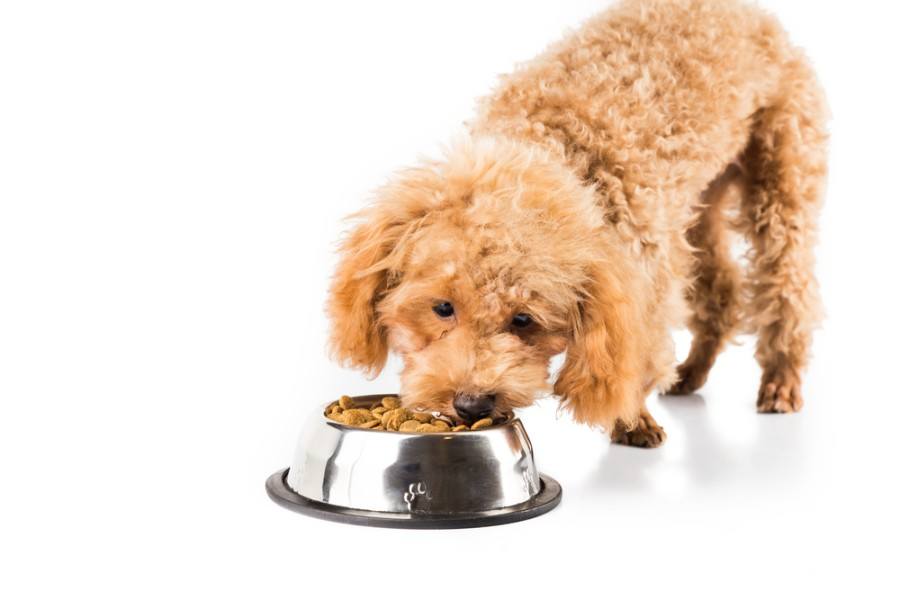
Set a feeding schedule for your puppy and stick to it. Dogs have immature digestive systems, so they can’t handle a lot of food at once. Depending on your pup’s age, it may need to be fed as often as four times a day. Dogs naturally need to eliminate after they’ve eaten a meal, so having a consistent feeding schedule can help you know when your dog will need to poop and prevent accidents in the house.
If you need help with training your dog, we suggest speaking to an online vet for tips and tricks.
4. Reward, Never Punish
Praise and rewards go a long way with any animal. While praise and words of encouragement are rewards themselves, treats are one of the best training tools you should have in your potty training arsenal.
When your poodle is eliminated in the appropriate place, offer praise and a reward immediately. You can also begin implementing clicker training at this point by marking the positive action (urination or defecation) with a click and then a treat.
Do not offer the treat too soon, or this will distract from the positive action you’re trying to reinforce. On the other hand, if you give the reward too late, your dog won’t associate the treat with its good behavior.
Punishment is never an acceptable training method. Outdated techniques recommend hitting your dog with a newspaper, raising your voice at them and telling them how bad they are, or rubbing their face in their urine or defecation. Dogs do not associate these harmful behaviors with doing something wrong. All punishment does is teach your puppy to be afraid of you.
5. Clean Up Accidents Properly
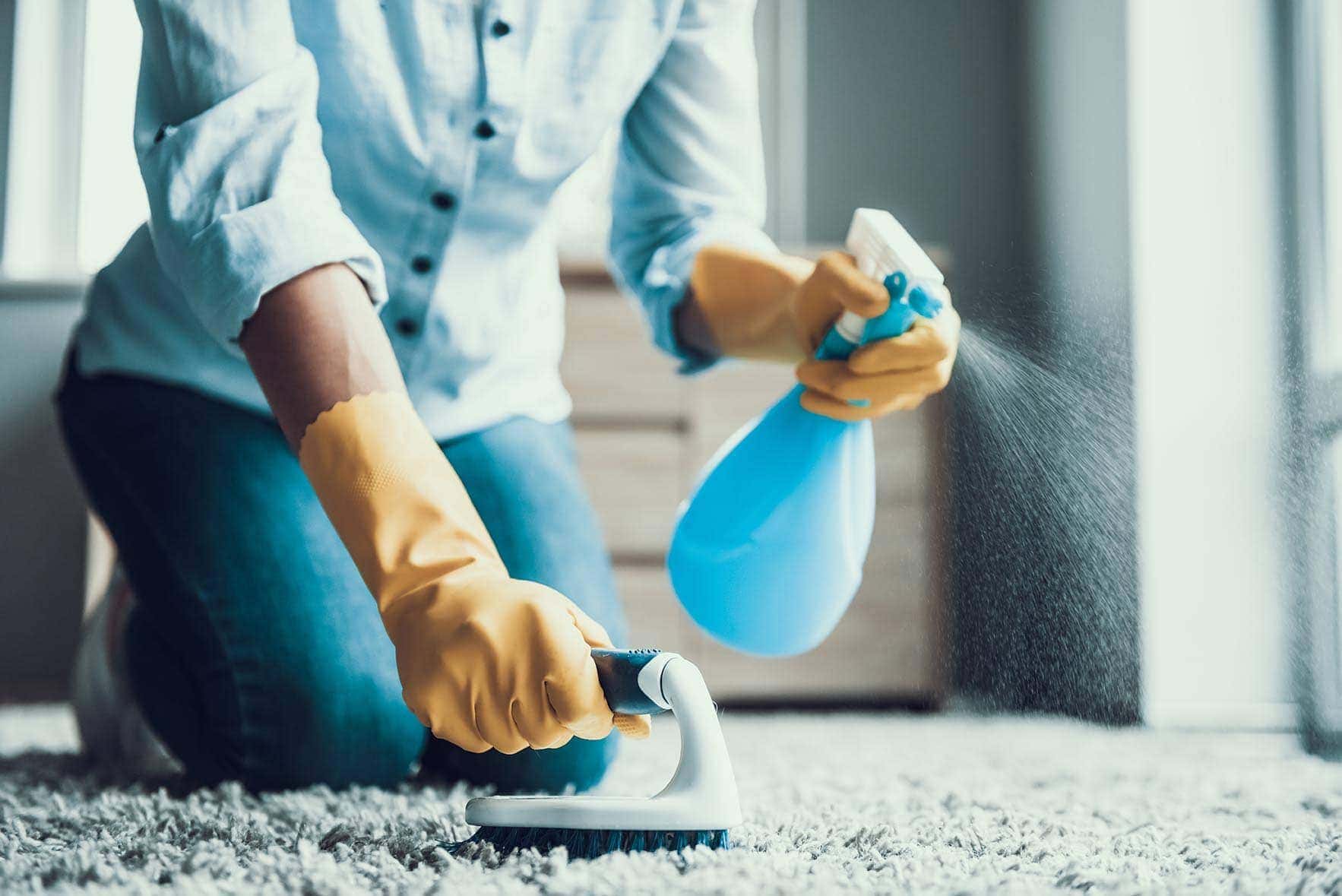
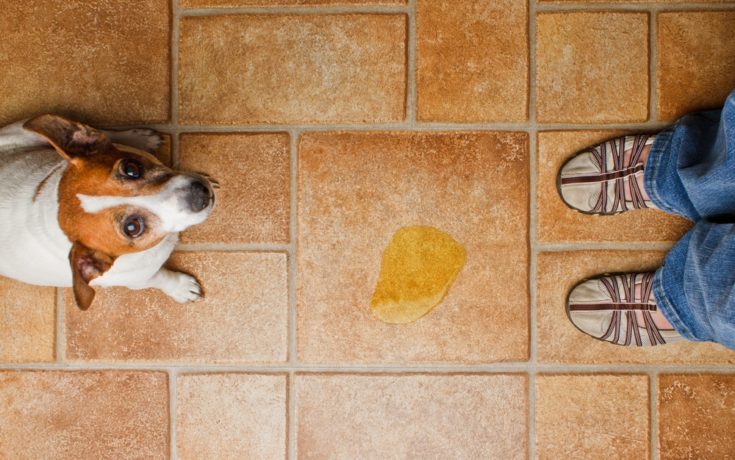
Though you may have removed the urine puddle or poop stain from your carpet with a thorough scrubbing, this isn’t enough. Scrubbing alone won’t remove the smell of your dog’s urine or feces. You may not be able to smell the remains with your human nose, but you can best bet your pup can. Every time it smells the lingering odors from a previous accident, your pup hears, “This is the bathroom spot!”
All accidents need to be cleaned with an enzymatic cleaner. These can be purchased from any pet store and will be your best friend as you wade through the challenges that potty training a puppy can present. You can even try creating your own at home with ingredients you probably already have on hand, like white vinegar and baking soda.
Our top pick for cleaning up pet messes is the Hepper Advanced Bio-Enzyme Pet Stain & Odor Eliminator Spray.
Yes, it’s our product, but we love it so much, we have to share! Not only does it permanently remove the very worst smells and stains (yes, everything you can imagine!), but we offer a 100% satisfaction guarantee!

- ADVANCED ENZYMATIC CLEANER - Penetrates the most stubborn smells and stains at the deepest molecular levels to dissolve any pet mess you encounter and lift it away at the source.
- FOR ANY MESS, ON ANY SURFACE - This pet odor eliminator cleans your carpets, floors, furniture, fabrics, and more. Whether it's urine, feces, vomit, or drool, you can erase all foul spots and smells!
- FRESH, NATURAL ODOR - Our unique formulation doesn't rely on dangerous or unpleasant chemical fragrances to get the job done. We eradicate smells and stains, not just cover them up.
6. Approach Potty Pads Carefully
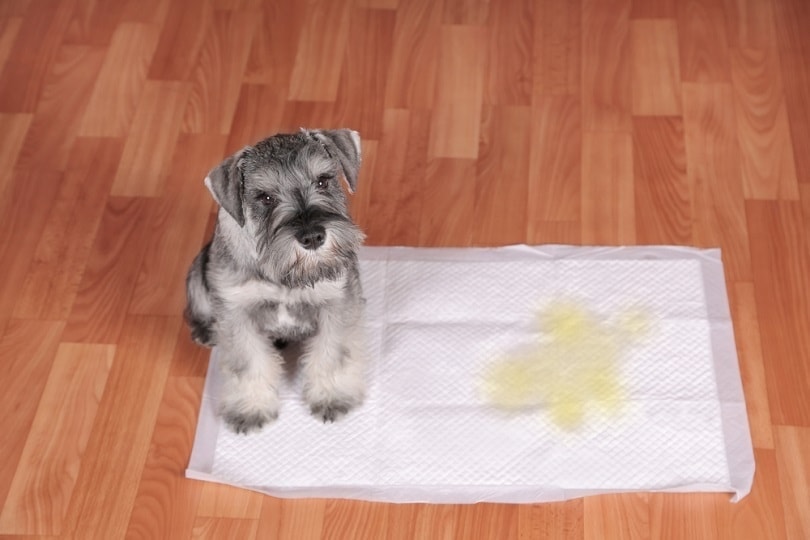
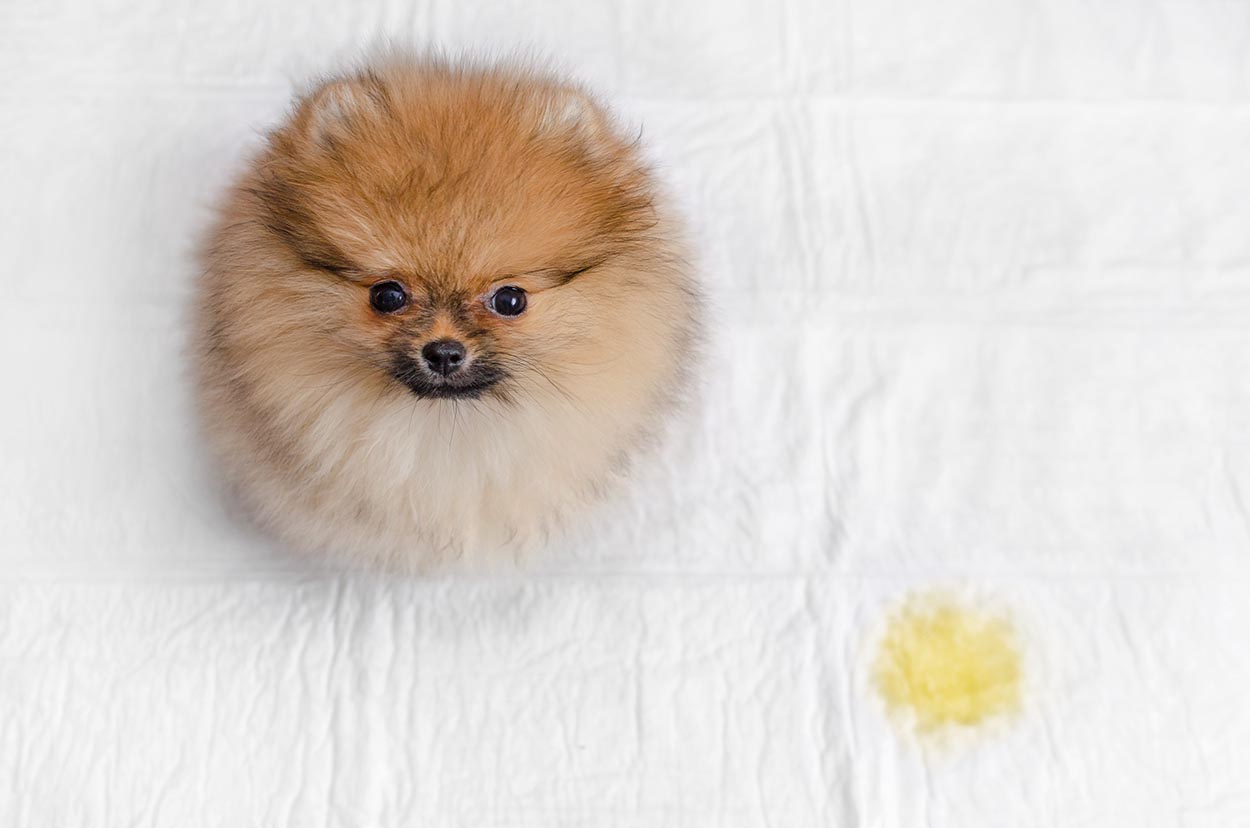
Potty pads can be a useful potty training tool in some situations. However, you shouldn’t use them as a substitute for eliminating outside unless you live in a building where going out is not easily accessible such as a high-rise apartment, or if you have limited mobility. Allowing your puppy to use a potty pad inside your home can confuse where it is appropriate to eliminate, dragging out the potty training process.
If you must use potty pads, designate one area of your home where your puppy can relieve itself and put the pads there. You might put down several pads at first but then begin to reduce the number you lie down as your puppy gets used to this area being their spot to eliminate. Make sure you take them to the potty pads often to help them connect the dots that they are to be used for peeing and pooping.
7. Constant Supervision
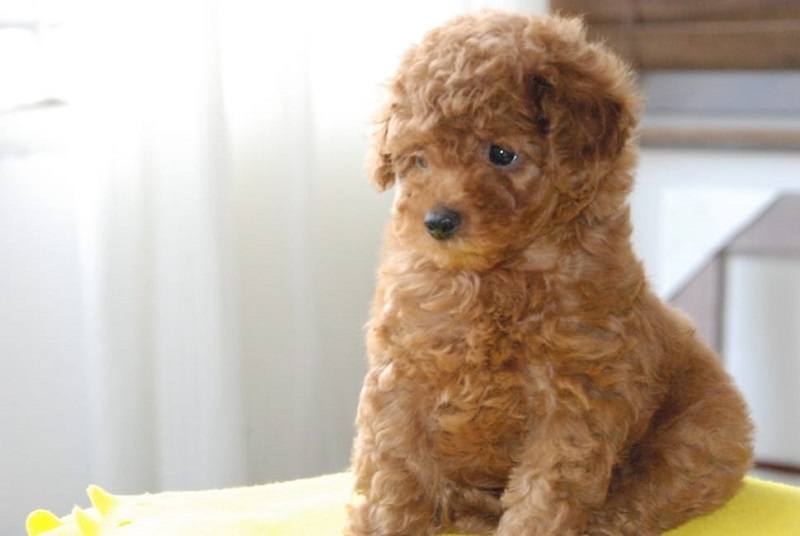
Constant supervision is one of the essential parts of successful potty training. Some dogs will be able to hold it longer than others, and some will need to go to the bathroom whenever they play or get too excited. With time you’ll learn the cues that indicate your dog needs to go to the bathroom so you can prevent unnecessary accidents in your home.
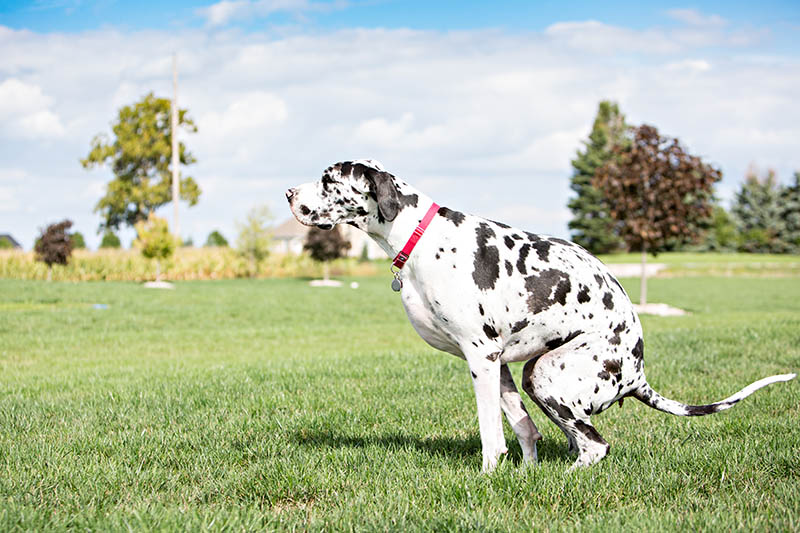
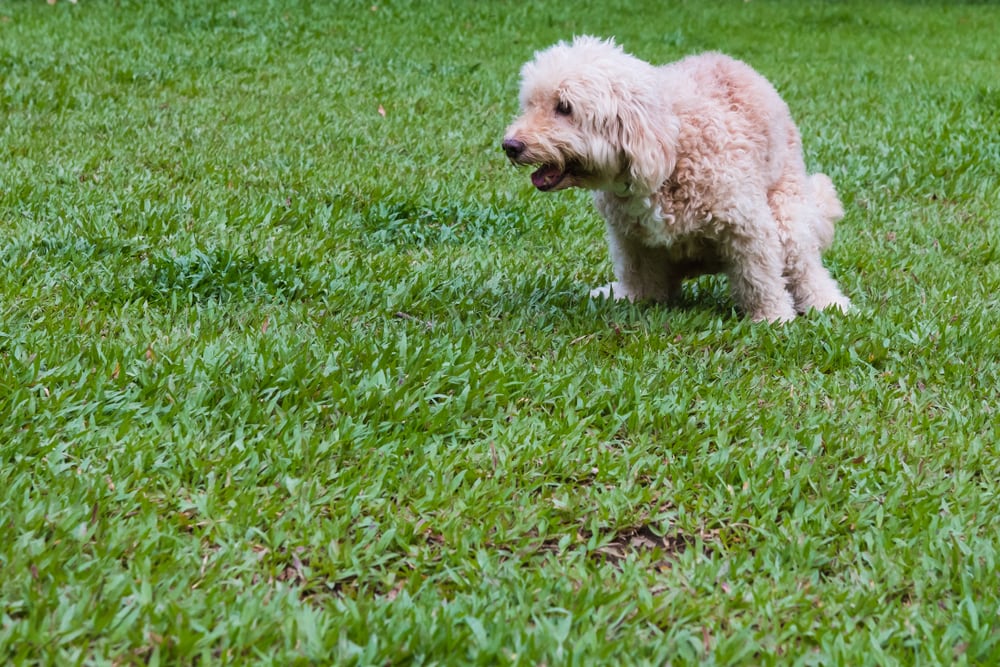
The most common signs your dog needs to pee or poop include:
Crate Training to Potty Train a Puppy
Crate training can be useful for house training a puppy or adult dog, at least in the short term. It allows you to watch them for signs they need to go potty and teach them to hold it until you’ve opened the crate and let them outside. In addition, dogs generally do not like to eliminate where they sleep or eat, so training your pup to be comfortable in a crate is a fantastic way to prevent accidents in the house.
Do not use the crate as a punishment, as it should be used whenever your dog cannot be directly supervised and for naps and bedtime.
Choose a crate size that works for your poodle. Your dog should have just enough room to stand, turn around, and lay down. If the crate is too big, it gives your dog space for peeing in one corner and eating or sleeping in the other.
How Long Does It Take to Potty Train a Poodle?
Two factors will affect how long it takes your puppy to become potty trained: the age and mental maturity of your poodle and the amount of time you’re willing to spend creating a consistent schedule for training.
It typically takes four to six months for a puppy to be fully house-trained. However, some less enthusiastic pups may take up to a year.
The age and size of your puppy can influence the speed at which it can be potty trained. For example, young poodle puppies need to relieve themselves more often, even as often as once an hour. Smaller breeds, like toy poodles, have smaller bladders and faster metabolisms which may equal more frequent trips outside.
Another factor that can influence your pup’s willingness to be potty trained is the living conditions it’s coming from. You may find you need to break your dog of bad habits before you can establish more desirable ones.
What If My Poodle Isn’t a Puppy?
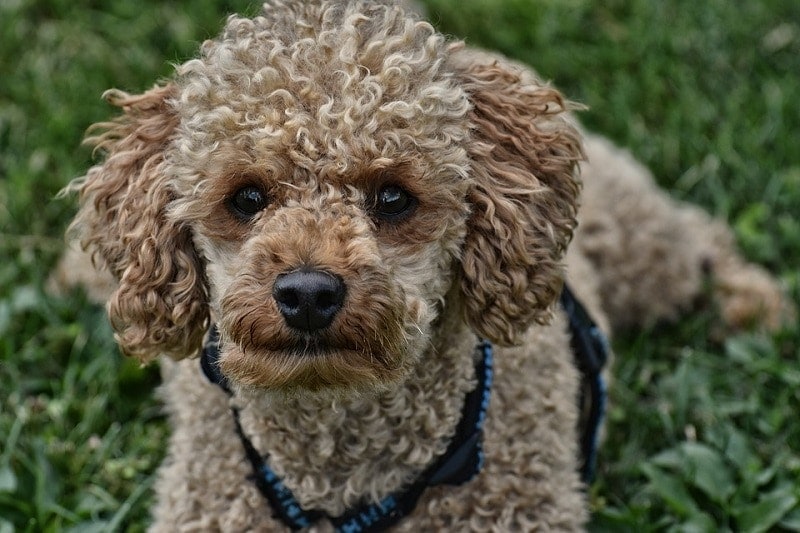
Sometimes adult dogs need help with potty training, so don’t feel bad if your adult poodle needs some help with house training.
As with puppies, your adult dog will need a firm routine to get into the swing of things. Serve its meals at a predictable time every day and take it out to pee at specific times such as first thing in the morning, after meals, several times throughout the day, and before bed.
Don’t free feed your dog as you won’t be able to monitor when it’s time to take it outside to go. Stay with them when you go outside so you can keep an eye on them and see if they’ve eliminated. If it hasn’t peed or pooped, bring it back inside in its crate for 10 minutes before trying to go outside again. If you avoid letting it loose in the house after an unsuccessful pee attempt, you may find an unexpected surprise on your floor later.
And, as with all types of training, offer lots of praise and rewards for a job well done.
Conclusion
Potty training is a complicated and multifaceted process that requires a lot of time and patience. However, your poodle can be potty trained within a few months with a good plan, lots of enthusiasm, and tasty treats on hand. Remember, accidents will happen during potty training but never scold or punish your dog for something out of control.
Sources
Featured Image Credit: ThamKC, Shutterstock
Get Hepper In Your Inbox


Pet care tips from our vets and experts, straight to your inbox.
You may opt-out at any time. View our Privacy Policy for more information.
Chantelle's life revolves around two passions: writing and animals. Raised on the prairies of Canada amidst a menagerie of pets, she now lives with five cats, two guinea pigs, and a bearded dragon. Together with her husband and child, Chantelle delights in being an exemplary animal parent, going as far as installing wall-mounted cat shelves to give their cats an indoor playground. When she's not cozying up with her cats or snapping their amusing antics, she enjoys venturing into the Rocky Mountains, binge-watching her favorite Netflix shows, and indulging in spontaneous reading adventures.
Join the conversation
Ask a question, share your story, or send private feedback.