Hepper is reader-supported. When you buy via links on our site, we may earn an affiliate commission at no cost to you. Learn more.
Is My Bearded Dragon Constipated? Our Vet Explains

In this article
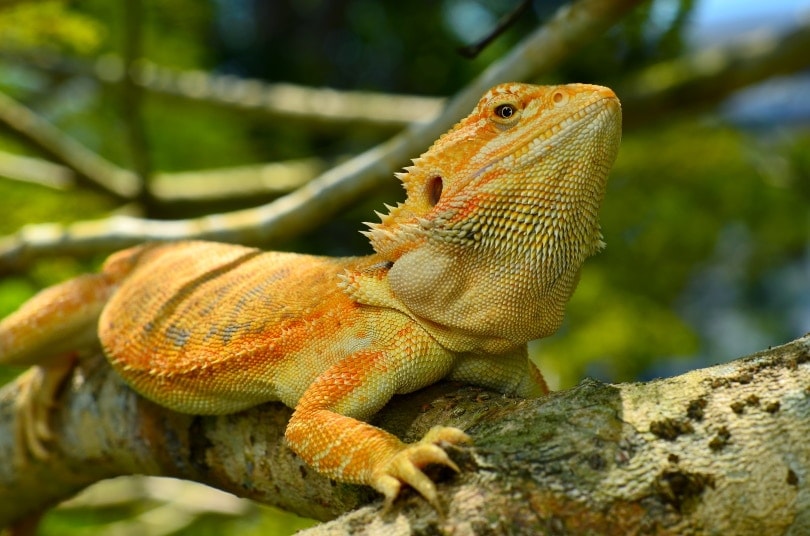
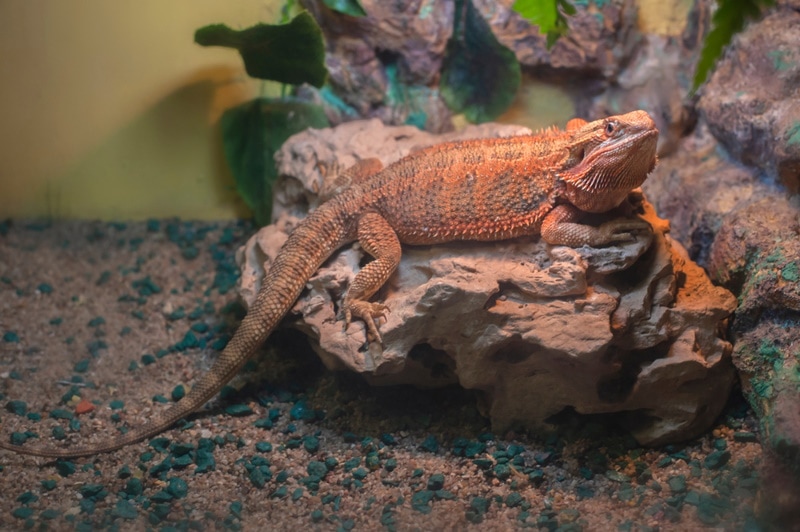
The bearded dragon, or Pogona spp. (which includes eight different species), is a friendly lizard that is easy to care for. These reptiles can reach 30–50 centimeters and live 8–12 years. Although they are robust animals, they are still prone to various health problems, just like any other pet. One of the most common problems in bearded dragons is constipation.
Constipation represents the impossibility of producing feces. It can be caused by sand ingestion, improper diet, tumors, parasites, injuries, or dehydration. A constipated bearded dragon will not produce any feces. Other signs may include refusal to eat, regurgitation, and a swollen body and cloaca.
If your bearded dragon has not had a bowel movement in 2 weeks, contact a vet.

Why Is My Bearded Dragon Constipated?
Constipation is a common condition found in bearded dragons. When these lizards are constipated, they usually consume food but do not defecate.
This condition is often caused by the fact that your bearded dragon's nutritional needs are not being met. The most common causes of constipation in beardies include the following.
Inadequate Diet and Impaction
Bearded dragons are omnivores, but they become more herbivorous as they age. You can offer them a variety of fruits (apples, peaches, blueberries, strawberries, etc.), vegetables (kale, green beans, bell peppers, etc.), insects (cockroaches, locusts, earthworms, and roaches), meat (minced beef, lean turkey, or chicken breast), and meat by-products, such as chicken heart or liver. Occasionally, you can give them worms or baby mice. In short, these small lizards need a balanced diet that contains both protein and fiber for a healthy digestive system.
Bearded dragons can have different food preferences, so don't hesitate to offer them many different foods, as this will enable them to have the necessary intake of vitamins and nutrients.
For example, if you feed your beardie too many mealworms, it can lead to intestinal blockage (impaction), especially in the case of young beardies. If you have a baby bearded dragon that doesn't defecate, and you have been feeding it mealworms, they could be the cause of your lizard's constipation. To avoid this, feed the worms in moderation (as treats) and encourage your pet to consume more fiber (vegetables).
Also, if your bearded dragon lacks calcium in its diet, it could start consuming the substrate, which can lead to intestinal obstruction. Make sure your pet is receiving all the necessary minerals so you don't find yourself in a situation where your beardie starts to consume its substrate.
If you suspect that your beardie is suffering from intestinal obstruction, contact your veterinarian immediately, as it can endanger its health and ultimately, lead to death.
Dehydration
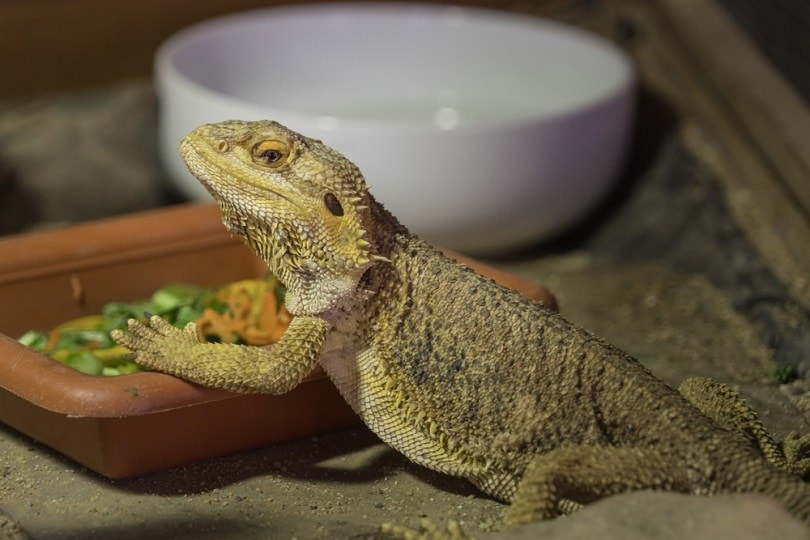
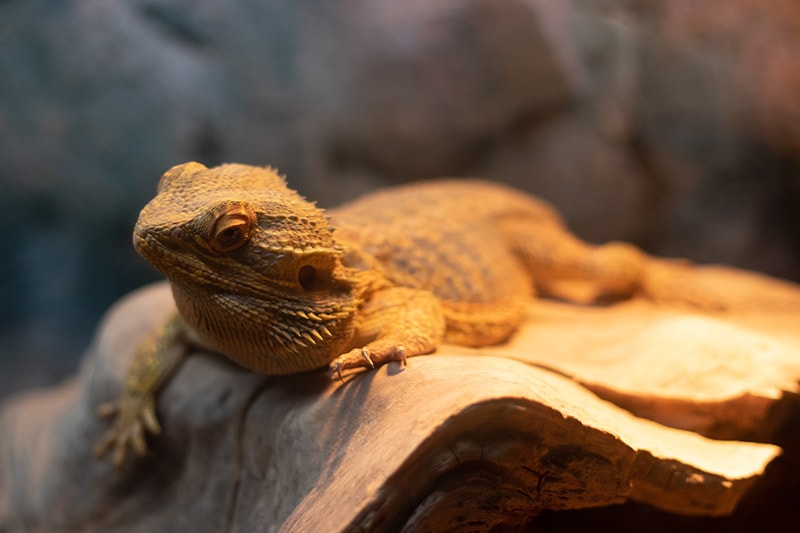
Even though they are desert animals, bearded dragons constantly need access to fresh water. Place a bowl with a small amount of water in their enclosure. The depth of the water should be minimal to prevent the danger of drowning.
If they do not consume water, they will become dehydrated. The intestines will absorb the water from the feces, hardening them. As a result, it will be difficult for your beardie to defecate.
Signs of dehydration in bearded dragons include:
To determine whether your beardie is hydrated, you can gently pull your pet's skin and then let go. If your pet’s skin immediately returns to its normal state, your beardie is most likely not dehydrated. Conversely, if the skin returns slowly, it means your pet may be dehydrated. If it is dehydrated, it is vital to make it drink. Contact the veterinarian if your pet's condition is severe.
What Are the Clinical Signs of Constipation in Bearded Dragons?
If your bearded dragon hasn't had a bowel movement in approximately 2 weeks, you can say that it is constipated. Besides the fact that it will not produce any feces, other clinical signs of constipation in bearded dragons include:
How Can You Help Your Bearded Dragon If It Is Constipated?
If your beardie is constipated, here's what you can do to help it.
Warm Baths
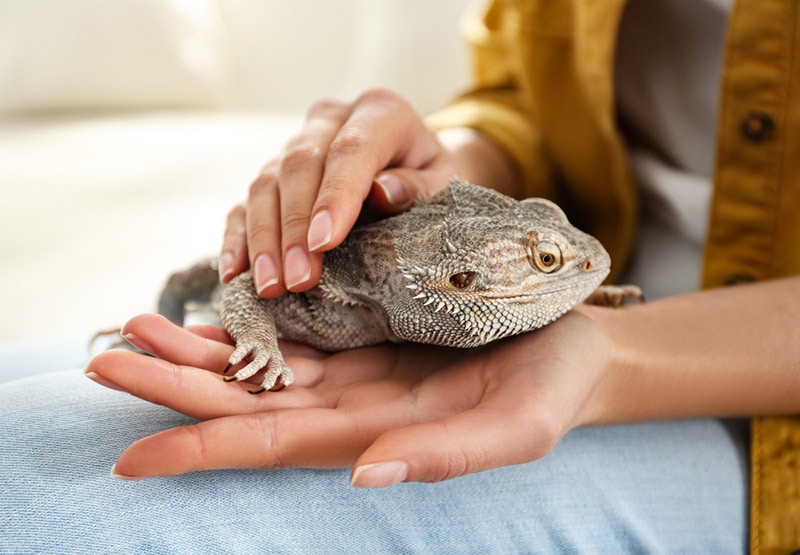
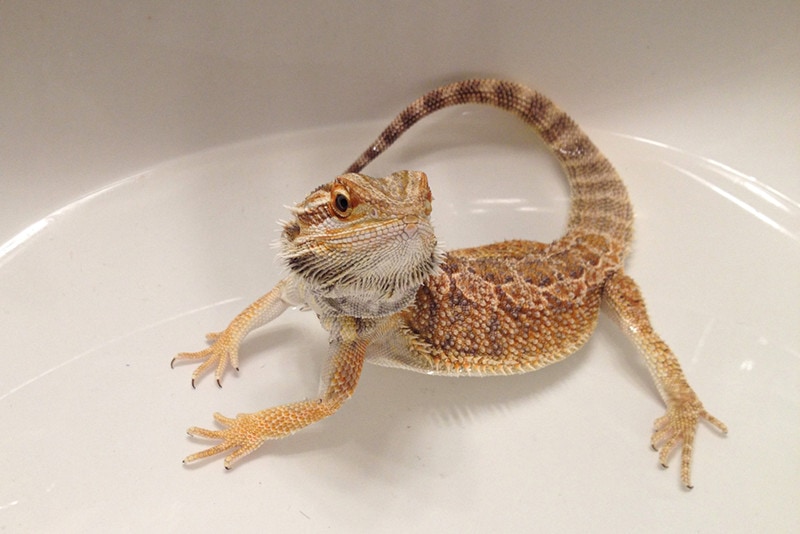
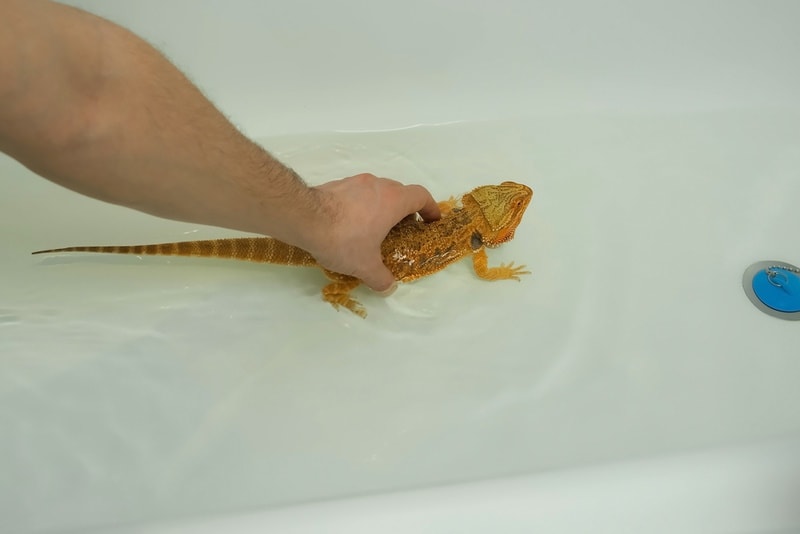
Bathing your beardie can relieve constipation and help keep it hydrated. Give your pet a bath with warm water twice a week. Fill a container with water up to your beardie's shoulders, and let it sit in the water for 15 minutes. You can also give your beardie a gentle belly massage.
Bathing with warm water does not cure constipation, and your beardie must not be left unattended during the bath to avoid drowning. If the warm water does not improve the condition of your pet, contact the veterinarian.
Olive Oil-Dipped Bugs
Another method by which you can improve your beardie's constipation is to dip bugs in olive oil. Olive oil will help lubricate the feces that are blocked in the intestine, which can facilitate their evacuation.
You can also mix two to three drops of olive oil with a small amount of water and give this to your pet with a syringe. If you do not notice any improvement, contact your veterinarian.
Natural Laxatives
There are several natural laxatives for bearded dragons, such as:
Fiber-rich fruits can help your dragon with constipation.
Vet Visit
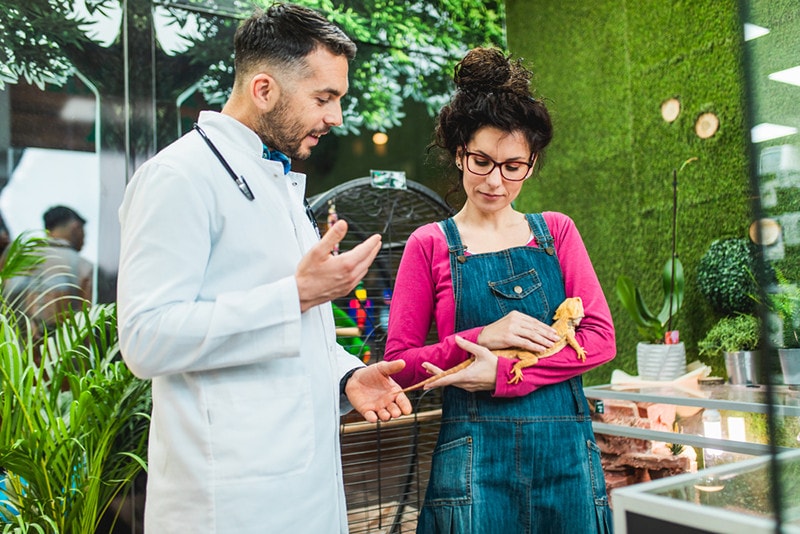
If none of these methods work, it's time to contact the veterinarian. They can combine bathing in warm water with injectable treatment, laxatives, enemas, and/or subcutaneous or intravenous fluids for rehydration.
How Often Should Bearded Dragons Defecate?
As with other pets, the frequency at which bearded dragons defecate varies according to their age (metabolism) and the type of food they eat. The older they are, the slower their metabolism is, and the younger they are, the more active their metabolism is. So, as a bearded dragon ages, its metabolism slows down.
Bearded dragons will generally defecate according to their age as follows:
Another factor that influences how often bearded dragons defecate is the food they eat. As a result, if your beardie eats a diet rich in silkworms or butter worms (which contain high concentrations of calcium and other nutrients), it will defecate more often than a pet that does not have these things in its diet.
How to Tell the Age of Your Bearded Dragon
If you want to make sure you’re feeding your bearded dragon appropriately, but you don't know how old your pet is, you can measure it from head to tail to estimate its age. For example:
These measurements are not exact and may differ depending on the breed of your bearded dragon. Some breeds will reach their maximum size of 24 inches, while others will measure 18 inches in length. Small breeds of bearded dragons will grow up to 12 inches, and the smallest breed up to 6–7 inches.
Conclusion
Depending on the age of your bearded dragon, it can defecate one to three times a day to once a week or every 2 weeks. If your bearded dragon hasn't defecated in about 2 weeks, you can say that it is constipated.
Clinical signs of constipation in beardies, besides the absence of feces, include bloating, refusal of food, regurgitation, swollen body, lethargy, and pallor. In more severe cases, bearded dragons can develop walking problems with their hind legs. To relieve constipation, you can give your pet warm baths twice a week, massage its belly, give it olive oil, or give it natural laxatives. If none of these methods work and your dragon's signs do not improve, contact the veterinarian.
Featured Image Credit: hedgehog94, Shutterstock
Get Hepper In Your Inbox


Pet care tips from our vets and experts, straight to your inbox.
You may opt-out at any time. View our Privacy Policy for more information.
Iulia Mihai is a veterinarian with more than 13 years of experience in pet pathology, laboratory, and cancer. She studied at the University of Agronomical Sciences and Veterinary Medicine of Bucharest, Romania Iulia earned a master’s degree in equine and pet pathology and studied epithelial cancer for her Ph.D. Dr. Mihai's passions for internal medicine and parasitology inspired her to volunteer at the faculty’s clinic in her third year of college. She has worked in a couple of veterinary clinics over the years as an internal medicine specialist, and loves to write and educate pet parents about pet nutrition, behavior, and diseases.
Iulia is a passionate veterinarian with a strong affinity for veterinary parasitology, internal medicine, and laboratory. She is excited to share her experience and knowledge with pet owners around the world through her writing and hopes to educate people on pet nutrition, diseases, and behavior.
Education
Iulia graduated from the University of Agronomical Sciences and Veterinary Medicine, Bucharest, Romania, in 2012 and has a Master’s degree in Small Animals and Equines Pathology and is certified in HAACP food safety system implementation. Iulia started her Ph.D. in epithelial cancer in dogs and cats in 2013. Her research is published in national and international veterinary journals.
Experience
Dr. Iulia has been a veterinarian for more than 14 years. She is experienced in animal pathology and laboratory and has experience with exotic animals, such as pet rats and ferrets. She also has skills in the field of clinical pathology, laboratory, microscopy, cancer, and imaging.
Join the conversation
Ask a question, share your story, or send private feedback.