Hepper is reader-supported. When you buy via links on our site, we may earn an affiliate commission at no cost to you. Learn more.
What Does Bearded Dragon Poop Look Like? Vet-Approved Facts


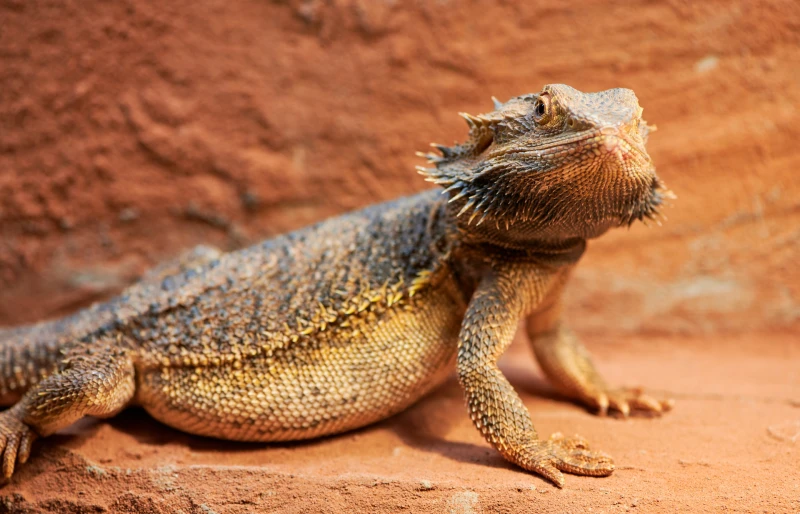
Thanks to their dramatic appearance and easygoing nature, bearded dragons are the most popular reptile pets in the world. Caring for them might be unfamiliar if you’re used to cats and dogs, however. They don’t eat as much, for one, and their poop can look strange too, as bearded dragon poop is usually pelleted and brown with white urates on either side of the poop.
Though the idea of inspecting your bearded dragon’s poop might seem bizarre, it’s a great way to keep track of their health and something all bearded dragon owners should do. In this article, we will describe what normal bearded dragon poop looks like.
We’ll also look at reasons your bearded dragon’s poop might be appearing abnormal, and what you should do if their poop appears abnormal.

Normal Bearded Dragon Poop
Normal bearded dragon poop is brown in color and pelleted. It should not be runny, should hold its form when passed, and shouldn’t appear like it’s covered in mucous.
Bearded dragons lack a urinary bladder and therefore usually pass urates with their feces, along with some liquid. The urates are white in color. These urates are usually seen either on the side or end of the poop. However, they should not be mixed with the poop itself. The urates should not have a foul smell. The liquid portion of their urine should be colorless.
The 10 Types of Abnormal Bearded Dragon Poop
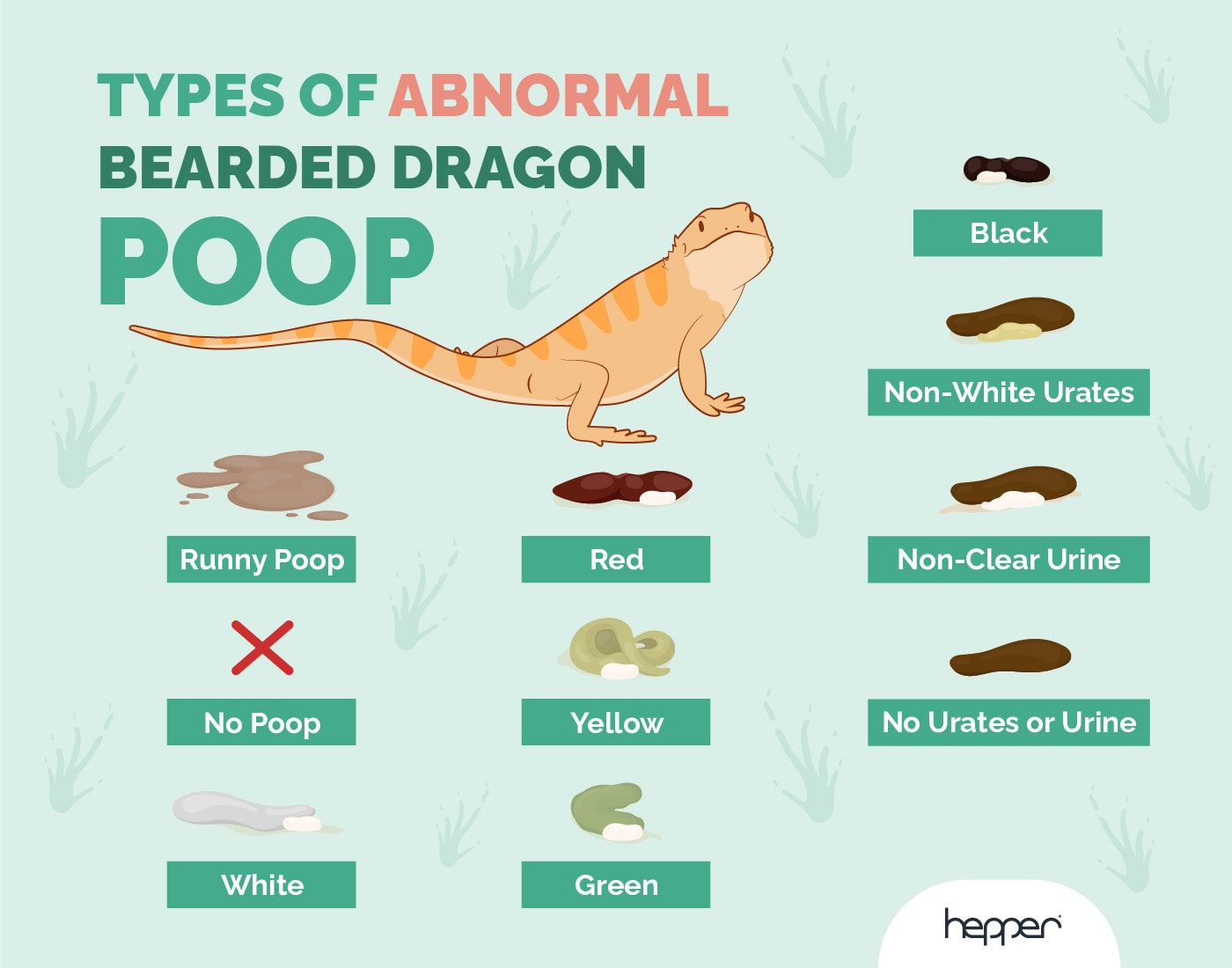
There are several problems that lead to abnormal bearded dragon poop, ranging from mild to severe. Here are some abnormal bearded dragon poop types, and reasons why the poop might be appearing as such.
1. Runny Poop
Poop that is runny and fails to hold its form after being passed is usually indicative of intestinal parasites. This is most common in juvenile bearded dragons. In healthy, parasite-free adults, runny poop might indicate a very high amount of greens in the beardie’s diet. Though adult bearded dragons are usually fed high amounts of vegetation, a sudden change in their diet might result in such episodes of runny poop.
Please be mindful that a healthy adult bearded dragon can be reinfected by parasites, even after being treated for them earlier in life. Often, parasitic infections occur after the consumption of insects that contain these parasites. In addition, runny poop as a result of parasites also has other signs:
- Mucus in your bearded dragon’s poop
- Lethargy
- Inappetence
- Weight loss
- A very foul smell is coming from the runny poop
Certain viruses that affect bearded dragons can also result in runny poop. Examples of such viruses include Adenovirus infections. However, these are more common in juveniles than in adults.
2. No Poop
The absence of poop is usually caused by one of the following:
- Constipation. Adult bearded dragons that are not brumating should poop at least once a week and are considered constipated if they fail to do so.
- Pinworms. Though rare, heavy infections of pinworms (which are found in the lower digestive tract of bearded dragons) can cause fecal impaction.
- Brumation. During brumation, bearded dragons poop less than usual and may not pass feces as they should.
- Egg-Laying issues. Females may have trouble passing feces if they have issues with egg laying (for example, egg binding). It is however, worth noting that this isn’t a common occurrence in bearded dragons
- Cloacitis. This is a broad term that refers to the inflammation of the cloaca. It is a clinical sign that is never normal but can be caused by many different diseases.
- Starvation. Failure to pass any poop might be indicative of a starved bearded dragon.
3. Chalky, White Poop
Chalky, white poop that seems is often a sign of dehydration. This requires quick intervention on your part to ensure that your bearded dragon gets the hydration they need. Bearded dragons are notorious for not wanting to drink from their water bowl.
Misting the wall of their enclosure or dipping their insects in water can encourage them to drink more.
4. Red Colored Poop
There are two reasons your bearded dragon’s poop appears red. The first is a fairly harmless effect of eating foods that are red, such as beets or certain berries (such as raspberries). At other times, it indicates injury along their digestive or urinary tract, which is causing blood to come out of their vent. In such cases, you may see other signs as well:
- A swollen vent
- Blood dribbling from your bearded dragon’s vent (even when they don’t poop).
- Restlessness
- Lethargy
- Inappetence
5. Yellow Colored Poop
In most cases, yellow-colored poop is an indication that your bearded dragon’s calcium metabolism isn’t working as it should. This can be due to one of two reasons:
- You are providing your bearded dragon with far too much calcium than their body needs.
- Your bearded dragon does not have enough access to good-quality lighting and cannot process their calcium as they should.
Both these issues can be resolved by consulting with your exotic veterinarian to determine if you’re feeding too much calcium or if your bearded dragon’s setup needs changes.
Another reason your bearded dragon’s poop might be yellow is due to liver or bile issues. This can be very difficult to spot in bearded dragons. In many species, liver issues are accompanied by yellow mucous membranes.
However, bearded dragons normally possess yellow-tinged mucous membranes, making the task of identifying a liver issue very difficult for an untrained individual.
6. Green Colored Poop
Though rare, eating a large amount of greens can sometimes result in green-colored poop. At other times, it may be an indication of digestive tract or liver issues.
7. Black Colored Poop
Black poop can be caused by a diet that’s very high in insects. However, it can also be caused by intestinal bleeding. It is best to have your bearded dragon examined by a vet if you notice black-colored poop.
8. Non-White Urates
Urates of any color other than white are often a sign of either a nutritional imbalance or other systemic issues. These scenarios require veterinary input to determine the underlying reason for the change in urate color.
9. Non-Clear Urine
The "urine" component of your dragon's poop should always be clear. The presence of any other color is indicative of a health issue (usually a problem with the kidneys or liver) that needs veterinarian input.
10. No Urates or Urine
The absence of urates or urine is a serious condition that warrants immediate veterinary intervention. As mentioned previously, bearded dragons don't have a urinary bladder. Therefore, they lack the ability to "hold" their urine or urates.
Their absence indicates either a blockage, severe dehydration, or other renal issues.
What To Do If You Observe Abnormal Poop
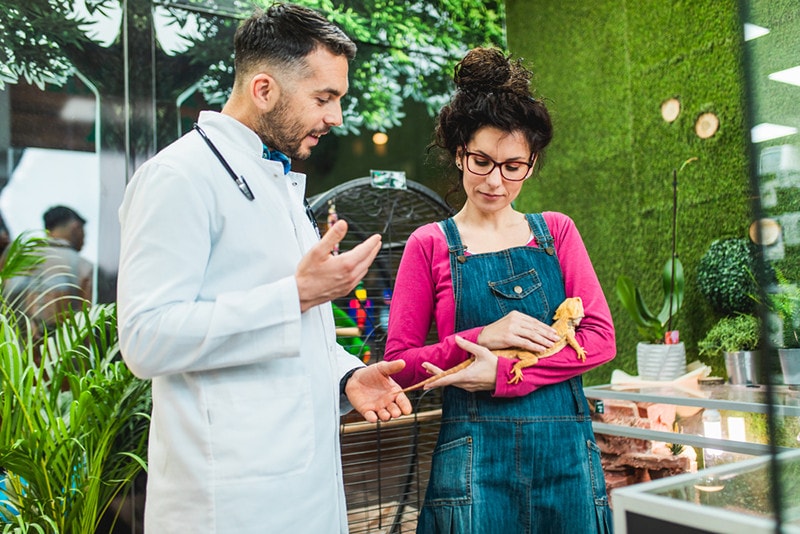
Because there are many reasons your bearded dragon’s poop may change color from a harmless diet change to an infection, it is best to consult with your veterinarian to ensure your bearded dragon is in good health.
This is especially true if you notice a change in poop color without any changes to their diet. For example, if your bearded dragon was not fed red foods but suddenly produces red-colored poop, you should have them looked at by your veterinarian promptly.
How Often Do Bearded Dragons Poop?
Bearded dragons are easy to care for, and part of it is that they hardly ever poop. A young baby beardie might poop every day, which slows down to two or three times a week at maturity. The frequency of pooping heavily depends on your beardie’s diet and metabolism. In order to assist in proper digestion, you should feed your bearded dragons in the morning. If a Bearded Dragon is undergoing brumation, they very rarely poop.
If you suspect your bearded dragon is pooping too much or not enough, you should call or trip to a vet that handles reptiles. They’ll be able to help you identify any specific problems with your lizard’s health or diet, plus screen for any relevant health conditions.
Conclusion
Bearded dragon poop can give pet owners a good indication of their health. Normal bearded dragon poop is brown, pelleted, holds form, and is passed with white-colored urates and some urine.
Changes in your bearded dragon’s poop color can be caused by many reasons ranging from a harmless dietary change to an infection that needs veterinary care. If your bearded dragon’s poop changes and they display other signs of unthriftiness, it’s best to immediately have them checked by your veterinarian.
Sources
Featured Image Credit: C. Nass, Shutterstock
Get Hepper In Your Inbox


Pet care tips from our vets and experts, straight to your inbox.
You may opt-out at any time. View our Privacy Policy for more information.
Join the conversation
Ask a question, share your story, or send private feedback.