Hepper is reader-supported. When you buy via links on our site, we may earn an affiliate commission at no cost to you. Learn more.
How Often Do Bearded Dragons Poop? Vet-Verified Facts & FAQ


In this article
Understanding your bearded dragon's waste is an important skill necessary for all beardie owners. The color, consistency, and frequency of your reptile's poop can tell you a lot about its health, so the more you know, the better you'll understand your pet's well being.
One of the most important things is how often your beardie poops. Many factors play into frequency, but most healthy adult bearded dragons poop once every 1 to 3 days. Read on to learn everything you've ever wanted to know about how often your bearded dragon should be producing waste.

Factors That Influence Bearded Dragon Poop Frequency
As mentioned above, several factors can influence the frequency of your bearded dragon's poop schedule.
Age
Most baby bearded dragons will poop once a day, and some will go more than that. This is because baby beardies need diets higher in protein to keep up with their accelerated growth rate.
Juvenile beardies typically poop once every other day. However, as they get close to the 18-month mark, they'll naturally reduce their poop frequency to around two or three times a week.
Adult beardies will poop anywhere between one to seven times a week. We realize this is a huge range, but the other factors below will also affect your fully-grown beardies' poop schedule.
Need help determining your beardie's age? One mostly accurate way to guesstimate age is to measure body size. This technique works best on younger dragons, as they're still growing. Measure your pet from the top of its head to the tip of its tail. Newborn beardies are around three inches long and will grow approximately two inches monthly until fully grown (between 18 and 24 months). Beardies younger than a month are typically between three to four inches. By the time they're six months, they'll be somewhere between 11 and 18 inches. Adult dragons will be somewhere in the 16-to-24-inch range.
Diet
The food your dragon eats will also determine how often it poops.
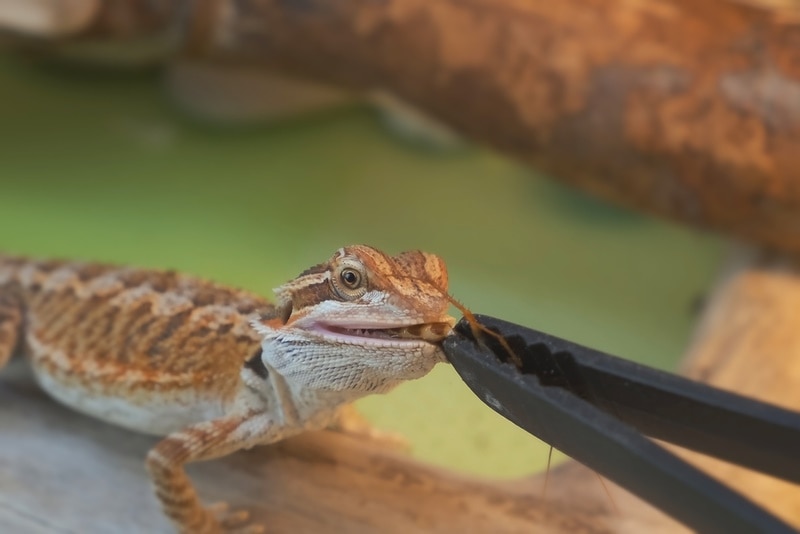
Beardies eating diets rich in calcium (e.g., staple protein sources like silkworms) may poop more than those who eat crickets predominantly. Silkworms are notorious for causing runny poops, too. This is something to remember if you're noticing changes in your beardie's poop consistency.
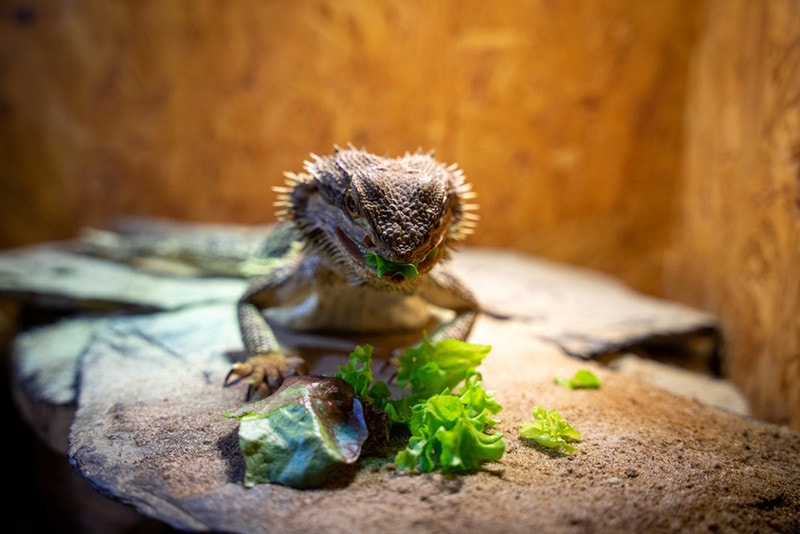
Adult beardies that eat mostly veggies will poop one to three times a week.
Conversely, if your beardie is not eating, it won't produce much poop.
Husbandry & Environment
A bearded dragon whose enclosure isn't being kept at the proper temperature or humidity levels may experience changes in its poop schedule. The same applies if your beardie isn't getting the right amount of UVB and UVA light daily. Exposure to light helps these reptiles digest their food properly. Fluctuations and inconsistencies with lighting and temperature levels can severely impact your beardie's digestive and overall health.
Even something as seemingly minor as your beardie’s tank position can cause it to eat less, thus affecting the frequency of its poops.
Mood
Beardies feeling stressed can go weeks without pooping. This is especially common in bearded dragons moving to a new environment, such as babies being transferred to their forever home for the first time. Likewise, adult beardies can have a stress response when switching to a new enclosure, even if you're moving them somewhere bigger and better.
Beardies often show other signs of stress, such as a darkened beard or dark lines on their bodies.
Brumation
Brumation is the hibernation-like state that beardies often enter. Brumating bearded dragons won't be moving or eating much during this period of reduced activity, so you shouldn't expect them to produce much waste, either.
What Does Healthy Bearded Dragon Poop Look Like?
Healthy bearded dragon poop consists of two portions: the traditional brown "log-like" poop and white or yellow urates. Poop and urates are passed together, so you should see them in the same area when your bearded dragon poops.
Once you've had your beardie for a while, you'll know what its regular poops look like. If you notice any deviations from the usual, you might need to pay closer attention to your beardie's diet, activity levels, and mood to gauge whether it was a one-off thing or if it's not feeling well.
What problems should you look out for?
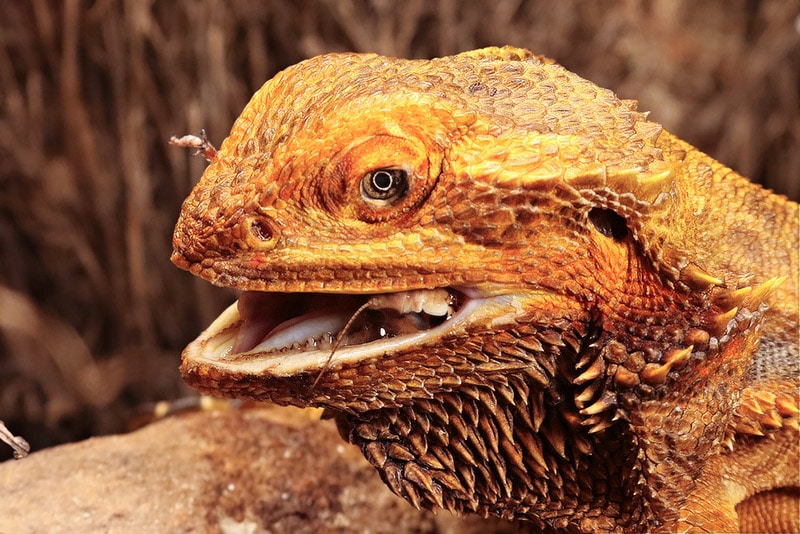
Constipation or impaction is the most common digestive problem seen in captive reptiles, and it can be deadly. There are a number of factors that can cause impaction in your beardies, most of which can be readily corrected to avoid this dangerous condition.
As we already mentioned, the frequency of beardie poops can really vary, so it is important to become familiar with your dragon's schedule, so that deviations are easily recognized. Signs that your beardie might have an impaction include:
- No poop or bloody poop
- Sunken, dull eyes
- Lack of appetite
- Lack of energy
- Trouble moving hind legs - this is a really bad sign and you should get your beardie to the vet ASAP
Things that can cause impaction include:
Final Thoughts
Poop isn't anyone's favorite topic to discuss, but it is important to familiarize yourself with it as a pet owner. Generally speaking, you should expect your baby beardie to poop at least once a day, while its adult counterparts can go several days between each elimination.
You can tell a lot about your beardie's health by the appearance and frequency of its poop. If your reptile starts pooping less or more than usual and is exhibiting out-of-character behaviors, it might warrant a call to your exotic vet to see if an illness is brewing.
Related Read: Leather-Back Bearded Dragon: Info & Pictures
Sources
Featured Image Credit: petroleum man, Shutterstock
Get Hepper In Your Inbox


Pet care tips from our vets and experts, straight to your inbox.
You may opt-out at any time. View our Privacy Policy for more information.
Chantelle's life revolves around two passions: writing and animals. Raised on the prairies of Canada amidst a menagerie of pets, she now lives with five cats, two guinea pigs, and a bearded dragon. Together with her husband and child, Chantelle delights in being an exemplary animal parent, going as far as installing wall-mounted cat shelves to give their cats an indoor playground. When she's not cozying up with her cats or snapping their amusing antics, she enjoys venturing into the Rocky Mountains, binge-watching her favorite Netflix shows, and indulging in spontaneous reading adventures.
Join the conversation
Ask a question, share your story, or send private feedback.