Hepper is reader-supported. When you buy via links on our site, we may earn an affiliate commission at no cost to you. Learn more.
Is Pancreatitis Contagious in Dogs? Vet-Approved Facts, Diagnosis & Prevention



Pancreatitis is a common disease process diagnosed in dogs. The term pancreatitis means inflammation of the pancreas. The pancreas is an organ in dogs that aids in digestion and the release of digestive enzymes. This organ is also responsible for producing insulin. When the pancreas becomes inflamed, a dog will often become nauseous, vomit, anorexic, and have abdominal pain.
Some dogs can be severely affected and have to be hospitalized while others have mild cases. If your dog is diagnosed with pancreatitis, should you be concerned about your other dog(s) at home developing pancreatitis as well? While pancreatitis is not contagious itself, the cause of pancreatitis could be. Keep reading to understand more.

What is Pancreatitis?
Pancreatitis is a common disease process in dogs that means inflammation of the pancreas. The pancreas is an organ that produces different enzymes that help aid in digestion, as well as hormones such as insulin. Because the pancreas secretes multiple enzymes that are necessary for digestion, it should be no surprise that when the pancreas becomes inflamed, other organs of the digestive system can be affected. Affected dogs will often vomit, become nauseous, anorexic, and also have diarrhea.
Inflammation of the pancreas may scar and affect the pancreatic tissue and its insulin-producing cells. Normally insulin aids in the regulation and balance of the body’s blood sugar (glucose) levels. When the pancreas cannot appropriately manage its insulin release, an affected dog may suffer from diabetes mellitus or exocrine pancreatic insufficiency.

How Will My Veterinarian Diagnose Pancreatitis?
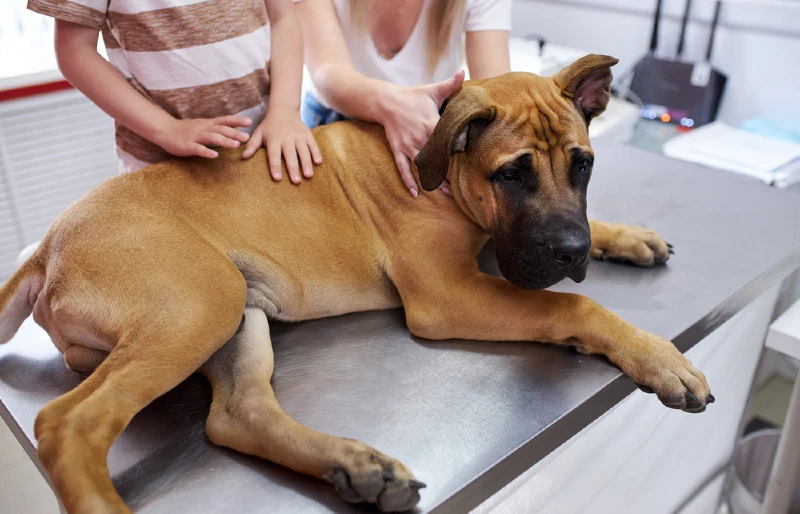
The most common clinical signs of pancreatitis are vomiting, diarrhea, anorexia, and abdominal pain. Some dogs will be severely affected and require hospitalization. Others will have mild signs and can be treated as outpatients, and at home with their owners.
Your veterinarian may do bloodwork and radiographs to make sure there is no intestinal obstruction or other cause of the abnormalities. Radiographs are not sensitive enough to visualize the pancreas. However, non-specific findings may be observed where the pancreas sits in the abdominal cavity.
There are specific blood tests that test levels of pancreatitis enzymes, to determine if they are abnormally high or not.
Because radiographs are not sensitive enough to visualize the pancreas, an abdominal ultrasound is often needed to assist in diagnosis. The combination of an abnormal pancreas on ultrasound and elevated pancreatic enzymes on bloodwork are used to make a diagnosis of pancreatitis.
Can My Other Dog(s) Catch Pancreatitis?
The short answer to this is, no. Pancreatitis is a condition specific to each individual dog. Each dog’s body and each dog’s pancreas will react differently to the same stressor or trigger. Just as some people can eat dairy with no problems, while others cannot eat dairy without becoming sick, some dogs will develop pancreatitis from a certain trigger, while others will not.
You may be thinking to yourself—“but oftentimes, when one of my dogs becomes sick, is vomiting, and has diarrhea, my other dog will then become sick a few days later. Doesn’t this mean they both have pancreatitis?”
The answer to this is, possibly. While pancreatitis is not contagious, one of the more common causes of pancreatitis is the diet so if several dogs are eating the same diet, they can develop it at the same time.

Causes
The most commonly reported cause of pancreatitis in dogs is idiopathic. In other words, there is no known cause. Unfortunately a lot of dogs will present to their veterinarians for vomiting, diarrhea, anorexia, abdominal pain, and pancreatitis, and it often cannot be traced to a specific cause.
Still, other causes can be found. Gastrointestinal parasites such as hookworms, roundworms, and giardia, can cause intestinal upset. Any cause of intestinal upset may trigger the pancreas to become inflamed. Both parasites and giardia can be spread to other dogs by ingestion of eggs or infected feces. Dogs who drink out of the same contaminated water source, eat one another’s poop, or live in the same outside space may pass infection on to one another. Therefore, when one dog becomes sick, the housemate may also develop pancreatitis from the same source.
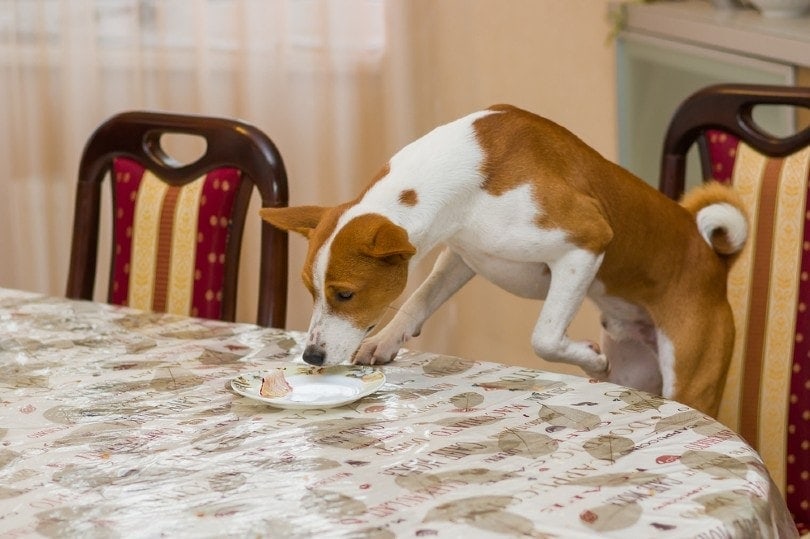
Getting into the trash, a high-fat meal, or what is referred to as “dietary indiscretion”, is thought to be another common cause of pancreatitis. Again, this cause is not contagious amongst dogs. However, if more than one dog gets into the same trash, share a human meal knocked off the counter together, or are both fed huge fatty meals at a family gathering, then each dog may independently develop pancreatitis at the same time.
Pancreatitis can also be secondary to underlying disease such as diabetes, kidney disease, IBD, and cancer. With each of these, the disease process is unique to each affected dog. Therefore, if your dog has pancreatitis because it developed on top of another condition, there is no common contagious element.
Can All Dogs Be Cured?
Unfortunately, no. There is no magic cure for pancreatitis. The treatment is supportive, which means your veterinarian will try to control your dogs’ nausea, vomiting, inflammation, and dehydration, and help their appetite. If your dog has pancreatitis secondary to kidney disease, diabetes, etc., then your veterinarian will also need to aim medications at treating those causes.
Some dogs will require hospitalization and aggressive treatment, while others can be treated at home. Long term, chronically affected dogs may be put on a special low-fat diet, with strict recommendations for the amount and types of treats they can get as well. If you happen to have more than one dog affected with pancreatitis at the same time, each will recover differently.
Conclusion
Pancreatitis is a disease process that is specific to each dog. Therefore, it’s not a contagious process.
However, the causes for pancreatitis varies. Some causes may be infectious and transmissible such as parasites, viruses such as parvo, and other infectious microorganisms that affect the gastrointestinal tract.
While the disease process itself is not contagious, dogs who live together may get into the same trigger or source of contamination at the same time. Therefore, it is possible to have more than one dog affected by pancreatitis at the same time.
Because the disease process is unique to each individual dog, treatment and recovery may vary greatly.
Sources
Featured Image Credit: EvitaS, Pixabay
Get Hepper In Your Inbox


Pet care tips from our vets and experts, straight to your inbox.
You may opt-out at any time. View our Privacy Policy for more information.
Nicole is a lover of animals of all sizes but is especially fascinated with the feline variety. She’s the proud mom of Baby, a Burmese, and works every day so he can relax in the sunshine or by the fire. She’s always had a cat in her home and has spent countless days with others, observing behaviors and softening up even the grouchiest of the lot. Nicole wants to share her kitty expertise with you so you and your cat can live happy, healthy, and care-free.
Join the conversation
Ask a question, share your story, or send private feedback.