Hepper is reader-supported. When you buy via links on our site, we may earn an affiliate commission at no cost to you. Learn more.
Kidney Failure in Dogs: Signs, Causes, and Treatment (Vet Answer)


The kidneys are two bean-shaped organs located on either side of the abdomen that play a vital role in removing waste products from the body, maintaining electrolyte balance, maintaining blood pressure, and producing hormones.1 Kidney failure occurs when the kidneys are no longer able to perform their normal functions.

Types of Kidney Failure in Dogs
Kidney failure is classified as either acute or chronic. Dogs with acute kidney failure2 (also referred to as acute kidney injury) have kidney function that rapidly declines over hours and days, with affected animals becoming ill quite suddenly. Although this condition is life-threatening, acute kidney injury is potentially reversible if the disease is diagnosed and treated early enough.
Dogs with chronic kidney failure3 (also referred to as chronic kidney disease) have had reduced kidney function for three months or longer. Unlike acute kidney injury, chronic kidney disease is irreversible and usually becomes worse over time. Although chronic kidney disease cannot be cured, if the disease is caught early and managed correctly, affected dogs can still have a good quality of life for months to years.
Symptoms

A dog’s kidneys have the ability to compensate for a loss of function, and it’s only when at least 75% of kidney function is impaired4 that symptoms can be seen. This makes it difficult to recognize the symptoms of kidney failure early on. In many cases, by the time a dog shows symptoms, the disease is already in an advanced stage.
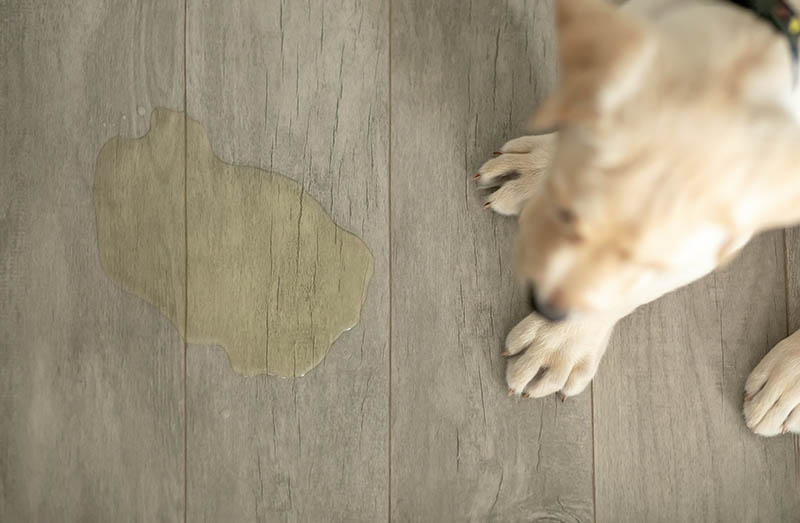
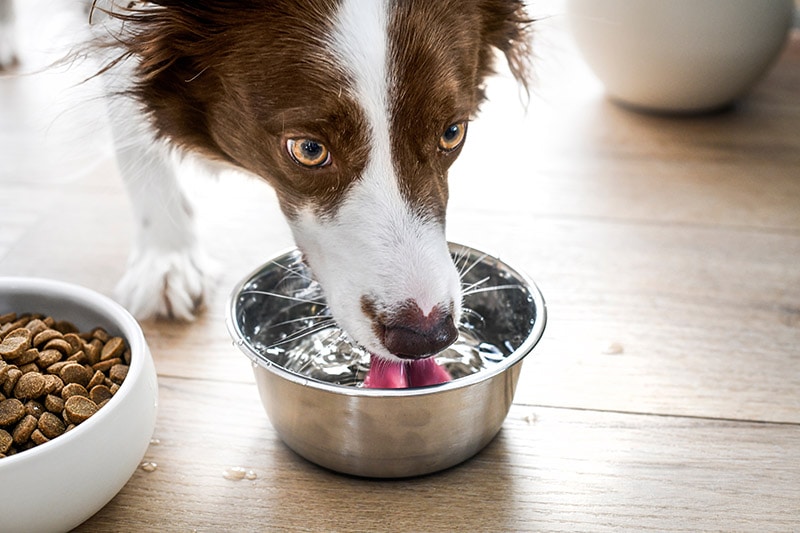
The earliest symptoms of kidney failure in dogs are increased thirst and urination. As kidney function continues to deteriorate, waste products that are normally filtered by the kidneys will accumulate in the bloodstream, and the following symptoms5 can be seen:
- Vomiting
- Loss of appetite6
- Mouth ulcers
- Ammonia-smelling breath
- Weakness
- Collapse
Dogs with acute kidney injury will have symptoms that appear quite suddenly7, while dogs with chronic kidney disease will show symptoms over a longer period of time, with the symptoms becoming progressively worse.
In addition to the aforementioned symptoms, dogs with chronic kidney disease typically experience weight loss and develop anemia8 (a low level of circulating red blood cells).
As the kidneys are responsible for producing erythropoietin9, a hormone that stimulates the bone marrow to create red blood cells, animals with kidney failure produce less erythropoietin and, therefore, make fewer red blood cells. Anemia contributes to the worsening of symptoms experienced by dogs with kidney failure, such as weakness and loss of appetite. Another sign of anemia is pale gums.

Causes of Acute Kidney Injury

There are many causes of acute kidney injury in dogs.
Some of the more common causes include:
Causes of Chronic Kidney Disease
Often, the cause of chronic kidney disease can’t be determined. Chronic kidney disease occurs in dogs of all ages, but is most frequently a disease seen in older dogs. Causes of chronic kidney disease include:
- Age-related degeneration
- Congenital kidney abnormalities (kidneys that do not develop normally before birth)
- Acute kidney injury causing permanent damage to the kidneys
- Recurrent or sustained injury to the kidneys from conditions such as systemic hypertension, recurrent infections, and chronic inflammation
Treatment
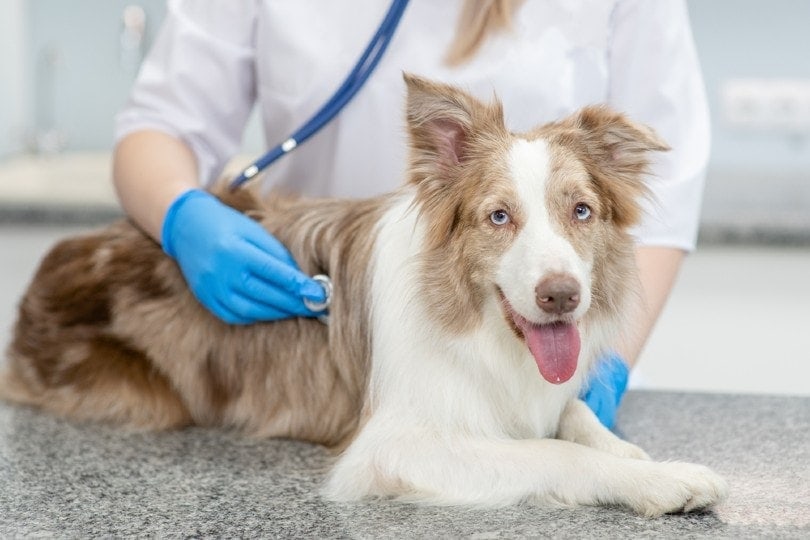
Acute kidney injury is life-threatening and dogs with this condition require hospitalization and intensive care. Timely recognition and treatment of the condition can save a dog’s life.
Treatment involves addressing the underlying cause, while supporting the body, giving the kidneys time to heal. Treatment often includes the following:
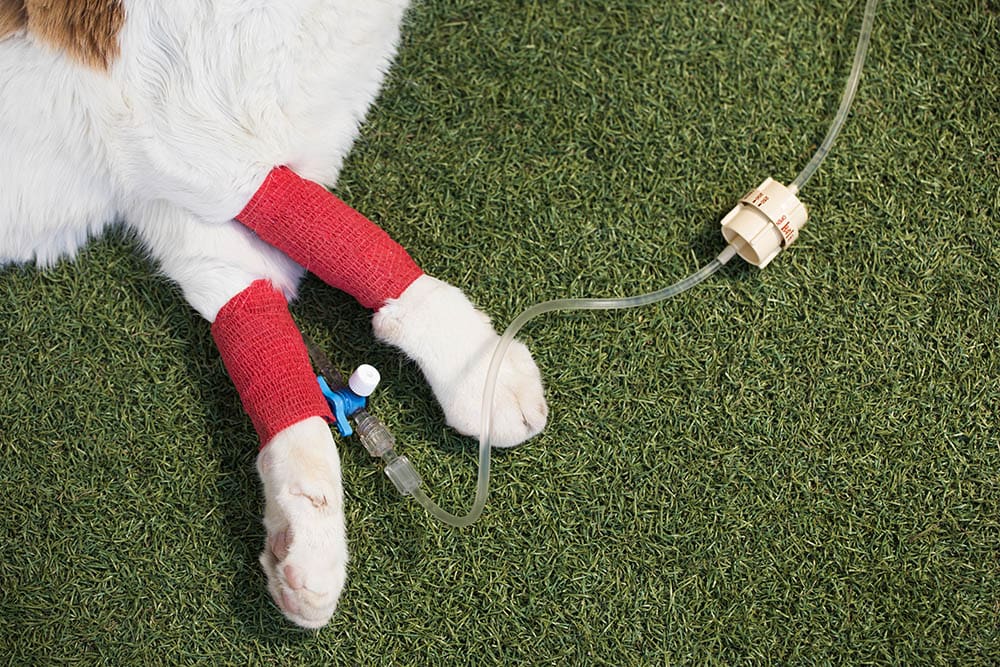
- Intravenous fluids to restore and maintain dehydration
- Treatment of blood pressure abnormalities
- Treatment of electrolyte disturbances
- Anti-nausea medications
- Gastrointestinal protectants
In severe cases, dogs may need to undergo hemodialysis. In hemodialysis, a machine takes over the work of the kidneys, filtering waste and fluid from the blood. Unfortunately, hemodialysis is not available or affordable for all patients.
Treatment of Chronic Kidney Disease
The treatment of chronic kidney disease is aimed at slowing the progression of the disease and improving the dog’s quality of life by reducing the symptoms of the disease. The treatment depends on the severity of the disease and is tailored to the individual dog. Treatment often includes:
- Feeding a high-quality, specially-formulated kidney diet
- Keeping plenty of fresh water available at all times
- Medication to treat high blood pressure
- Medication to treat protein loss
- Medication to correct anemia
- Medication to regulate acid-base disturbances
- Medication to control nausea and vomiting
Maintaining hydration is extremely important for dogs with chronic kidney disease, as dehydration can make kidney disease worse. Dogs with this disease sometimes need additional fluids, either in the form of intravenous fluids or subcutaneous fluids (fluids under the skin).

What is the Prognosis for Dogs with Kidney Failure?
Acute kidney injury is a serious and often fatal disease. However, with early diagnosis and treatment, it is possible for dogs with this condition to make a full recovery. However, surviving dogs may be left with permanent damage to the kidneys, leading to chronic kidney disease and the need for ongoing life-long care.
The prognosis for chronic kidney disease depends on the severity of the disease. There are four stages of chronic kidney disease, with the lower stages associated with longer survival times than the higher stages.
Although it’s not always possible to prevent your dog from developing chronic kidney disease, catching the disease early in its development can result in a better prognosis. Regular veterinary check ups and bloodwork to monitor kidney function can play an important role in catching the disease as early as possible.
Featured Image Credit: Lindsay Helms, Shutterstock
Get Hepper In Your Inbox


Pet care tips from our vets and experts, straight to your inbox.
You may opt-out at any time. View our Privacy Policy for more information.
Lindsay is a veterinarian who lives in the beautiful city of Cape Town, South Africa with her husband and their rescue cat and dog, Harrison and Blizzard. Lindsay obtained her bachelor's degree in veterinary science from the University of Pretoria and currently works in small animal practice. When she’s not at work, you can find her out in nature, hiking with Blizzard, or following some kind of creative pursuit, such as writing, playing the piano or sewing.
Lindsay is a veterinarian living in Cape Town, South Africa with her husband and their rescue animals, Harrison and Blizzard. You can find her hiking with Blizzard, enjoying time in nature, or writing when she’s not working.
Education
Lindsay graduated from the University of Pretoria, receiving her bachelor's degree in veterinary science.
Experience
Lindsay currently works in small animal practice.
Join the conversation
Ask a question, share your story, or send private feedback.