Hepper blog

Search our database of over 9,984 posts with up-to-date information from our experts and veterinarians.

Hepper is reader-supported. When you buy via links on our site, we may earn an affiliate commission at no cost to you. Learn more.

My Dog’s Lips Are Turning Pink: Vet-Reviewed Advice & Recommendations

By Rachel Giordano · Reviewed & fact-checked by Dr. Amanda CharlesVet Approved
Dr. Amanda Charles
Reviewed & Fact-Checked byDr. Amanda CharlesVeterinarian
Dr. Amanda Charles qualified as a vet in 2002 after graduating from the University of Liverpool and has been in small animal practice ever since. She has a postgraduate Certificate in Dermatology. She loves empowering pet parents by giving them up-to-date and accurate information and thrives off the variety that being a vet brings.Outside of work, Amanda has two very active young sons and an equally active Cocker Spaniel and Ragdoll cat, all of whom keep her very busy!View authorThe information is current and up-to-date in accordance with the latest veterinarian research. Read about our vets
Share
Ask us a question in the comments
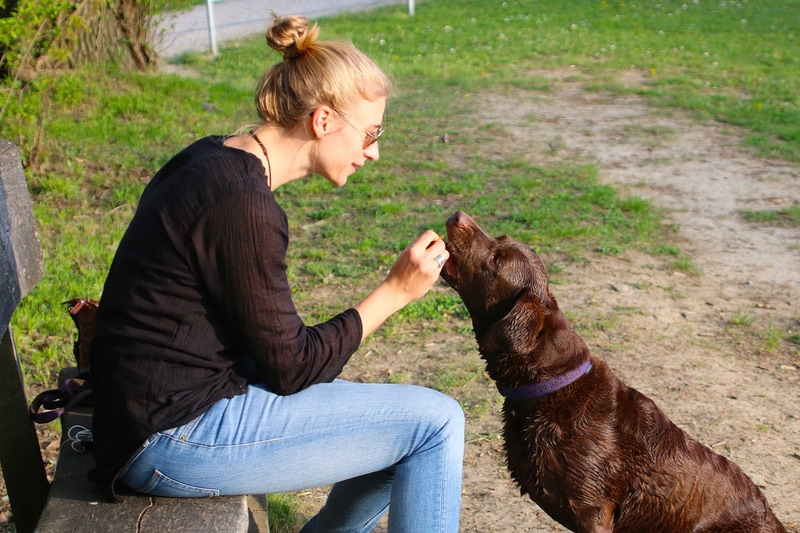
woman checking her dog lips

Most dogs have black or darkly pigmented lips, but they can vary in color depending on the breed. If your dog’s lips turn pink, you’ll notice the difference, but more importantly, you’re probably wondering why your dog’s lips are turning pink. Should you be worried?

In many cases, your dog’s lip turning pink is nothing serious, but it is always best to have them checked out by your veterinarian to look for any underlying causes that may need more investigation and treatment.

The color can be a temporary change or a permanent one, depending on the cause. A few factors are to blame for a dog’s lips turning pink, and in this post, we’ll explore the possible medical reasons why this happens and what, if anything, can be done about the problem.

Should I Be Worried?

If you notice your dog’s lips have turned pink, it’s wise to examine the mouth closer. If your dog’s mouth looks normal apart from pink lips, it may not be a cause of concern. However, pink lips could be an indicator of an underlying medical issue you’re unaware of. As stated, many cases are not serious and are not a worry, but it’s still wise to take your dog to the vet just in case.

Let’s take a closer look at what can cause your dog’s lips to turn pink.
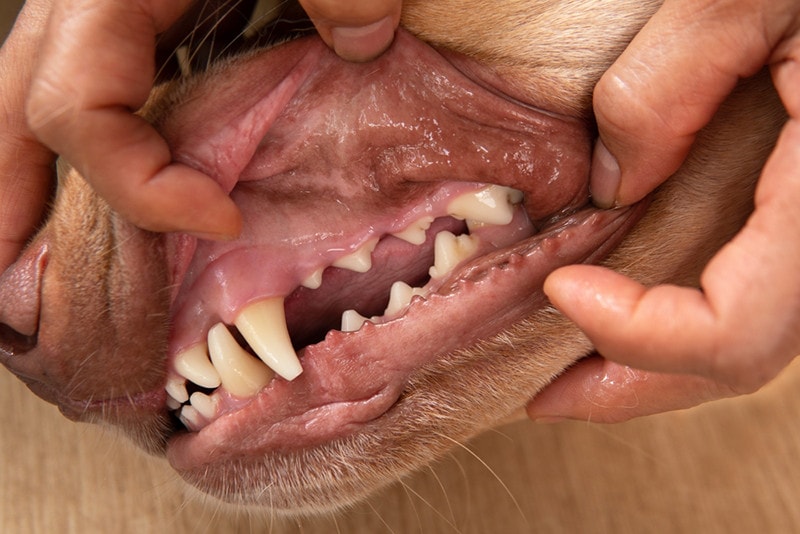
  • Age: As a dog ages, the body may produce melanin (pigment) at a slower rate, which can sometimes cause the lips to become pinker.
  • Allergies: If your dog has underlying allergies and comes in contact with something they're allergic to, the reaction can cause pink lips. Often, this is combined with swelling and irritation, and other skin signs.
  • Vitiligo: This uncommon skin condition can be categorized into two types: focal, which affects only one area, and generalized, which can occur in multiple areas of the body. In dogs, vitiligo starts when a dog is young and destroys melanocytes (cells that produce melanin). As the melanocytes die off, the result is white or pink pigmentation at the affected site. In dogs, the face, including the lips, is the most affected area. No treatment is available; however, the condition causes a dog no pain and is purely cosmetic.
  • Infections: Fungal or bacterial infections can cause a dog’s lips to turn pink. Lip infections can be particularly common in dogs with prominent lip folds, such as Bulldogs, Bassets, and Spaniels.
  • Mucocutaneous pyoderma (MCP): This is a bacterial infection of the mucocutaneous junctions including the lips. It is most commonly due to an underlying cause, such as allergies and lip fold dermatitis, and can cause loss of pigmentation causing the lips to become more pink. Topical antibiotics are often used to treat the condition.
  • Porphyrin: This naturally occurring substance is found in the tears and saliva and tends to show up as a brown or pink color wherever your dog has licked, dribbled, or produced excessive tears.
  • Discoid lupus erythematosus (DLE): This autoimmune disease most commonly causes a loss of pigment on the nose, but rarely can affect the lips also. Diagnosis usually requires a biopsy.
  • Uveodermatologic syndrome: This rare disease is when a dog’s immune system forms antibodies against its own pigment cells in the skin, which can cause skin depigmentation. It can also affect light-sensing cells in the back of the eye, causing red, painful eyes. The disease can cause impaired vision or blindness.
  • Lymphoma of the skin: This form of cancer is the most serious cause of your dogs lips turning pink. Also known as cutaneous lymphoma, the condition is an abnormal lymphocyte replication that forms nodules, plaques, and lesions on the skin and the lip margins are an area that is commonly affected. Your veterinarian will perform a skin biopsy to diagnose and may do other tests such as chest x-rays and abdominal scans to check for the spread of the cancer.
Dog Mouth Infection
Image Credit by: 9gifts, Shutterstock

Tips for Keeping Your Dog Healthy and Safe

Dogs are curious beings and use their noses to investigate the world. Dogs with allergies may come in contact with something that can cause an allergic reaction, which can cause pink lips. Allergic reactions typically exhibit swelling, redness, or inflammation, so it’s wise to have your dog examined by your vet.

Many of the conditions mentioned are non-life-threatening and cause your dog little discomfort. However, lymphoma of the skin is a serious type of cancer that should be addressed as soon as possible. Always take your dog to the vet if you notice signs of something off, such as pink lips, just to be safe.

You can do your part in keeping your dog healthy by feeding a complete and balanced diet and providing adequate exercise suitable for your dog’s breed and size. Diseases and conditions can happen to any dog, regardless of their health and the food they eat, so it’s advisable to keep your dog up to date on all vaccines and routine checkups.

male vet checking dog teeth
Image Credit: YAKOBCHUK VIACHESLAV, Shutterstock

Conclusion

If your dog’s lips have turned pink, it’s often no cause for alarm, but it's always best to get them checked over by your vet if you notice it. Your veterinarian can do an exam and may need to run some tests to help determine the cause and administer treatment if need be.

Sources

Featured Image Credit: Hebi B., Pixabay

Get Hepper In Your Inbox

Pet care tips from our vets and experts, straight to your inbox.

List

Select all that apply.

You may opt-out at any time. View our Privacy Policy for more information.

Rachel Giordano
Authored by

Rachel Giordano

Join the conversation

Ask a question, share your story, or send private feedback.
Rate this post
Required to post. Only our editors see your rating.
Who should see this?

A human reviews every comment before it appears. Your email is never published.

Picked to go with this article

Why Do Dogs Have Black Lips? Vet-Reviewed Facts & FAQ

Why Do Dogs Have Black Lips? Vet-Reviewed Facts & FAQ

As a dog owner, you may be wondering why some dogs have black lips and others don’t. While some link the trait of black lips on dogs to intelligence or hunting…

Jeff Weishaupt
By Jeff Weishaupt ·
Dog’s Nose Changing Color: Should I Worry? Vet-Approved Advice

Dog’s Nose Changing Color: Should I Worry? Vet-Approved Advice

As loving dog owners, it’s very easy to get caught up in small changes to your dog’s appearance. Each little change could possibly mean there’s an underlying c…

Dean Eby
By Dean Eby ·
Healthy vs Unhealthy Dog Gums: Vet-Reviewed Signs & Pictures

Healthy vs Unhealthy Dog Gums: Vet-Reviewed Signs & Pictures

Keeping your dog healthy and well-nourished is key to a long life and happiness. Taking care of their teeth and gums regularly can significantly improve your d…

Jana Blagojevic
By Jana Blagojevic ·
Why Is My Dog’s Tongue Red? Vet-Reviewed Causes & Prevention Tips

Why Is My Dog’s Tongue Red? Vet-Reviewed Causes & Prevention Tips

In most cases, healthy dogs’ tongues are pink in color. Some breeds, like Chow Chows and Shar-Peis, are exceptions to this rule with their bluish-black tongues…

Kit Copson
By Kit Copson ·

Keep reading

More stories you might like

Dog Snow Nose: What Is It? (And What to Do About It)

Winter brings all sorts of changes. The temperature drops and snow often begins to cover the ground. People dress warmer, and your dog's coat will thicken and…

Keri-Beth Clur
By Keri-Beth Clur ·
Dog Snow Nose: What Is It? (And What to Do About It)

Why Are My Dogs Paws Pink and Black? 8 Vet-Approved Causes & How to Protect Them

Depending on your experience owning and raising dogs, there might be some things you’ve never seen or experienced that might concern you. One is when your dog…

Gregory Iacono
By Gregory Iacono ·
Why Are My Dogs Paws Pink and Black? 8 Vet-Approved Causes & How to Protect Them

Oral Papilloma in Dogs: Causes, Symptoms, and Care (Vet Answer)

If your dog has a wart-like growth on its snout and is diagnosed with an oral papilloma, it may have you feeling concerned—and full of questions. The following…

Dr. Leigh Wilder
By Dr. Leigh Wilder ·
Oral Papilloma in Dogs: Causes, Symptoms, and Care (Vet Answer)

My Dog Keeps Smacking Their Lips: 9 Vet-Reviewed Causes

Sometimes, dogs behave in ways that baffle and intrigue us, including lip-smacking and licking. Although lip-smacking can occur for innocent reasons that shoul…

Kit Copson
By Kit Copson ·
My Dog Keeps Smacking Their Lips: 9 Vet-Reviewed Causes

Can Dogs' Noses Get Sunburned? Important Facts & Care Tips

When it comes to dogs in the sun, you might not think much of it when they're out running around outside. But the truth is, the sun can also damage our canines…

Ashley Bates
By Ashley Bates ·
Can Dogs' Noses Get Sunburned? Important Facts & Care Tips

Why Are My Dog's Paws White? 10 Vet-Approved Reasons

If you're relaxing with your dog and notice something strange with the color of its paws, it may not immediately worry you. Many dogs get dry skin occasionally…

Beth Crane
By Beth Crane ·
Why Are My Dog's Paws White? 10 Vet-Approved Reasons

How to Treat Sunburn in Dogs: 5 Possible Ways

It might be a little unusual to consider. Sunburns and dogs don't seem like they would belong in the same sentence. However, not only is it entirely possible,…

Ashley Bates
By Ashley Bates ·
How to Treat Sunburn in Dogs: 5 Possible Ways

Skin Papilloma & Dog Warts: Our Vet Explains Causes, Signs & Risks

Wicked witches and troublesome toads—these are creatures you might associate with warts. But what about our canine companions? Do dogs get warts? And, if so, s…

Dr. Leigh Wilder
By Dr. Leigh Wilder ·
Skin Papilloma & Dog Warts: Our Vet Explains Causes, Signs & Risks