Hepper is reader-supported. When you buy via links on our site, we may earn an affiliate commission at no cost to you. Learn more.
Why Are My Dog's Paws White? 10 Vet-Approved Reasons

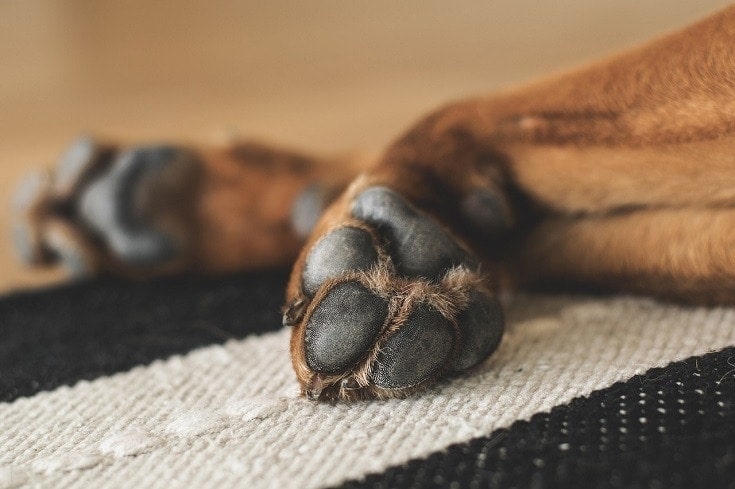
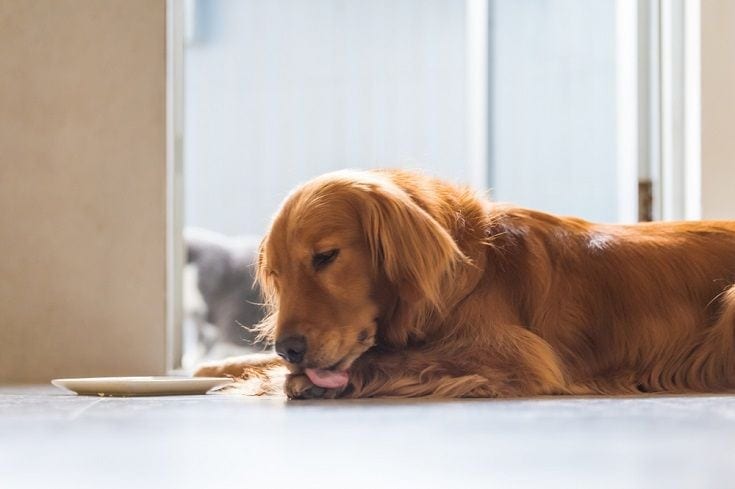
If you're relaxing with your dog and notice something strange with the color of its paws, it may not immediately worry you. Many dogs get dry skin occasionally, and dogs with white fur often get smudges or stains.
However, if you notice a drastic change to the surface of your dog's paw and it's turning white, it could require your veterinarian’s assistance. Knowing what causes the color change can put your mind at ease before seeking a diagnosis from your vet, so we've listed nine reasons why your dog's paws and paw pads might be white.

The 10 Reasons That Dog's Paws are White
1. Dry Skin
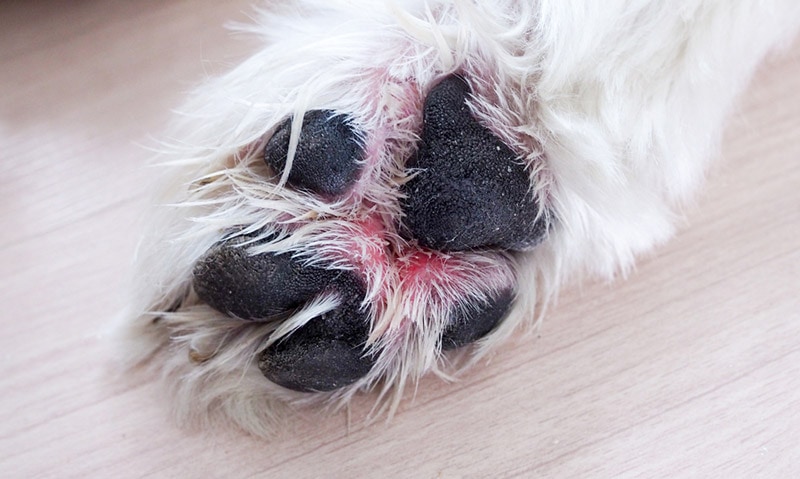
Dry skin on a dog's paw pads can appear white, especially if the dog's paws are dark. Normal dry skin is usually minimal and doesn't cause a dog any problems. However, in some situations, white skin can become so dry that it begins to crack and causes discomfort and pain 1.
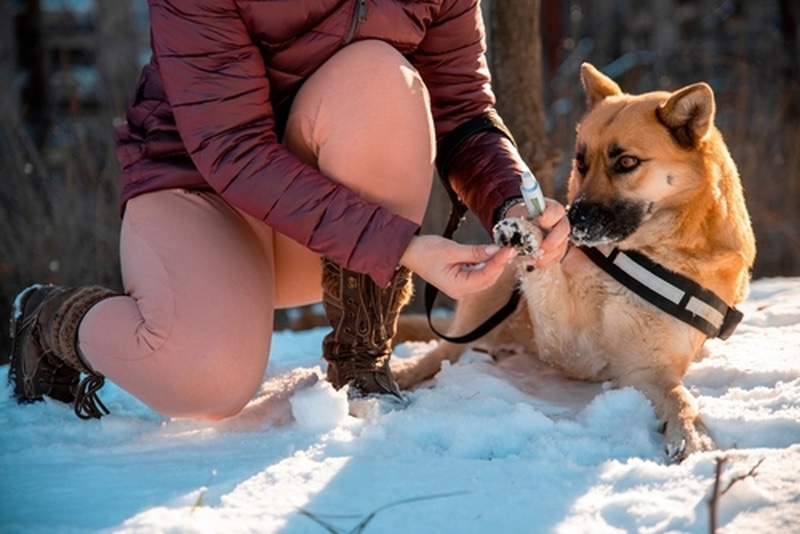
Running on rough surfaces is a major factor in developing dry paw skin, and dry or cracked paws are common in winter. To prevent this, consider using booties on your dog in winter and carefully rinsing their paws off after a walk on rough ground. In addition, moisturizing your dog's paws with a pet-safe paw balm can protect them and prevent them from getting dry.
2. Distemper (Hard Pad Disease)
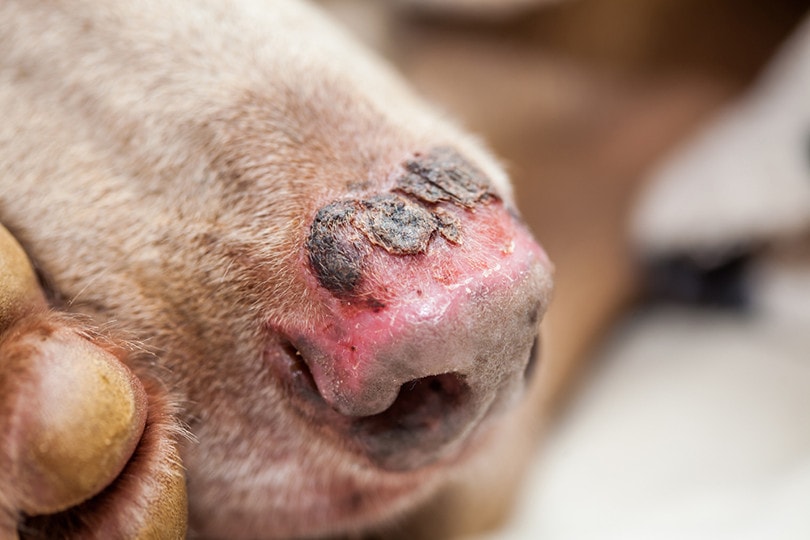
Canine distemper is an incredibly infectious disease affecting a dog's entire body. Nearly all systems are affected by distemper, including the nervous system and brain, gastrointestinal system, cardiovascular system, and skin. A white overgrowth of skin on the pads and the nose is a characteristic sign of distemper.
Other common signs of distemper can include fever, runny nose, coughing, sneezing, and vomiting. Puppies are vaccinated against canine distemper starting at around 6-8 weeks and receive final boosters after they're 16 weeks old. Canine distemper is often lethal, and the effects are debilitating, distressing, and preventable. If you suspect your dog could have distemper, call your vet immediately.
3. Vitiligo
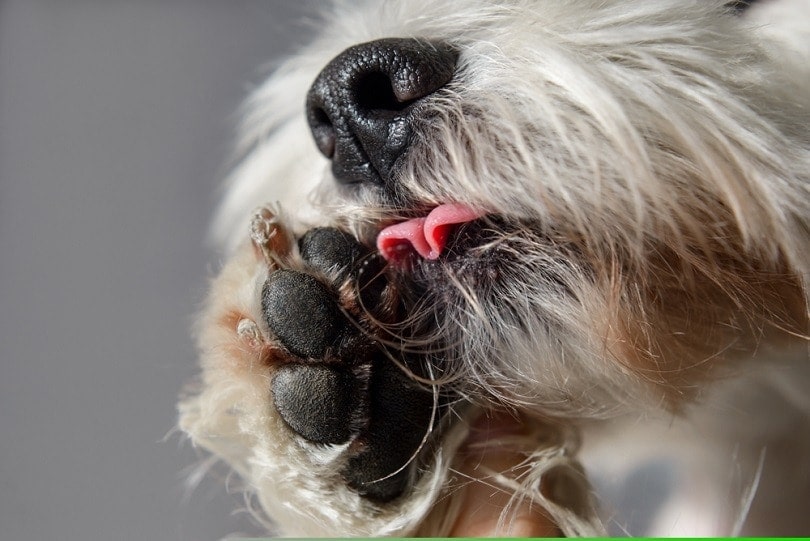
Vitiligo is a condition in which the pigment in your dog's skin and fur that gives it its color, called melanin, begins to disappear. A dog will lose this melanin (depigmentation) either in only one spot (focal vitiligo) or in a widespread pattern (generalized vitiligo).
Noses, faces, and paw pads are some of the most commonly affected areas, but white patches can appear anywhere on a dog's body. Causes of vitiligo can be hereditary, stress-related, or autoimmune. Whatever the reason your dog’s paw pads lose their melanin, it does not bother your dog in the slightest and is not painful or uncomfortable. However, it's best to get your dog checked by your vet to determine the cause of the change.
4. Viral Papilloma
Viral papilloma is a skin condition caused by a virus, resulting in cauliflower-like growths that grow on the skin. These growths are commonly found around a dog's mouth but can affect the paw pads and turn them white. These warts usually don't cause any problems, and many dogs fight the virus off in a month or two.
However, some kinds of papilloma can be painful and even affect the dog’s quality of life, such as in-growing papilloma on the feet 2. Surgery may be an option if the papilloma is severe or ulcerated. If you suspect your dog has a papilloma on its paw, take it to the vet for a check-up.

5. Hyperkeratosis
Hyperkeratosis is when the body produces too much keratin, which is the substance nails are made of. In dogs, that means that their paws, nose, and even other areas of the skin become dry and crusted with hair-like growths.
These often discolor the paw pads to a pale yellow or white shade and can be painful if they crack or rub. Some dogs, like Irish Setters, seem genetically predisposed to developing hyperkeratosis from a young age. Other causes include infection, autoimmune disease, and parasites. Unfortunately, hyperkeratosis is incurable.
6. Infection
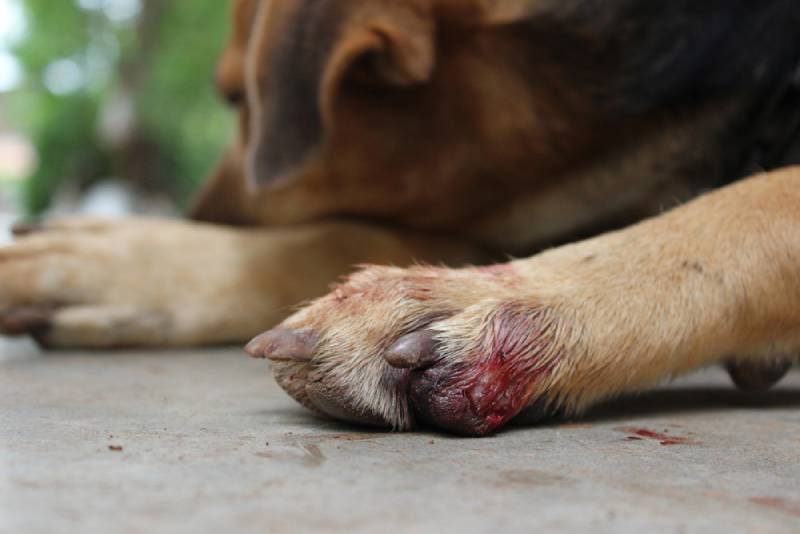
Infected cuts, cracks, blisters, lesions, or foot wounds can cause skin discoloration or white pus to ooze from the paw pad. Pus is a collection of white blood cells and proteins that the body uses to fight off infection, which is why it's so common to see when an active infection has taken hold.
If your dog's pad or food is swollen, hot, has red and white parts, or is causing pain, it could have an infection that needs urgent treatment from a vet. Infections should never be untreated, as they can quickly become systemic and cause sepsis.

7. Frostbite
Frostbite is the damage cold can cause to the skin when an area is exposed for too long. In temperatures lower than 32°F, the blood vessels in your dog's extremities will begin to constrict. The blood circulates around the organs, but the paws and pads cool down rapidly.
This can mean the tissue of the pads (or any exposed skin) can freeze, resulting in painful frostbite. The skin of your dog's pad may turn white, red, or black if they get frostbite. It is very painful and dangerous, so if your dog has been out in the cold and you suspect frostbite take them to the vet immediately for pain relief and treatment.
8. Genetics
Your dog's paws could be white simply because that's the way they were born. Genetics have a part to play in canine coloring, and your dog's paws can be white due to its parents having white paws. White paws can have black or pink pads or a mixture of the two.
Your dog does not have to be entirely white to have white paws; many breeds mix white and another color, such as Collies or Cavalier King Charles Spaniels. If your dog has white fur, they should have sunscreen on them on sunny days to prevent sunburn (and skin cancer) in those areas. Make sure to use one that's safe for dogs!

9. Wear and Tear
Lastly, if your dog is a little older, the pad’s wear and tear could be why they are starting to go white. Because your dog will thicken its pads naturally throughout its life, the skin can become denser and look lighter. In moderation, this thickening will benefit your dog, as it allows them more protection from the hard ground. However, be on the lookout for any cracks or dryness that can be painful, and keep the paws moisturized with a pet-safe paw balm.
Conclusion
There are many reasons why your dog's paws could be going white, but some are less concerning than others and may only require minor treatments. If you notice any changes in your dog's paw pads, you should get them checked out by the vet. Not all conditions will be painful for your pup, but many (like frostbite) are and require urgent veterinary attention.
Featured Image Credit: LUM3N, Pixabay
Get Hepper In Your Inbox


Pet care tips from our vets and experts, straight to your inbox.
You may opt-out at any time. View our Privacy Policy for more information.
Beth is a mom to two babies: one with four legs, and one with two. Beth has years of practical experience as a veterinary care assistant, working in both the operating room and in consult, expanding her knowledge to gain certification in her favorite subject: feline behavior and well-being! When she's not writing about her favorite topics (cats, dogs, and creature comforts), she's looking after her two-year-old daughter and her energetic eight-year-old Nebelung, Kiba. When she gets a moment's respite, Beth loves to read fiction books. Horror is her number one genre, with fantasy and rich history being her second option.
Join the conversation
Ask a question, share your story, or send private feedback.