Hepper is reader-supported. When you buy via links on our site, we may earn an affiliate commission at no cost to you. Learn more.
Small Breed vs Large Breed vs Regular Dog Food: Vet-Verified Facts & Info


In this article
The world of dog food can be a confusing one, and it becomes extra confusing when it comes to food that is specific to the size of your dog. How do you know if your dog needs small or large breed dog food? Maybe you’ve got two dogs that are small and medium in size. Would it be okay to feed them both the same regular dog food?
Understanding the differences between small breed, regular, and large breed dog foods and the needs of the dogs that fall into these categories is the only way to make sense of this confusion. If all else fails, talk to your vet or a board-certified veterinary nutritionist about what is appropriate for your dog.
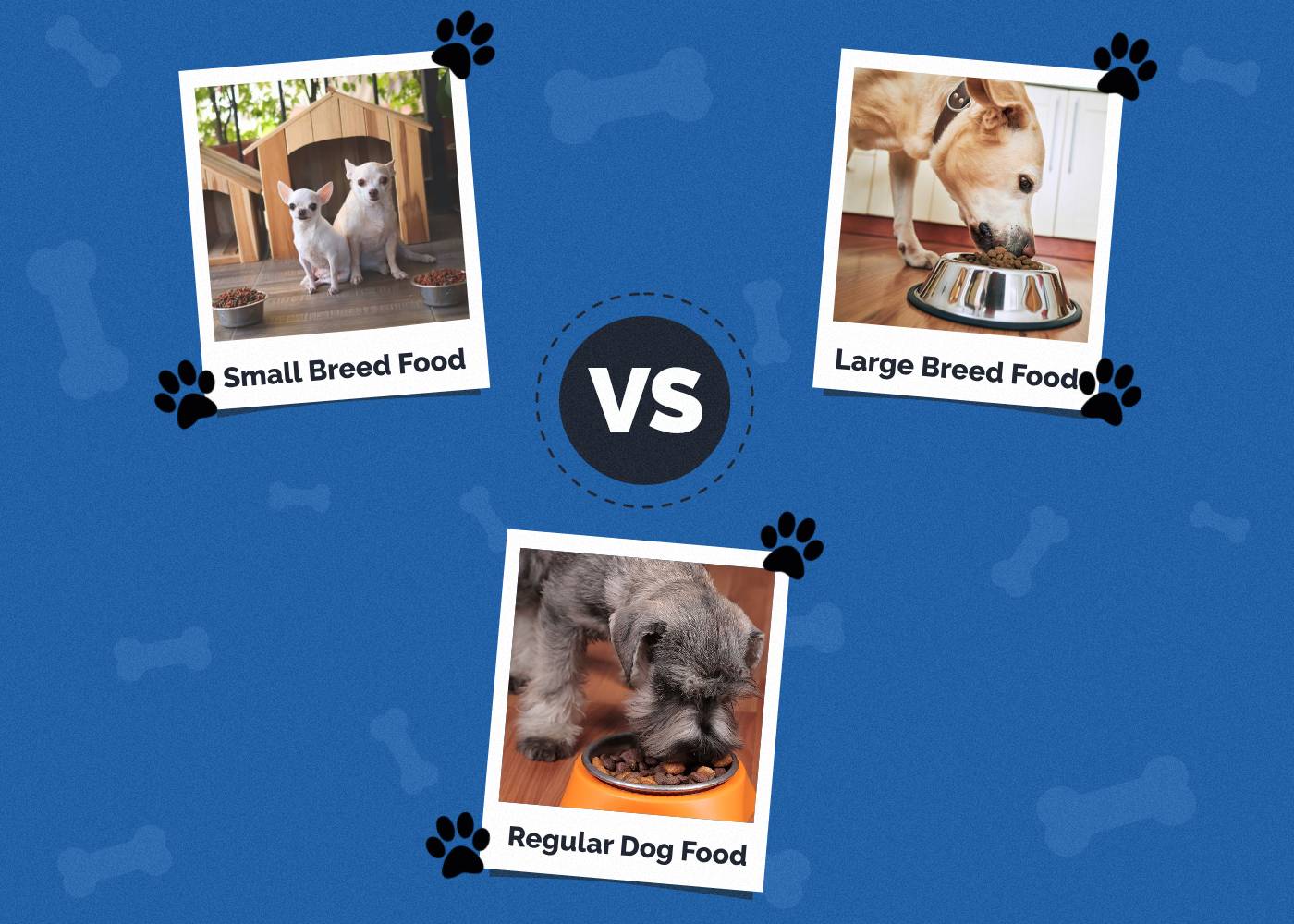
The good news is that there is no nutritional edge of one of these types of foods over the others, as long as you’re selecting what’s appropriate for your dog. Large breed food isn’t a good way to save money on food for a small dog, for example. Here’s what you need to know to make sense of these food types.

At a Glance
Let’s look at the key points of each product.

Overview of Small Breed Dog Food

Small breed dog food is made with the specific nutritional needs of small dogs in mind. This means that it often contains antioxidants, which help support health and longevity due to the longer lifespans most small breed dogs live. It is designed with a proper calorie density for small bodies, as well as being supportive of satiety since small breed dogs tend to have higher metabolic rates than larger dogs do.
It helps support appropriate growth rates for small dogs, which often grow more slowly and reach maturity more slowly than larger dogs do. When it comes to dry dog food, small breed dog food is typically smaller kibbles than other dog food varieties, making it easier for small dogs to eat.
There are no obvious cons of feeding small breed dog food to small breed dogs, but it is not appropriate for medium, large, and giant breed dogs due to its nutritional content.
Pros
- Contains high levels of antioxidants to support long lifespans
- Contains an appropriate calorie content for small bodies
- Supports satiety in dogs with high metabolic rates
- Supports appropriate growth rates
- Easy for small dogs to eat
Cons
- Not appropriate for breeds other than small breeds

Overview of Regular Dog Food

Regular dog food is designed to meet the basic nutritional needs of all dogs. It’s important to understand, though, that it won’t provide the benefits of small or large breed dog foods if you have a dog that falls into these categories. For example, most regular dog food won’t support the joint health of large breed dogs or the longevity needs of small breed dogs. However, for most dogs, regular dog food is perfectly adequate.
The benefit of regular dog food is the number of recipes that it comes in. If you have a dog with specific joint or dental health needs, for example, then you’re likely to find a regular dog food with additives to help support these specific needs. It’s also typically an appropriate size for dogs of almost any size to eat.
Pros
- Formulated to meet the basic nutritional needs of all dogs
- Ideal for dogs in the middle of the size spectrum
- Multiple specialty recipes available
- Appropriately sized kibbles for most dogs
Cons
- Lacks the baseline special additions that small and large breed foods have

Overview of Large Breed Dog Food

Large breed dog food is made specifically for large and giant breed dogs. This means that these foods often contain supplements that are beneficial for big dogs, like glucosamine and chondroitin. They also have an appropriate calcium to phosphorus ratio, which is important for large dogs, especially puppies. This is because big dogs are more likely to retain calcium, which can have a negative impact on the musculoskeletal system, leading to deformities and pain.
This type of food also contains an appropriate ratio of calories, protein, and fats to support healthy and appropriate growth for big dogs, which is especially important for puppies and dogs that haven’t finished growing yet. Large breed dogs may not reach full maturity for 18–24 months, so growth support is extra important.
Most large breed dog foods have larger kibbles than other types of dog food, which can make them easier for large dogs to eat. Kibble size aside, large breed dog food is not appropriate for medium or smaller dogs due to the specific nutrient ratios.
Pros
- Usually contain supplements to support joint health
- Appropriate calcium to phosphorus ratio for large and giant breed dogs
- Contains an appropriate ratio of nutrients to support large and giant breed dogs
- Supports healthy growth in large breed puppies
- Larger kibble size is easier to eat
Cons
- Not appropriate for breeds other than large and giant breeds

What Are the Differences Between Them?
Variety
| Edge: | Regular |
Regular dog food has a clear edge over small and large breed dog foods when it comes to variety. There are far more “normal” dog food diets on the market, with a variety that can meet special needs, while large and small breed dog foods may be more limited. This is especially true when a specialty diet is needed.

Price
| Edge: | Small Breed |
The only reason that small-breed dog food has a pricing edge is simply because it costs less overall to feed small dogs. The larger your dog is, the more you can expect to spend on food. There are dog foods for just about every budget, but it’s best to aim for high-quality, veterinary-recommended foods.
Nutrient Density
| Edge: | None |
When it comes to nutrient density, none of the food types have a clear advantage. This is because each type of dog food is formulated with specific nutritional needs in mind. This means that there’s a broad range of nutrient densities among all types of dog foods.
Satiety
| Edge: | Small Breed |
This is a tight race, but small-breed dog food does pull out in front when it comes to satiety. Small breed dogs tend to have a faster metabolism than larger dogs, which means they may get hungry more frequently. Food that supports satiety can help your dog feel full between meals, and it can also help support healthy blood sugar levels. There are satiety-support diets for medium and large dogs, but at baseline, small-breed dog food provides more satiety.
Conclusion
There is no clear winner between small, regular, and large breed dog foods because each of these foods is formulated for specific needs. It is important to determine which category your dog falls into to help you select the right food for your dog’s needs. It is also important to avoid feeding small-breed or large-breed dog foods to dogs that don’t fall within those categories because the nutrient profile may not be appropriate for your dog. Consult with your veterinarian for specific dietary questions.
Featured Image Credit: New Africa, Shutterstock
Get Hepper In Your Inbox


Pet care tips from our vets and experts, straight to your inbox.
You may opt-out at any time. View our Privacy Policy for more information.
Nicole is a lover of animals of all sizes but is especially fascinated with the feline variety. She’s the proud mom of Baby, a Burmese, and works every day so he can relax in the sunshine or by the fire. She’s always had a cat in her home and has spent countless days with others, observing behaviors and softening up even the grouchiest of the lot. Nicole wants to share her kitty expertise with you so you and your cat can live happy, healthy, and care-free.
Join the conversation
Ask a question, share your story, or send private feedback.