Hepper is reader-supported. When you buy via links on our site, we may earn an affiliate commission at no cost to you. Learn more.
How to Tell If a Lost Cat Is Microchipped & What to Do Next (Vet-Approved Tips)



In this article
Having your cat microchipped is one of the best ways to ensure that you are reunited with them if they should ever go missing. Collars with identification tags are also helpful, but these collars can get snagged on things and come off. If a cat is found without a collar and isn’t microchipped, it can be extremely difficult to find their owner. Most indoor cats don’t wear collars regularly.
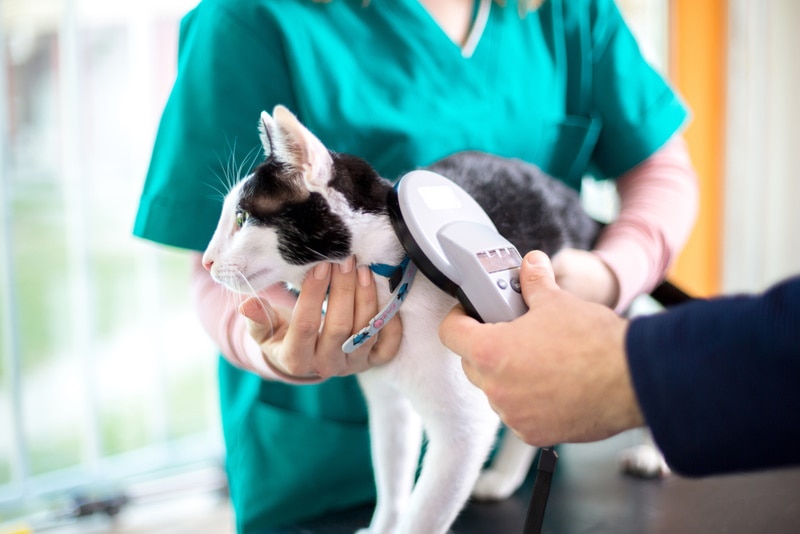
If you find a cat without a collar, you may be wondering how to find their owner. If no lost cat signs are hanging up nearby, you will want to check to see if the cat is microchipped. In some cases, you may be able to feel the microchip between the feline's shoulder blades by gently pinching its fur. Otherwise, you may need to contact your local vet or shelter to have the cat scanned.
Let’s look at a microchip and what to do if you find a lost cat.

What Is a Microchip?
A microchip is a small computer chip that holds a link to your cat’s identifying information. If a cat is lost, this chip can be read to find out the number on it. This number is then typed into a database, which will display the cat’s name, their owner’s information, and where they live.
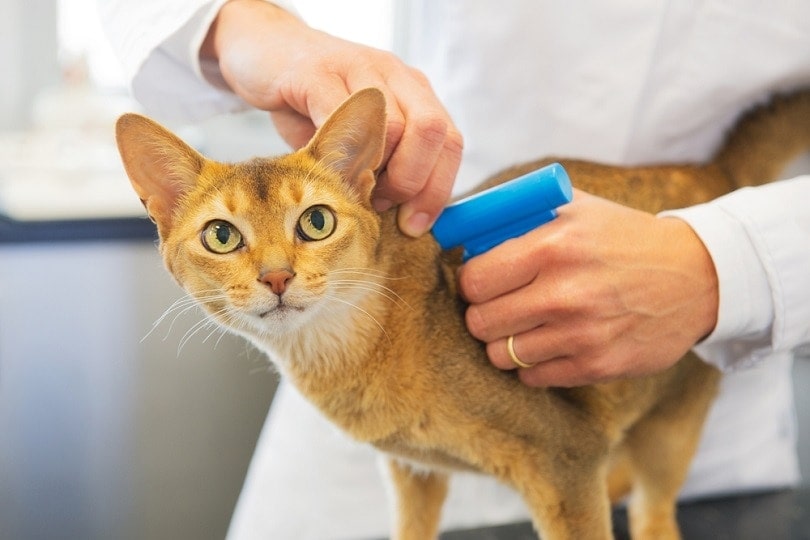
This chip is inserted under the skin, usually between the shoulder blades, with a needle. The chip is the size of a grain of rice and won’t cause your cat any pain, discomfort, or allergic reactions. They won’t feel it once it’s placed.
Over time, the microchip may migrate and wind up in a different spot, but it won’t enter your cat’s bloodstream or end up in any organs. It’s only skin deep.
Is the Microchip a Global Positioning System (GPS) Device?
There is a misconception that your cat can be tracked by the microchip if they go missing. Unfortunately, microchips don’t use GPS technology, so you won’t be able to locate your cat if they’re chipped. This is just a tool to help people who have found your cat be able to reunite them with you.
Microchip Effectiveness
A microchip is only useful if it’s registered to an owner. Sometimes, chips can be read and the number leads to blank information. In other cases, the information registered is old and not updated. Phone numbers are disconnected and addresses aren’t current. For a microchip to do what it was designed to do, it’s up to the cat owners to make sure their information is filled out and current.
What to Do If You Find a Lost Cat
If you come across a lost cat, here are the steps to take to determine if they have a microchip.
1. Capture and contain the cat.
If you can pick up the cat and bring them into your house, that’s the safest thing to do. Perhaps the kitty is at your back door and will run in when you open it. This is the easiest way to get them safe while you plan for what to do next. Cats are best confined in a small room in your home, like a bathroom or spare bedroom.
If the cat is aggressive or injured or won’t come to you, contact your local animal control and let them know the exact location where the cat was last seen. Don’t attempt to wrangle a cat that is acting aggressively. If you can capture the cat while they’re injured, take them to the vet or your local animal control right away.

2. Check for Identification
Once you have the cat in your possession, check and see if they are wearing a collar. An identification tag may be hanging from the collar. Some collars have the owner's identification information embroidered on the material itself.
3. Feel for a Microchip
Sometimes you can feel a microchip beneath the cat’s skin. This isn’t always the case, though. It depends on the cat’s weight and the placement of the chip. You’re feeling for a hard object the size of a grain of rice underneath the skin between the shoulder blades. Using both hands, start by gently pinching bits of skin behind the cat’s neck, and then massage lightly. If the cat likes the attention, this is easier to do. Once you feel the microchip, there’s no mistaking what it is.
This way of checking if a cat is microchipped is not perfect. Most cats don't enjoy being touched too much, especially by people they don't know. It can also be hard to feel the microchip under their skin. Even if you can feel it, you still won't know what information it holds until it's read with the special device.

4. Have the Cat Scanned for a Microchip
The guaranteed way to know if a cat has a microchip is to have them scanned for one. Animal shelters, veterinary clinics, and many police stations have scanners. You typically don’t need an appointment if you’d just like a scan to be done. This is performed at no cost to you. Just walk in and tell someone that you’d like to have an animal scanned.
Since the microchip can migrate in an animal’s body and not remain between the shoulder blades, the scanner can do a better job at finding the chip than fingers can. The cat is scanned all over their body to see if a chip is detected. X-rays can also be useful to help identify a microchip and its specific location on the body.
Owning a Microchip Scanner
If you'd like to have your own microchip scanner, you can purchase one for home use. When scanning, be ready to search for the number that is read on the scanner once a chip is located. You can head to aaha.org/petmicrochiplookup to find out which organization the chip is registered to. Go to that registry and look up the number again. It should reveal the owner’s contact information.
Can Cats Lose Their Microchips?
The main benefit of microchips over collars is that collars can come off while microchips never do. Once the microchip is implanted, it’s there for the remainder of the cat’s life. It may shift around and migrate to different areas in the skin, but a scanner will always be able to detect it.
Microchips are important and effective ways to reunite pet owners with their lost or stolen pets.

Can Microchips Malfunction?
Yes, just like any electronic device, microchips can malfunction and stop working. To make sure your cat’s microchip is still functioning properly, ask your vet to scan it at your cat’s routine checkups. This way, if there’s an issue with the chip, you’ll know about it and be able to get a new, functional one for your cat.
Final Thoughts
Microchipping your pets is one of the best ways to be reunited with your cat or dog if they go missing. If you find a cat, have them scanned for a chip or scan them yourself. Finding the cat’s owner is more likely to happen with a microchip than a collar with an ID tag.
Microchips can sometimes be felt under the skin. By lightly massaging or pinching the area, you may be able to feel a hard object the size of a grain of rice. Then you know that you’re holding someone’s beloved pet. Be sure to keep your own cat’s microchip information up to date in the database, and ask your vet to regularly scan the chip to make sure it’s working properly.
Featured Image Credit: AjayTvm, Shutterstock
Get Hepper In Your Inbox


Pet care tips from our vets and experts, straight to your inbox.
You may opt-out at any time. View our Privacy Policy for more information.
Chelsie is a freelance writer who is passionate about helping pet owners and beloved animals live their best lives. She lives in rural Alberta, Canada with her husband and two sons. She is also currently a pet parent to four horses, four cats, and a border collie.
Join the conversation
Ask a question, share your story, or send private feedback.