Hepper blog

Search our database of over 9,984 posts with up-to-date information from our experts and veterinarians.

Hepper is reader-supported. When you buy via links on our site, we may earn an affiliate commission at no cost to you. Learn more.

Are Siamese Cats Hypoallergenic? Vet-Approved Facts & FAQ

By Kristin Hitchcock · Reviewed & fact-checked by Dr. Luqman JavedVet Approved
Dr. Luqman Javed
Reviewed & Fact-Checked byDr. Luqman JavedDVM (Veterinarian)
Dr. Luqman grew up with an extreme fondness for animals and turned a childhood dream into reality by becoming a veterinarian. His goals are now focused on helping pet owners understand their pets better in order to ensure the best quality of life for all pets globally. He is passionate about wildlife, exotic pets, pet owner education, and animal welfare. Luqman has 3 years of professional experience working with a variety of animal species. He has skills in demonstrating proper animal husbandry and training some exotic species, such as parrots. Additionally, he has decades of personal experience with keeping many exotic pets: freshwater fish, parrots, songbirds, chickens, ducks, turtles, and hamsters.View authorThe information is current and up-to-date in accordance with the latest veterinarian research. Read about our vets
Share
Ask us a question in the comments
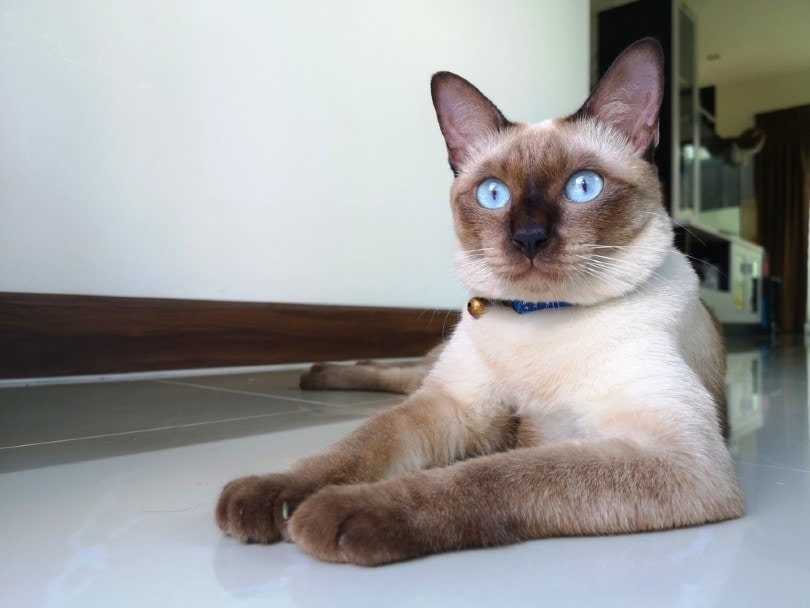
siamese cat lounging

If you have cat allergies but love cats, you may be interested in finding a hypoallergenic cat. These cats are often described as solid options for those with allergies. However, the science is often much more complicated than that. There are many misconceptions surrounding hypoallergenic animals in general, which is often made more complicated by some companies marketing their pets as hypoallergenic.

Siamese cats are sometimes grouped in the hypoallergenic category because they are thought to shed less than other cats. However, this isn’t necessarily the case. Siamese cats shed just as much as any other feline. Their hair is simply smaller and finer than other cat’s fur, so it may appear that they shed less.

However, as we’ll discuss, it doesn’t matter how much Siamese cats shed at all.

What Is the Science Behind Hypoallergenic Cats?

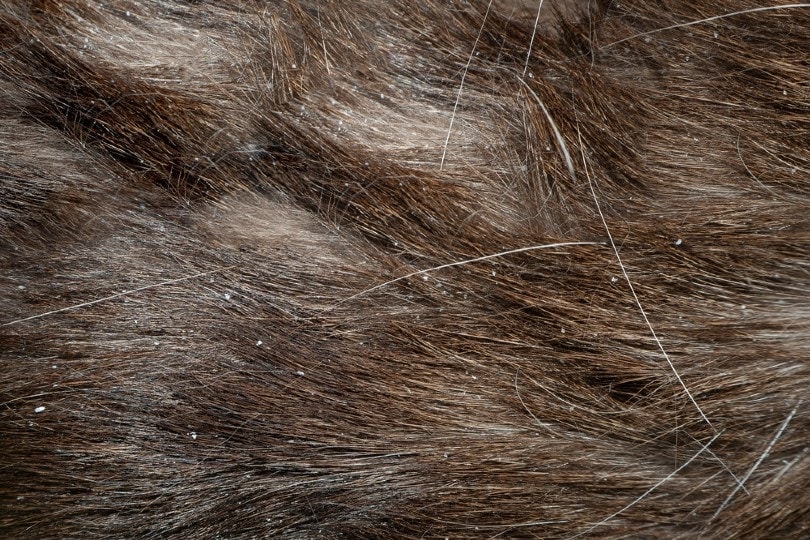
When someone has a cat allergy, they are reacting to the proteins the cats create that are distributed along their saliva, skin, and urine. These proteins are called allergens. A major protein with regard to cat allergies is known as Fel d1, which is produced primarily by your cat's skin. Additionally, cats also naturally produce dander, which is a microscopic composition of bits of dead skin that they shed throughout their life.

All cats have these proteins and produce dander. Dander traps these proteins and releases them around your house as your cat naturally sheds. You aren’t going to find a protein-less cat. Therefore, there isn’t really any such thing as a hypoallergenic cat (or dog).

The amount of fur a cat has doesn’t have anything to do with whether they are hypoallergenic or not. Those with allergies aren’t allergic to a cat’s fur; they’re allergic to specific proteins their cat produces that get mixed with their dander. Any cat that has skin and makes dander will set off someone’s allergies. There is currently no cat that doesn’t produce dander.

Fur can work to spread the dander around. It may help it stay airborne. However, dander does a pretty good job at this itself, so it often doesn’t need the loose fur to cause allergens. In fact, the protein that causes cat allergies is found just about everywhere, including places that don’t even have cats, like schools and stores. The dander likely catches a ride on people’s clothing and is then deposited into the environment. Dander is extremely small, even smaller than dust particles; therefore, we can’t see it around us. The hair itself isn’t important in this process.

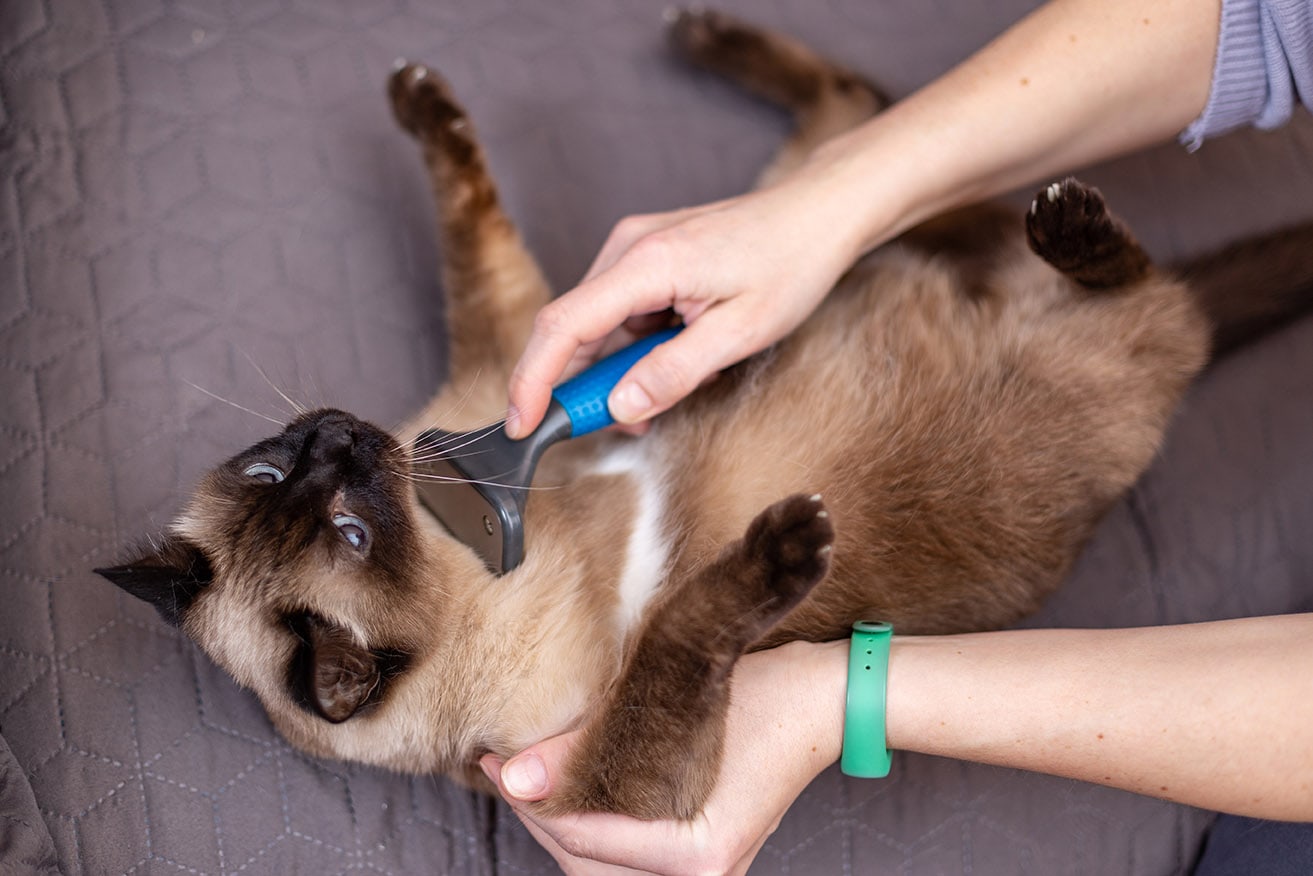
woman brushing a siamese cat
Image Credit: bymandesigns, Shutterstock

Can You Make a Siamese Cat Hypoallergenic?

No. There is nothing you can do to make a feline hypoallergenic. All cats produce allergens, create dander, and can cause allergies. However, there are several strategies that you can take to reduce the amount of dander in your home, which may help with allergies.

While the most effective method for reducing allergies in cases of severe reactions is to remove the pet from the environment, this is commonly not done by pet owners with manageable allergy levels. Most who develop pet allergies look for other ways of reducing their symptoms without leaving their pet.

Many people implement extensive cleaning schedules, as this is the best way of controlling allergens that cause an allergic reaction. Because allergies are often caused by allergens that are already in the environment, removing these allergens can be extremely helpful. The cat can only produce dander so fast. The main problem is when the dander that they have produced builds up in your house.

Here are effective tips to control allergens around your house:

Tips to Control Allergens Around Your House

  • Regularly clean and wipe down surfaces, such as walls, counters, tabletops, and baseboards.
  • Consider investing in an upholstery vacuum with a HEPA filter. Vacuum thoroughly around the house at least once or twice a week.
  • Replace any carpets in your house with smooth flooring wherever possible. Carpets are the primary “reservoirs” of allergens in your home and contain far more allergens than smooth surfaces such as tile, wood, or linoleum.
  • Professional steam cleaning is recommended for carpets that can’t be replaced.
  • A HEPA air filter is your best friend if you find yourself suffering from cat allergies.
  • It’s always a good idea to establish a cat-free zone or area in your house where your cat isn't allowed.
  • Since pet dander is on your clothing and other fabrics, like your sheets, pillows, cat beds, and blankets, frequent laundry washes will remove quite a large amount of dander.

Bathing the cat may or may not be helpful. This is because your cat can return to producing the same number of allergens in as little as 2 days after being given a bath. Plus, bathing a cat is very difficult and can affect your bond with them, so this often isn’t possible.

Conclusion

The Siamese doesn’t fit the typical definition of a “hypoallergenic” cat. They shed just as much as any other feline, though their shorter hair makes it less noticeable. They also produce the exact same type and amount of dander as any other cat breed, which means that they’ll produce the same level of allergy symptoms as any other feline.

In fact, there is no such thing as a hypoallergenic cat. All cats produce proteins that are potential allergens in their skin, saliva, and urine. Any of those could cause allergy symptoms. If you’re allergic to cats, don’t believe the advertising that any cat is hypoallergenic.

See Also:


Featured Image Credit: Witsawat.S, Shutterstock

Get Hepper In Your Inbox

Pet care tips from our vets and experts, straight to your inbox.

List

Select all that apply.

You may opt-out at any time. View our Privacy Policy for more information.

Kristin Hitchcock
Authored by

Kristin Hitchcock

Join the conversation

Ask a question, share your story, or send private feedback.

Rate this post
Required to post. Only our editors see your rating.
Who should see this?

A human reviews every comment before it appears. Your email is never published.

Picked to go with this article

Do Siamese Cats Shed? Facts & FAQ

Do Siamese Cats Shed? Facts & FAQ

Siamese cats are well-known for having extremely short hair. However, this doesn’t mean that they don’t shed. In fact, Siamese cats often shed just as much as…

Kristin Hitchcock
By Kristin Hitchcock ·
Are Oriental Shorthair Cats Hypoallergenic? What Science Tells Us

Are Oriental Shorthair Cats Hypoallergenic? What Science Tells Us

Some cat breeds have the reputation of being hypoallergenic because they are low-shedding or have a light-colored coat. To date, there is no way we can predict…

Jordyn Alger
By Jordyn Alger ·
What Is Cat Dander? Vet-Reviewed Facts & FAQ

What Is Cat Dander? Vet-Reviewed Facts & FAQ

Many people with a cat allergy assume that cat hair is the culprit. However, the most common cause of cat allergies is microscopic dead skin cells called dande…

Cassandra Kyser
By Cassandra Kyser ·
Can You Be Allergic to Some Cats but Not Others? Facts & Care Tips

Can You Be Allergic to Some Cats but Not Others? Facts & Care Tips

People with allergies to cats have reactions to a specific protein known as Fel d1. All cats produce this protein so, strictly, if you have a cat allergy you a…

Nicole Cosgrove
By Nicole Cosgrove ·

Keep reading

More stories you might like

Are Ragdoll Cats Hypoallergenic? Vet-Verified Facts & Info

Ragdoll cats are some of the fluffiest and floppiest cats around! These beautiful cats have loving and charming temperaments are extraordinarily soft and are c…

Kathryn Copeland
By Kathryn Copeland ·
Are Ragdoll Cats Hypoallergenic? Vet-Verified Facts & Info

Is a Burmese Cat Hypoallergenic? Everything You Need to Know!

If you suffer from pet allergies and are thinking about getting a pet, one of the first questions you must ask is if the animal is hypoallergenic. While there…

Adam Mann
By Adam Mann ·
Is a Burmese Cat Hypoallergenic? Everything You Need to Know!

How to Get Rid of Cat Dander: 10 Vet-Approved Tips

If you’re a cat lover but also have allergies, you’re clearly in a bit of a pickle! Your love for your cat is probably at war with the discomfort of your aller…

Kathryn Copeland
By Kathryn Copeland ·
How to Get Rid of Cat Dander: 10 Vet-Approved Tips

Are You Allergic to Cats? Learn About Common Cat Allergy Symptoms

When I visit my parent's house, my eyes always itch and get red. They have 2 cats and a big dog, but I also have cats in my house, and I'm fine there. So, do I…

Dean Eby
By Dean Eby ·
Are You Allergic to Cats? Learn About Common Cat Allergy Symptoms

Is an Abyssinian Cat Hypoallergenic? Breed Facts & Allergy Tips

Cats are amazing pets, but not so much if you’re allergic to them. However, if you’re allergic to felines but are determined to still be a cat parent, you can…

Misty Layne
By Misty Layne ·
Is an Abyssinian Cat Hypoallergenic? Breed Facts & Allergy Tips

Do Oriental Shorthair Cats Shed? What the Science Says

If you’ve ever met an Oriental Shorthair Cat, you couldn’t help but fall in love with the intelligent, curious creature. It has a life expectancy of between 12…

Patricia Dickson
By Patricia Dickson ·
Do Oriental Shorthair Cats Shed? What the Science Says

Is There A Genetic Component To Cat Allergies? What Science Says

Cats, unfortunately, commonly cause allergies in their human companions. Having a cat allergy can take the joy out of owning a cat, as you may be suffering fro…

Sarah Psaradelis
By Sarah Psaradelis ·
Is There A Genetic Component To Cat Allergies? What Science Says

Are Snowshoe Cats Hypoallergenic? Vet-Approved Facts & FAQ

Snowshoe cats are mixes of American Shorthair and Siamese cats. They tend to be devoted and loving, and most are quite social and able to adapt well to a varie…

Lorre Luther
By Lorre Luther ·
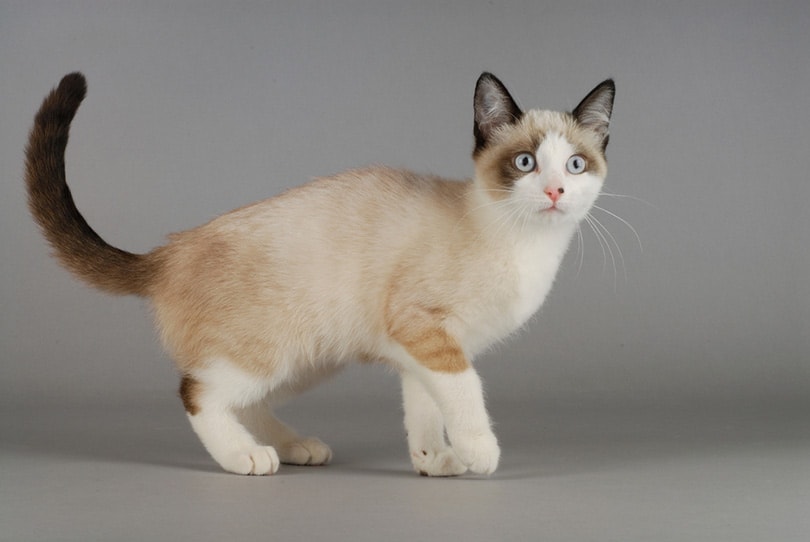
Are Snowshoe Cats Hypoallergenic? Vet-Approved Facts & FAQ