Hepper is reader-supported. When you buy via links on our site, we may earn an affiliate commission at no cost to you. Learn more.
White Pug: Pictures, Facts, Origin & History


In this article
When we think of Pugs, we naturally imagine the colors fawn and black, which are the two AKC standard colors, but other colors are possible. Pugs can be apricot-fawn, brindle, silver-fawn, and even white in some cases. Pure-bred white Pugs are very uncommon, as they’re the result of a genetic mutation called leucism.
Leucism is not the same as albinism, which is a total lack of melanin production1. Dogs with leucism still produce melanin but in small amounts. Mixed-breed Pugs may also turn out white if the other parent is a white dog. White Pugs are somewhat controversial because unethical breeders sometimes breed albino dogs and market them as rare “white” Pugs.
Color aside, there aren’t many differences between a white Pug and a Pug in any other color. If you’re curious to learn more about the history of Pugs and what they’re like to live with and care for, this post tells all.
Breed Overview
Height:
Weight:
Lifespan:
Colors:
Suitable for:
Temperament:
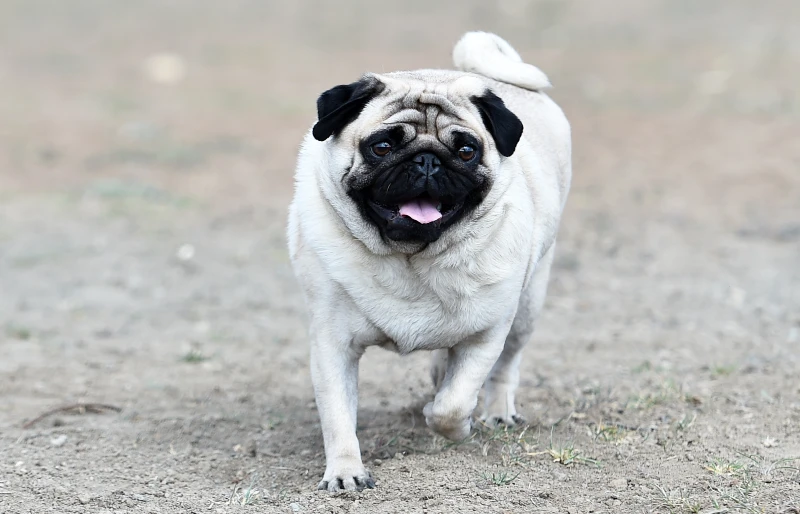
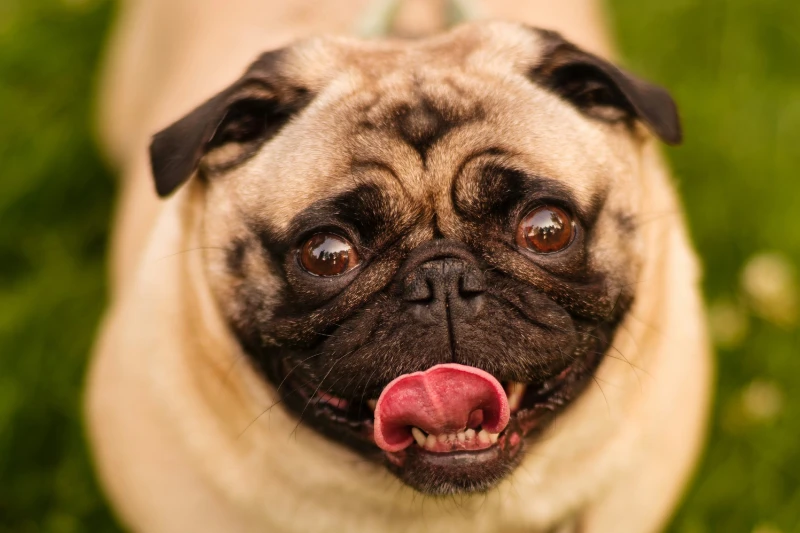
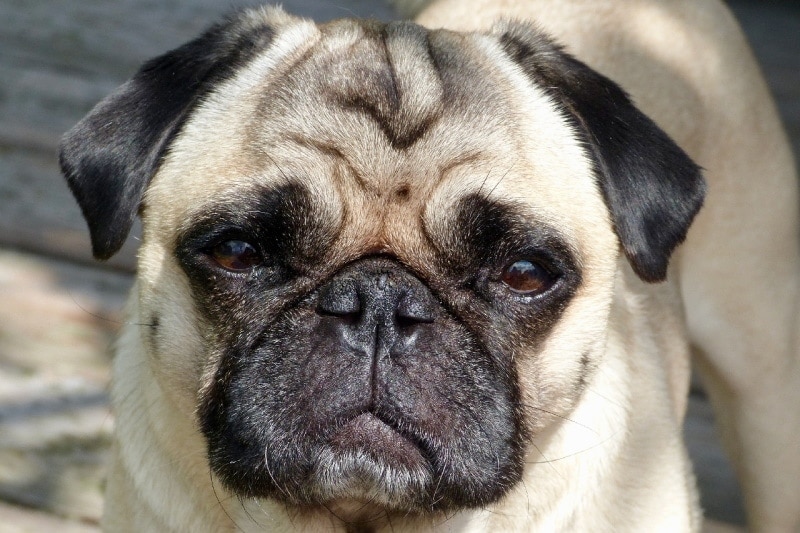
Like Pugs in other colors, white Pugs are small dogs that are typically about 10–13 inches tall at the shoulder. They weigh between 14 and 18 pounds and have a stocky, muscular build that is well-proportioned and almost square or rectangular-shaped, big, dark eyes, wrinkly skin, a short snout, and a curled-over tail. The Pug’s coat is short and smooth in texture.
Pug Characteristics

The Earliest Records of White Pugs in History
The Pug’s development began around 2,000 years ago. They originated in China, where, in ancient times, small, flat-faced dogs were held in high esteem by the imperial family.
In ancient China, Pugs wouldn’t have met many people other than those in or closely connected with the imperial family, as they were highly valued pets—even treasured among the royals—along with Shih Tzus and Pekingese dogs. They spent their lives in the lap of luxury as companion dogs, but some lived in monasteries with Tibetan monks.
Pugs were only found in Japan and Russia until the 16th century when they were first imported into Europe by Dutch traders. In Europe, they remained as popular with the royals as they had been in Asia.
How White Pugs Gained Popularity
White Pugs are pretty uncommon and have seemingly been popularized mostly in recent times, controversially, by unethical breeders who sometimes capitalize on breeding albinos and marketing them as rare.
However, Pugs as a breed have been popular for a very long time, beginning when they were lapdogs for Chinese royalty. From there, they headed over to Japan and Russia, then Europe, where more royals fell in love with them!
Monarchs who have kept Pugs include Queen Victoria and Prince William the Silent, the latter being responsible for making the breed popular in Britain when he visited with his Pug collection.
In 1740, the Pug became the mascot for a Freemason society named—wait for it—the Order of the Pug thanks to their steadfast devotion and loyalty. The Pug’s wonderful personality traits contributed to the breed’s continued popularity in many countries around the world, and, today, they sit at number 33 out of 284 on the American Kennel Club’s breed popularity rankings.

Formal Recognition of White Pugs
White is not recognized as a standard Pug color by the American Kennel Club, the Federation Cynologique Internationale, or the United Kennel Club. The AKC recognized the Pug in 1885, but only two colors are recognized as standard—fawn and black. Moreover, the AKC lists only black mask as a standard marking.
The FCI and UKC recognize four colors, which are fawn, black, apricot, and silver. Pure-bred Pugs can certainly be white, but this is considered a non-standard color, like the coat coloring pattern brindle.

Top 3 Unique Facts About White Pugs
1. Albino Pugs Have Pink Pigmentation
One way to tell the difference between a truly white Pug and an albino is to check for pink pigmentation around—not in—the eyes. An albino will have this pink pigmentation, whereas a white Pug will not. Albino dogs are typically blue-eyed, contrary to popular belief that their eyes are pink.
2. A Pug Saved William the Silent’s Life
A Pug (though the color is not known) named Pompey saved the life of Prince William the Silent in 1572 by barking when Spanish troops invaded a soldier’s camp, which alerted him to the presence of his would-be assassins.

3. Josephine Bonaparte Had Pet Pugs
When the wife of Napolean was imprisoned, she communicated with her family via secret messages her pet Pug at the time would deliver.
Does a White Pug Make a Good Pet?
All Pugs make great pets thanks to their typically affectionate, easygoing, and cheerful nature. They adapt very well to apartment life and only require a moderate amount of daily exercise to keep them happy, and only need to be brushed weekly as a rule because their coats are easy to maintain. This makes Pugs a good fit for many kinds of owners with various living arrangements.
Like other breeds, Pugs need to be socialized as early as possible with other people and dogs to make sure they feel comfortable navigating social situations and don’t react fearfully or aggressively. Socialization will truly enhance and bring out the Pug’s lovely traits, like friendliness towards anyone who treats them kindly, other dogs, and other pets in the household.
One thing to be aware of is that Pugs are susceptible to certain health issues—particularly breathing issues—because they are brachycephalic dogs. For this reason, they quickly become uncomfortable in hot weather, as this exacerbates their breathing difficulties.
The breeding of Pugs is a subject of controversy because of the discomfort they can suffer due to breathing problems and their wrinkly skin, which is vulnerable to skinfold dermatitis. If you have an albino Pug, they may also be prone to sunburn and skin cancer.

Wrapping Up
To recap, truly white Pugs, which come about as a result of leucism, are very rare and are distinct from albino Pugs, whose bodies do not produce melanin. Their rarity certainly distinguishes them from other Pugs, however, historically and in terms of personality and other characteristics, white Pugs aren’t really different from any other kind of Pug!
See Also:
Featured Image Credit: Murilo Mazzo, Shutterstock
Get Hepper In Your Inbox


Pet care tips from our vets and experts, straight to your inbox.
You may opt-out at any time. View our Privacy Policy for more information.
Kit Copson is a freelance writer and lifelong animal lover with a strong interest in animal care. She has parented various furry beings over the years and is currently a proud cat mom of two—one skittish but adorable Domestic Shorthair and very chilled (unless hungry) Siamese and a —and dog mom of one—an adopted Bichon Poodle cross. When not writing about or spending time with pets, Kit can be found doodling in her sketchpad, reading, or more often than not, drinking tea.
Join the conversation
Ask a question, share your story, or send private feedback.