Hepper is reader-supported. When you buy via links on our site, we may earn an affiliate commission at no cost to you. Learn more.
White’s Tree Frog: Lifespan, Diet, Pictures and More
In this article
For experienced and beginner amphibian enthusiasts alike, White's tree frogs (Litoria caerulea) stand out as charming and captivating pets. Their appearance is so endearing it's almost comical, and they have distinct behaviors to go along with their high cuteness factor. White’s tree frogs have manageable care requirements and have become increasingly popular in the world of exotic pet keeping.
Let’s leap into the wonderful world of White's tree frogs, exploring everything you need to know about keeping them as happy and healthy companions.
| Size: | 3–4 inches long, 2.5–3.5 ounces |
| Lifespan: | 7–10 years |
| Colour: | Various shades of green and bluish green |
| Suitable for: | Beginner and experienced amphibian owners |
| Temperament: | Docile, calm, easy to handle |
| Diet: | Insectivores |
| Tank Set Up: | Coco coir, large bark, large gravel, branches, with live or artificial plants |
| Minimum Tank Size: | 15 gallons for one, 20 gallons for two |
| Suitable Tank Mates: | Other White Lipped Tree Frogs |
These frogs hail from the tropical rainforests of Australia, New Guinea, and Indonesia, where they inhabit trees and shrubs near water sources. White's tree frogs are known for their nocturnal habits, becoming more active at night when they hunt for insects and other small prey. Their arboreal nature means they are excellent climbers, and you'll often find them perched gracefully on branches or leaves in their native environment. They’re not super active and prefer just relaxing in one spot for a while.
Characteristics of White’s Tree Frogs

White’s Tree Frog Overview
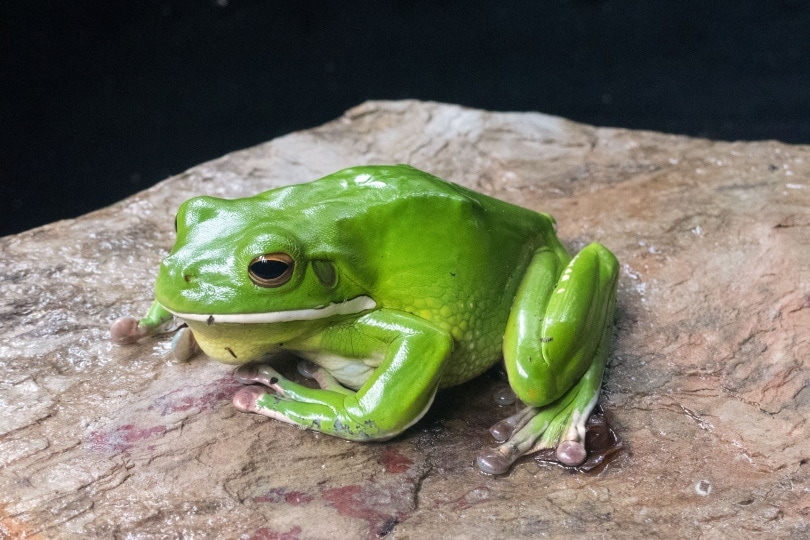
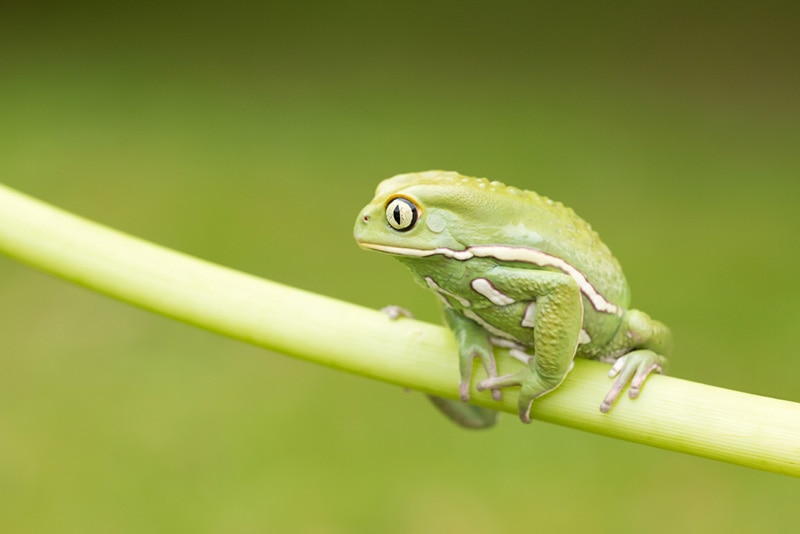
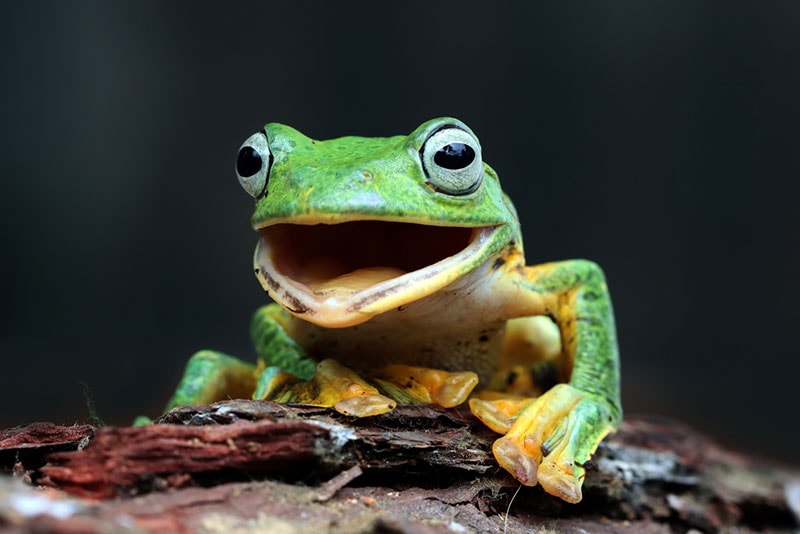
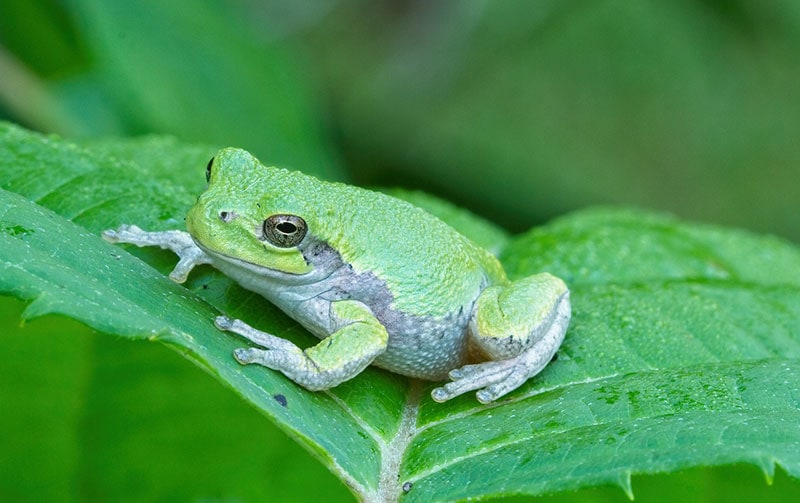
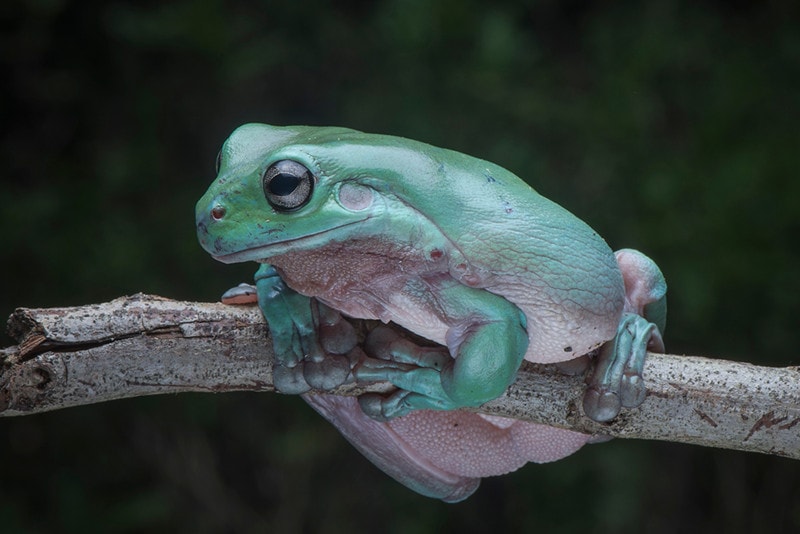
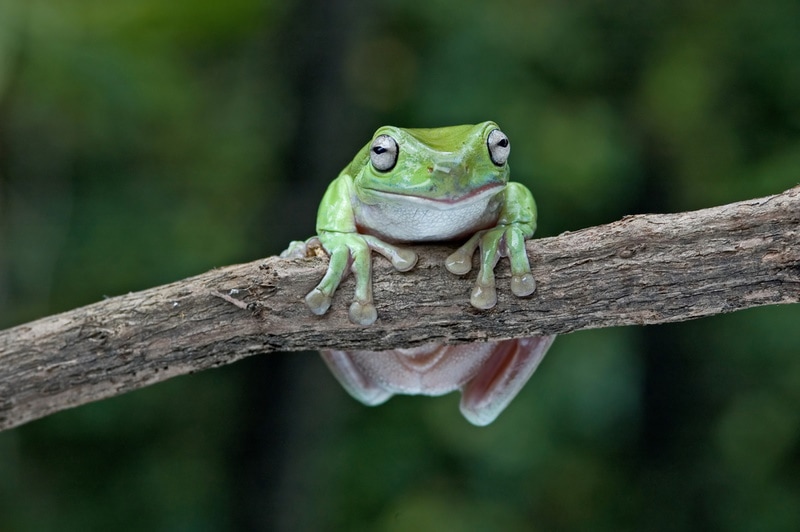
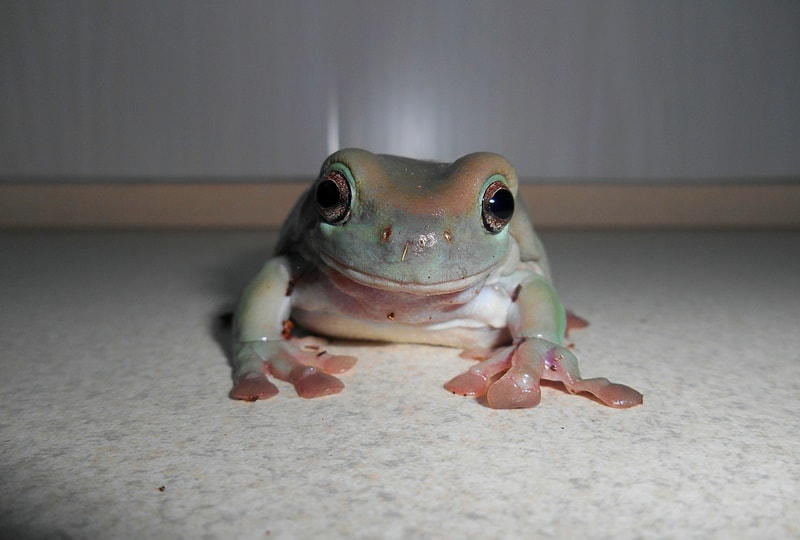
White's tree frogs are famous for their rotund bodies and oversized, expressive eyes. Their lovely coloration (from bright green to mint to pale greenish-blue) adds to their charm, making them highly recognizable and appealing to people.
These frogs typically reach about 4 inches in length, with males being slightly smaller than females at closer to 3 inches. They weigh 2.5 to 3.5 ounces. This petite size is perfect for those looking for a unique but manageable pet with lots of personality (for an amphibian!).
Another distinct feature of these cuties is their feet. They are webbed and have extra-long toes/fingers that have large round pads on the bottom that add to their whimsical appeal.
White’s tree frogs also have a waxy coating on their skin that is unique to amphibians. It helps them retain moisture and live in more arid environments (like a house or apartment) than other species of amphibians.
Care Guide & Tank Set Up
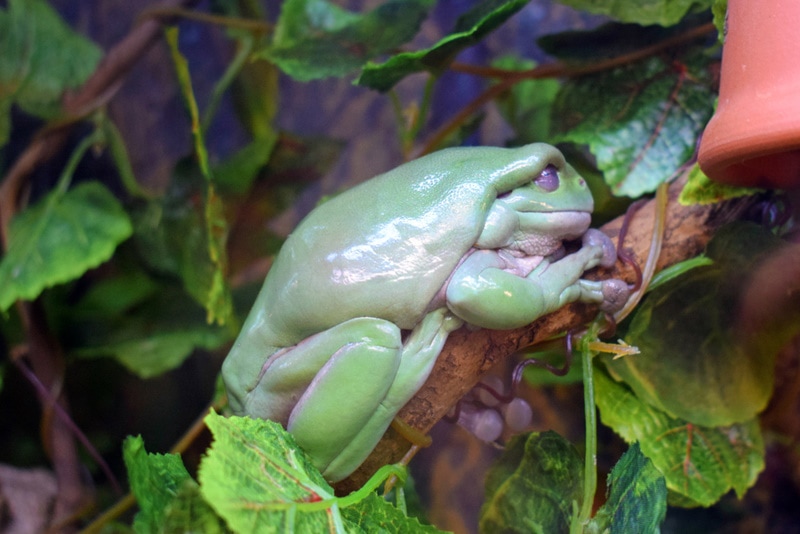
Creating the perfect habitat for your White's tree frog is a critical first step in ensuring their well-being. Here's what you'll need:
Tank Size
Choose a spacious glass terrarium that provides both horizontal and vertical space; it needs to be both tall and long to allow your frog to explore and feel comfortable. A 20-gallon tank is the minimum size needed for a pair of frogs. Ensure it has a secure lid to prevent escape; these frogs can easily climb on both branches and the glass sides of the tank. Avoid metal mesh lids and anything with sharp metal edges.
Each day, you’ll need to look around the tank for feces and uneaten food; these should be cleaned up right away to prevent a build-up of bacteria that can harm your froggo. Deep clean the tank every two weeks using a 1:30 bleach-to-water solution. Do not use household cleaners or scented soaps; your pet has very sensitive and highly absorbent skin.
Substrate
Choose the right kind of substrate. Opt for a substrate that retains moisture well, such as coconut coir or sphagnum moss. This not only helps maintain humidity but also provides a comfortable substrate for burrowing. Provide areas that have a covering of large gravel as well. Stay away from small fish tank gravel or shredded barks that your frog could accidentally eat.
Add many climbing branches, live plants (fake ones work, too), and hiding places to create a stimulating and secure environment. An enriching environment is an essential part of keeping your pet healthy and content. Ensure that any decorations are securely anchored to prevent accidents. Create little hiding holes and other private areas for your frog to sleep or rest in.
Humidity
White's tree frogs require high humidity levels of around 50–70%. Achieve this by misting the enclosure regularly and using a hygrometer to monitor humidity levels. You could also purchase rain bars for the lid of the tank to achieve the same effect.
Lighting
Adding black paper to the outside of the back of the tank can help your frog find a dark place to hunker down during the day. Use a low-wattage light that is set to give the tank 12 hours of sunlight and 12 hours of darkness each day.
Heating
Maintain a temperature range of 75–85°F (24–29°C) during the day and a slight drop (68–75°F) at night. Use a heat source and a low-wattage UVB light to replicate their natural conditions.
Things to Know When Owning a White’s Tree Frog
Food & Diet Requirements
White's tree frogs are insectivores, meaning their diet primarily consists of insects. To keep them looking forward to mealtime each day, you'll need to provide them with a varied and nutritious diet. The mainstay of this diet includes appropriately sized insects such as crickets, grasshoppers, roaches, beetles and moths. Ensure that the insects are gut-loaded with nutritious food and dusted with calcium and vitamin supplements once a week for full-grown frogs before feeding them to your pet. Offer a cycle of insects to ensure a balanced diet. Waxworms, mealworms, and small earthworms can be occasional treats.
Feed your frogs every 2–3 days, adjusting the quantity based on their appetite and size. White’s tree frogs can get chunky easily, so be mindful of how much you’re feeding them to keep them in good health. Keep an eye on the ridges that are in the area above their eardrums; no ridges mean your frog is not getting enough food and prominent ridges indicate they are getting too much.
If your frog doesn’t seem inclined to catch insects that you place in their cage, you can use tweezers or forceps to hold the insect in front of them until they grab it. Just be careful as your frog may move suddenly and accidentally hurt themselves on the tweezers.
Water/ Liquid Requirements
White’s tree frogs absorb moisture through their skin. To keep them properly hydrated, provide them with a water dish they can soak in. Change this water daily.
Size & Growth Rate
As with several species of frogs, females are slightly larger than males, averaging about 4 inches when fully grown. Males reach to about 3 inches at maturity. White’ tree frogs will reach their full adult height, whether male or female, in about 2 years.
Varieties
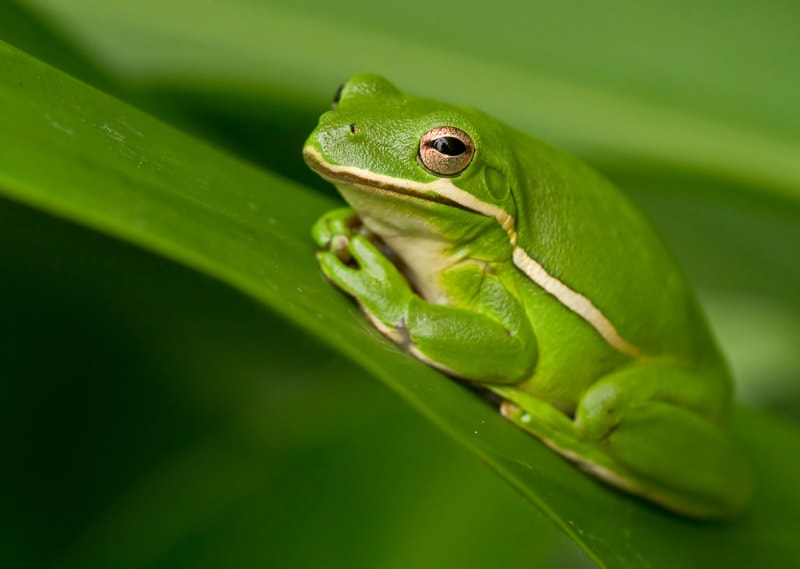
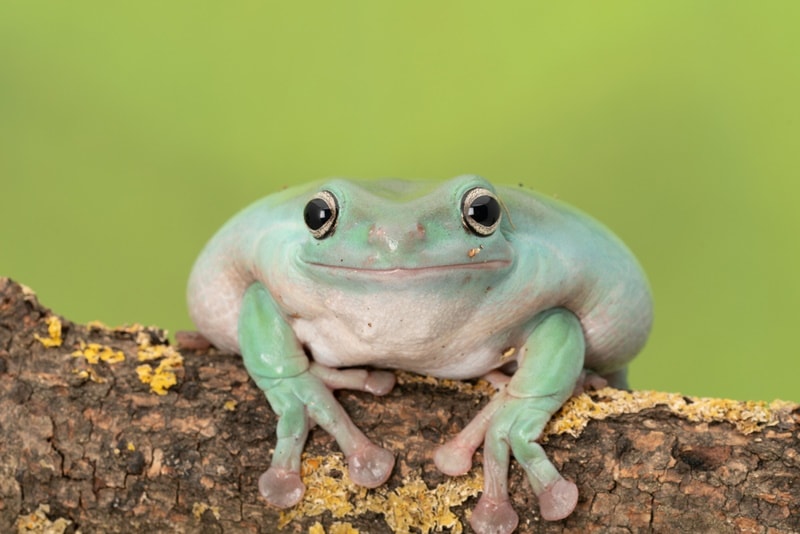
White’s tree frogs come in a variety of color morphs, such as bright green, mint, pale greenish-blue, and even a snowflake morph (covered in white spots).
Lifespan and Health Conditions
Preventive care is key to keeping your White's tree frogs healthy. Give your frogs a once over daily to make sure all seems well. Watch for any signs of illness, unusual behavior, sudden decrease in activity or changes in appetite. If you plan to introduce new frogs to your existing setup, quarantine them first to prevent the spread of diseases.
As we said earlier, clean the terrarium regularly by removing waste and replacing soiled substrate. This helps maintain a clean and healthy environment and keeps the tank lovely to look at (and smell!). Limit handling to a couple of times a day so that your frog doesn’t become stressed out.
Male vs Female
Besides size, there are not too many differences between male and female White’s tree frogs. Both sexes need the same type of setup, food, and access to fresh water.
3 Little-Known Facts About White’s Tree Frogs
1. They Can Change Color (Kinda!)
Their color changes slightly throughout the year as variables like humidity, temperature, and diet shift; they seem to like some aesthetic variety as much as we humans do!
2. They Will Always Seek Out Moisture
In their native environments, they have been found in unusual places during hot and dry seasons. Always in search of moisture, people have found White’s tree frogs in their bathrooms, water tanks, and reservoirs.
3. They Are Loud When They Need to Be
When threatened, these cuties can emit an earsplitting distress call.
Conclusion
White's tree frogs are charming, low-maintenance pets for people looking for something a bit different in an animal companion. They are unique and eye-catching, with lovely coloring and sweet faces. With proper care and attention to their needs, your froggy friend could be in your life for years. So, take the leap (hardy har har) and embark on a journey into the captivating world of White's tree frogs as your next pet companions!
Featured Image Credit: Hwe Ie, Shutterstock
Get Hepper In Your Inbox


Pet care tips from our vets and experts, straight to your inbox.
You may opt-out at any time. View our Privacy Policy for more information.

Nicole is a lover of animals of all sizes but is especially fascinated with the feline variety. She’s the proud mom of Baby, a Burmese, and works every day so he can relax in the sunshine or by the fire. She’s always had a cat in her home and has spent countless days with others, observing behaviors and softening up even the grouchiest of the lot. Nicole wants to share her kitty expertise with you so you and your cat can live happy, healthy, and care-free.
Join the conversation
Ask a question, share your story, or send private feedback.