Hepper is reader-supported. When you buy via links on our site, we may earn an affiliate commission at no cost to you. Learn more.
Why Does My Dog Pee Next to the Pad? 9 Vet-Reviewed Reasons


In this article
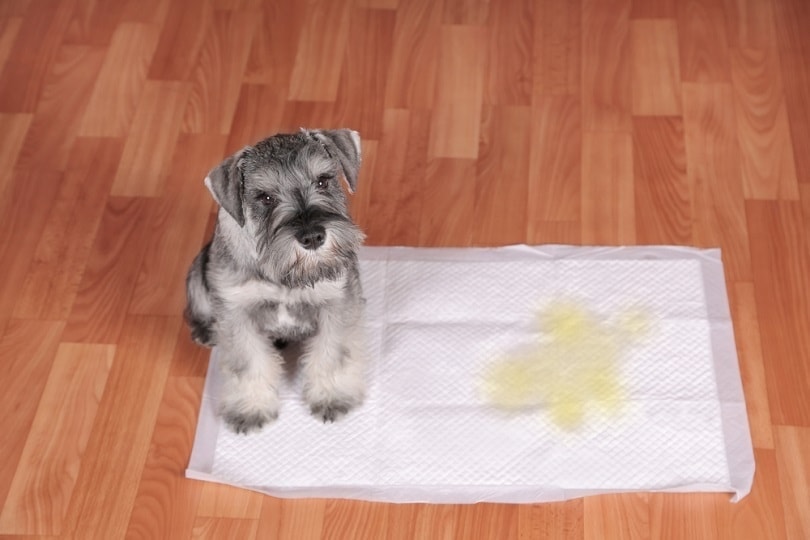
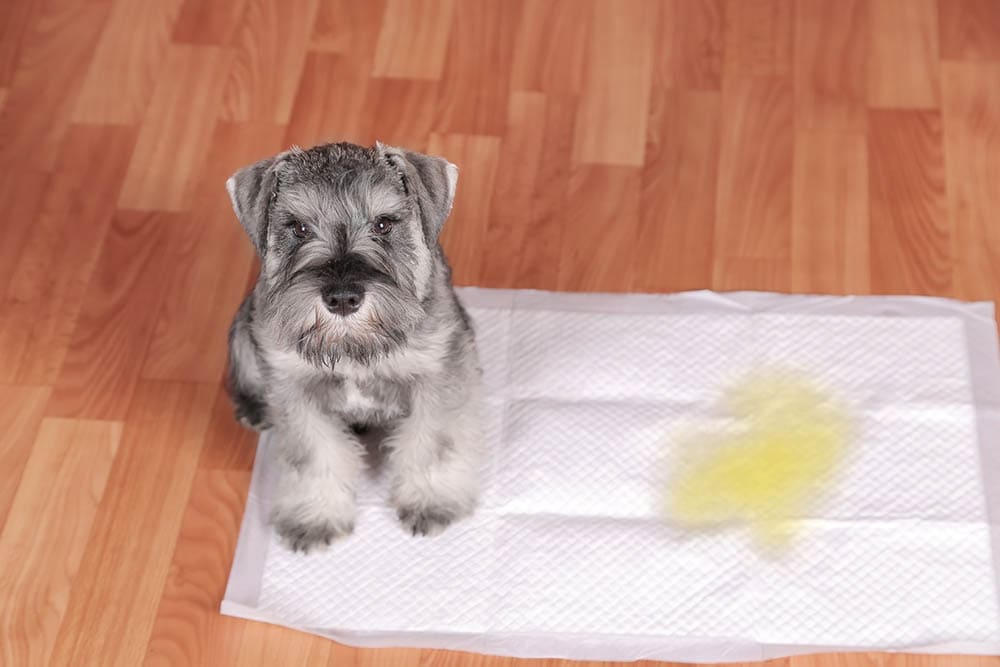
There is a moment in every dog owner’s life when they need to teach their pup to use the potty pad. That can be a complex process, especially if the puppy is young, so you’ll probably have to deal with your dog missing the spot at times. If this happens a couple of times, there’s no need to be alarmed, but if your dog is constantly missing the pad, there might be an issue.
There are several possible reasons why your dog pees next to the pad. Continue reading to learn more about them and get some tips and tricks on puppy potty training.

The 9 Reasons Why a Dog Pees Next to the Pad
1. Your Dog Is Unsure What the Pad Is For
Pads are not natural for a dog, so, understandably, your pup won’t be able to figure it out instantly. One of the most common reasons a puppy pees next to the pad is that it is unsure what the pad is for. If you didn’t provide adequate potty pad training, your dog still doesn’t realize that that’s where it needs to pee.
Do not be aggravated with your dog, and instead try to help it and potty train it to use the pad in the future. Puppies are fast learners, so as long as you guide them to where they need to go, they’ll quickly realize that they should relieve themselves on the pad.
2. Your Dog May Think It's a Toy
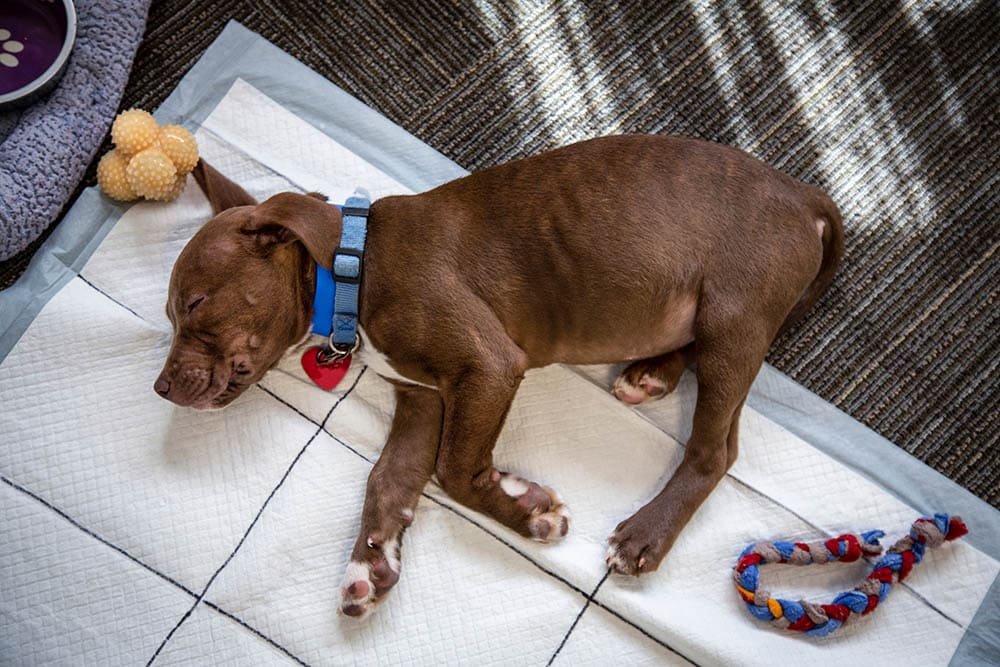
We already mentioned your dog could be unsure what the pad is for, so it might think that it’s a toy! Since puppies are not familiar with potty pads before you introduce them, they’ll probably shred them or want to play with them. Here is where potty training comes to the rescue, so once you teach your dog that the pad is solely there for peeing, that’s what they’ll begin to do. Please keep an eye on your puppy at all times to avoid any ingestion accident while he is learning the purpose of this pad.
3. The Pad Is Located Near Their Food, Water, or Sleeping Area
Dogs like to have designated spots for everything they do. That’s why it’s crucial to provide them with a safe space where they can eat, sleep, drink water, and pee. If you put the pads near their food, water, or sleeping space, the dog might not be happy. Try to create an appropriate area for food and water and sleeping, and place the training pads in the bathroom. That way, your puppy will know which room/space it needs to visit to do a particular thing.
4. The Pad Is Difficult to Reach
Another reason why your dog is peeing next to the pad is the location. If you set the pad in a difficult-to-reach area, or it’s not noticeable, your pup will have issues peeing on it. Your dog might not notice it instantly, or even if they do, they might not have enough time to hold their bladder till they reach the pad. As mentioned above, it would be best to place the pads in the bathroom, where the dog will have it in plain sight and reach it without struggle.
5. The Pad Is Not Always in the Same Place, or It's in a High-Traffic Area
When you constantly change where you put the potty pads, your dog can quickly become confused and not know where it needs to pee. So, once you make a spot for the pee pad, be consistent and keep it there at all times. Also, if you set the pad in a high-traffic area, your dog will likely pee somewhere else. Like us, dogs need a quiet, peaceful environment to pee, so placing a pad in a busy spot will be an issue as it can cause distraction.
6. The Surrounding Areas Smell Like Urine
You probably already know that dogs use their sense of smell to recognize the place where they urinate. Now, that helps with potty training, but if your dog has peed on other surfaces in your home and you haven’t cleaned them properly, the pup might want to pee in that same spot again. So, it’s essential to keep your home clean, and the only place that should smell like dog urine is the potty training pad. That will help your dog to remember where it needs to go.
Our favorite enzyme cleaner for eliminating pet smells and stains is our very own Hepper Advanced Bio-Enzyme Pet Stain & Odor Eliminator Spray. It makes clean-up a breeze because it permanently removes even the very worst smells and stains (urine, feces, vomit, you name it!) from basically any surface you can imagine.

- ADVANCED ENZYMATIC CLEANER - Penetrates the most stubborn smells and stains at the deepest molecular levels to dissolve any pet mess you encounter and lift it away at the source.
- FOR ANY MESS, ON ANY SURFACE - This pet odor eliminator cleans your carpets, floors, furniture, fabrics, and more. Whether it's urine, feces, vomit, or drool, you can erase all foul spots and smells!
- FRESH, NATURAL ODOR - Our unique formulation doesn't rely on dangerous or unpleasant chemical fragrances to get the job done. We eradicate smells and stains, not just cover them up.
7. Your Pup Might Have Bad Aim
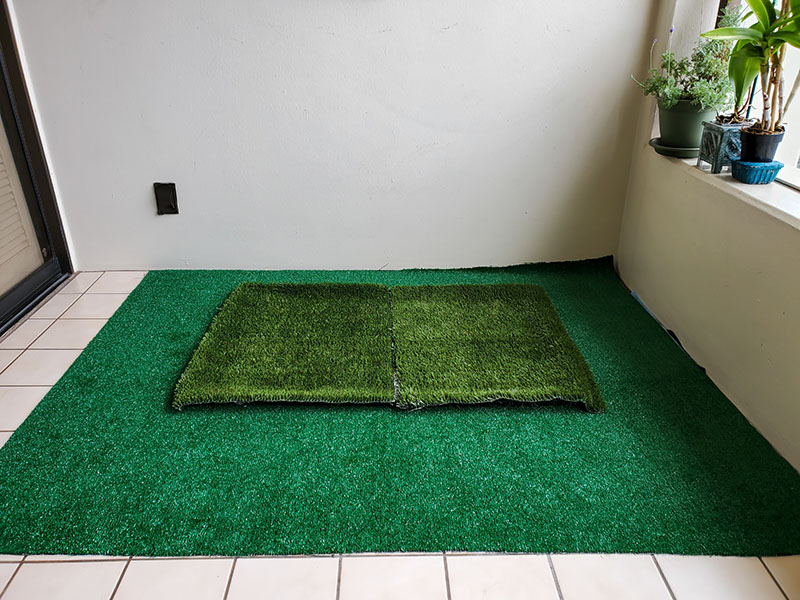
Sometimes, especially when a dog is young, they may have bad aim. Be there for your furry friend and try to help them with this problem. It would be good to place a couple of pads next to one another to cover a larger area. Also, you could set it with raised edges so that the urine won’t spill or splash. Take your time, be gentle, and guide your pup until you resolve the issue. They will be thankful to you and you’ll be able to bond more through this process.
8. The Pad Isn't Clean
You probably wouldn't like to use a dirty toilet, so no wonder puppies don’t want to pee on dirty potty pads. You need to ensure that the hygiene of the pads is as it’s supposed to be. Of course, there’s no need to change the potty pad if your dog peed on it once. However, you shouldn’t wait until it’s soaked in urine to change it.
9. Your Puppy Isn't Able to Reach It in Time
One of the common reasons your dog is peeing next to the pad is that they might not be able to reach the potty pad in time. When puppies are young, their potty reflexes are still not fully developed, so if they cannot reach the area they need to pee, they will do it somewhere else in the house. This issue will resolve itself with time, so there’s no reason to worry.
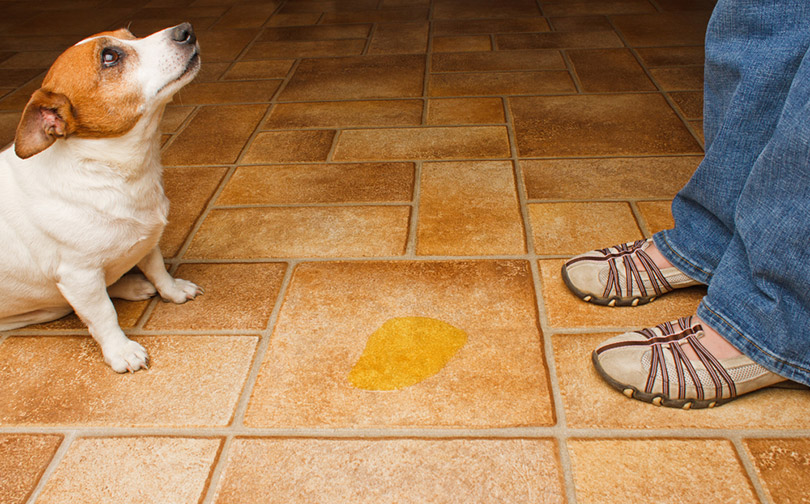

How to Train Your Dog to Use the Potty Pad
You can help your dog and train them to use the potty pad to minimize this issue. You have to begin this process calmly and with tons of patience. Once you set up the training pad, regularly take your dog there and create a daily routine. Try to anticipate when your puppy will pee, which commonly happens after eating, drinking, or sleeping. Another indicator that your dog needs to pee is that they’re sniffing around the house instead of playing. Guide them to the potty pad whenever you notice a sign that your puppy wants to pee.
It might be best to take your pup to the pad every 2 to 3 hours to develop a habit of using the potty pads. Always reward your puppy when they’ve peed on the potty pad. Your dog will be happy knowing that they've done an excellent job and got praised for it.
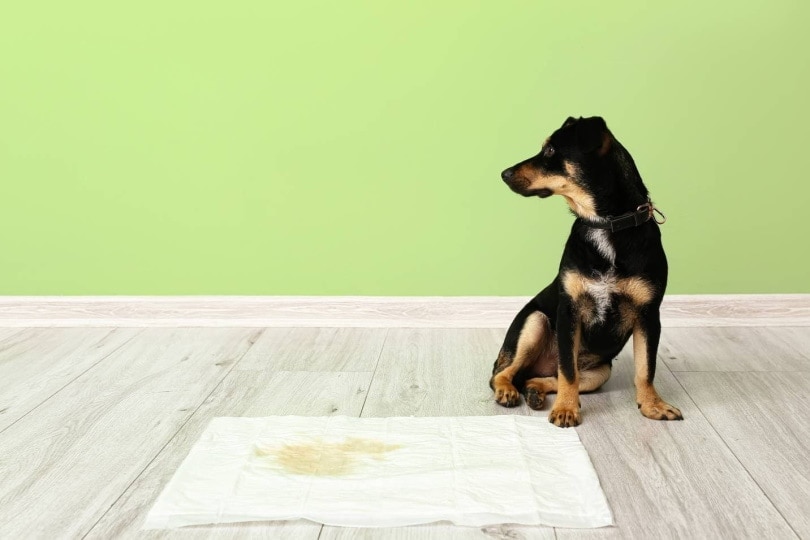
Pad Hygiene
You should pay attention to pad hygiene so that they’re always clean and ready for your pup to do what it needs to do. Below, you can see some key points to keep up the hygiene and create a safe area where your dog can pee.
When Should I Change My Dog's Pad?
As a dog owner, it is your responsibility to keep everything related to your dog hygienic. After several uses, you should change the pads (preferably three or four). There’s no need to change the pad after one use, but you shouldn’t leave it soaking in urine for days.
That will help your dog recognize where they need to go and the area will smell nice.
Where Should You Place Pee Pads?
We suggest placing the potty pads in the bathroom and placing the potty training pad into a pee pad holder. That will prevent any leakage, and you’ll be sure urine will not spill on your floor. Once you create a designated area where your dog will pee, it is best not to change the spot where you place the pads.
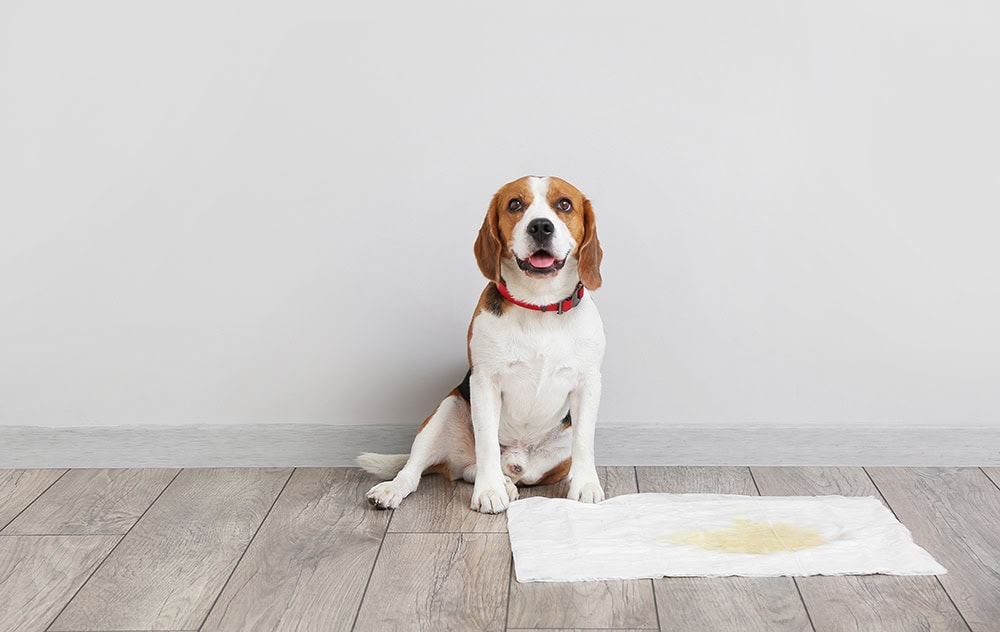
How Do You Change a Pee Pad Location?
If you’re planning on changing the location of your puppy's potty pads, you need to do it gradually. It might be best to move it for a couple of inches each day until you reach the new location. Daily show the new spot to your pup to adapt to the new potty spot without difficulties.
How Long Should a Puppy Use Pads?
There’s no exact timeframe when it comes to how long a puppy should use pads. Still, there are signs you can notice in your dog's behavior that can be an indicator that it is time to get rid of the potty pads. Consider removing the wee pads from your home if you notice any of these signals.
Also, there are indicators that your dog is not ready to give up the potty pad just yet.
If you see any of these signs, keep the pads for a little longer. Every dog is unique, so some will need more time than others to finish potty training.

Conclusion
When you notice that your dog is missing the potty pad, try to get to the root cause of the issue and help your dog. Again, it is crucial to be patient, so take your time and guide your dog. As long as you support your puppy with care and love, they will be grateful and quickly learn to use pads properly.
See also:
Featured Image Credit: Maximilian100, Shutterstock
Get Hepper In Your Inbox


Pet care tips from our vets and experts, straight to your inbox.
You may opt-out at any time. View our Privacy Policy for more information.
Nicole is a lover of animals of all sizes but is especially fascinated with the feline variety. She’s the proud mom of Baby, a Burmese, and works every day so he can relax in the sunshine or by the fire. She’s always had a cat in her home and has spent countless days with others, observing behaviors and softening up even the grouchiest of the lot. Nicole wants to share her kitty expertise with you so you and your cat can live happy, healthy, and care-free.
Join the conversation
Ask a question, share your story, or send private feedback.