Hepper blog

Search our database of over 9,984 posts with up-to-date information from our experts and veterinarians.

Hepper is reader-supported. When you buy via links on our site, we may earn an affiliate commission at no cost to you. Learn more.

Why Does My Puppy Poop So Much? Vet-Reviewed Health Facts & FAQ

By Nicole Cosgrove · Reviewed & fact-checked by Dr. Paola CuevasVet Approved
Dr. Paola Cuevas
Reviewed & Fact-Checked byDr. Paola CuevasMVZ (Veterinarian)
Paola Cuevas is a veterinarian and animal behaviorist, with over 18 years of experience working with a variety of species. Her passion is animal welfare and focuses on the importance of preventive medicine. Paola has skills in the fields of nutrition, microscopy, clinical pathology, diagnostic imaging, and endoscopy as well as extensive experience in animal training through positive reinforcement. As our in-house veterinarian, Paola is very happy to share her knowledge and experience with our readers and hopes to be helpful with any issue presented by your non-human family members.View authorThe information is current and up-to-date in accordance with the latest veterinarian research. Read about our vets
Share
Ask us a question in the comments
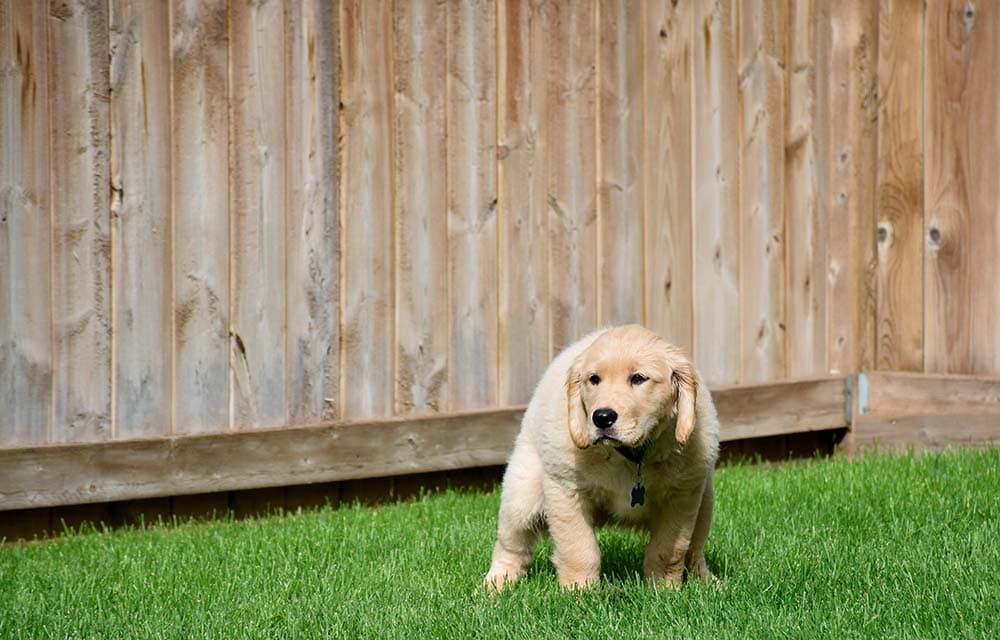
Golden retriever puppy getting ready to poop on green grass in the backyard

It is time to get your game face on for today’s topic. Although poo is never a pleasing conversation, when it comes to your puppy, it is more important than you think. As a matter of fact, your veterinarian uses your dog’s droppings as their main barometer to determine their overall health.

If you have a brand-new puppy, though, the number of bathroom trips can be alarming if you're not familiar with how much a puppy poops. To save you the suspense and worry, puppies are like babies—cute, cuddly, and always going!

That being said, there are some instances when you should be worried. In this article, we will go over how much is too much, what should be considered an emergency vet visit, and how you can reduce the overall number of bathroom breaks.

Why Does My Dog Poop So Much?

The average adult dog typically goes to the bathroom between one and three times per day. A puppy can go twice that amount. As a general rule, the younger the pooch, the more they are going to go.

The determining factor of poo volume is the amount of fiber in their diet. Other factors, such as their size, age, metabolism, and health, can also impact their toilet habits. For example, a change in diet, anxious situations, and a deviation of their normal routine can be at fault.

Overall, though, the concerning question regarding your dog’s poo goes beyond how much there is and includes the frequency and consistency. We know examining your puppy’s fecal matter is probably not on your bucket list, but it can help you figure out what is normal for your pooch and what is cause for alarm.

In general, you want to be aware of consistency, frequency, color, size, and make-up. (Gross but necessary, we know.) Once you have an idea of what a normal poop looks like for your pup, your only job is to make sure it stays consistent. Loose, watery, or off-color waste is when you want to be worried, which we will go over in more detail further on.
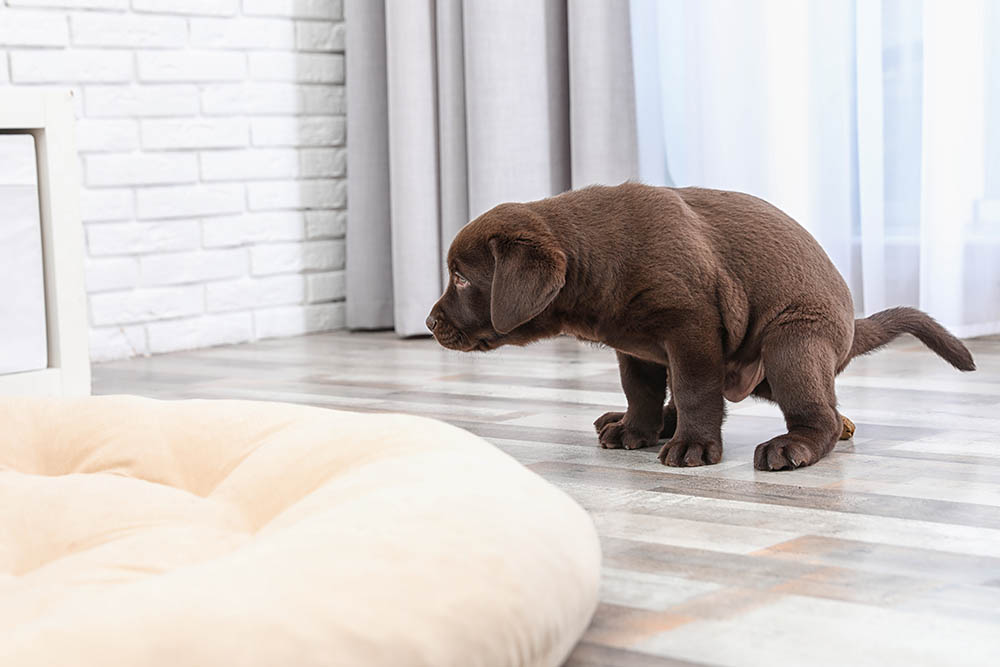
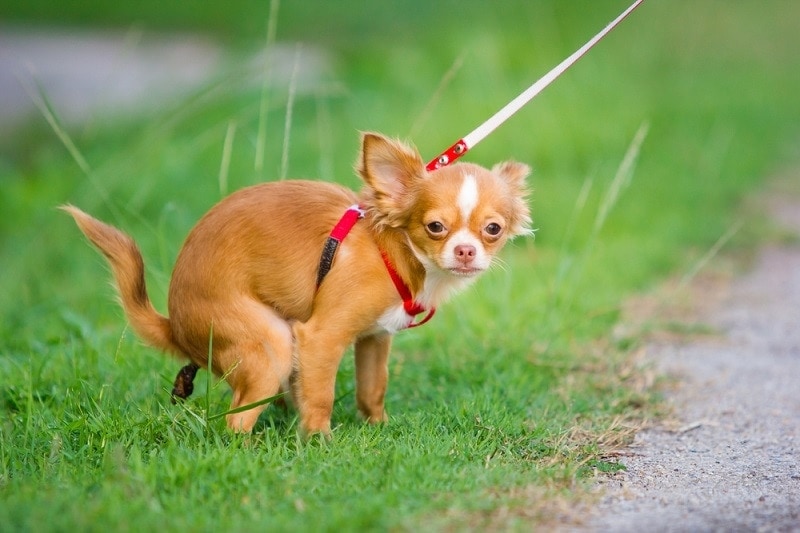
Chocolate Labrador puppy pooping
Image Credit: New Africa, Shutterstock

Why Is My Puppy Pooping a Lot Lately?

Many new pup parents tend to get alarmed when their furball starts to go more frequently. If they have been paying attention to consistency and started to notice a pattern, then an increase can seem like a problem

Determining the reason for the increase is usually a simple matter of deduction. Here are the most common reasons for an increase in potty runs:

  • Too Much Food: Overfeeding your puppy can result in more frequent bathroom trips. It is interesting to know how many puppy parents are shocked by this revelation. In general, fur babies should be fed three to four times per day. If you are giving them five small meals, you can combine them into three meals a day. Conversely, if you are doing only two meals a day, this can be too much food at once, and you should even it out to avoid other tummy issues.
  • Leftovers: Yes, we are sure you have heard this before, but table scraps are not good for your pet. Human food has ingredients that dogs have a hard time tolerating. Greasy foods, sugar, and other ingredients can have a very lucrative effect on your furball's bowels—if you catch our drift. In short, skip the leftovers and find healthy treats instead.
  • Change: We touched on this briefly before, but a change in diet or environment can cause more bathroom breaks. Diet specifically can give your ankle biter’s stomach a shock. New scenery can cause your pet excitement and stress, which can also affect their digestive system.

Again, as long as your puppy is showing the same consistency, an increase of pooping frequency in 1 day or so should not be a worry, especially if you can pinpoint one of the factors above as the cause.

What Is Not Normal?

Unfortunately, other underlying issues could be affecting your puppy’s poop schedule. You want to be aware of the warning signs so you can take the right steps to correct it. Let’s take a look at the different circumstances that would be a cause for concern:

  • Diarrhea: A change in consistency and increased frequency of feces is the definition of diarrhea. Any poo that is loose or watery is a sign of gastrointestinal distress. The cause can be several factors, including diet, eating table scraps, or anxiety. In some cases, though, it can be more serious. You should also watch out for vomiting. Try to give your pooch a bland diet and lots of water, and monitor them for improvement. If they do not, you should seek help from a professional.
  • Deviation From Their Normal Routine: If your furball has created a poo space (which all dogs do), and they start going in other areas, that can be a sign of trouble. This is especially true if they also show other signs of issues.
  • Blood: If you notice blood in your puppy’s stool, you need to get them to the veterinarian immediately. From the deadly parvovirus to worms, blood in the feces needs to be investigated by a vet.
  • Color: You should know the normal color of your dog’s poop. If you notice dark or black coloring, this could indicate digested blood. A red color also means bleeding, but it’s closer to the anus and not digested. Yellow or orange poop usually indicates an issue with the liver, while white or gray poop points to a problem with the pancreas or gallbladder. Any of these colors could be cause for concern, though certain things that get ingested can also affect poop coloration.
  • Mucus or Grease: While oily or fatty food can make poop look greasy, this could also indicate pancreatic issues. Mucus could point toward parasites or intestinal inflammation. If all your puppy’s feces look this way, get them checked by the vet right away.
  • Worms: To spare you the gory details, here is a concise explanation. You will notice worms in your dog’s poop due to the contrast of white on brown. Rice or sesame seed-like particles are a good example. If you see these, go to the vet.
  • Food: If your puppy is on a fresh food diet, it is perfectly normal to see a bit of undigested plant material. The same principle applies if they ate some grass. However, seeing undigested kibble is an indication that there likely is a problem that needs to be addressed.

Overall, these are the most common poo problems. Although we mentioned an increase is not necessarily an issue if consistency is okay, the opposite is not true. If you notice your pup has not gone to the bathroom in more than 2 days, you should call your vet. Also, keep a lookout for whining, grass eating, and glances at their tummy region, along with an overall lethargic attitude.

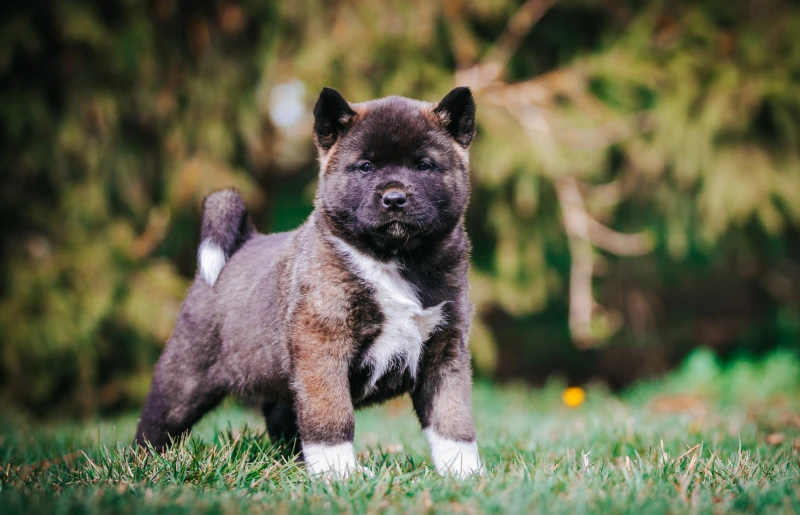
american akita puppy dog walking on the grass
Photo Credit: Eve Photography, Shutterstock

Can I Reduce the Poop?

As your puppy grows, the frequency that they need to go poo will gradually be reduced. It is normal for young puppies to poop six times in a day, which makes sense because their feedings are also more frequent. Potty training will help prevent in-home accidents, especially as your puppy will gradually reduce the number of times a day that they need to poo.

Take a look at these proven methods to successfully potty train your puppy.

  • Create a schedule: Try to form a consistent schedule with your pooch so they will become accustomed to potty time. The best time to take them is right after a meal, first thing in the morning, the last thing before bed, after nap time, and after playtime.
  • Positive Reinforcement: It is important to reward your pooch when they go at the scheduled time in the correct place. Throw your pooch a treat for good poo etiquette.
  • Gradually Decrease Their Meals: As your puppy grows, you should be able to gradually decrease your pup’s feedings from four to five times a day to three. This will also cut down on the number of bathroom breaks that they need. Additionally, try to find food that has less fiber.
  • Potty Spot: This goes back to routine, but bringing your pooch to the same spot every time will reinforce training and help them recognize when it is time to go.
  • Key Words: Use the same words or phrases to indicate bathroom time, like “potty” or “bathroom.” Try to avoid these words until it is time to go. Your pup picks up on more subtle clues than you would think, and they can often associate “potty time” with going outside or for a walk.

Conclusion

The moral of the poo story is that too much is probably normal. As long as you are keeping an eye on the “matter” itself, you will soon come to see what is concerning and what is not. We hope this article has relieved your stress and given you the information you need to go back to enjoying time with your fur baby.

Also See:


Featured Image Credit: JulieK2, Shutterstock

Get Hepper In Your Inbox

Pet care tips from our vets and experts, straight to your inbox.

List

Select all that apply.

You may opt-out at any time. View our Privacy Policy for more information.

Nicole Cosgrove
Authored by

Nicole Cosgrove

Join the conversation

Ask a question, share your story, or send private feedback.
Rate this post
Required to post. Only our editors see your rating.
Who should see this?

A human reviews every comment before it appears. Your email is never published.

Picked to go with this article

Why Does My Dog Poop So Much? 5 Vet-Reviewed Reasons

Why Does My Dog Poop So Much? 5 Vet-Reviewed Reasons

As a pet parent, dealing with poop is an inescapable reality. But what if your dog is pooping too much? If you find yourself cleaning up more stinky piles than…

Chelsie Fraser
By Chelsie Fraser ·
What Should Puppy Poop Look Like? Vet-Approved Feces Guide & What to Look For

What Should Puppy Poop Look Like? Vet-Approved Feces Guide & What to Look For

When it comes to puppy poop, the less you see it, the better, right? Puppy stool may not be the most pleasant topic, but normal puppy poop is a sign of a healt…

Nicole Cosgrove
By Nicole Cosgrove ·
How Often Should a Dog Poop? Vet-Reviewed Facts & FAQs

How Often Should a Dog Poop? Vet-Reviewed Facts & FAQs

Believe it or not, dog poop can give us a lot of insight into our canine’s overall health. Healthy dogs with proper diets and ample activity will typically poo…

Jana Blagojevic
By Jana Blagojevic ·
Why Does My Puppy Have Diarrhea? 6 Vet Reviewed Causes, Types & Diagnosis

Why Does My Puppy Have Diarrhea? 6 Vet Reviewed Causes, Types & Diagnosis

Puppies and accidents go hand in hand, but diarrhea can be concerning. It can happen for several reasons - especially in puppies - ranging from a change in die…

Nicole Cosgrove
By Nicole Cosgrove ·

Keep reading

More stories you might like

Why is My Puppy Peeing a Lot? Vet-Approved Facts & Advice

Puppies pee. A lot. But how much is too much? If you find yourself cleaning up after your brand new, absolutely adorable puppy (lucky that they’re so adorable!…

Kathryn Copeland
By Kathryn Copeland ·
Why is My Puppy Peeing a Lot? Vet-Approved Facts & Advice

How to Firm Up Your Dog's Poop — 6 Vet-Reviewed Steps

Owning a dog can be fun, but there are a lot of responsibilities that are inevitable. From health problems to monthly expenses, caring for a dog is no easy tas…

Nicole Cosgrove
By Nicole Cosgrove ·
How to Firm Up Your Dog's Poop — 6 Vet-Reviewed Steps

Puppy Care 101: Information Sheet for a Healthy Pup

Getting a puppy is exciting and nerve-wracking at the same time. Raising a dog is a rewarding experience, but first-time puppy owners could easily become overw…

Nicole Cosgrove
By Nicole Cosgrove ·
Puppy Care 101: Information Sheet for a Healthy Pup

Dog Has Diarrhea but Acts Fine? Vet-Reviewed Advice & FAQ

It can be distressing when your dog isn’t feeling well, but what if they have diarrhea and seem to be fine? Should you be worried about this? Should you take t…

Kathryn Copeland
By Kathryn Copeland ·
Dog Has Diarrhea but Acts Fine? Vet-Reviewed Advice & FAQ

How to Stop Diarrhea in Dogs: 6 Vet Approved Home Remedies

Diarrhea is one of the most common concerns that vets deal with regarding dogs. It’s a very frequent ailment that affects almost all dogs at one time or anothe…

Nicole Cosgrove
By Nicole Cosgrove ·
How to Stop Diarrhea in Dogs: 6 Vet Approved Home Remedies

How Long After Eating Does a Dog Poop? Canine Digestive Facts (Vet-Reviewed)

One of the less pleasant parts about owning a pet is cleaning up after them. It doesn’t matter if it’s scooping a litterbox for your cat or taking care of the…

Nicole Cosgrove
By Nicole Cosgrove ·
How Long After Eating Does a Dog Poop? Canine Digestive Facts (Vet-Reviewed)

Progressive Retinal Atrophy in Dogs: Signs, Causes & Treatment

If you’re like most dog fanatics, the day you adopt a puppy or adult dog is one of your happiest, most exciting, and most emotional days. The last thing on you…

Gregory Iacono
By Gregory Iacono ·
Progressive Retinal Atrophy in Dogs: Signs, Causes & Treatment

Is Great Wolf Lodge Pet Friendly? 2026 Policy & Requirements

Are you planning a trip to one of the Great Wolf Lodge’s locations but unsure if they are pet-friendly? Knowing the facts before you go is essential in ensurin…

Rachel Giordano
By Rachel Giordano ·
Is Great Wolf Lodge Pet Friendly? 2026 Policy & Requirements