Hepper is reader-supported. When you buy via links on our site, we may earn an affiliate commission at no cost to you. Learn more.
Will Essential Oils Work for Cats? Vet-Reviewed Safety Facts


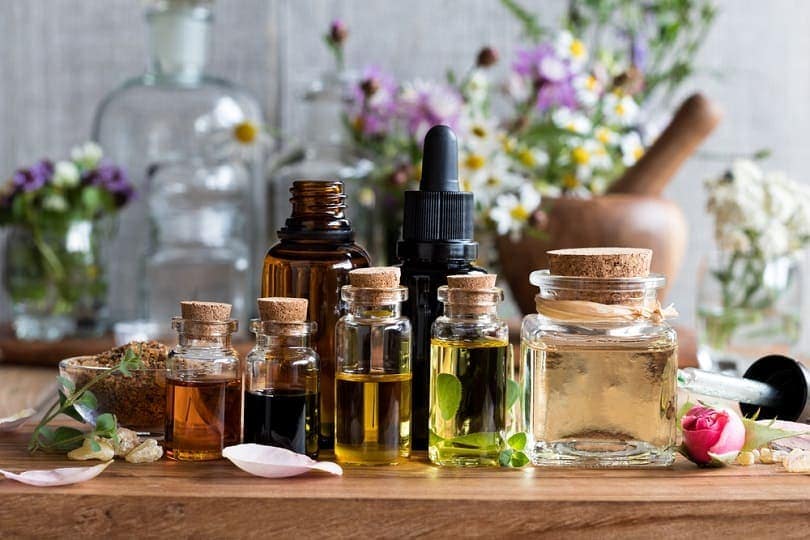
Essential oils can be used for many things—aromatherapy, health issues, pest control—but will they work for cats? After all, our feline friends could definitely use a little calming aromatherapy when crazy cat time hits or perhaps a bit of tea tree oil when they get a cut. Right?
Wrong! Essential oils will not work for cats and, in fact, can be dangerous for them. (Essential oils are dangerous for all our animal friends1, but especially cats). Here’s everything you need to know about essential oils and how they affect our cats, so you can keep your beloved pet safe.

What Exactly Are Essential Oils?
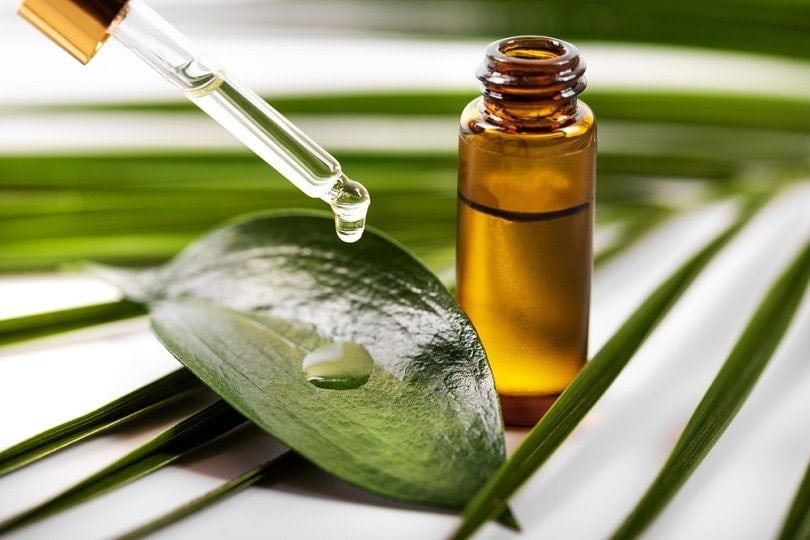
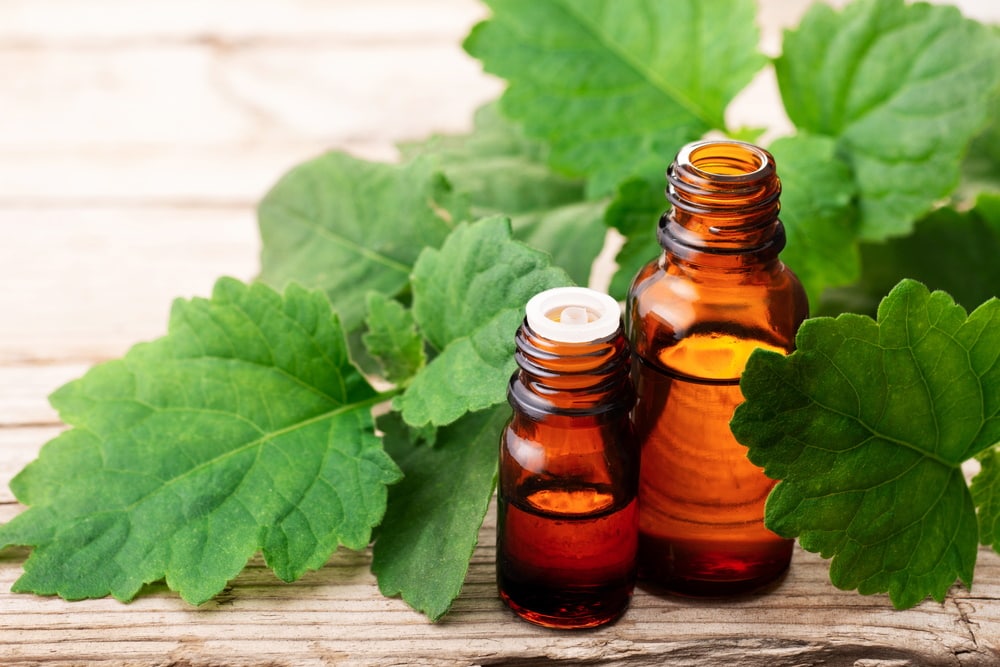
Chances are you’ve used essential oils before, but just in case you have questions, essential oils are what cause a plant to smell and taste the way it does. So, how do those oils become essential oils we use around the home? By being extracted from the said plant via either distillation or cold pressing.
And as we said above, these oils can be used in a multitude of ways. They can be used to create homemade insecticide or homeopathic remedies or as aromatherapy (the most common way they’re used).
Essential oils sound relatively harmless, but these oils aren’t all that harmless for kitties.
How Essential Oils Affect Cats
So, why shouldn’t you use essential oils for your cat? Essential oils can be toxic for our feline friends because our cats lack some of the glucuronyl transferase enzymes in the liver that are required to metabolize these oils. Without those enzymes, your pets are unable to rid their bodies of chemicals found in these oils, such as d-limonene and phenols.
Our cats can absorb these oils orally as well as via the skin. When that occurs, because of the missing enzyme, the essential oils become toxic to our pets causing damage to the liver, possible liver failure, and perhaps even death.
And while all essential oils are bad for our kitties, there are some that are more toxic than others. Some of the essential oils known to result in poisoning when absorbed by cats include:
- Ylang Ylang
- Wintergreen
- Tea tree
- Sweet birch
- Pine
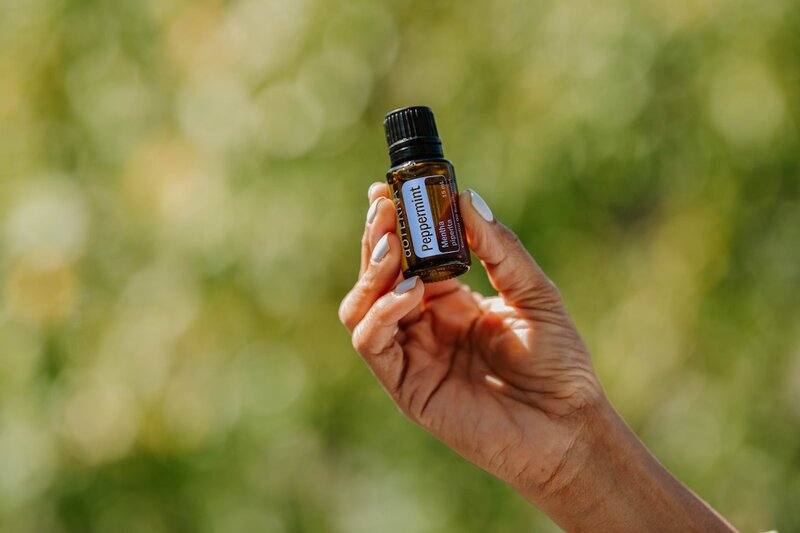
- Peppermint
- Pennyroyal
- Eucalyptus
- Clove
- Citrus
- Cinnamon
So, how will you know if your feline friend has been affected by essential oils? You’ll see several signs that something is wrong, including:
- Lethargy
- Throwing up
- Respiratory issues (labored breathing, a lot of sneezing, coughing)
- Teary eyes
- Pawing at the face
- Drooling
- Redness or swelling of mouth or gums
- Muscle tremors
- Liver failure
If you believe your pet is ill because of essential oils, it’s vital that you get it to the vet quickly.
Are Diffusers Alright to Use?
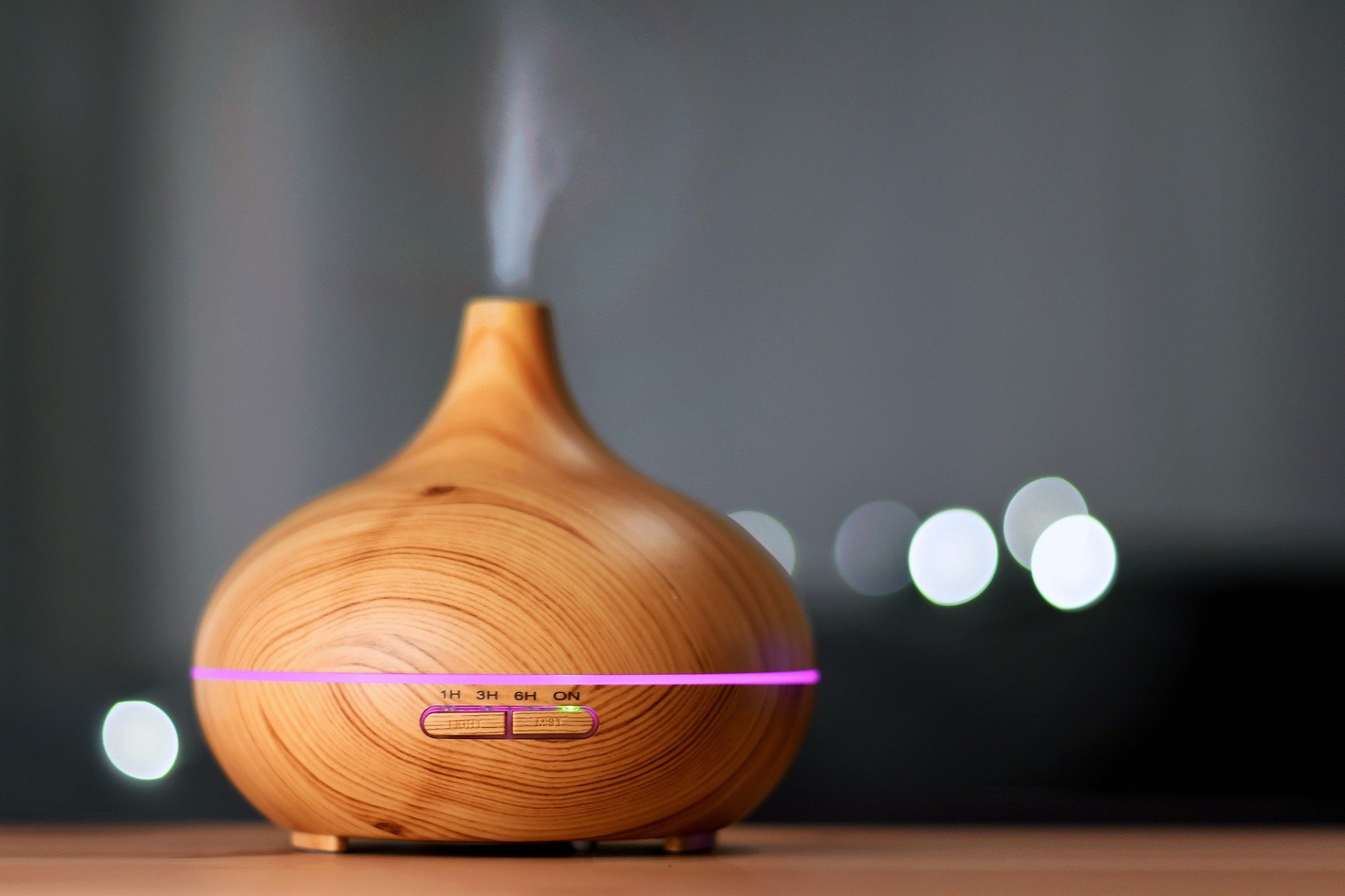
By now, you’re likely wondering if it’s safe to use essential oils even as aromatherapy in your home. You know that these oils can be absorbed through your cat’s skin or mouth, but a diffuser just causes a scent, right? So, is that safe?
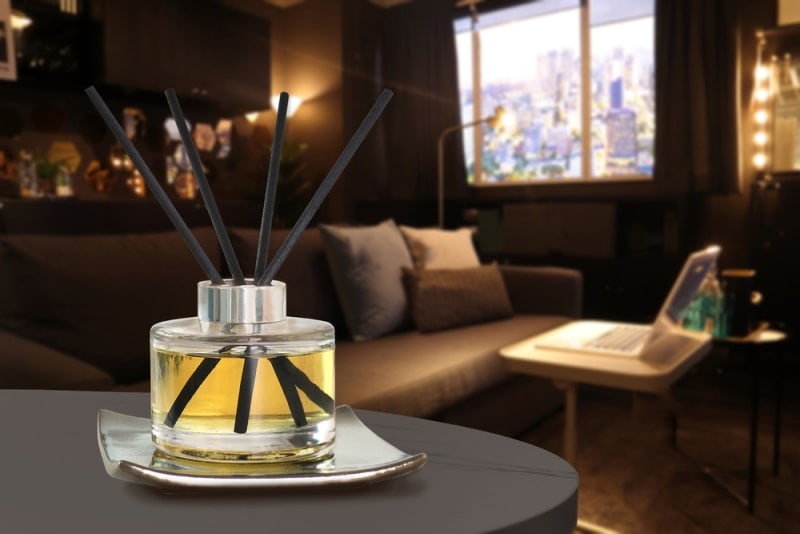
It might be if you keep your cat out of the room where you’re using the diffuser, but it also very well could harm your kitty. There are two types of diffusers—passive diffusers (heat or reed) and active diffusers (ultrasonic or nebulizing). Passive diffusers are safer to use than active diffusers, though both come with risks. Our recommendation is to err on the side of caution and avoid them altogether.
A passive diffuser could create a strong enough smell that it irritates your cat’s respiratory system. This could lead to difficulty breathing, drooling, watery eyes, and throwing up. If this occurs, you’ll need to get your pet out in the fresh air until symptoms clear up (and if they don’t, you’ll need to make a vet visit).
Active diffusers are worse because they don’t just create fragrance; they also put out essential oil particles into the air. And those tiny particles can get onto your cat’s coat and then be ingested during a grooming session or absorbed via the skin. In this case, it could lead to drooling, throwing up, tremors, lower heart rate, and even liver failure.
If you’d still like to keep essential oils in your home in some way, it’s best to speak with your vet about the safest way to go about doing that. But again, we suggest you simply avoid them.

Conclusion
Aromatherapy based on essential oils will not work for cats and can, in fact, be quite dangerous for them. This is because our feline friends are missing a liver enzyme that enables them to rid their bodies of chemicals found in essential oils. The inability to do this means your pet could become ill and, in the worst-case scenario, even die from liver failure. We recommend not using essential oils in the home, but if you want to keep a touch of aromatherapy around, speak with your vet about the best way to do so.
Featured Image Credit: Madeleine Steinbach, Shutterstock
Get Hepper In Your Inbox


Pet care tips from our vets and experts, straight to your inbox.
You may opt-out at any time. View our Privacy Policy for more information.
Misty Layne lives out in the woods in small-town Alabama with her two Siamese—Serafina and Jasper. She also has an array of stray cats, raccoons, and possums who like to call her front porch home. When she’s not writing about animals, you’ll find her writing poetry, stories, and film reviews (the animals are, by far, her favorite writing topic, though!). In her free time, Misty enjoys chilling with her cats, playing piano, watching indie and foreign films, photographing abandoned places, and catching up on her never-ending TBR list.
Join the conversation
Ask a question, share your story, or send private feedback.