Hepper is reader-supported. When you buy via links on our site, we may earn an affiliate commission at no cost to you. Learn more.
Do Dogs Have Unique Personalities? Vet-Verified Facts & FAQ


In this article
The relationship between humans and canines has had profound impacts on both of us. Several factors played a role in the diversity of jobs we assigned them and, consequently, the personalities of our animal companions.
The formal practice of creating canine breeds began about 160 years ago.1 According to Centrale Canine, there are 378 dog breeds.2 The American Kennel Club (AKC) categorizes them into seven groups, loosely classifying them by their role. These facts alone suggest there are various personalities among dogs.

The Genetic Component
You must start at the beginning to understand canine personalities fully, specifically with genetics. Domestic dogs have approximately 19,000 genes located on 38 pairs of non-sex chromosomes and two sex chromosomes.3 Puppies get one copy of the gene from their mother and father. These variations are called alleles. That’s where the possibilities for different personalities come into play.
Scientists have discovered that some behavioral traits, such as obsessive-compulsive disorder (OCD), have heritable forms. Researchers have also found similar evidence for aggression, fear, and sociability.4 Another study considered how DNA may reflect personality in 14 traits.5 Based on owner surveys, the team concluded that some traits had a strong genetic basis, as much as 50%.
Where does that leave selective breeding? Another study examined behavioral traits associated with specific breeds.6 Presumably, it’s one of the main drivers for this practice. The researchers found that while certain traits, such as howling frequency, have a strong genetic basis, the dog’s breed only contributed about 9% of their behavioral differences leading them to the conclusion that some traits are influenced by multiple genes as well as environmental factors. It’s worth noting the team found no traits exclusive to a single breed.
Instead, significant variation existed among dogs of the same breed. Some behaviors can have sporadic forms, which further complicates matters. The takeaway is that selective breeding is practical for conformation and adherence to breed standards. However, it’s not necessarily an indication of temperament. There are other factors influencing a dog’s personality.
Rearing and Socialization
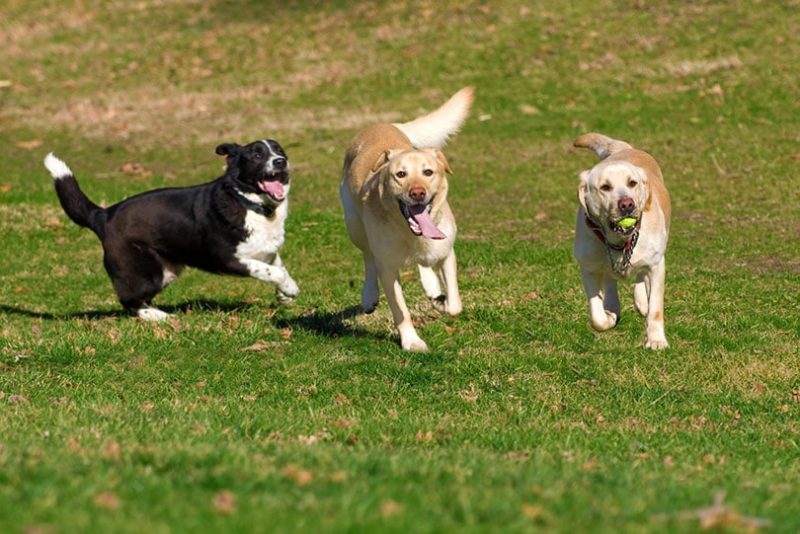
The early developmental stage in a dog’s life is called the critical socialization period which directly impacts behavior. The critical socialization period occurs from 3-14 weeks of age and essentially represents a time where pups are open to new experiences. Anything new after this age is likely to trigger a fear response. Another phenomenon, known as “fear periods”, are sporadic, short-lived, episodes of fear-reactivity that usually happen before 14 months of age. This can be a stage where dogs develop phobias but, with positive experiences, they can get through it with no lasting consequences.
Most breeders and veterinarians recommend getting a puppy over 8 weeks old. This time with their mother and littermates is essential for proper mental and social development. Researchers have found that pups acquired too early are more likely to develop behavioral problems later in life.7 It’s not hard to imagine the fear a puppy would experience if they were separated from their family at such a young age.
We can conclude that these first 8 weeks of life can affect a dog’s personality in both desirable and undesirable ways. It also shows that the genetic component goes hand in hand with the events that occur after birth and how they mold individual dogs' unique personalities. However, it doesn’t end there.
Environmental Influences
We’ve often discussed the serious responsibility of pet ownership. It is a major driver in personality development, both good and bad. The crucial elements are socialization, training, and the home environment. One study found compelling evidence of problematic behaviors, such as anxiety-related disorders, in dogs that lacked sufficient care in one of these areas.
The owner’s personality may influence a dog’s temperament. Research has shown a correlation between canine aggression and antisocial behavior in humans. While genetics may provide the framework, pet ownership and their social environment shape a dog’s malleable personality.

Frequently Asked Questions
Can You Change Behavior in Adult Dogs?
Dogs are intelligent animals and can learn by observation and behavioral conditioning. Think of Pavlov’s dogs. Behaviorists suggest positive reinforcement instead of punishment to modify unwanted traits. It requires patience, good timing, and consistency.
How Can I Prevent Unwanted Behavior in My Dog?
Positive reinforcement and early socialization are the best ways to guide your dog’s behavior in the right direction. It’s also imperative to consider your situation and lifestyle. A dog requires daily attention and care. If you and your family can’t provide it, then you should reconsider pet ownership. We recommend discussing behavioral issues with your vet. Early intervention is the wisest approach.
How Should I Choose a Dog?
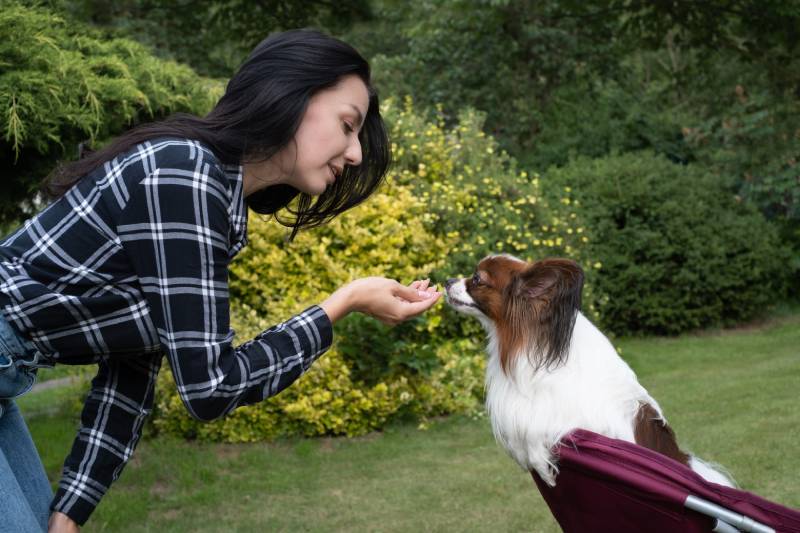
Choose a breed that suits your lifestyle. While not a guarantee for temperament, you can get a good idea of grooming and activity requirements. Meet a puppy’s mother and littermates. It’s not a guarantee, but it will provide excellent information. We suggest discussing your ideal dog with the breeder and your vet.
Conclusion
Three elements can influence a dog’s personality: genetics, rearing, and the environment. Much depends on taking advantage of when a pup can learn the fastest when young and impressionable but each dog will naturally have a unique temperament and respond differently to things. It underscores the responsibility of pet ownership.
Sources
Featured Image Credit: Jus_Ol, Shutterstock
Get Hepper In Your Inbox


Pet care tips from our vets and experts, straight to your inbox.
You may opt-out at any time. View our Privacy Policy for more information.
Chris is an experienced pet writer specializing in science topics, with a particular passion for health and the environment. She has been a writer for over 15 years and lives with her husband and three cats in Michigan.
Beyond writing about cats and dogs, Chris loves to learn about wine. She has WSET 1 and 2 certifications and is currently pursuing her Certified Wine Specialist Award (CSW).
Join the conversation
Ask a question, share your story, or send private feedback.