Hepper is reader-supported. When you buy via links on our site, we may earn an affiliate commission at no cost to you. Learn more.
Bloat in Puppies: Causes, Signs & Treatment (Vet Answer)
In this article
One of life’s many pleasures is wolfing down a large, delicious meal you've been thinking about all day. But did you know that what was just described as an ideal for most people is actually a recipe for disaster for some puppies, especially if they are a large or giant breed dog?
This situation poses multiple risks for large breed puppies that are at higher risk of developing bloat. What is bloat? Here is everything you need to know about this incredibly dangerous and deadly but mostly preventable phenomenon in dogs.

What Is Bloat in Puppies?
Bloat, or more accurately gastric dilatation and volvulus (GDV), is actually two problems combined. In dogs, when their stomach begins to fill with air and fluid, usually after a large meal, if it bloats (fills with air) too much, the stomach then starts to twist on itself. This twist will cut off blood vessels to parts of the stomach and close off any escape for air, food, and fluid, causing a rapid increase in the size and severity of the bloat.
This twisting, or volvulus, also usually twists the spleen along with the stomach as it sits against the long curve of the stomach and puts pressure on, or twists fully closed, major blood vessels of the spleen and returns blood supply from the body traveling by trying to get to the heart.
This very quickly creates an emergency situation in which parts of the stomach start to die, the puppy goes into shock, the spleen may also die, infection and sepsis can happen, the heart stops beating normally or can stop entirely, and the puppy can die. The mortality rate for bloat can be as high as 45% of cases in some studies.
What Are the Signs of Bloat in Puppies?
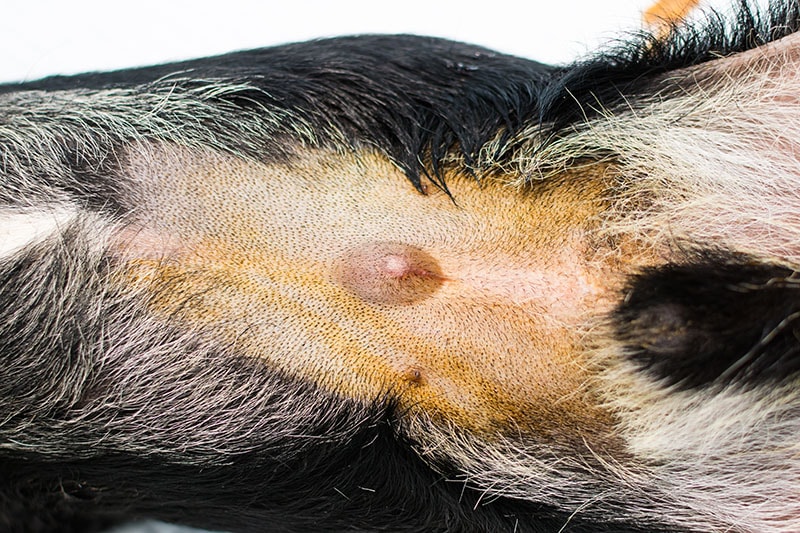
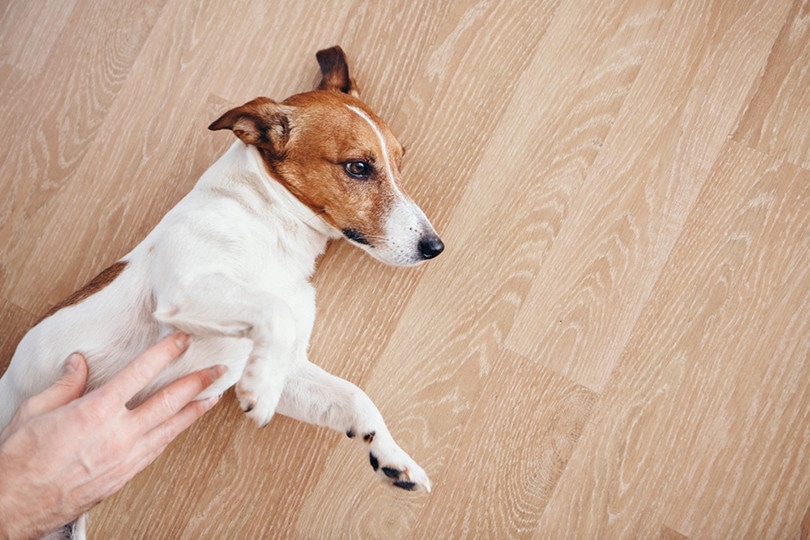
The classic signs of bloat are a suddenly tight, enlarged belly and an uncomfortable, agitated, or restless puppy that is usually retching as if to vomit without bringing much up. Drooling, burping or farting, gagging, crying, pale gums, and weakness are other common signs of bloat.
Bloat progresses within a couple of hours at most, not days. Puppies that have had signs for six or more hours before seeing a vet have a very poor prognosis, so puppies with signs for days are unlikely to have GDV, though any puppy suspected to be bloating or bloated should see a veterinarian immediately.
What Are the Causes of Bloat in Puppies?
Bloat has many possible causes, not all of them well understood. We know the following are important risk factors for the development of GDV in dogs:
- Deep chest conformation – distance from spine to the bottom of the chest is longer than the chest is wide
- Large size – dogs over 100 pounds have as much as a 20% risk of developing GDV in their lifetime
- Age – the older a dog becomes, the higher their risk of GDV
- Sex – male dogs are more likely to bloat than female dogs
- Familial history – puppies with first-degree relatives that have bloated are more likely to bloat
- Diet – puppies fed one large meal rather than several smaller meals are at risk
- Exercise – activity after eating a meal, especially a large meal, increases a puppy’s risk of GDV
- Anxiety – anxious dogs have been shown more likely to bloat than dogs with a calm temperament
- Speed of eating – eating a large meal quickly increases the chances of aerophagia, swallowing air, which increases the chance of bloating
- Body position – eating from an elevated food bowl increases the risk of bloat for a puppy, potentially also due to increased aerophagia
- Previous bloat – a dog that bloats once will almost certainly do so again, usually very quickly, unless preventative surgical measures are taken
There are several other possible links to GDV, but studies aren’t always consistent. Some show an increased risk of bloat for dry food, others for wet. Previous removal of a dog’s spleen has been shown in one study to significantly increase the risk of bloat, but another study found no association. Body weight, other causes of GI inflammation or stagnation, drastic temperature changes, water restriction, some medications, and breeds with a possible genetic link may all contribute to a puppy’s risk of developing GDV.
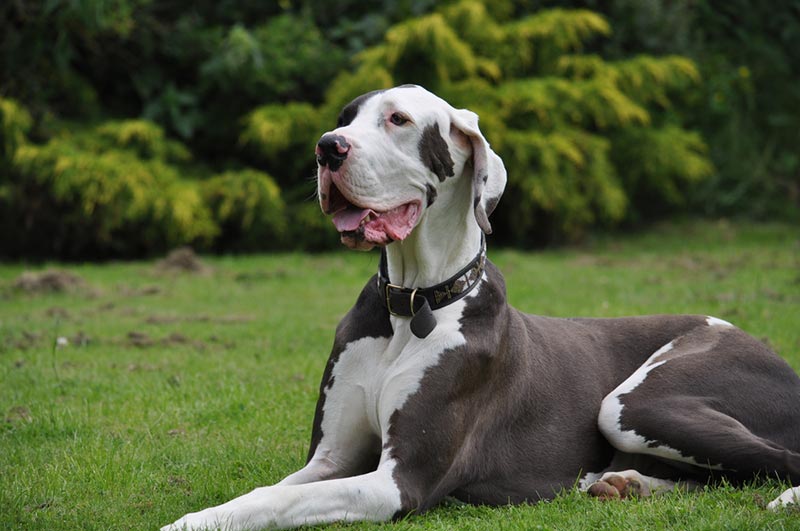
Great Danes are the most likely dog breed to bloat.
How Is Bloat in Puppies Diagnosed?
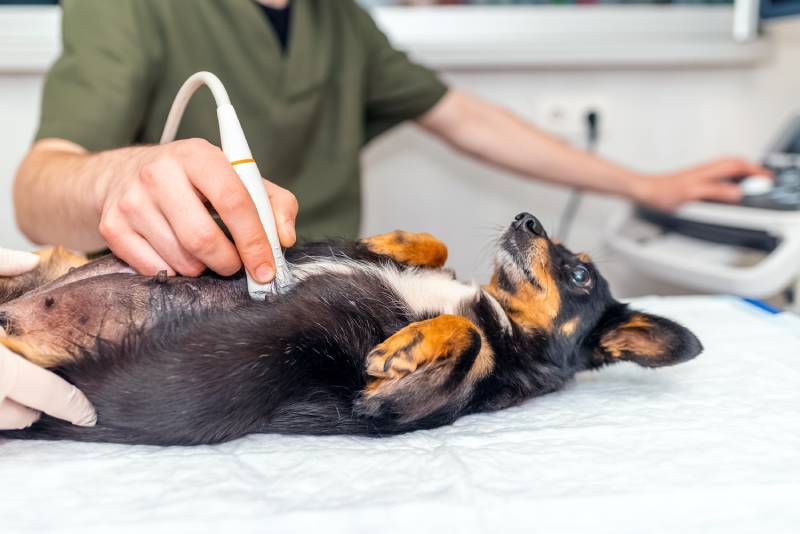
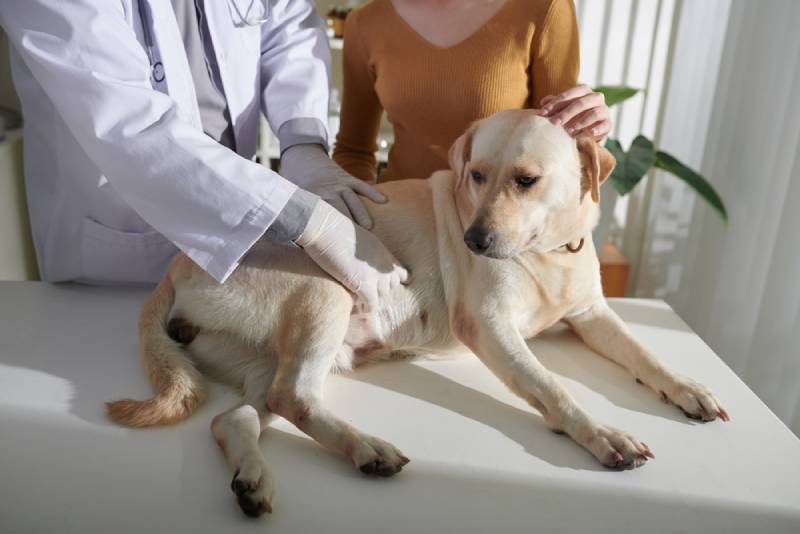
While not all puppies will show the classic signs of bloat, most will. Especially as time progresses and the puppy rapidly gets sicker, presenting at a veterinary clinic with signs of bloat can be enough for a diagnosis. X-rays can be taken to confirm when needed.
Puppies experiencing bloat also need bloodwork to screen for electrolyte abnormalities. Checking lactate levels can also be helpful for both the diagnosis and monitoring of prognosis.
Puppies that present for GDV need constant heart monitoring via ECG (EKG) to detect arrhythmias. GDV can cause very specific arrhythmias very early or up to three days later, and this must be treated if it develops; otherwise, the puppy may die, even after successful treatment of their GDV.
How Is Bloat in Puppies Treated?
For a puppy to survive bloat, they must be taken to a veterinary clinic as soon as they show signs. At the clinic, very quickly, the stomach must be decompressed, meaning the trapped air in the stomach that is stretching it too big must be released, the stomach must be untwisted, fluids need to be given to correct shock and stabilize the puppy, and any arrhythmias that have already developed need to be treated.
Immediately after checking and fixing all these initial problems, the puppy should then proceed to surgery. While technically, the GDV was stopped by releasing the bloated air and getting the stomach to untwist, it can immediately retwist in many cases. The stomach and spleen also need to be assessed for dead tissue. After fixing any of these issues, the stomach can then be “tacked” or sewn to the abdominal wall to pin it into the correct position, preventing future episodes of GDV. This procedure is called gastropexy.
How Do I Care for a Puppy With Bloat?
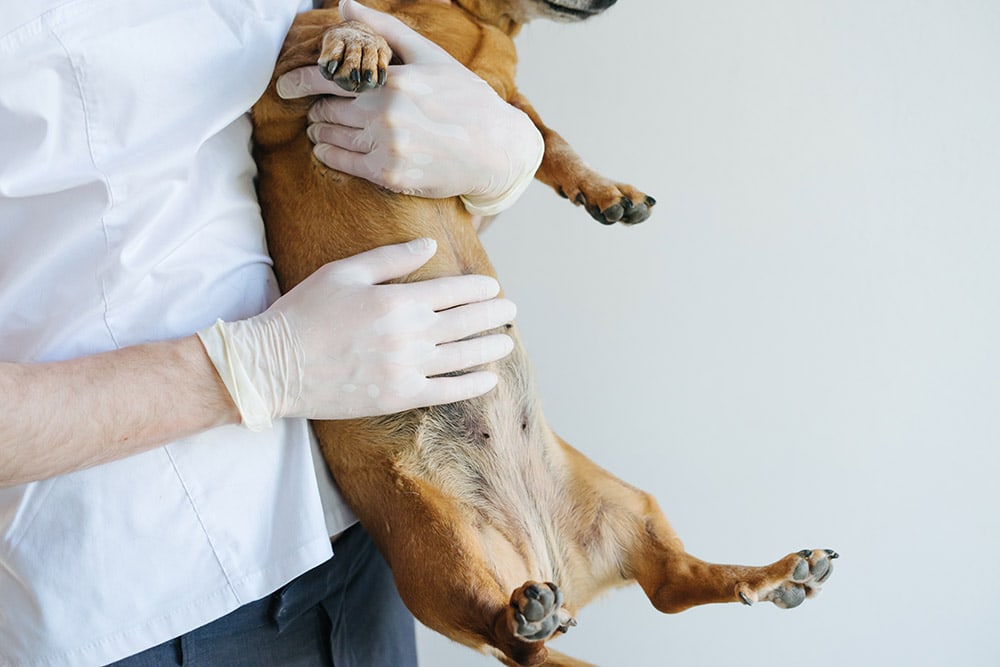
The prognosis for a puppy that bloats significantly improves if they undergo surgery as part of treatment and survives long enough to complete the surgery. Bringing a puppy into a veterinarian quickly and pursuing surgery as both part of treatment and to prevent future GDV episodes is the best way to care for a puppy with bloat. A gastropexy generally only allows a puppy’s stomach to perform the first part of the GDV (bloat) while preventing the twisting or volvulus, which is the life-threatening part of the condition. In the future, if their stomach bloats but doesn’t twist, it may be uncomfortable, but they will recover on their own at home safely.
Even with a gastropexy, a puppy may still have another episode of GDV in the future. For at-risk dogs, it is important to provide multiple meals per day, limit exercise immediately after eating, slow down fast eaters, control stressors, and be present after meal times.
How Do I Prevent Bloat in My Puppy?
Controlling as many risks for bloat as you can helps to prevent episodes, but something called prophylactic surgery is the most important way to prevent bloat.
A gastropexy can be performed on a puppy once they’re six months old, which will fix the stomach into position and make it very unlikely that the puppy will ever experience GDV. This surgery is recommended for any dog expected to be over 100 lbs or from a breed known to be at higher risk.
Frequently Asked Questions (FAQs)
Is bloat common in puppies?
While bloat is far more common in large breed puppies than others, bloat is not common in puppies as it becomes more likely as a dog ages.
How do you fix bloat in a puppy?
Bloat is treated in a puppy the same way it is in an adult dog, by correcting the bloat, then performing surgery to fix any damaged tissues and sewing the stomach into position so it can’t twist again in the future.
Can I treat puppy bloat at home?
No. A puppy that doesn’t receive immediate emergency veterinary care at a hospital for bloat will almost certainly die. If they do manage to survive the ordeal, it is a near guarantee that they will bloat again in the future, possibly very quickly, and will not survive again.
Can overfeeding a puppy cause bloat?
Yes, eating a large meal, especially quickly, increases the chance of bloat for a puppy.
How fast does bloat happen in puppies?
Most episodes of bloat will happen within two to three hours of a meal.

Conclusion
Bloat in puppies is always an emergency situation. Survival rates rely heavily on early intervention that includes surgery. We don’t know exactly why a dog’s stomach is at risk of twisting on itself when it begins to bloat, nor do we know why the same meal a dog has eaten for five years may suddenly cause this emergency. Several risk factors have been identified with bloat, and owners of large breed puppies should try to control as many of these as they can, but these puppies should also receive a gastropexy surgery after turning six months old to prevent bloat in the future.
Sources
Featured Image Credit: Dragon Images, Shutterstock
Get Hepper In Your Inbox


Pet care tips from our vets and experts, straight to your inbox.
You may opt-out at any time. View our Privacy Policy for more information.
Dr. Zayas has a passion for sharing her extensive knowledge base with everyone she can. She lives in Colorado with her dogs, cat, and fish and has traveled all over the world with them. Her various life and work experiences have allowed her to focus on not only clinical practice, but also providing informative, accurate answers to almost any question her clients and readers can ask of her.
Education
Dr. Zayas received her Bachelor’s degree from Bryn Mawr College and her Doctor of Veterinary Medicine degree from Ross University School of Veterinary Medicine.
Experience
Dr. Zayas owns a house call small animal and exotics veterinary practice. She has special interests in allergies, pain management, end of life/hospice care, and finding unique solutions tailored to her patients’ and families’ individual needs. She has worked in shelter medicine, home health, and everything in between.
Join the conversation
Ask a question, share your story, or send private feedback.