Hepper is reader-supported. When you buy via links on our site, we may earn an affiliate commission at no cost to you. Learn more.
Umbilical Hernia in Dogs: Signs, Causes & Treatment (Vet Answer)

In this article
Umbilical hernias are common in puppies and adult dogs. And the good news is that many do not cause a problem, and some may even heal on their own. Others may need to be fixed with a simple surgery. But some can turn into big problems that need emergency intervention.
Read on to learn more about what they are, how to monitor them, and how to fix them when needed.

What Is an Umbilical Hernia?
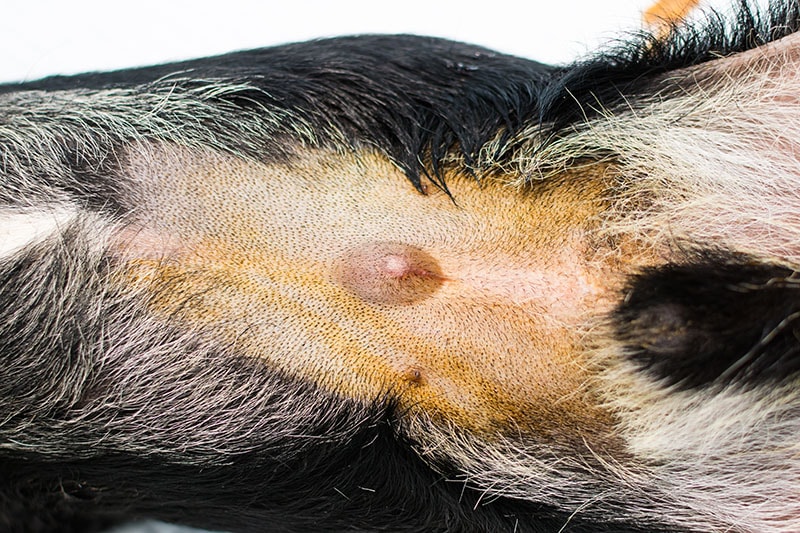
An umbilical hernia is an abnormality in the abdominal wall that forms a pocket filled with internal abdominal content sitting outside the wall, just between the skin and muscles.
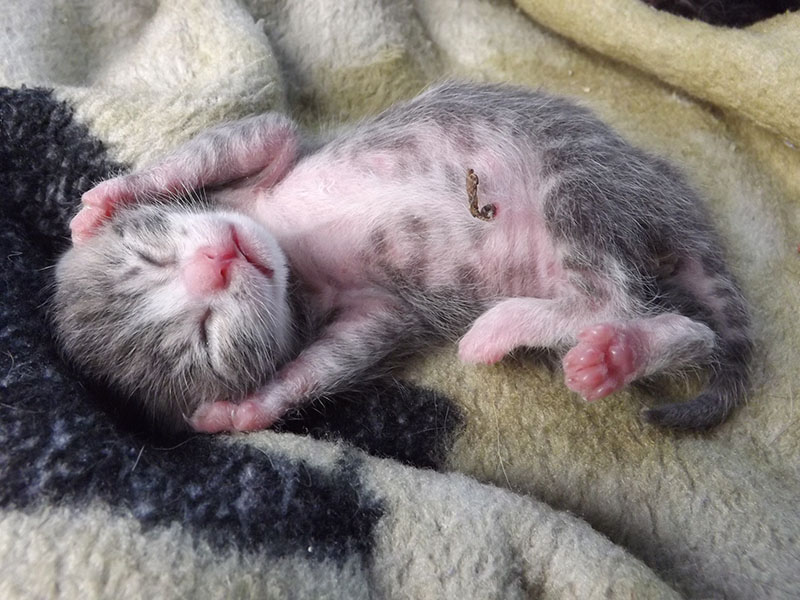
Umbilical hernias are usually found immediately after birth. They form around the umbilicus, the part that heals into the navel.
The internal abdominal contents can be fat, connective tissue, or digestive organs. A hernia forms when a small (or large) amount of the internal abdominal contents pushes through a hole in the abdominal wall and gets stuck outside the abdomen.
The Common and Safe Types of Hernia
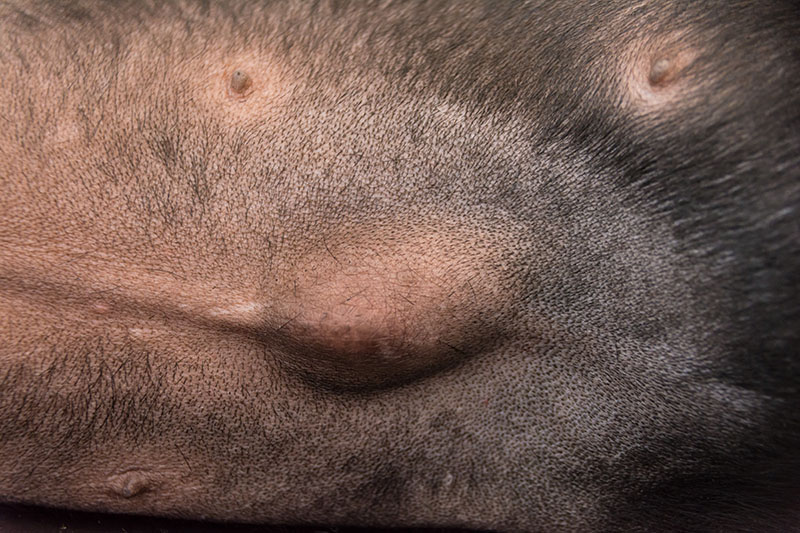
Most are simply just a little bit of abdominal fat and connective tissue that should be inside the belly sitting in the externalized pocket.
Within the abdomen, the digestive organs are covered with a fatty layer of connective tissue called the omentum. And there is a layer of fat sitting between the muscles of the abdominal wall and the digestive organs, protecting the organs.
These two things (the omentum and the abdominal fat) are usually what is poking out in a hernia. Neither usually causes a problem. It is usually painless and just a little pocket of fat that might or might not go away on its own.
The Less Common But Dangerous Types
Sometimes digestive organs, such as the intestines, can also squeeze through the hole so that a fold of the intestines now sits outside the abdomen. This can then create a kink in the intestine, which is not only painful but can have serious complications.
This is a much more severe case of an umbilical hernia. It can form a blockage in the digestive tract. It can form a pocket of the intestine that suffocates and slowly dies off. Or it can cause infection of the hernia and umbilicus as food material builds up at the obstruction.
If an umbilical hernia turns into this type, it needs immediate veterinary assessment. See below for signs to tell the difference.
What Are the Signs of Umbilical Hernia?
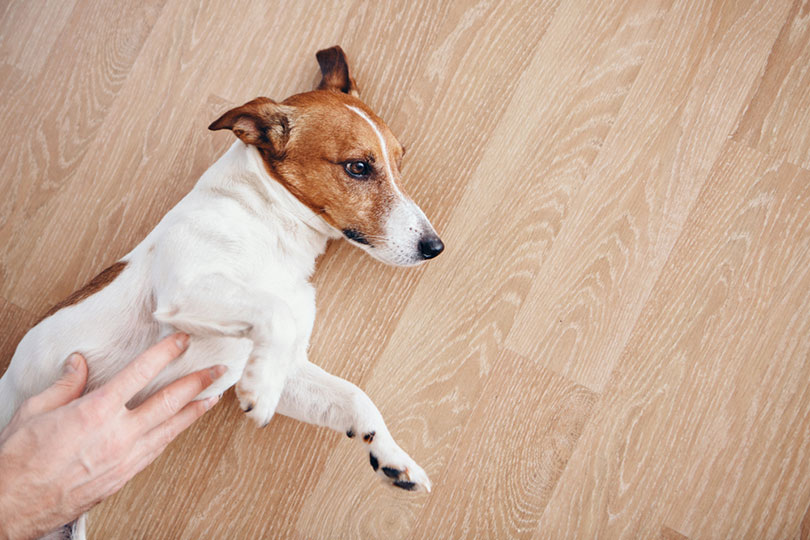
An umbilical hernia is usually identified after a full physical exam when the hernia is found and palpated. The small lump can usually be seen on the belly and felt with the fingers. It feels just like you would imagine a little pocket of fat sitting under the skin would feel like.
Most of the time, it is small and unobtrusive. However, if it is larger and has other abdominal contents (such as the intestines), it might feel firmer or have segments that can be felt within the pocket, especially by a veterinarian.
Most puppies are perfectly normal otherwise. They do not act any differently than any of their other siblings—they are not sicker. Unless you feel or see it, you might not know it's there.
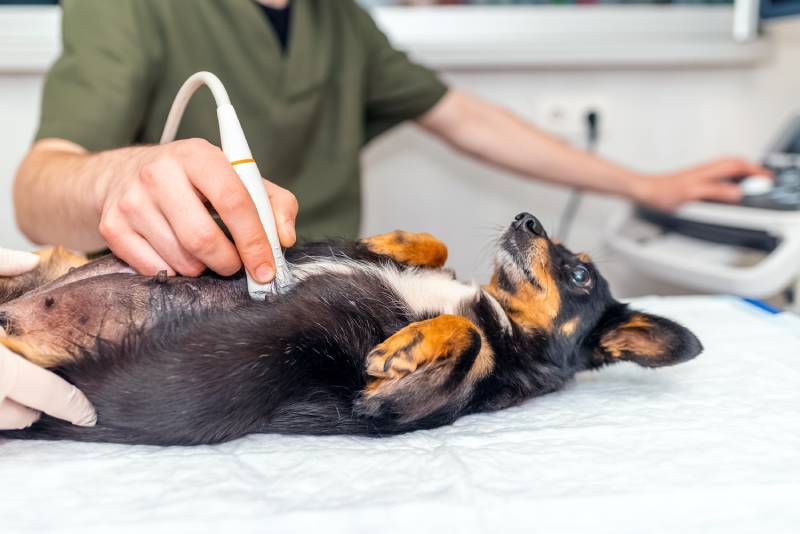
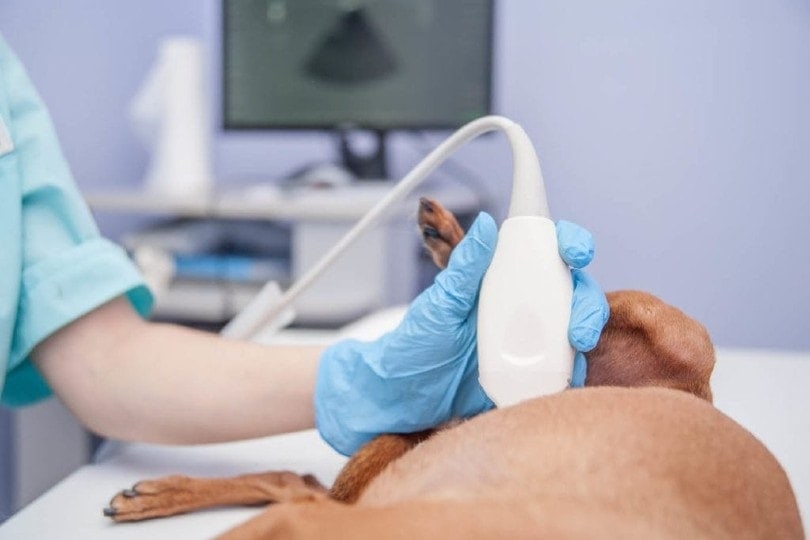
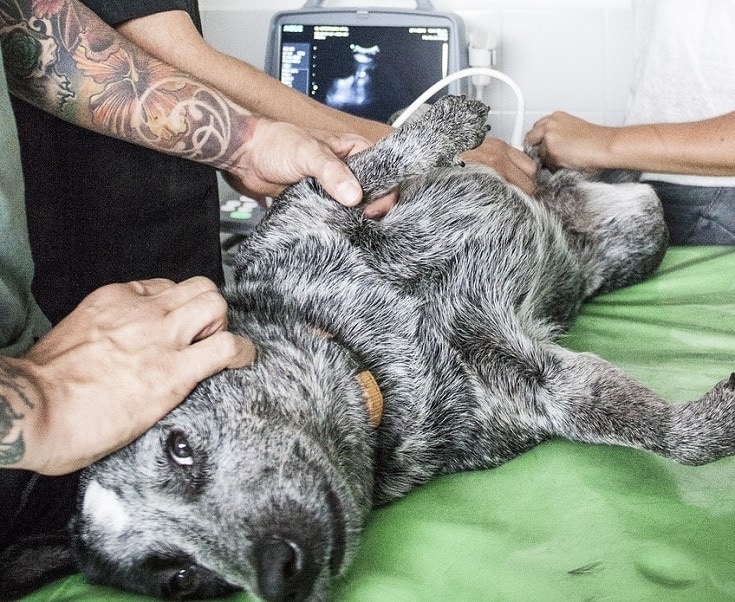
The vet can also sometimes use an ultrasound or X-rays to determine if organs are involved or if it is just fat slipping out.
Signs of a Serious Complication
If the digestive organs are slipping through the hernia, it usually feels harder and more inflamed, and the belly might be painful. And the puppy might start showing signs of intestinal blockage, which include the following:
- Vomiting
- Diarrhea
- Inappetence
- Painful hernia
- Painful belly
- Thick swollen hernia
What Are the Causes of an Umbilical Hernia?
The abdominal wall is made up of muscles and tissue that weave over the contents of the abdomen, keeping everything enclosed. The abdomen consists of the digestive system, the stomach, and the intestines, for example, and the abdominal wall holds all these heavy organs up against gravity and within the body.
Amongst the organs, and particularly between the organs and the muscles, are layers of fat. This fat creates another softer, protective layer between the outside and the digestive organs.
If there is a weakness in this muscular wall, the heavy organs push against it and start to wiggle the abdominal fat through the weakness, creating a hole. This fat creates a small pocket that is pushed out of the abdomen and sits between the abdominal muscles and the skin.
During gestation, the umbilical cord creates a small hole in the abdominal wall. The umbilical cord brings blood from the mother into the fetus, and it travels through this small hole in the developing muscles and skin. Upon birth, the cord is severed and heals over.
Sometimes, though, the hole creates a point of weakness for the abdominal contents to push against and balloon out of their confinement, creating an umbilical hernia.
How Do I Care for a Dog With an Umbilical Hernia?
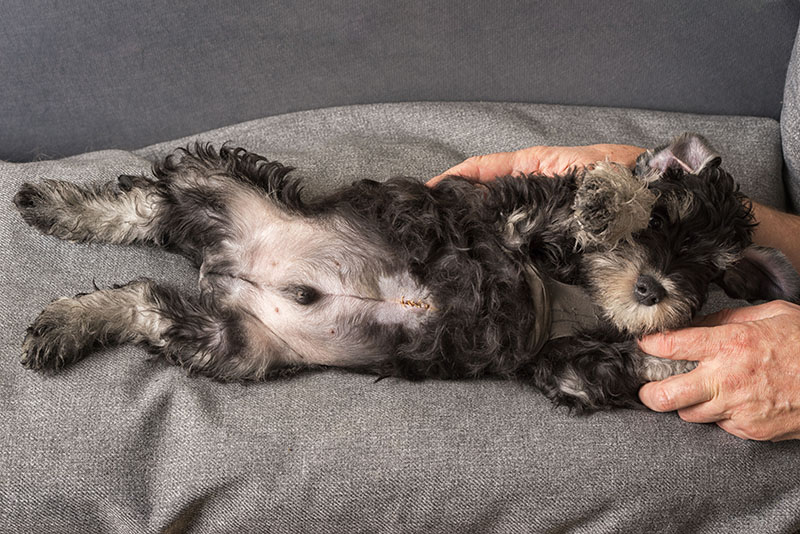
There usually is not much to do. Most puppies are perfectly fine with their umbilical hernia, especially if it just contains fat and the omentum. They are usually painless.
If the umbilical cord is still healing (it takes a few days after birth to heal from being severed), you must ensure it stays clean, dry, and not infected, which you should do anyway, especially if there is also an umbilical hernia.
However, even if a simple umbilical hernia starts out just containing fat and the omentum, the intestines can sometimes slip through, changing the entire situation. Umbilical hernias can resolve on their own. As the puppy grows, they go away. This usually happens by 4–6 months old. Usually, by the time a dog is spayed or neutered, you will know if it will go away or if it must be surgically fixed.
However, veterinarians usually recommend surgically correcting the defect if it does not fix itself, even if it is not currently causing a problem. As you might imagine, as the puppy grows, the hole can grow too, and the digestive organs are more likely to slip through it—creating a problem.

Frequently Asked Questions (FAQs)
What does the surgery involve?
Surgically correcting an umbilical hernia involves pushing the fat and intestines back through the hole and suturing the abdomen closed. Sometimes special mesh or equipment is used to help push the slippery contents closed and create a stronger connection in the wall. If the fat is too slippery and big, sometimes it cannot be pushed back in, so it is cut off, and then the hole is closed.
Can I push the hernia back in?
No. Even if you push the contents of the hernia back in, it will fall out through the hole again. The hole is the problem, and you can’t fix it with just your fingers.
When should we do surgery?
Often an umbilical hernia will be fixed at the same time as spaying or neutering. This saves on anesthesia —it’s only one surgery instead of two. And the timing is usually just about right. If the hernia has not gone away by the time the dog is old enough for desexing, then it is not going to go away.
If you were not planning on desexing the dog, there are a few things to keep in mind. Umbilical hernias do seem to have a genetic component, as they are more common in certain breed lines. So it may be that this puppy is not the best breeding candidate. You do not want to perpetuate this problem further down the family line.
How do I know if there is a problem?
As we have discussed, if a piece of the intestine gets caught in an umbilical hernia, it can turn into an emergency. If the hernia suddenly grows or looks inflamed (red, hot, or swollen), bring your dog to the veterinarian. The hernia could be infected.
Or if your puppy develops sudden and persistent vomiting or diarrhea, that could be a sign of an intestinal blockage. If this happens, the dog gets sick very quickly; they may vomit, be lethargic and depressed, and/or have a painful, sore tummy.
These situations will not resolve on their own, and they will not get better. Left untreated, the puppy could die. So, take them to the vet immediately.
Conclusion
Most umbilical hernias are just a pocket of abdominal fat, and some go away on their own as the puppy grows up. Sometimes they need a little tummy tuck that fixes the small hole the hernia creates, which usually happens during their spaying or desexing.
A problematic hernia, though, needs to be treated quickly so it doesn’t turn into a larger, life-threatening problem. Having a happy, healthy, fat little puppy is one of the great joys in life. And most of the time, a little extra belly fat is just a little bit more to love until it can be fixed.
Featured Image Credit: Todorean-Gabriel, Shutterstock
Get Hepper In Your Inbox


Pet care tips from our vets and experts, straight to your inbox.
You may opt-out at any time. View our Privacy Policy for more information.
Dr. Chantal is passionate about the human-animal bond and improving animals' lives through their connections with their human companions. She has worked with many different species, big and small, including dogs, cats, birds, rabbits, guinea pigs, reptiles, amphibians, and even horses and mice. Chantal is excited to share her knowledge using her writing to help people connect with their animal friends.
Dr. Chantal believes that the best way for animals to be healthy is for their humans to understand their needs and well-being. She loves spreading her knowledge to as many people as she can through her writing.
Education
Dr. Chantal graduated from the Royal Veterinary College in London, England, where she received her vet degree. She then received her Masters in Conservation Medicine from Tufts University.
Experience
Dr. Chantal has worked with animals her entire life in many fields, even outside of veterinary medicine. She managed horse barns, worked as a dog trainer, and as a wildlife biologist before attending vet school. Chantal has been a veterinarian for over three years and continues to work with dogs, cats, and exotic animals. And, she still knows a thing or two about horses.
Join the conversation
Ask a question, share your story, or send private feedback.